Enduring in a Hazardous World (2)

This Sunday we’ll be continuing through the letters to the seven churches in our study of the book of Revelation. We’ll be reading chapter 2:12-29, where the cities of Pergamum and Thyatira will be the recipients. Jesus follows the same pattern: commendation, correction, warning and promise.

We’ve been considering Jesus’ corrections for the churches to discern what it is God is expecting from the church as we live in these last days – what is our emphasis to be? What should characterize our ministry? As we looked at Ephesus and Smyrna, we learned that prioritizing love and minimizing fear were our expected attitudinal priorities.

Pergamum was a capital city in the Roman Empire – the ruling city of the province of Asia. Jesus refers to it as the city where Satan’s throne is…and Satan’s city. Jesus certainly does a little name-calling in these chapters. What do you think he means by this, considering that “satan” means enemy or accuser?

The church there had some good things going on, but Jesus addresses their tolerance of teachings that bear similarities with the actions of Balaam, the Old Testament rogue prophet. You can read about him in Numbers 22-24. Clearly, the symbolism is meant to indicate that the church in Pergamum was in danger of being absorbed by the cultural influences of their day. Applying that to our own time and culture, what influences do we need to be mindful of? What aspects of our present culture flow with the values of God’s kingdom, and what aspects do not? How do we make that determination?

The promise given is that of hidden manna in heaven. What did manna provide for the Israelite? What might this invisible, heavenly-sided manna be for us?

The promise of a white stone with a new name is intriguing. There are many different views about its meaning. I’m partial to the connection with the “tessara hospitalis” view. What does the white stone speak to you?

We’ll also be reading the letter to the church in Thyatira, and while it’s the longest of the letters, we’ll deal with it briefly, since it largely carries a similar warning to that of Pergamum. This time around, the false teachings being tolerated are compared to the Old Testament character Jezebel – whom you can read about in 1 Kings 18 and 19.

Committing adultery with “Jezebel” is symbolic in nature – indicating, not actual adultery, but spiritual unfaithfulness on the part of the church. Apparently they were being tempted to follow doctrines that led them away from Christ and to something or someone else. What things in our world vie for our affection or allegiance in competition with Christ? How can we examine our loyalties and see to it that Christ holds the highest priorities in our choices?

This will be a challenging study – hope to see you there!

Enduring in a Hazardous World

Related image

Man…what a year 2017 has been! We’re on track to break records for the magnitude and frequency of natural disasters this year. USA today says we’ve already tied the record for billion dollar disasters. It is reasonable that people are wondering about the end of the world.

I’ve been asked multiple times if I think these are signs of the last days. My answer is “absolutely”. According to Matthew 24, all of these things – wars, rumors of wars, earthquakes, storms, diseases – are going to characterize the world as we wait for Jesus to return. From the time Jesus rose from the dead and ascended into heaven, we’ve been on the final stretch of history until he returns. So, yes, these are indicators of that…but in many ways, it’s just another tragic day in a broken world. These are the labor pains as a new world is breaking in. Since labor pains usually increase as the birth draws closer, it seems reasonable that these upheavals will increase as we get closer to the end.

Given that, how should the church be responding to this? What is Jesus expecting from us as this world reels and becomes hazardous? If the world were going to end tomorrow, what does God want to see from us?

That’s what we’ll be considering this Sunday as we continue our study in Revelation, reading chapter 2:1-11.

This begins another section traditionally called the 7 letters to the 7 churches. As we stated before, there were more than 7 churches in Asia Minor, so highlighting 7 of them carries the implication that these instructions are for all churches throughout all time.

The first church addressed is in Ephesus. They are commended for an active ministry and doctrinal purity. They were hard at work, serving each other and holding on to orthodoxy. But Jesus zeroed in on something that was lacking. What was it? They were doing the stuff that most churches are always being prodded towards – but it doesn’t seem to be worthwhile without the component Jesus identifies as missing. Jesus tells them to “remember”, “repent” and then “do”. What would that look like lived out in real life?

What does that tell us about God’s expectations of us as this world rocks and reels? What is our main mission as we march toward the end of history?

We’ll also be reading the instructions to the church in Smyrna. They aren’t corrected for anything – but they are encouraged not to do something. What is it? What does that tell us about God’s expectations for the church in the last days? What should characterize our attitudes and ministries? How does that square with frantic end of the world predictions you’ve encountered?

Hope to see you this Sunday!


Jesus in the Middle of His Church

Image result for stereogramDo you remember those old “magic eye” posters that were all the rage in the 90’s? They were 3D images that were masked by a two dimensional pattern that could only be seen by slightly crossing your eyes, like you would to view a 3D stereogram (this is what a stereogram is, if you don’t know and actually care).

The key to seeing those visual puzzles had to do with refocusing your eyes. The picture didn’t emerge until you saw it from the proper focal direction.

That is a lot like the book of Revelation. It has a message that seems confusing and difficult on the surface reading – but when we focus our eyes properly, we begin to see that not everything is as it seems on the surface. The symbolic imagery begins to take on a different meaning which encourages us to hold fast to our faith in Christ.

We began an expository study of Revelation last week, and this week we’ll continue, still in chapter one, reading v9-20.

The first eight verses were the introduction, the last 11 are the opening of the prologue.

A dramatic and powerful voice commands John to write this down in a letter to 7 churches in the province of Asia Minor. When John turns to see who’s talking, he gets an eyeful. Jesus stands in the middle of 7 lamps, which v 20 says stand for the 7 churches. The number seven will be significant in this book. It’s actually a significant number in the whole of the Biblical Narrative. Easton’s Bible Dictionary says: “Seven is used for any round number, or for completeness, as we say a dozen, or as a speaker says he will say two or three words.”  Given this usage of that number – what significance do you think “seven churches” has?

The One speaking isn’t named as Jesus, but his self-description of being dead but now alive is a clear indicator of who this Risen One is. Where is he standing? Given that the lamps are the church, what is significant about his placement?

Look at the descriptions of Jesus. A long robe, a golden sash, white hair, flaming eyes, shining skin, burnished bronze feet and a literally sharp tongue (sorry, couldn’t help myself). All of these symbolic descriptors are meant to indicate Jesus’ power and ability to preserve and empower his church. What do you think these descriptions imply about Him in relation to the church?

We’ll go into more detail on Sunday – but take some time to read this passage before-hand. Get the feel of how John uses imagery. Let your imagination take flight and do your best to picture what John is describing. This is how we’ll enter into this as an experience and not just another lesson with more information to store. Let’s get stoked about “The First and the Last, the LIVING ONE!”

Hope to see you Sunday!

Famous Last Words

(note: based on the current tracking models for Nate, we will plan to have our meetings as usual since we’re just under a TS watch. However, should the storm start tracking East, or if we find ourselves facing full-on tropical storm conditions or worse, we will cancel our meetings. If that is the case, stay home and stay safe. We will post on Facebook and through email if we cancel our services.)

rev_FB Graphic

Well – it had to happen at some point, right? This Sunday (Lord willing), we will begin a new Bible study on the last book of the Bible – The Revelation! I know for some this has been something they’ve been hoping for for quite some time. It is literally the last book of the New Testament for me to teach through.

Now I know that the world was supposed to end a few weeks ago and some people got really caught up in the hype of that. We have had a lot of cosmic-like events happening lately, a solar eclipse cut across North America, multiple devastating hurricanes and earthquakes have done catastrophic damage around the world and a violent madman unleashed automatic gunfire into a crowd of innocent concert-goers. So many terrible things happening that we could start wondering if these are signs that the end is near.

The Revelation that John wrote will address that, as Jesus did in Matthew 24. I can tell you now, that yes, these are signs of the end. From the time that Jesus was raised and ascended into heaven until he returns again the world is in it’s last stage. It’s lasted a lot longer than anyone anticipated, but these last 2,000-plus years have been the last days. Jesus told us plainly that what will characterize the world in the interim of his two advents will be wind and waves, diseases, earthquakes, wars and rumors of wars. The world will continue in violent upheaval that are like birth-pangs, waiting for a new world to be born. So, yes, the horrible things we are seeing daily on the news are indications that we are in that time Jesus spoke of, but it’s just another day in a broken world as well.

So the natural question Christians and the church have asked throughout the ages has been, “If we claim that Jesus is Lord and ruling all things, why is all this terrible stuff still happening? Why do Caesars and Hitlers and Kim Jong-Uns still exercise their tyranny and hurt so many people? Why does the world seem like its full of monsters?”

The Revelation was written to answer that question. It was intended to pull back the cosmic curtain and remind us that there is more going on than meets the eye. God has a plan and purpose that he continues to fulfill, no matter what it may look like on the surface.

Let me warn you that I will not be offering charts of sequential events or providing formulas for how to calculate when the end will occur. We won’t be describing ways in which we can spot the Antichrist or set a date for the rapture. What we will be doing is reading The Revelation to discover what it tells us about today, and how we can find hope in Jesus in our present lives. I believe this book has a lot to offer in our ongoing discovery of Jesus! In fact…I’m SUPER stoked about this book as I’ve been re-studying it over the last several months!

As we begin our study, we’ll be reading v 1-8 as an introduction.

It may help if you have an acquaintance with the genre of Apocalyptic Literature.

I also can’t say enough good about The Bible Project’s videos – and it would really be helpful to your understanding of The Revelation if you had an overview of the book of Daniel in your mind – so watch this short video to get that:

I hope we have our services on Sunday – I hope we all stay safe – pray for the people of Louisiana and Mississippi – as well as all the regions that have been in harms way lately. Pray for a return to stability and for life to be preserved – and always be on the lookout for ways we can be the Good News in this world!


Practicing to Practice

Phew! I missed my Friday deadline for this post! This Sunday we’ll be continuing our short series of Following Jesus into the World – and we’ll be talking about Practicing to Practice. There are two different ways in which we use that word “practice”. It either means learning in preparation for the “real thing”, like a competition or a performance. It can also mean to practice something like law or medicine.

I believe the main purpose that we find for gathering is actually missional. Our main text is going to be Ephesians 4:11-16.

What does Paul say about the reason for the gifts that God placed in the church? Entertainment? Personal edification? What does he expect is going to happen as people gather and experience the presence of Christ corporately? How does that enlarge the idea of practice in it’s first usage? How does it relate to practice in the second way we described it?

In what ways can you imagine the church community as a practice field for our lives in the larger world?

I think this will be a challenging study – hope to see you tomorrow!

Engaging Without Judgement nor Accommodation

This Sunday we’ll be returning to our series Following Jesus into the World. We’re going to consider how we can engage our culture without judging people, nor accommodating every development a society makes. We pointed out two weeks ago that our present American culture has become “disenchanted” – that is, scientific rationalism has resulted in a deeply secularized society. The willingness to embrace a belief in a God who can’t be seen nor proven empirically is no longer considered a beneficial option.  We considered some of the ways the church has reacted to our Post-Christian culture, and so far, our track record has not been all that positive.

This week we’ll look at Acts 17, where Paul engaged the Athenian culture in his sermon on Mars Hill. The Ancient Greeks present the closest parallel we’ll find to our modern, Western world. As you read over his sermon, how would you characterize his words? Does he sound combative or angry? What did he tell them about Moses or the Old Testament? Who did he reference in his talk? How observant and knowledgeable did Paul seem to be with the Athenian worldview?

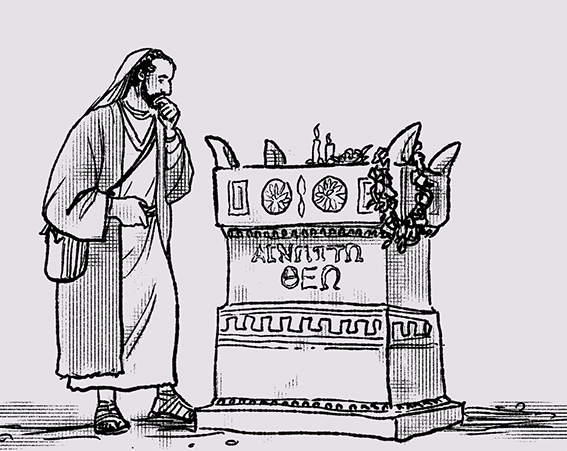
If we were to look at Paul as an example of how to engage a culture which doesn’t acknowledge our God or our faith, what can we apply from his approach as we seek to engage our world? Paul observed an altar to “the unknown god” and saw it as a crack in their preconceptions through which he could shine the light of the gospel. What sort of cracks can we observe in our own culture’s barriers to the unseen, spiritual world? How might we shine our hope through those cracks?

Hopefully this will give us some things to think about, and maybe we can keep our eyes open for opportunities we hadn’t considered before. See you Sunday!

Following Jesus into the World

Jesus came and told his disciples, “I have been given all authority in heaven and on earth.  Therefore, go and make disciples of all the nations, baptizing them in the name of the Father and the Son and the Holy Spirit.  Teach these new disciples to obey all the commands I have given you. And be sure of this: I am with you always, even to the end of the age.”

Those are the final words presented in Matthew’s gospel, which we looked at last week as we concluded our study through that book. As I was praying and thinking about where to go next, I felt strongly that we, as a community, may benefit from hanging out on those words for a while. So, we’re going to begin a short “topical” study that focuses on this mission Jesus set before us as his followers. Some of the things I want to consider will be: What characterizes the world in which we are to pursue this mission? What is the nature of this mission? What will it look like in real life? What does it mean to have Jesus present with us? Do I have to get weird now?

I think there have been few things that I’ve felt more uncomfortable and awkward with than “evangelism”. My whole Christian life I’ve known that the mission given to us by Christ is to go make disciples – to invite others into the kingdom of God. But so many of the evangelism programs that I’ve participated in over the years have left me feeling more like a salesman than anything else. I’ve memorized “conversation starters” that I was supposed to spring on unsuspecting strangers in restaurants or stores. My words inevitably became ill-fitting and I’d usually excuse myself without having “closed the deal”, walking away feeling bruised and inadequate and yet frustrated because I was clearly not being myself. If this is what evangelism is, then it is the introverts nightmare. Have you ever had experiences like that within the church?

What I want to do is consider how our life of following Jesus, of submitting to his reign over our lives, is a large part of how we will fulfill this Great Commission. How being present with Christ and having Christ’s presence IN us becomes the meeting place between heaven and earth. I want to look at our present culture and start to understand it more than critique it, so that we can be observant for where Jesus is already at work in our world and join him. That will be what we focus on as we start our study this Sunday.

As you look at 21st Century American culture, what characteristics stand out as negatives to you? What positives are you able to observe? As you’ve observed it, how much weight does our present culture give to supernatural things? Of course, imaginative stories of superheroes and ghosts are the main ingredients of movies and TV…but culturally, what would you say our culture puts its trust in? How might that effect their interest in our Good News about an invisible, Creator, God and a resurrected Savior? What sort of challenges can you envision with that set-up?

Author Lance Ford wrote: The gospel of God’s kingdom reign is not only good news in and of itself—it is good news because it creates a new people who are good news. How might that enlighten us as to how we would approach our culture with the gospel?

Hopefully, this series will challenge AND encourage us. Trust me, I have no interest in fostering some unrealistic program to save souls…I’m hoping we become people who are stoked about being good news.

Hope to see you Sunday!

And the Beat Goes On

Well – we did it. After a year and some change, we have come to the final study in the Gospel of Matthew. We will be finishing up chapter 28, reading verses 16-20. This is Matthew’s abbreviated account of Jesus meeting up with his disciples after his resurrection. It’s a brief passage, but there is a lot of stuff to consider in these final words.

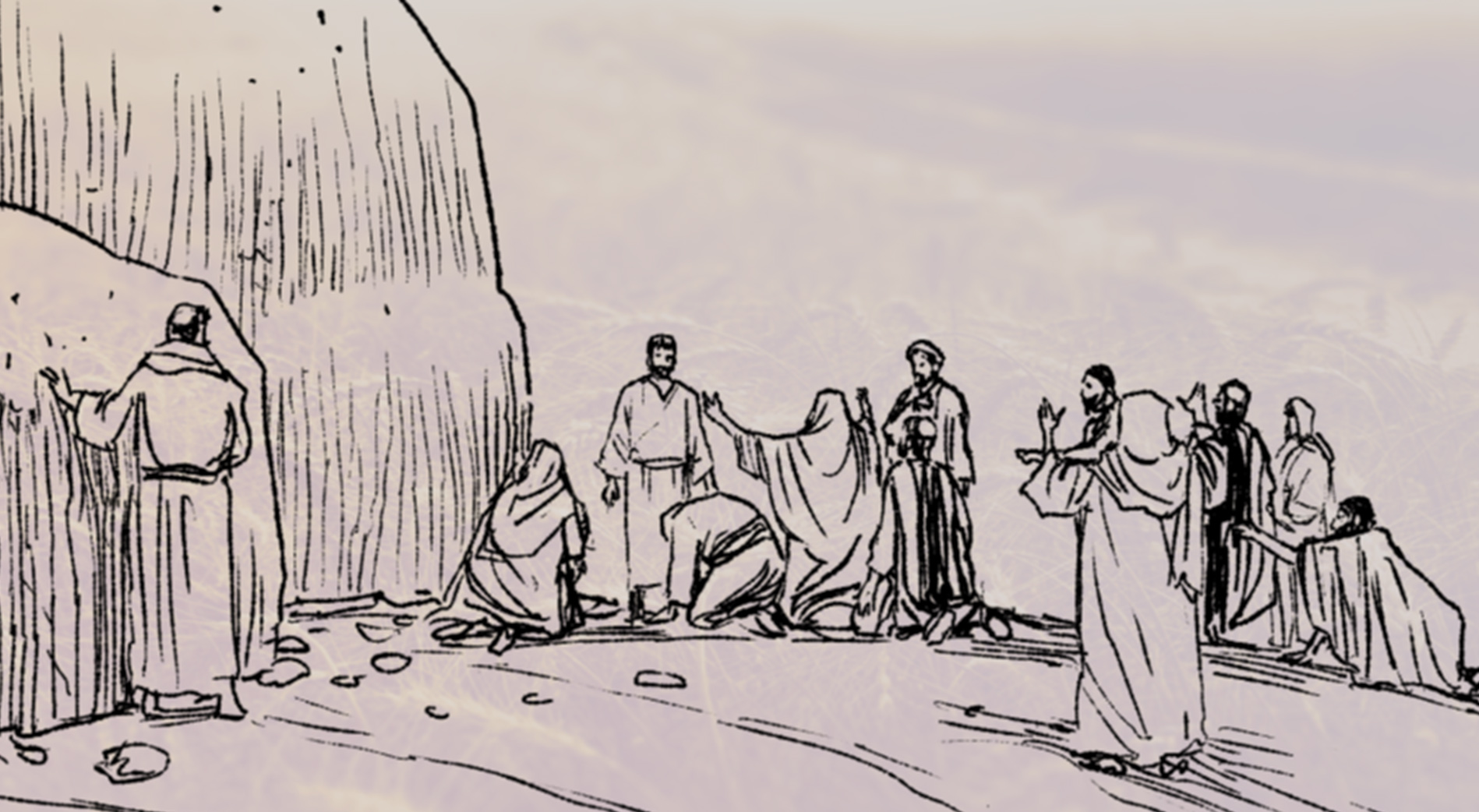
For one thing, v16-17 are fascinating and delightful to me. As his followers gather around their previously deceased Rabbi, they respond in a way that is telling about the nature of Christ. They worship him. How would you respond to an event like that? How would it change your perception of the person you followed as a leader? Jesus allows them to worship him. What does that tell us?

You know what else I like? V17…that some doubted. It’s a very brief and unqualified statement which Matt just slips into the narrative. What did they doubt? That it was Jesus? Or did they doubt that he had really died? Or were they just unsure of what to make of this; unsure that worship was the right response? What doubts would you be wrestling with if you stood in their sandals? Consider this: does Jesus rebuke them? Does Jesus separate out the doubtful before he gives his instructions? He appears to give his command to worshipers and doubters alike. What can that tell us about the dynamic of faith and doubt in our own Christian life?

Some Greek scholars say the sentence has been translated poorly, that is should read “they worshiped AND doubted” – meaning the response was a mixture of devotion and perplexity.

I find that delightful. It resonates as real to me.

Jesus gives several imperatives in his final instruction. Go to all nations, make disciples, baptize, teach, obey and trust. This is what will be going on until, as he puts it, the end of the age. Which of those imperatives are easy for you to jump in on and participate in? Which ones are more challenging for you? How has our study of Jesus’ ministry help to shape our understanding of what this will look like?

I hope you’ve gotten as much out of Matthew’s gospel as I have. I hope we all gain a clearer focus of God’s kingdom and heaven meeting earth to make all things new.

Bearing our Consequences

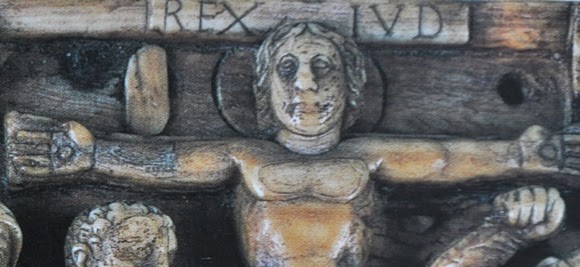
Image result for ancient crucifix

I was doing my usual research for our teaching this week and came across some differing views about policies of capital punishment in the Roman Empire (yes…I’m that boring), which led me to investigate historical evidences of crucifixion, which led me down a very long path of looking at all the various ways in which the crucifixion of Christ has been represented in the arts. (None of this, by the by, made the cut for my teaching…but it was fascinating for me)

What struck me was how much the crucifixion of one Middle Eastern man two millennia in the past has persistently and relentlessly invaded the imagination of humans right up until this present day. That cross emanates something we vaguely intuit. There is a key there and we can’t shake it.

The New Testament has the crucifixion of Jesus as a central theme from which the hope of the gospel flows out. While a robust theology of this event was still in it’s primitive stages in the minds of the NT writers – one thing is crystalline clear: Something VERY important happened in relation to the human condition and the future of the world when Jesus died on the cross. That much they unflinchingly declared.

This Sunday we’ll be reading the account of Jesus’ crucifixion in our ongoing study of Matthew – we’ll be reading Matthew 27:32-66.

Over and over again the NT tells us that Jesus died for sinners – for us. The picture they present is that Jesus, as our substitute, the righteous for the unrighteous, took the consequence of our sins onto himself in that death.

As we consider him, hanging naked and surrounded by enemies who mock him, we see him bear our shame.  In what ways does that effect us now? How can Jesus bearing our shame help us in understanding ourselves in relation to God. How does it effect our understanding of God’s view of us?

Jesus quoted Psalm 22 from the cross – most likely wanting to connect himself with the suffering servant of God from that lament. On the cross he takes our forsakeness – our despairing aloneness and separation from the Divine onto himself.  Not just to identify with us – but to take that away. What do you think that looks like in your life experiences? How can we apply this to times when we do feel alone or forgotten by God?

I love the image of the curtain which separated the holy of holies being torn from top to bottom. What significance, if any, do you see in the direction of that tear? Christ’s sacrificial death has now cleansed us and re-united us with God. What implications does this carry for us, especially in light of understanding who we are in relation to God?

As you read over the passage – what other consequence of sin, if any, do we see Jesus bearing in our place?

This, again, is a brutal yet beautiful passage – a window into the heart of God towards you and I. Hope you can be there this Sunday!

The Wonderful Cross

“Righteousness and love, law and grace, life and death, as well as time and eternity all intersect at the cross; displaying a divine wisdom that staggers the imagination and leads the humble heart to bow in thankful adoration. To understand the cross of Christ is to understand the heart of God toward a fallen world He wants to save.”
― Steven Cook

This Sunday we’ll be reading Matthew 27:1-31. It describes the preliminary stages of the cross experience of Christ. We’ve stated before that the cross is the central revelation of God’s character. So, we’ll be focusing on the cross in our teaching, discovering what it reveals and provides for us. It’s a very painful section to read and discuss, but it is also beautiful when understood as a picture of God’s heart towards humanity. That’s one of those strange, delicate tensions that the Gospel is full of.

In v1-10, we have the set up for the trial before Pilate, but then a parenthetical account of Judas’ fate. Judas went to the temple and the temple leaders because his heart was burdened by the sin he committed. What response did he meet there? What does that tell us about what had happened to the temple system of that time? How does that contrast with Jesus’ ministry and the cross experience he undergoes in this section? What warnings do we discern when it comes to our own framework for the practice of our faith?

Through the rest of the section we’ll cover we read about the trial before Pilate. Pilate had political aspirations and clearly wanted to protect those, but he also had difficulty with the apparent innocence of Jesus. The crowd and their leaders wanted blood and Pilate wanted to avoid a riot which could further tarnish his reputation as a competent leader for Rome. He offers a trade – he’ll let one prisoner go as a gesture of good-will for the Passover – who will it be? Barabbas, a condemned insurrectionist and murderer, or Jesus, the hopeful messiah. He likely expected they would choose Jesus over a brigand, but he was wrong. Barabbas, the guilty goes free and Jesus, the innocent, takes his place for crucifixion. Matthew is pretty heavy handed with the telling of this – it’s obvious what he wants us to see. What do you see?  What is this a picture of the cross providing for us all.

When the soldiers mock Jesus, they dress him up like a clown king…a parody of what a ruler should look like. They fashion a crown out of thorny brambles to put on his head. The Creation story comes to mind, and the curse pronounced because of sin:

Gen 3:17…”cursed is the fertile land because of you;
        in pain you will eat from it
        every day of your life.
18 Weeds and thistles will grow for you,
        even as you eat the field’s plants.”

Considering that curse, what does Jesus being crowned with thorns mean to you? What can it be picturing about what the cross of Christ is providing for us?

As I said – it’s a heavy and painful section of Scripture to read – but beautiful beyond comprehension as well. Hope to see you Sunday.