Spiritual DNA

DNA testing to discover our ancestry has been all the rage for the last several years. People have looked into their histories and found new family members or had surprising results that indicated they were not who they had always thought they were.

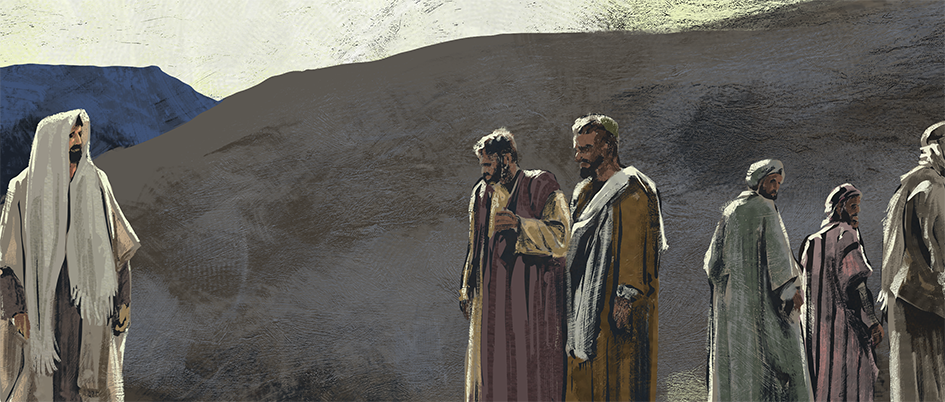
In the passage we’ll be reading this Sunday Jesus will be discussing family lineages, though not biological or genetic ones. We’ll be tackling John 8:31-59, the last installation of a very long conversation/argument that Jesus had with the leaders and the crowds while in Jerusalem.

As the discussion opens, what does Jesus point to as our source of true freedom? How does that compare to what most people think freedom is? The Israelites were outraged that Jesus would infer that they weren’t already free people (which is odd, considering that there were probably Roman soldiers standing guard, watching this increasingly argumentative crowd). They considered themselves part of the covenant people simply because they had the right last name and were part of the Jewish race. Yet Jesus equates freedom from sin with adoption into a family – we are freed from our bondage to a broken self will and elevated to the status of family members with God. In other words – being born as a descendant of the people of promise doesn’t automatically make a person part of the family – one must commit one’s self to Christ. How does this play out in our present day church environment? How can people make the mistake of thinking they are secure in God’s family when possibly they are not?

Jesus then makes a sharp delineation between families – indicating that those who are rejecting him and his teaching are showing off the family resemblance – only they’re revealing they’re part of the wrong family. How we respond to Jesus reveals our family traits. How will our lives reflect our response to Jesus?

In the last section, Jesus makes the profound statement “Before Abraham was, I AM.” – equating himself with God and inspiring the crowd to want to stone him on the spot. It’s an awesome thought to me that Abraham looked down the corridors of history in anticipation of Christ’s day and rejoiced…it reminds me that being part of a family with God has always been his design. God wants family, not drones of religion. How can we be inspired to live in a way that shows off the family resemblance? This will be a challenging yet encouraging study – I hope you can join us this Sunday!


Our Guiding Light

A few weeks ago, I had a friend tell me a story about his elderly cousin that he helps to care for. His cousin lives about an hour away and usually has a list of things for him to work on when he stops by. Recently, she had a light bulb in her kitchen go out. Since she was unable to fix it on her own she had to wait for one of his visits to come and replace the light bulb. My friend went into his cousin’s kitchen and in the dark he could see silhouettes of pots and pans that had been piled up. It had been too dark to care for the space or do dishes since there were no windows. He went in with his ladder, unscrewed the old light bulb, and put in the new light bulb. Can you guess what happened after that?

As the the new lightbulb was put in, he saw rodents scatter everywhere. The room was filled with them and they scrambled quickly to hide back in the safety of the darkness. I gasped in terror when I heard this story while he merely chuckled. I guess he has come to expect this sort of thing.

I think if it were me I would want to unscrew the new lightbulb and back out of the room slowly. In a situation like this, I’d rather not know what is lurking in the shadows. Sometimes, when light exposes things we don’t want to see, there can be a tendency to flip the switch off and say, “I’d rather not know. I’m good with the way things were.” 

This Sunday we will be reading John chapter 8:12-30. The first verse will start with the revolutionary declaration that Jesus makes about himself. Jesus says that He is the light of the world and that anyone who follows him will no longer have to walk in darkness.

This confronts everyone who hears this statement with a choice. Do we choose to follow Jesus and follow his light, or are we good with the way things are? Do we want to live in darkness with dirty dishes? I mean yes, there may be rodents, but at least we can’t see them! 

Or do we want to follow Jesus and live in the light? Do we want the honest truth, no matter how uncomfortable it may be? The gospel is regularly confronting us with this choice and it’s one that we cannot answer for other people. Each one of us must look at our own lives, examine our own feet, and decide which direction to take our next steps.

I’m looking forward to digging into this passage. As always, there is so much beneath the surface that will be fun to unpack and discover together at church this Sunday. Hope to see you there!

Spiritual Malpractice

This Sunday we’ll be reading one of my favorite stories about Jesus. In it, we’ll see the Jesus I’ve put my whole trust in and the grace on which my hope is glued.

The problem is…most scholars don’t believe the verses we’ll be reading are from the original manuscript of John’s gospel. Worse…I believe them.

However, that doesn’t mean I don’t count this story as accurate or true. It’s sort of complicated – but we’ll get into it more on Sunday.

We’ll be reading John 8:1-11 in our study of John, the story of the woman caught in adultery – or, as I prefer to call it, the case of spiritual malpractice.

As you read this story, there are some very poignant questions you want to keep in mind. First and foremost is: Where is the man and accusations against him? According to Deut 22:23-24, both parties in this scenario were to be put to death. We assume she was betrothed since death by stoning is only mentioned for engaged people in the Law. Why might the religious leaders not be interested in the man in this relationship?

If the woman were engaged, she lived in a culture where her husband had been picked for her by her father. Have you ever seen Fiddler on the Roof? Do you remember the daughters who had different ideas about marriage than Tevye? It’s a very reasonable possibility that this woman had a young man in her life that she had fallen in love with and they gave in to their desires. I think it’s really interesting that so many paintings and movies depict the woman of this story dressed in red and displaying the stereotypical attributes of promiscuity. I seriously doubt that was the case.

Why do you think the narrator points out that Jesus stooped to draw or write in the dust, but didn’t provide the details of what he drew or wrote? If what was drawn isn’t important, what significance can you imagine would be conveyed by that action?

Jesus’ answer is possibly one of the most quoted passages in Scripture, next to “judge not”. Usually, both are misapplied when used. If Jesus meant that a person had to be sinless in order to carry out the judgements of the Law, nobody would ever have been held accountable. It’s likely that he’s pointing out Deut 13:8-9 which commands the accuser to strike the first blow. He’s also saying something else – theses accusers need to look at their own hearts to determine if they’re in a position to rightly defend God’s righteousness this way. It’s sort of like: “If we’re gonna’ get this serious about defending God’s righteousness, we may need more stones than just for her.”

By saying this, Jesus brings to light the most heinous sin being committed that day. What were these men doing by leveraging God’s righteousness and the Law of Moses in order to get at Jesus? In what way were they using God’s word and their faith? How can we keep from doing the same thing in our own context? Where do we apply God’s truth, first and foremost?

The graceful words that Jesus wraps around this woman are beautiful to me. His final command, to “go and sin no more” has been puzzled over a lot. He said the same thing to the man he healed at the Pool of Bethesda after he had been busted by the religious leaders for carrying his mat on the Sabbath. In both cases where this phrase was used, the context is one where people are being abused by religious authorities. Since going forward and living a “sinless life” was, and is, completely impossible for humans in a fallen world – perhaps he meant “change the trajectory of your life because these guys are looking for a way to get me through you.” I certainly don’t know if that’s the right way to read it, but it sort of tracks.

Either way…that statement is placed at the very end of this story. How many steps can you discern that happened between Jesus’ first meeting this woman until that statement? Did he lead with a command about sin? When did he express grace and release her from condemnation, before or after this command about sin? What might we learn from that?

I’m really, really stoked about this study – I can’t wait to dig into the scriptures together! Hope to see you Sunday!

Gaining Clarity

This Sunday we’ll be reading John 7:25-52 and we’ll be tracking the same themes we looked at last time: a misunderstood Jesus.

It’s not easy to find clarity in this life. Our world is generally a blurry place. There are so many things that want to influence us, but we see so little of the whole picture that it’s very difficult sometimes to make sense of life. That’s one of the things Jesus has come to do in introducing the kingdom of God – he provides a story from which we can start to make sense of the world around us.

In order to grasp that story though, we have to avoid some of the attitudes and reactions that many of the people in this passage had.

In v 25-29 the people draw a conclusion about Jesus based on the rabbinical teachings that Messiah would appear with no origin story. How does Jesus address this misunderstanding? What didn’t the people know? Does that imply anything to us about what we are sure we know about God and his ways?

In v 30-36, and 40-46 the leaders of Jerusalem want to arrest Jesus but the guards they sent come back stunned and empty handed. The leadership thought that they were in control of this situation, but clearly they were not. What do you fear losing control of most – and what can we learn about who is in control from this passage?

The people in power react to the growing support Jesus is gaining in Jerusalem in v47-52. What attitude jumps out at you from their statements? It’s easy to lose sight of the bigger picture when we start thinking more of ourselves than we should. In what ways can we as the church start to feel superior to others, and how can we counteract that tendency?

The key to clarity is found in the middle of the passage, in v37-38 where Jesus makes an invitation. It’s a powerful moment which we’ll describe in more detail on Sunday. He’s addressing a spiritual hope in Israel, water being a symbol for the end of exile… but it also points to a deep human need – a longing for fulfillment and purpose. Come and drink and then be the conduit by which others have their thirst quenched. How can drinking in Jesus’ words, example and mission be a source of satisfaction and purpose in our lives?

Overthinking Jesus

Have you ever watched talent competitions on TV, like American Idol, and been amazed at how unaware people can be of themselves? There are countless examples of contestants entering these types of competitions convinced that they have what it takes to win the show, only to be shocked when the judges say that they have no business even singing in the shower, let alone in front of people. It’s a harsh reality that some people have trouble facing. While others may be aware of their own lack of ability, there are certain people who are blindly confident in themselves, even when they shouldn’t be.

This Sunday, we’re going to be reading John 7:1-24 and we will be reading about several different scenarios of people whose confidence is misplaced in their own knowledge and idea of who Jesus should be. And while Jesus isn’t a cruel British judge on a panel, he is clear when people aren’t hitting the marks of what his mission is all about. Not only does Jesus confront the misunderstandings, he also continues his mission of exposing the truth of what is in people’s hearts.

Jesus’ brothers are also introduced in the gospel during these verses. They are mentioned in a few other gospels and even some of Paul’s writings for the early church. We can assume they were often around Jesus and we can also assume they weren’t followers (YET). Since they have a close connection to Jesus, they offer some familial advice about how to fix the problems Jesus is facing. I like to imagine them laying on a couch somewhere and interrupting important conversations to share their solutions. “You know what you should do Jesus…” 

While it will feel easy to judge the people interacting with Jesus in these verses, it’s important to remember that scripture is meant to be a mirror we hold up to ourselves. What parts of these interactions can we relate to? How often do we dictate, with misplaced confidence, the direction that we want Jesus to go? Where does humility fit within our approach to understanding Jesus?  Join us this Sunday at 10:00AM as we read through and discover the answers to these questions together.

Casual or Committed

Have you ever had a fair-weather friend? You know, someone who is happy to be your pal until it may cost them something or it is somehow inconvenient. Then they are nowhere to be found. Jesus had and still has his share of those types of friends, as we’ll see in the passage we’ll be exploring this Sunday – John 6:60-71.

Jesus has gone off the deep end in some people’s estimation, talking about eating his flesh and drinking his blood – a clear violation of Old Testament law. Jesus was speaking figuratively…but even still, it was just too uncomfortable for many of his followers…..so they quit following.

Jesus didn’t soften what he said or chase everyone down and beg them to stay with him. Does that surprise you at all? What elements of the gospel disturb you or rub you wrong? When Jesus says we have to lose our life to find it…or demands that we take up a cross to follow him…or insists that we forgive people who mistreat us? What about where he tells someone to sell everything and follow him? We like to think about miracles and grace and Jesus loving the outsiders….but there is all this other stuff about eating his flesh and dying to self that sometimes makes us want to avoid Him.

So what do WE do in those instances? We may not ever admit to walking away…but do we shut out those hard claims of the gospel on our lives? Through a thousand little choices do we reclaim our lives from Jesus, or do we remain committed to His Gospel?

Peter’s response to Jesus is beyond wonderful to me.

“Where we gonna’ go?” What has the gospel brought to your life that you think you could replace through some other pursuit? How can we remind ourselves of what’s really important when we’re tempted to return to our old lives, piece by piece?

Peter said “we believe and we know you are the Holy One of God.” What do you see as the difference between believing and coming to know? What does this tell you about the nature of following Jesus?

It should prove to be a convicting yet encouraging exploration of the Word this Sunday – hope you can be there!

The Process of Unity

This Sunday Janelle and I will have a conversation which continues our study on the subject of unity in the Body of Christ. The above video from the Bible Project is specifically about justice, but it carries themes that are integral to our understanding of the basis for God’s intention for a united family of faith.

We’ll be looking at Paul’s challenge to the church in Galatians 3, specifically v1-3, 6-9 and 26-29. Consider why his words would encourage us to aspire to unity across the many variations of Christ’s church. I’m looking forward to exploring this text together – see you then! And don’t forget, we’re participating in a Unity Service with Pastors United of Bay County, this Sunday at 4pm at Sharron Sheffield park in Lynn Haven. I hope you can join us as we unite to praise our One God and Father of all!

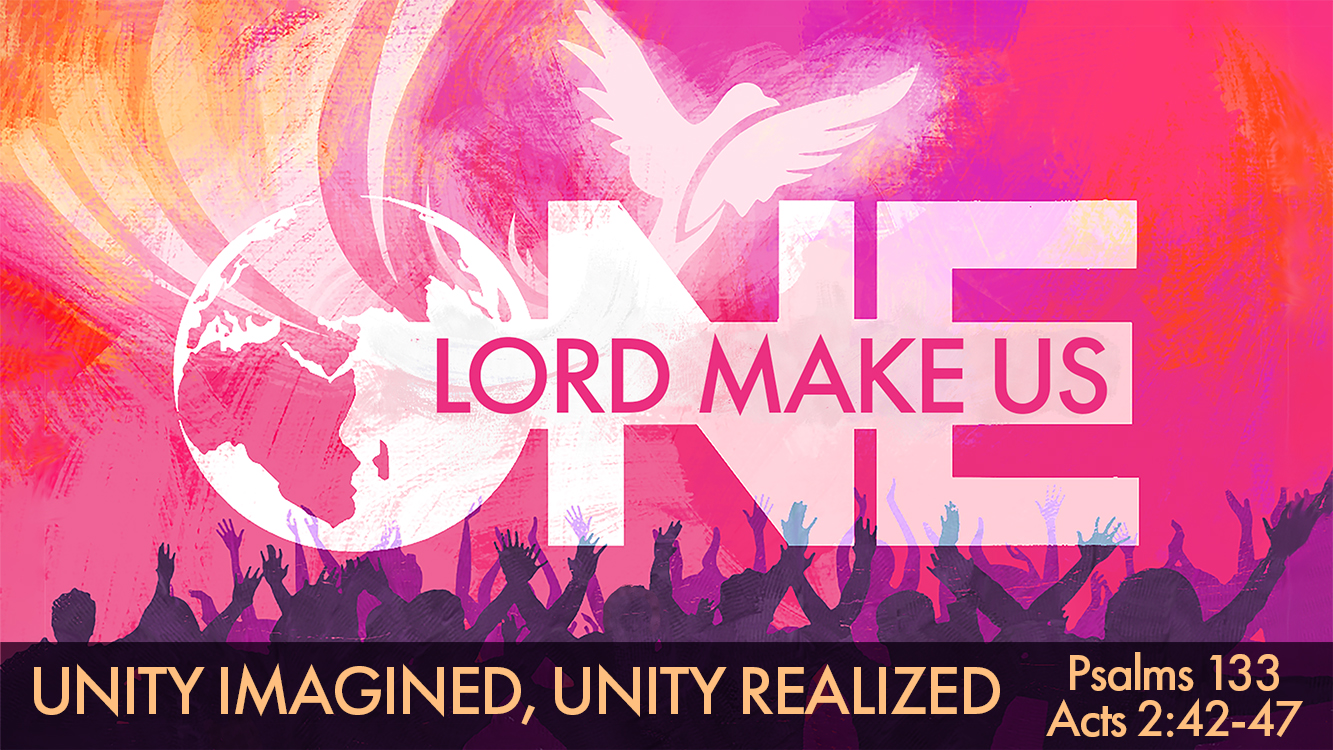
Lord, Make Us One

This Sunday we’ll be taking a short break from our study in John as we prepare for the upcoming Unity Service hosted by Pastors United of Bay County. We’ll begin a two part series that focuses on unity in preparation for that service.

Our text will be Psalm 133 and Acts 2, with an emphasis on the first and last sections of that chapter.

In Psalm 133, the priority of unity among God’s people is presented. We could say, it is unity imagined. There is some strange imagery that the psalmist uses to explain why unity is good – and it’s going to take some unpacking to figure out what it points to….but man, when we see it, it’s going to be amazing!

Not only did God imagine unity for his family, but he brought it about on the day of Pentecost when the Holy Spirit was poured out on the church. Obviously, harmony within groupings of human beings is nearly impossible – but through God’s own Spirit, anything can happen, and did!

Look for the connecting points between Psalm 133 and what happened in Acts 2 (hint: oil is often used as a symbol for the work of the Holy Spirit). The first phenomenal event that occurs with the church is what…what barrier is removed, and what might it be pointing to?

I’m really stoked about this study and looking forward to digging into these passages together! I hope you can join us this Sunday!

The Bread From Heaven

One thing we know about Jesus, he was terrible at PR….or at least he didn’t care about it. He makes bold statements that confuse his listeners and causes them to bristle and push back – but Jesus never flinches. He keeps right on pushing an agenda and worldview that completely upended the religious expectations of the day. It’s important that you understand, what Jesus is going to be saying in the verses we’ll be looking at is meant to be shocking. There was no age or culture where his words wouldn’t be weird and offensive. What we really want to consider is why Jesus would want to use such disquieting language.

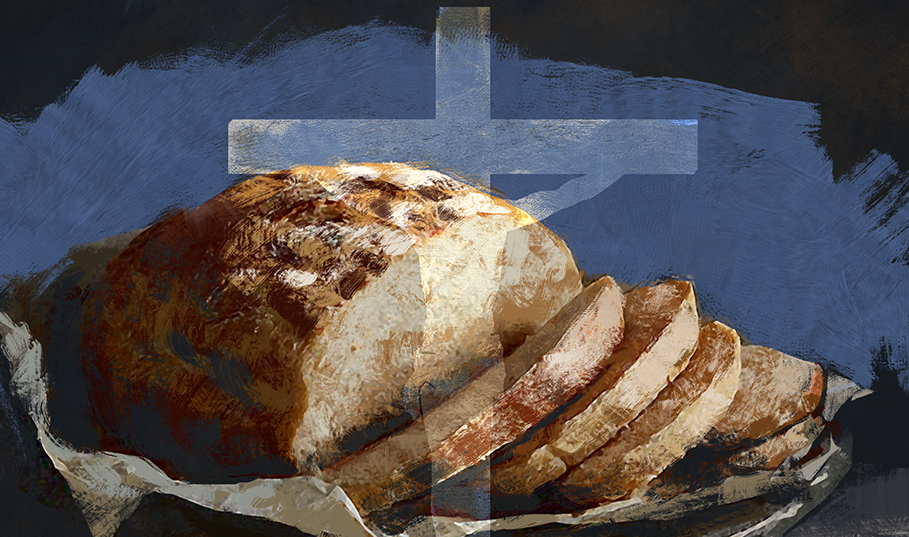
We’ll be reading  John 6:22-59 this Sunday. It’s the famous “Bread from Heaven/Bread of Life” discourse that Jesus gives.

As this section begins, Jesus makes a pretty clear delineation between  physical and spiritual bread. What do think an example of spiritual bread is? How was looking for physical bread revealing bad motives for the crowd? When you consider your own relationship with Jesus – what kind of “bread” do you value most in life?

When the people realize that Jesus is describing something more than normal bread, they ask what they must do to work for the bread Jesus is describing. What is his answer? V29 is the key to understanding all the imagery Jesus will use in the rest of the passage.

Jesus ignores the growing hostility of the crowd and takes things even further – describing himself as the bread come from heaven that the manna from the Exodus story was simply  foreshadowing. He describes his flesh and blood as elemental food and drink – what does that make us think of immediately? Jesus said that the bread that gives life to the world (v51) is his flesh. What do you believe this is a reference to? In what way can you imagine that Jesus’ flesh gives you life?

The language Jesus uses for eating grows progressively more intense as the discourse goes along. He begins by using a word that simply means to consume, but in the later verses of this passage, he says feed, which in the Greek is the word trogo, meaning to chew, crunch or gnaw. He’s talking about how it is that we believe on him – the intensity of the word he uses is trying to tell us something. What do you think it is?

This will be an admittedly heady study. It’s just the nature of this passage, and we certainly won’t plumb the depths of it by any means. We’ll only scrape the surface, but that in itself is a lot to wrestle with. Hope to see you Sunday!

More Than Moses

I think everyone here knows this, but I (Janelle) come from a big family. I’m the youngest of four kids and the family of 6 that I grew up in has turned into a family of 17. My siblings and I have all gotten married and we have a combined total of 7 kids

One thing you should know about our family is that we quote from a few movies and tv shows constantly. Seriously, it’s constant. Sometimes it feels like half of our communication is quoting from shows or movies with the other person. This happens so much so that whenever a new person would show up (like someone that was marrying into the family) we would often be tempted to give them a list of movies and shows to watch so they can understand the majority of what we’re saying to one another.

It is especially important to know what we are referencing because we never stop to say what movie we are quoting from, why we quoted it, or how it fits the conversation. My husband says, “It’s real fun” marrying into the Woodrum family. While I know he is being sarcastic, I like to take it literally and say, “Yeah, it IS fun.”

For example, there is a scene in Christmas vacation when the beloved Christmas tree gets burned up in the living room. While Clark Griswold watches helplessly as his most special tree burns to a crisp, a relative walks in the room and callously responds to Clark’s despair by saying, “It was an ugly tree anyway.” Another older relative pipes up and responds, “At least [the tree] is out of its misery.” The unabashed insensitivity makes me giggle even as I write this.

 Now, when things break, we quote this line. For example, if a car breaks down we might respond to the situation by saying, “It was an ugly car anyway.” Someone else would likely jump in saying, “At least it’s out of its misery.” At this, the newcomer to the family would probably be confused at our lack of sensitivity to a stressful situation. The truth is, we are not saying the car was ugly, we are just quoting back to a movie line where someone was being insensitive about a difficult situation. My family knows this and they are immediately making the connection without anyone having to stop and explain it.

THIS SAME THING is happening with the Jewish readers of the gospel. They are making all sorts of connections that we today do not easily see. We are the new family members coming into the story and the best way for us to get caught up is not to watch the list of movies that we suggest to the in-laws, but to read the Bible stories. Not just from the New Testament, but the Old Testament too. We might not make the connection as easily as the people who lived 2,000 years ago, but when the connections are referenced we will be able to place the story and the concept in a way that we couldn’t if we don’t read the Bible.

I invite you to join us this Sunday as we read John 6:1-21. I encourage you to read these verses and think through the stories you know from the Old Testament. Are there any connections that jump out to you? Consider the fact that the ancient writers of the Bible did not include unnecessary details. Look at the details of the setting and the time of year that is noted by John. Is he using these details to clue us into connections that the Jewish audience may have understood immediately?

The initial reading of this can spark so many questions within us. Why would John ask Philp how they were going to feed everyone if he already knew the answer? Why would Jesus hide from the crowds who wanted to worship him as king? Why would Jesus send the disciples in a boat that was going to get caught in a storm? 

Join us this Sunday at 10:00AM as we work to discover the meaning intended behind this story and the way that it can affect how we live today.