This Sunday we will be reading John 12:44-50, which contains the very last thing Jesus says to the crowds during his three year ministry before the cross. After this, Jesus’ words will be reserved for the disciples, the religious leadership, and the people who watch him as he is crucified. Various crowds have been following Jesus for the last three years, and he has but a few moments to speak to them for the last time.
Up to this point in the story, Jesus has proven himself through miracles, healing, wisdom, and compassion. If it were me, I would be tempted to tell Jesus not to waste anymore time trying to explain who He is. I would say, if they don’t get it by now, they are not going to get it. Thankfully, Jesus is better than that. Thankfully, Jesus doesn’t give up that easily.
With only a few moments left, what do you think Jesus will say to these crowds? Do you think Jesus will retract any of his previous statements? Or do you think that Jesus will reinforce them?
I’ve been thinking about this a lot as I have been preparing my teaching this week. If this was my last time speaking, what would I want to say? What would I want people to walk away believing? Is it really possible to change someone’s mind with just a few words? And how do we make those words count?
We invite you to join us this Sunday at 10:00AM for our study in the book of John 12:44-50. Let’s see what we can learn from these few verses and let’s see what Jesus wants us to hear before he journeys towards the cross.
Have you ever heard an audible voice from heaven giving you direction? I never have – though I know people who have had that type of experience. I used to think that if I could just hear God shouting out of the clouds letting me know he was there that I would never doubt again.
We’re going to see from our passage this Sunday that its really not that simple. Well be reading John 12:27-43. This passage includes a supernatural event like I described above, but it certainly doesn’t have the result one would expect.
As we read this passage let’s consider the reactions of the people towards Jesus. I believe there are some pitfalls we can observe and try to sidestep in our own journey to discover more of God and his ways.
For one thing – there were three distinct reactions to the voice from heaven. One, of course, was John who obviously heard the voice of God clearly enough to record for us what the voice said. What were the other two reactions? What do you suppose made the difference in what people heard in that sound from the sky? I find it interesting that there is often so much ambiguity when we encounter the divine. I think if a person is determined to do so, they can always find a way to rationalize what others perceive as a supernatural event. God seems intent on moving in such a way that he’s easily hidden if someone is determined not to see him. I also think there’s a bit of heart-testing in that ambiguity. How open minded are you when it comes to God encounters?
The other thing that I notice in v34-36 is a doctrinal barrier. In v34, the people don’t actually say “it’s written in the Scriptures“…what do they say instead? How would you explain their problem with Jesus and their understanding of the Hebrew Scriptures? How well do you know the doctrines that you hold to as non-negotiables? What are your doctrinal convictions based on – what is written, or what you’ve learned? In what ways could God get obscured by our doctrines. How can we be faithful to our convictions and still be open minded?
Finally, the last verse of this section (v43) is very telling. How can loving the praise or glory that comes from men (that is, the validation and affirmation that we crave so deeply) end up interfering with our loyalty to God? What measures can we take to prevent that from happening in our own experiences?
Should be an interesting study – hope to see you then!
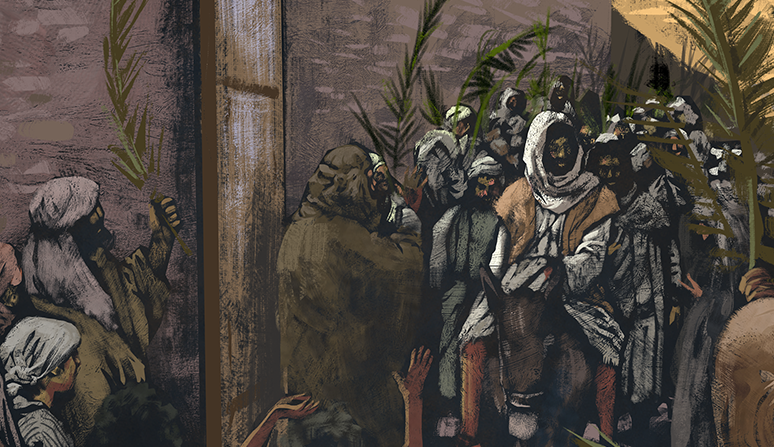
After many successful dodges of the authorities, and many hush, hush miracles, this week we’ll see Jesus boldy riding into Jerusalem to claim his throne as King of Kings and Lord of Lords. We’ll be picking up in our text this week covering John 12:12-26. We’ll be covering a segment of scripture known as the triumphal entry.
The surprising thing is Jesus doesn’t ride in to town on a majestic war horse dressed for battle, he rides in on a lowly donkey clothed like the poor. What might this suggest about the Kingdom of God? What might it mean for us his loyal subjects?
We see the crowds hailing Jesus as Lord and savior, hoping for a conquering King to finally free them from Roman oppression. Just when they expect to hear a battle cry from their hero, he says something completely opposite. In vs 23-24 He gives a cryptic analogy about a seed dying, and producing many more seeds filled with that same potential. It hearkens back to the garden of Eden. In the garden, the serpent sowed a seed of doubt in Eve’s heart regarding God’s goodness and His intentions for mankind. That seed grew doubt in her mind that led to death, spiritually and physically for all of humanity. In our text this week Jesus offers another seed, his very life offered on our behalf to restore all that was lost in the garden. What does the image of Jesus on the cross reveal about God’s heart for humanity? What difference does the depth of his love for you make in your daily life?
He goes on to explain that a love for our own life in this world will again produce death but that a hate for it will result in life renewed and eternal. The key to this is the phrase “in this world”. Of course he doesn’t want us to hate the life He’s given us. The hyperbole he employs emphasizes his point that nothing “this world” or its systems have to offer should be more important to us than our commitment to Christ. A stark contrast to the commitment to self permeating our society.
The choices we face today are the same ones they faced in the garden. Go our way or go God’s way. At some point we have to realize that Father knows best.
Does the pursuit of possessions or positions (circumstances) dominate your daily life? Do you wake up each day in hopes of being one step closer to that happiness you’ve always dreamed of? What priority does the pursuit of holiness hold for you?
Jesus invites us to follow him to the cross, to embrace a life of sacrificial love, that reveals his unsurpassable love for our neighbors and all of mankind. He says that in portraying his image into this world, we’ll find that full and purposeful life that our heart is truly longing for.
Have you ever experienced a let down or a low after working so hard in pursuit of a possession or position? Does knowing the temporal nature of what this world offers help to dull the draw towards them?
Our last verse holds a remarkable promise. vs 26 says that those who serve Jesus will be honored by the Father. The word honored means valued or prized. Does the thought of being valuable to God, mattering much to the King of the universe inspire different priorities in your life?
It should be a challenging and promising study this week. Hope to see you there!
History is filled with accounts of royal coronations. Emperors, kings and queens ascend their thrones amid pomp and ceremony, all of it designed to celebrate the new rule and power over people. Sometimes the ceremony is meant to inspire fear, other times there were assurances of peace and prosperity, but all of it was focused on the new ruler’s power. Coronations of kings and priests run as a thread all through the Hebrew bible – and very rarely did the ruler placed on the throne do well with that power.
It all leads to Jesus – the King of kings and Lord of lords. If we had in mind the grandeur of history’s celebrations of new rulers, we’ll be deeply surprised at how this goes down in Jesus’ anointment as King.
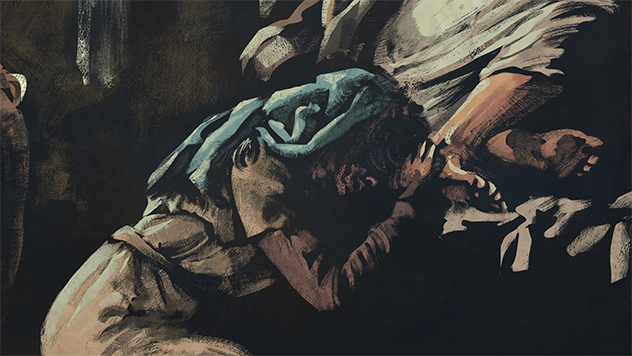
The scene that John describes is one that would have been awkward and uncomfortable in our culture to be sure, but in actuality it would have been weird in Jesus’ day too. Back in Luke 10, Mary upset her sister Martha by defying ancient protocol when she sat out with the men to learn as a disciple while her sister conformed to the domestic expectations of the day. Here again, Mary behaves in a way that for some people viewing it, might have cast her in an unsavory light. Letting down her hair to wipe Jesus’ feet, pouring out an entire box of oil when just a dab would have done…these were actions that were out of sync with the expected norm, and it created a reaction.
How do you think you would have reacted to Mary’s behavior? Who reacted negatively to this action? What seems to be the most important issue for him? What seems to be important to Mary?
All of the different characters and all of their responses. Who do we relate to the most in this section? The Chief Priests react with their one-note response…they want to kill someone. Let’s hope you don’t relate to that. Mary sacrificed a very expensive box of oil to pour out on Jesus. She also sacrificed her dignity and reputation. All because she wanted to demonstrate to Jesus her love for him. How much of Mary do you see in your approach to worship? How much of Judas?
Everything about Jesus disrupts and inverts the normal expectations of this world’s system, especially as it touches what it means to reign in power.
This should prove to be a challenging study this week! Hope to see you there!
Have you seen any of those videos that inform you that you are incorrectly attending to some menial task you’ve been practicing your whole life? For instance, most of us tie our shoelaces incorrectly. Or we hold the can opener the wrong way. There’s just a plethora of habits and patterns we’ve accepted in our daily lives that can be proven wrong.
That is a startling truth when in comes to how we, as Christians, carry ourselves in this broken world. There are patterns that the world has which we often adopt without thinking about it – patterns which Jesus and the Gospels challenge us about.
We’ll be continuing our study in John this Sunday, reading ch 11:45-57.
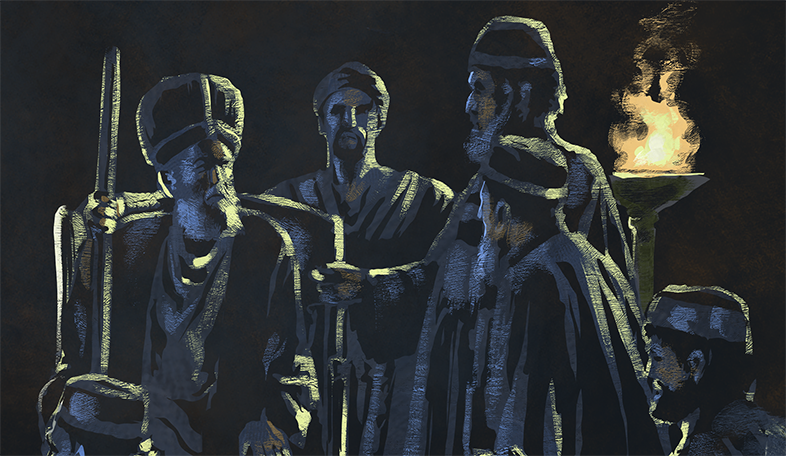
The whole section is the fallout from the amazing miracle Jesus performed in raising Lazarus from four days of death. Instead of rejoicing and seeking God to see what such a miracle meant – the religious leaders begin considering the political ramifications of Jesus’ popularity, and come to the conclusion that he must die.
The motives of those religious leaders mirror the motives of the systems of this fallen world. Their story is a cautionary tale for those who claim Jesus as their Lord. We’ll examine those motives on Sunday and identify the responses that would more likely fit a follower of Jesus.
When the religious leaders discuss their Jesus problem – what is their main concern? Try reading the passage in different translations. Who does it seem like they are most concerned with? To what lengths are they willing to go in order to preserve their positions of privilege? How does that contrast with Jesus’ ministry so far in this gospel – and where we know that it’s going?
What are the possible broken patterns that the church today is following, and how might we change those patterns in our own lives?
These will be interesting things to ponder – I hope you can join us this Sunday!
It’s the sad refrain of a broken world: “If only”. “If only he’d entered the freeway five minutes sooner…”, “If only I would have kept my mouth shut…”, “If only the lab results had shown it…”, ….. “If only God had heard my prayers…”.
We live in a world that is painful and confusing so often, and for people who want to seek after God, adding to that pain and confusion is the regular complaint that one prayer or another has gone unanswered. It’s very tempting to assume that God has forgotten, doesn’t care, or has no plan at all for us in the vast scheme of things. If you’ve ever felt that way, please know that you’re not alone. Every honest seeker of God will wrestle with this at some point in the journey.
We’re going to be reading a large portion of text this Sunday, John 11:1-44, which begins the revelation of Jesus’ glory and power – but which also sheds a remarkable light on the subject of delayed answers in prayer.
The text plainly says that Jesus loved this family, yet it also says even thoughLazarus was sick, Jesus waited two more days to head to Bethany. Does that seem like the behavior of someone who loves someone else? His reasons for delay are somewhat disclosed in v15 – does this give us any clue as to why God sometimes allows our prayers to seem unanswered? How can we view an apparent silence from heaven differently in light of this?
When Jesus arrives both women confront him with “If only you’d have been here”. In answering Martha, Jesus makes another statement of “I am”, calling himself the resurrection and the life. He was revealing that in some mysterious way, the future hope of God’s plan of redemption was reaching back to the present and infusing life with abundant possibilities, beyond what we can see (HT N.T. Wright). But this wasn’t just a theological exercise for Jesus – he isn’t portrayed as a dispassionate observer of human plight. V33, 35 and 38 make that abundantly clear. If Jesus is the fullest revelation of God and God’s heart toward the human race – what does his reaction tell us about God’s heart in the midst of our plight?
What happens next is one of those too good to be true moments. It forecasts what Jesus himself will soon experience and the hope of Easter morning. But it serves also as a parable for us. What are the bleak situations or hopes that have died which we’ve rolled a stone of resignation over? Even though Jesus didn’t respond when we wanted him to, and things don’t look the way we expected them to…can we allow for the possibilities of him bringing new life in ways we never thought of? Have you experienced this already? Have you faced some pain and seeming disinterest from heaven, only to find that God has revealed some new and unexpected life in ways you hadn’t anticipated? What lessons about God, his patterns and his heart toward us can we learn from this text?
I’m really looking forward to this study – hope you can join us!
My husband Matt loves movies. Last I checked we owned over 1,000 dvd’s. If you don’t know, DVD’s are a disc that has a movie on it and it’s kind of like a CD… which if you don’t know what a DVD is then you definitely don’t know what a CD is. Either way, my husband organizes all of the DVD cases not in alphabetical order, or by genre, but by the color of the DVD case. He does this for me because I really love the look of it all together on a shelf and the way that one color feeds into the next. When we lived in Jacksonville, we came home one night to find that our apartment had been robbed. They took computers, instruments, and anything else they could find that seemed valuable at the time. They also cleared a very large bookcase of DVD’s before they left.
I know, it sounds like a heartbreaking scene for someone like my husband who loves his movies so much.The good news, or great news even, was that my husband never keeps his DVD’s in the case. He keeps them in a large binder stored directly next to the DVD bookcase. This means that there was a point in time when the robbers went through every single DVD case to find absolutely nothing inside. I wonder if they gave up checking after they realized the first few were empty, or if they sat there in a pile of empty cases checking every last one. Either way, the DVD’s and the binder were safe at home and the cases have never been seen since.
There are certain spoken and unspoken rules about how things should be organized in our culture. Books, movies, and files are often organized alphabetically or by genre, and stories are often told chronologically in the order the events happened. John, and several writers from the Bible, played by different rules. Their culture certainly had priorities about how history should be preserved, but chronological order was not always of greatest importance. This Sunday, the verses that we study will jump from one festival to the next. This is because John organized his gospel by thematic events. However, this was not put together hastily or without thought. On the contrary, what we discover is a literary design that is incredibly complex and meticulously structured.
This Sunday we will be reading the second half of John chapter 10. We find Jesus in the festival of Hannakuh and the people are asking Jesus to explain who he is. The verses in the translation I’m using say: “Tell us plainly who you are”,,, but another translation could be “Stop annoying us and tell us who you are.” Jesus responds to the question by not only saying who He is, but who we are as his followers.
Some people do not take the straightforward answer well. Others are intrigued. We invite you to join us this Sunday at 10:00AM to discover more about who Jesus is, the themes John presents to us in the book of John, and where we fit in the narrative.
One of the challenging things about reading Scripture is trying to figure out the imagery employed from an ancient culture. As the saying goes, the bible was written for us, not to us. I’ll admit that there is not a lot in my life thatWe’ll be reading John 10:1-21 where Jesus gives a discourse that provides a contrast to the corrupted religious system that had just rejected the formerly blind man, and Messiah who went to find him.
The story is the closest thing to a parable that we find in John’s gospel, and it uses imagery that would have been familiar to the first hearers but which is almost totally foreign to us.
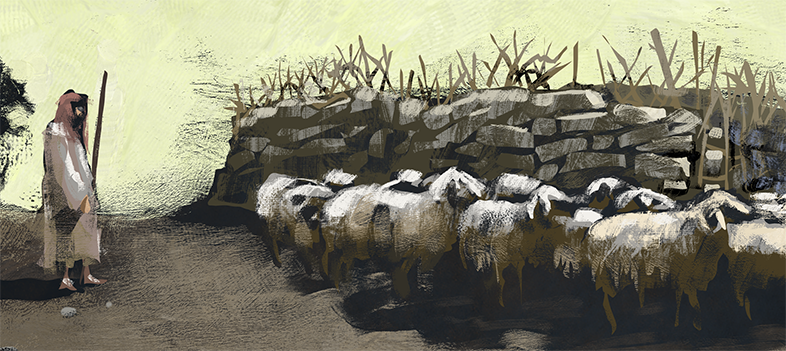
He describes a practice of shepherding where there was a common sheepfold used by multiple shepherds. This pen would likely be a circular stone walled enclosure with one gap which would be guarded to ensure the security of the sheep. The shepherds would be known by the gatekeeper, and their sheep would follow them by the sound of their unique call, or whistle, or a tune played on a flute.
This good and proper practice is contrasted with sheep rustlers who sneak over the fence to steal sheep – forcing them to go with them.
Then Jesus changes the metaphor, where HE is a gate for the sheep. This still stays within the shepherd mold as well. Shepherds would sometimes sleep in the gap of the enclosure, as the first line of defense against robbers or predators that might threaten the sheep. He would literally become a door to the pen.
He talks about motives – the motives of hired hands and the motives of a good and true shepherd.
All of this is meant to contrast the values and purpose of the kingdom of God over against a religious system. As you read this description by Jesus,what are the main characteristics of his relationship to his followers? In what ways can a religious system manifest the characteristics of the robbers Jesus described?
Jesus seems to be trying to encourage people like the formerly blind man that religion may reject them, but it doesn’t really matter. Following Jesus is where real life is found. But this begs the question…how do we KNOW we’re following Jesus and not a religious system? How can we discern what or who we’re following by the clues Jesus gives us in this story?
This is an important issue to consider. I’m looking forward to digging into this on Sunday – hope to see you there!
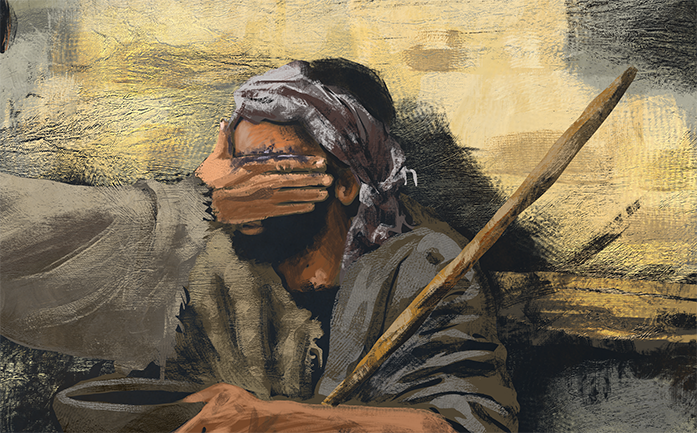
This Sunday we’ll be reading a familiar but challenging text in our study of John. We’ll encounter a man who was born blind whom Jesus healed – and the miracle of this man gaining his eyesight effectively blinds the religious leaders in the story. It’s another classic “gospel reversal” which we encounter frequently in John’s gospel. We’ll be reading Chapter 9:1-41.
This is honestly an entertaining passage – it reads like a Shakespearean comedy. There is witty dialogue, imbecilic folly, but also pathos and drama. It’s a great story with a powerful message.
The story begins with a stunning miracle performed by Jesus, as well as some insight as to the nature of suffering – but that part is really only the set-up the real point – the reaction from the religious elite.
As we read this passage, it’s easy to identify with the man healed from blindness. It’s the oft repeated theme of the powerful oppressing the weak, and it reveals the absurdity of obsessive rule-keeping. But as members of the church in 21st century America, we need to recognize in the folly of the religious leaders a cautionary tale about the symptoms of religious blindness.
In v14 we find out why the healing of this man is controversial at all – it took place on the Sabbath. No work was to be done on the Sabbath day – and according to the Talmud, kneading was a forbidden work – something Jesus did when squishing his spit together with dirt to make a paste of mud. An activity that required the use of three fingers stirred up an outrage that ended with one man being excommunicated from the hub of Jewish society, the synagogue.
We could wag our heads at these religious leaders and wonder how they could be so blind…but as the modern church, do we have similar blind spots? Can you think of any examples where the rules of what we might consider righteousness have become more important than people? Have you ever witnessed the church pushing the requirements of holiness at the expense of people?
As you think about it, why did John include this story in the good news about Jesus? What do you think his purpose is; what is he trying to reveal about the religious order of that day contrasted with the plan of God as it unfolded through Jesus?
How can we keep ourselves from succumbing to religious blindness? How would you rewrite the Pharisee’s story if they were truly able to see?
Can’t wait to cover this one…hope to see you Sunday!
DNA testing to discover our ancestry has been all the rage for the last several years. People have looked into their histories and found new family members or had surprising results that indicated they were not who they had always thought they were.
In the passage we’ll be reading this Sunday Jesus will be discussing family lineages, though not biological or genetic ones. We’ll be tackling John 8:31-59, the last installation of a very long conversation/argument that Jesus had with the leaders and the crowds while in Jerusalem.
As the discussion opens, what does Jesus point to as our source of true freedom? How does that compare to what most people think freedom is? The Israelites were outraged that Jesus would infer that they weren’t already free people (which is odd, considering that there were probably Roman soldiers standing guard, watching this increasingly argumentative crowd). They considered themselves part of the covenant people simply because they had the right last name and were part of the Jewish race. Yet Jesus equates freedom from sin with adoption into a family – we are freed from our bondage to a broken self will and elevated to the status of family members with God. In other words – being born as a descendant of the people of promise doesn’t automatically make a person part of the family – one must commit one’s self to Christ. How does this play out in our present day church environment? How can people make the mistake of thinking they are secure in God’s family when possibly they are not?
Jesus then makes a sharp delineation between families – indicating that those who are rejecting him and his teaching are showing off the family resemblance – only they’re revealing they’re part of the wrong family. How we respond to Jesus reveals our family traits. How will our lives reflect our response to Jesus?
In the last section, Jesus makes the profound statement “Before Abraham was, I AM.” – equating himself with God and inspiring the crowd to want to stone him on the spot. It’s an awesome thought to me that Abraham looked down the corridors of history in anticipation of Christ’s day and rejoiced…it reminds me that being part of a family with God has always been his design. God wants family, not drones of religion. How can we be inspired to live in a way that shows off the family resemblance? This will be a challenging yet encouraging study – I hope you can join us this Sunday!


 WONDERWHAT