The Compassion of Justice

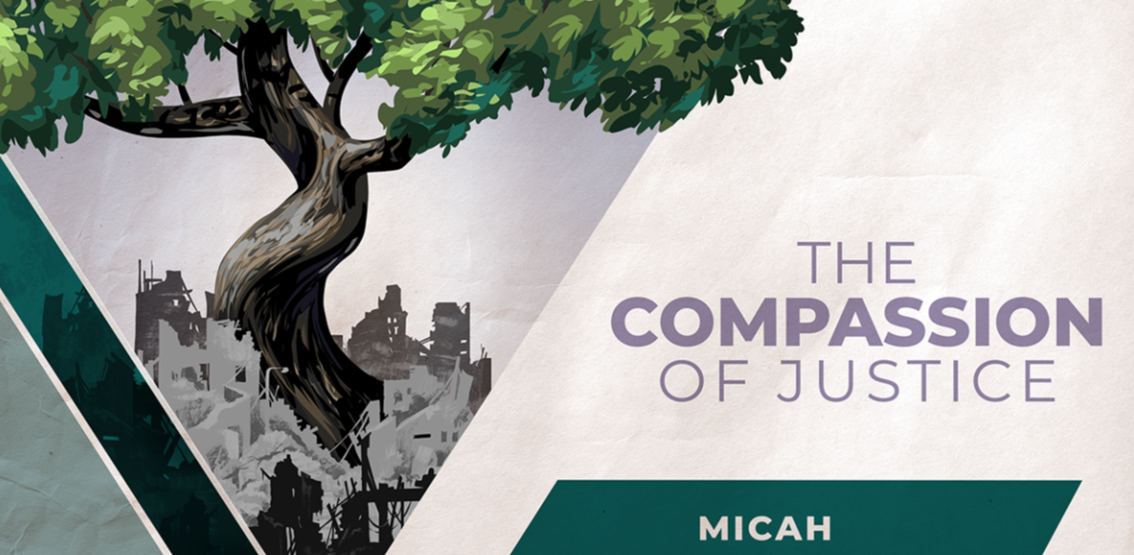
This Sunday we’ll begin a new book series, doing an examination of the Minor Prophet, Micah. I recognize that some may start to squirm in their seats at the thought of reading through the thundering pronouncements of an Old Testament prophet on a Sunday morning – but I can assure you we will not be leveraging these writings to try and scare anyone about God. As a matter of fact, I tend to agree with N.T. Wright who asserts that the promotion of a wrathful, vengeful God is a somewhat pagan initiative, and not representative of the Biblical narrative.

That’s not to say that Micah will be an easy read. Far from it. We will encounter a lot of talk about judgement described on a cosmic scale – but this Sunday we’re going to take a moment to consider what God’s corrective judgement might be telling us about God’s nature. When we think of God’s judgement, what normally comes to mind? What images do we conjure up? It’s fairly important to grapple with our own picture of God and His character as we unfold the words of Micah, because often the things that trouble us are merely the preloaded assumptions which we map onto the text.

If you’re up to it, you may want to read the book of Micah (it won’t take long) before we start in on it in the next few weeks. Let your mind conjure up images of what it described and take some time to jot down who God is confronting and why. We have a modern tendency to personalize sin without taking into account how much attention God pays to how we interact with our fellow human being.

If you can’t manage to read the book, maybe take a look at The Bible Project’s summary of the book – it’s very informative and will point you in the direction we’ll be taking in this study (you can view it at the bottom of this page). I hope you can join us for this study – it will be a wonderful lead up to where we go next!

Am I good enough for God to use?

The Bible gives examples of all sorts of people God uses to carry out His divine plan. Studying these different stories and people can lead us to question whether we are as great as these examples or possibly good enough for God to use.

Last Sunday, we completed our study in Corinthians and learned about the hot mess church. Before moving on to the next book study we will spend a few weeks on topical studies like this one. This week, we will examine the types of people that God works through and discover what that means for each one of us today.

The main example we will examine is Esther. Being familiar with her story and this book of the Bible will help us compare her story not only with others in the Bible but also with our own. I highly encourage you to read through the story of Esther in the Bible. Also, if you get the chance, I also encourage you to watch the Bible project video linked below that summarizes it beautifully.

We hope to see you this Sunday at 10:00AM as we study this topic and scripture together.

Final Instructions and Parting Words

This Sunday we’ll be wrapping up our study through the book of 1 Corinthians – we’ll be reading all of chapter 16, where Paul closes his letter.

We’ll be focusing on his final instructions in v1-4, where he talks to the Corinthians about gathering funds to support the believers in Jerusalem. Part of Paul’s missionary journey through Asia Minor was meant to raise funds for the poor in Jerusalem. We aren’t totally sure why, but it’s likely that the famine mentioned in Acts 11 played a role in that need.

In the process of giving his instructions, Paul actually provides some important principles for us, as modern readers, when it comes to how we approach financial gifts within the church community. What stands out, if anything, about Paul’s instructions? Does Paul want money to be raised while he’s with them? Why do you think he gives this instruction? How might we learn about generosity from this section?

The rest of the chapter will be dealing with specific greetings and Paul’s closing remarks, which we’ll look at on Sunday.

If you stuck with us through this study, I hope you got something out of it; I know I did. Did anything come to light for you during our reading of this letter? What parts did you find most challenging, and which parts gave you comfort? I’d be interested in knowing, if you have time to put it in the comments.

Hope you can join us this Sunday as we conclude our look at the Hot Mess Church of Corinth!

Resurrection; The Substance of Salvation

We’ll be returning to our study of 1 Corinthians after taking two weeks away from it for the holidays. We’ll be reading 1 Cor 15:35-58 – Paul’s concluding thoughts concerning the doctrine of the resurrection.

In the first part of chapter 15, Paul was corrective in his discussion about the resurrection – pointing out how intimately Jesus’ resurrection was tied to our own stories. In Paul’s thinking, Jesus’ experience was a model for what God intended to do for all of his people, hence, the general resurrection was a mandatory belief.

I do find it fascinating how very little time or thought our modern, Western church gives to this idea. N.T. Wright wrote a very insightful book on this topic, called “Surprised by Hope”, which I highly recommend reading.

For the last half of the chapter, Paul points both to nature and the Biblical narrative to make his case for the holistic nature of the resurrection. I really like his argument as it touches nature. What are we witnessing every spring as winter recedes? If God is the author of reality as we perceive it, what might he be trying to tell us in this cycle of seasons?

Going to the biblical narrative, Paul asserts a new Adamic role for Jesus. His logic seems to be, if we all face the certainty of death through Adam’s sin, doesn’t it stand to reason that we all get in on Christ’s resurrection life through Him?

As Paul has elaborated on this subject, has it influenced how you perceive an afterlife with God? Paul finishes on a high note, in v55 he rewords a prophetic poem from Hosea 13, flipping the meaning of that oracle into a forecast of triumph for God’s people. How can we start incorporating a more robust hope for resurrection into our faith worldview?

I’m really stoked about getting into this section of 1 Corinthians – I hope you’re able to join us this Sunday at 10 AM!

Resurrection; The Sum of all Hope

I know, I know….you’re thinking: “Rob! It’s almost Christmas, not Easter!” I realize that. But I would also argue that the themes of Easter should be something that resonates with followers of Jesus no matter what time of year it is. As we’re going to be reading in our text this Sunday, the resurrection of Jesus is the very heart of our faith and hope. We’ll be continuing our study in 1 Corinthians this Sunday, reading chapter 15, verses 1-34.

I’ll warn you right off, this is a fairly complex and dense bit of theology that Paul delves into as he comes to the close of his letter. It might behoove you to read the passage in a few different translations – but especially take a look at Eugene Peterson’s “The Message” version – because while it may overly simplify some of the concepts Paul is advocating, it most certainly provides a readable overview of this thoughts.

As you read it over, how important does the resurrection of God’s people seem to be for Paul? Does it match your own passion for that subject? If not, why might that be? How much space does the resurrection of the saints take up in your spiritual worldview? Clearly, for Paul, everything hinged on that idea.

Paul indelibly tethers Christ’s experiences to the future plans for His followers. In Paul’s thinking, our beliefs about what happened in the past have a profound effect on our present and our future when it comes to the resurrection. I’ll be honest, the string of Paul’s logic feels so foreign to me as someone who has grown up in the Evangelical church. Our matrix has always been: “Believe on Jesus and you will go to heaven when you die and avoid eternal punishment in hell.” It just feels like that reasoning couldn’t be further from Paul’s thinking about mortality and eschatology. In fact, how many times does Paul reference “going to heaven or hell” in his presentation of the central core of the Gospel?

That’s really something to ponder for a bit. The more I ponder it, the more I start to ask, “What have we been thinking?”

If you’re really interesting in tackling a big topic, I hope you’ll join us this Sunday at 10 am as we dig deeply into Scripture.

Order From Disorder

What should we do when we encounter scripture that makes us uncomfortable? Sometimes I’ve read scripture that leaves me squirming in my seat and unsure if I should continue reading or close the book for good. Maybe it’s when God sends a flood to destroy all of humanity except for one family, maybe it’s the violence we are confronted with in the Old Testament, or maybe it’s the verses that Paul writes about slavery and women. 

When this uncomfortable confrontation happens, and I believe it will happen for anyone who reads scripture, we are faced with a choice. Do we close the book for good? Do we pretend we didn’t read that part or pretend those verses are not in the Bible?

We can choose to walk towards God or away from God in our confusion. It seems that walking away would be an easier route. It certainly takes less work and it requires less trust.

Or, do we take the road less traveled? Do we choose to move towards God, even in our confusion? 

Personally, I have found God and scripture to be more than capable and strong enough to withstand my questions, doubts, and feelings of confusion. I have also found that when we begin to understand that God is big enough for our questions, something else begins to happen. The uncomfortable scriptures morph from a haunting of unknowns to a mysterious adventure waiting to unfold with God at our side. 

This week we will be reading 1 Corinthians 14:26-40, which are famous verses for this exact reason. Read them and you’ll know why immediately. We invite you to step towards the uncomfortable scriptures and join us this Sunday at 10:00AM as we study God’s word together.

Belonging

There was sort of a mantra a while back that summed up the Christian experience as: “Belong, Believe and Behave”. The order of those statements caused some controversy (which I get, to some degree), but I really do think the phrase provided a quick take on the meaning of being a Christ follower. For me, while we must do all we can to be a welcoming and accepting community, I think the believe part would be better placed at the front-end of the statement. We believe that Jesus is God’s Messiah who fulfilled the promise made to Abraham that through his family, all the people of the world would be blessed, that is, be reconciled with Him.

The belonging is the result of that fulfilled promise. Now, all people from all places can be united as God’s covenant people. There are no limitations on ethnicity, culture or heritage – all the people of all the nations dwell equally under the covering of God’s grace. This experience of God’s loving grace lavished on us produces an altered behavior from its recipients. Instead of selfish pursuits, our actions are shaped by the values of faith, hope and love. Love and forgiveness become our identifying qualities.

This Sunday we’ll be celebrating our 4th Annual Great Big Post Thanksgiving Holiday Potluck Bonanza (or Post-Thanksgiving Potluck if your into the whole brevity thing) at 10 am. It’s really special this year because the Spanish-speaking church, Mar De Cristal Fellowship, who shares our facilities with us, will be sharing in this celebration as well! We’ll do a combined worship service, Pastor Christian will share a little about himself and his family, and we’ll observe communion together, and afterwards share a meal! It’s a wonderful demonstration of BELONGING.

Being a follower of Jesus isn’t just an intellectual assent to a set of propositions. It’s not a ritualistic practice of dogmas. Belonging is such a vital part of this experience – and it can’t happen in isolation or by simply watching a screen. It happens as we break bread and hear and see and accept one another in Christ. I really hope you can join us this Sunday as we revel in our belonging to God and to each other!

The Best Life of All

According to an article on Insounder.org, love is the all-time most common theme of song lyrics, followed by life and death. Love is such an elusive concept for so many people, which is probably why it dominates our thoughts.

Of all the people in the world, I would think that followers of Jesus would have some pretty important insights into the nature and meaning of love. The Bible talks about love around 750 times, depending on the translation, about 300 of those mentions appear in the New Testament. That’s what I would consider to be an emphasis.

Strangely, that emphasis doesn’t seem to carry over into how the church has represented itself throughout history, and especially in our contemporary American culture. I often wonder about that. Why is it such a struggle to keep our eye on this massive target the Scriptures present?

This Sunday we will be reading one of Scriptures most famous, and certainly most beautiful poem about love. We’ll be reading 1 Cor 13, the famous love chapter.

This passage usually finds its way into wedding ceremonies, which is great…but not that’s really the context or point the author was trying to make. The context is one that spills over from ch11-12, how we attend to our services and abilities as the church. As you read v1-3, how much importance does Paul place on having love as a motive for what we do in service to Christ? Do you think Paul would agree that “the end justifies the means”?

V 4-7 Paul describes what love looks like in action. Where do feelings fit in with his descriptions? What sort of lesson can we take away from his picture of love?

Here’s something: we’ve said before that if we want to know what God is like, we look at Jesus. Try substituting the name Jesus for the word “love” in v4-7. Does it seem to fit? If so, what do we learn about God’s nature from this?

In v8-13 Paul points out the eternal nature of love. In the NLT v113  says that “three things will last forever” – I don’t think that’s a great translation. Most other translations word it: “three things abide” or “remain” – basically it means stay and wait with us. Faith, hope and love, but the greatest is love. When might faith or hope be completed? What would bring love to its conclusion? Does that give any insight as to why Paul said love is the greatest?

Of all the teachings in this series, I just think this one is the most vital for our day and age. I really hope you can join us this Sunday as we dig into Scripture together.

The Gifts of the Spirit

When I was in high school my teacher brought in a local professional to motivate our class. The professional shared about working hard, going to college and building his own business. He encouraged us by saying that we could have the same future if we worked hard and stayed focused. Then, he finished his motivational speech in a way that I’ll never forget. He ended it by saying, “I know I said a lot, but you know we still need plumbers so everyone shouldn’t do what I did.”

I remember laughing when he said it and then realized he wasn’t joking. Was he worried that his pep talk was too good? Was he worried the entire class was going to graduate college and run successful businesses and then we would end up in a world without plumbers? I can’t say for sure what motivated him to haphazardly tell us that not everyone should follow his example, but I can say that as I’ve gotten older I realized that he’s not wrong.

There is no doubt that our society would fall apart if everyone had the same job, and that is one of the points that Paul will be making in 1 Corinthians 12 this Sunday. The same concept applies to our jobs and giftings within Christianity and the importance of embracing our diversity in such things.

As we review the gifts of the Holy Spirit this Sunday it’s important to consider the different experiences each of us have had in the past that we bring to church with us. I want to encourage everyone who is able, to set aside preconceived ideas or biases regarding the gifts of the spirit and start with a clean slate in studying the verses this week. We will be reading the whole chapter which is a lot of scripture, but it flows together nicely and will hopefully give us some insight as to how we live our lives.

We invite you to join us this Sunday at 10:00AM. Hope to see you there!

The Lord’s Supper

I heard a well-worn story of a little girl who didn’t want to go to kid’s church, but wanted to join her parents for the main service. It happened to be a Communion Sunday, and when they passed the tray of cracker bits and small cup of juice, her mother noticed she was visibly disappointed. When the service was over her mother asked her how she liked the main service, and the little girl said: “I’m going to go back to kid’s church next week. The snacks are better and you get way more juice!”

She’s not wrong, a nibble and a sip wouldn’t cut it…if snack time was what this ritual was all about. But, for those of us who’ve encountered the One who is behind this ritual, we know it’s far more than just a snack-break in church.

This Sunday we’ll be observing Communion (we put it off from last week because the text was more appropriate for it this week). We’ll be reading 1 Cor 11:17-34 in our study of Paul’s letter.

As you read Paul’s critique, you’ll notice he states his harshest criticisms over this matter. What stands out to you as Paul’s main complaint (you’ll find it spelled out in v22)? Do you notice that the practice Paul describes doesn’t really seem to match up with how we attend to this ceremony today? We’ll look into that a bit on Sunday.

When Paul says to examine ourselves before taking the bread and cup, what do you think he’s wanting us to determine? What do you think eating and drinking “unworthily” might be? If you’re not sure, v33-34 explain it pretty clearly. How might we be able to put Paul’s instructions into place in our own practice of observing the Lord’s Supper?

I hope you can join us this Sunday as we examine this passage together, and join each other at the Lord’s Table.