Order From Disorder

What should we do when we encounter scripture that makes us uncomfortable? Sometimes I’ve read scripture that leaves me squirming in my seat and unsure if I should continue reading or close the book for good. Maybe it’s when God sends a flood to destroy all of humanity except for one family, maybe it’s the violence we are confronted with in the Old Testament, or maybe it’s the verses that Paul writes about slavery and women. 

When this uncomfortable confrontation happens, and I believe it will happen for anyone who reads scripture, we are faced with a choice. Do we close the book for good? Do we pretend we didn’t read that part or pretend those verses are not in the Bible?

We can choose to walk towards God or away from God in our confusion. It seems that walking away would be an easier route. It certainly takes less work and it requires less trust.

Or, do we take the road less traveled? Do we choose to move towards God, even in our confusion? 

Personally, I have found God and scripture to be more than capable and strong enough to withstand my questions, doubts, and feelings of confusion. I have also found that when we begin to understand that God is big enough for our questions, something else begins to happen. The uncomfortable scriptures morph from a haunting of unknowns to a mysterious adventure waiting to unfold with God at our side. 

This week we will be reading 1 Corinthians 14:26-40, which are famous verses for this exact reason. Read them and you’ll know why immediately. We invite you to step towards the uncomfortable scriptures and join us this Sunday at 10:00AM as we study God’s word together.

The Lord’s Supper

I heard a well-worn story of a little girl who didn’t want to go to kid’s church, but wanted to join her parents for the main service. It happened to be a Communion Sunday, and when they passed the tray of cracker bits and small cup of juice, her mother noticed she was visibly disappointed. When the service was over her mother asked her how she liked the main service, and the little girl said: “I’m going to go back to kid’s church next week. The snacks are better and you get way more juice!”

She’s not wrong, a nibble and a sip wouldn’t cut it…if snack time was what this ritual was all about. But, for those of us who’ve encountered the One who is behind this ritual, we know it’s far more than just a snack-break in church.

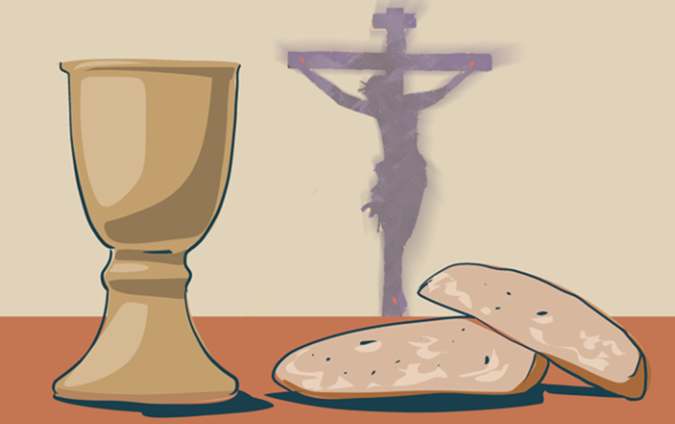
This Sunday we’ll be observing Communion (we put it off from last week because the text was more appropriate for it this week). We’ll be reading 1 Cor 11:17-34 in our study of Paul’s letter.

As you read Paul’s critique, you’ll notice he states his harshest criticisms over this matter. What stands out to you as Paul’s main complaint (you’ll find it spelled out in v22)? Do you notice that the practice Paul describes doesn’t really seem to match up with how we attend to this ceremony today? We’ll look into that a bit on Sunday.

When Paul says to examine ourselves before taking the bread and cup, what do you think he’s wanting us to determine? What do you think eating and drinking “unworthily” might be? If you’re not sure, v33-34 explain it pretty clearly. How might we be able to put Paul’s instructions into place in our own practice of observing the Lord’s Supper?

I hope you can join us this Sunday as we examine this passage together, and join each other at the Lord’s Table.

Uncompromising Compassion

This Sunday we are going to continue our study in the book of 1 Corinthians (Chapter 9:19-27) and we will be reading some fairly famous verses that Paul wrote. The verses start with a statement from Paul where he juxtaposes his freedom, (“with no master”), and his slavery (“to all people”). Those are clearly opposite statements and it leaves us pondering how both can be true.

He goes on to say that when he was with the Jews, he lived like a Jewish person. When he was with the Gentiles, he lived like a gentile person. Some people could perceive this as Paul being fake or disingenuous, but the fact that he proudly shares his choices tells us that this was all for a purpose. Why doesn’t Paul walk into those spaces with the rights and freedoms he possesses to show people how Christianity should look? Isn’t he one of our prime examples of how to live Christianity out?

It’s important to remember that when Paul went to preach about Jesus at the synagogues he was not met with open arms. He knew the risk, he knew the challenges, he knew the outward changes he had to make to be heard, and he knew the feeling of being beaten and bruised by those he once called family. He knew all those things and not only did he continue to share, he looked at the people he was writing to and asked them to do the same.

So where does this leave us in the polarized world that we live in today? In what ways can we exercise our freedom by choosing to be a slave to the people around us? How does this work in our effort to maintain healthy boundaries and remain honest about who we are at our deepest levels?

There is a lot to ponder in these verses and we invite you to join us this Sunday at 10:00 AM as we study and break down these verses together.

Grow Up!

“You’re acting like a baby!”

If someone were to direct that statement to us, we’d know that it’s not a compliment. I mean, most people like babies – they’re cute and sweet and vulnerable and we instinctively want to protect them. There is, however, a threshold where humans are expected to move beyond the helpless, selfish and demanding behavior of an infant. Humans without mental or physical obstacles are meant to mature.

That same expectation is present in our spiritual lives as well. In the passage we’ll be reading in our study of 1 Corinthians, we’ll examine the idea of spiritual maturity this Sunday. We’ll be reading 1 Cor chapter 3.

Paul returns to his original example of division in Corinth, highlighting the factions they have split into over different church leaders. Division is his chief identification of spiritual immaturity and worldliness. Do you find that interesting? When we consider what a worldly church, or a compromised church might have as characteristics, what things normally come to mind? Where does division fit in your thinking? Does this challenge you to reconsider the priority of unity in the church?

Paul stacks several metaphors together in order to explain his concern about unity in the church – a garden, a building and the temple. What does “garden” imagery bring to mind when it comes to the Bible? What is Paul’s point about those who tend the garden? How does the the modern American church fare when it comes to making celebrities out of church leaders? In what ways can we keep from falling into that pitfall, based on Paul’s words?

What is the foundation of the “church building” (metaphor, remember). How important is a foundation to any structure that is built? What does that tell us about where the focus of the church should be?

The temple imagery sort of wraps his thesis up. What was the temple a representation of in Israel (hint, we talked about it extensively in our teaching on Genesis)? How does it tie in with the “garden” imagery? It’s very important to remember that whenever Paul says “you” in this passage, we should be reading it as “ya’ll” – it’s corporate language; a group of people, not an individual. According to v17, why is it important to maintain the unified integrity of the “temple-church community”?

What do you suppose Paul is getting at when he says “everything belongs to you” in v22? Since the unity of the church is the theme, I tend to read it as a reminder that we don’t need to strive and fight our way to the top of any social structure….when we belong to the Church (at large), we’ve arrived at the best place we can be in God’s scheme of things. Does that mean the church is without problems? Not as long as WE’RE part of it – but it’s where God intends us to be in order to bring out what’s best in us. That alone provides us a life-long purpose and goal, both individually and corporately.

I think this will be an enlightening and still challenging study. Hope you can join us!

God’s Plan Revealed

My grandson lost one of his water shoes at our house the other day. We looked everywhere for it – outside, inside, in drawers, under couches…no place left unturned. It appeared to have a yearning to be free because it never showed up. Until a few weeks later, when we weren’t looking for it, it was resting in plain view in our toy room. Had it been there all along? It seems impossible, and yet there it was on the floor for everyone to see. I’ve had numerous experiences like that in life, predominately with our refrigerator. I ask Robbie if we’re out of mustard, and she replies “No, it’s in the fridge”, to which I reply “I’m looking in the fridge and there isn’t any.”; which prompts her to join me at the door of the icebox where she magically reaches in and retrieves the mustard which was right in front of me. She’s a wizard.

Sometimes things are hidden to us even when they’re in plain view. In our study in 1 Corinthians this week, we’ll be considering how the Gospel, God’s great plan for humanity and this world, was something hidden in plain sight until it was revealed by Jesus. We’ll be reading 1 Cor 2:1-16.

Verse two of this chapter is one of my favorite verses. Think back on what we’ve learned about Roman culture, the honor / shame aspect of it. How might a crucified Messiah sound to people in that context? Paul doesn’t seem to mind how out of sync his message is to the prevailing cultural norms. Why do you think Jesus as the crucified One was an important message in Paul’s view? What message does Christ’s crucifixion give us about God’s intent for humanity (hint, look at John 3:16-17). How might Paul’s singular focus on the cross impact our message in the world we live in?

Paul goes on to describe the Gospel as a mystery – which in the Greek means something revealed that was formerly hidden. What aspects of the Gospel were likely surprising to those Paul is writing to? Paul references the “rulers of this world” being in the dark about God’s purposes. Why do you think Paul said that?

As you read his concluding thoughts on this subject (v10-16), how does it appear that the mystery of God’s plan gets revealed to human minds? It’s interesting how readily we will make assumptions about what’s going on in other people’s minds – and here Paul points out that we do that with God as well. However, we can know God’s mind because He has given us His Spirit, who reveals God’s intent to us. What do you think is the primary way in which the Holy Spirit has revealed the mind of God to us?

It’s a rather dense section of Scripture we’ll be tackling, but I know you’re up for it – and I hope you can join us this Sunday as we dig into God’s Word together!

The Wisdom Paradox

“Wisdom shouts in the streets.

    She cries out in the public square.

She calls to the crowds along the main street,

    to those gathered in front of the city gate.” ~Proverbs 1:20-21

I don’t know about you, but when I think of wisdom, I don’t often imagine it calling out to us in the streets and the busy places we find ourselves. However, from the beginning, the Bible paints a consistent picture of wisdom that is in sharp contrast with the world around us. We see this thought continued in the New Testament with Paul who is writing the church in Corinth. We’ll be continuing our study in 1 Corinthians this Sunday, reading ch 1:18-31. Paul is desperate to remind the church that God’s wisdom should look different than the world’s wisdom. He also reminds them that what the world has to offer, especially in terms of wisdom, is actually quite foolish and insignificant compared to what God has to offer.

So, why is Paul telling the Corinthians about wisdom and reminding them about who is the “smartest of them all”? Well, since the book of Corinthians is a response and not the beginning of a conversation, we have to use context and our imagination to fill in the gaps. Last week’s verses emphasized the importance of unity and this week Paul is emphasizing God’s wisdom above our own. Could Paul be mentioning this because the Christians in Corinth are trying to change the gospel so that it looks and sounds less foolish to the world around them? Or maybe Paul is mentioning this because the Corinthians were using things like philosophy and scholarship to determine who had the highest standing among the Christians in that area? Whatever the reason, I think it’s safe to assume that a lack of humility and an abundance of pride is probably at the center of it all.

Even though it would be oh so easy to judge the “simple” Corinthians for falling into such follies, we want to remember how to hold the scripture that we read. We want to hold this living word up like a mirror to ourselves and see the places in our hearts that God wants to reach. I invite you to join us this Sunday at 10:00 AM as we consider the context and explore this scripture together.

Outside of Eden

One of the intriguing puzzles of the Biblical narrative is the amount of detail that is afforded some elements of the story, and the shocking lack of detail given to others that feel like they deserve more. Part of that, I believe, is intentional. There is no better way to draw your readers in than to push their minds to fill in the gaps. Much like an impressionist painting, the story of the Bible has many moments that virtually demand our participation.

One such section is what we’ll be reading this Sunday as we continue our study of the first four chapters of Genesis. We’ll be reading ch 4:1-16, which describes the start of life outside of the Garden.

The structure of chapter 4 is pretty important. It fairly mirrors certain aspects of chapter 3. Re-read chapter 3 after reading chapter 4 – what similarities jump out at you? What does God ask the humans in ch 3, what does he ask Cain? How do the humans respond in ch 3 and how does Cain respond in ch 4? Are you picking up the similarities.

The consequence for Cain’s sin mirrors the consequence of his parents: exile. Something to ponder: the humans are already outside of the Garden, where do you think is Cain being exiled to? What might be the point of this consequence and what could it be describing about humans and their Creator?

Who do you think the “they” could be that Cain is afraid of? We aren’t told what the sign is (there’s that lack of detail) that God gives to Cain – but what is the purpose of it? What does this reveal about God’s character in the face of abject human failure?

I hope you can join us this Sunday as we continue examining at the roots of the Biblical narrative in Genesis.

What’s the Deal with Baptism?

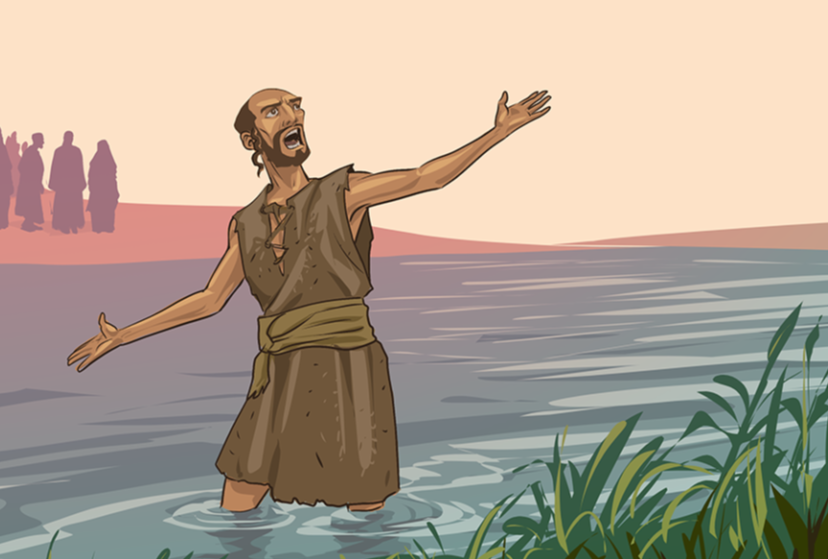
This Sunday, we are going to take a short detour from Genesis and spend some time examining the subject of baptism. I know that this is a topic that has been taught before at Eastgate, but to clarify that choice is intentional. There is a reason that we keep coming back to a sacred ritual of our faith, a sacred ritual that we encourage all Christians to partake in. At the beginning of the gospel of Mark, we find John the Baptist in the Jordan River baptizing many Israelites. Baptism was a demonstration of their repentance and renewal in God. In Mark chapter 1, Jesus arrives at the Jordan river and asks John to baptize him.

Why do you think Jesus took his turn with all the other people there and underwent this ritual? What does it tell us about the nature of this Divine King?

After his baptism, the fabric of reality is torn open and a glimpse is given to God’s reality – and from heaven the Holy Spirit descends on Jesus and God’s voice speaks calling Jesus His beloved Son. This is a passage that gives a provoking glance at the mystery of God’s Triune nature.

Jesus, as Messiah, stands as representative of all the human race. He entered our condition in order to bring us into His condition. That means that what is true of Jesus is true of those who believe in and follow Him.

What do you believe the Father declares about you?  Can you imagine God saying to you: “You are my Child, whom I love; with you I am well pleased.” Let that run through your mind, and put your own name in that sentence. What is your reaction to that?

I invite you to join us this Sunday at 10:00AM as we discuss the importance of baptism. We also invite you to join us at Rick Seltzer park after church to cheer on those who have decided to dedicate their lives to Jesus and get baptized.

The Rescuing Counterpart

This Sunday is Mother’s Day and coincidentally enough, in our study we’ll be reading about the very first mother, the creation of Eve. We’ll be continuing our study in Genesis, reading ch 2:18-25.

Once again, I want to remind us to manage our expectations when we come to a study like this. Remember, Genesis isn’t a modern science text-book – it is sacred spiritual literature – and we are approaching it to discover its theological truths. We’ll be reading about the creation of a counterpart for the human (Adam), and we’ll consider what this part of the story is trying to tell us. Whole fields of ideology on gender and gender roles have been derived from this section, for good or bad. Issues of gender are in the foreground of the text, but whether or not they’ve been well understood is another matter.

As you read the text, you’ll see we are confronted with another obstacle, maybe even crisis, since it is described as “lo-tov” – not good. What is it? God determines to resolve or eliminate the obstacle by providing a “helper”, which was “just right/suitable” for him.

The word “helper” in the Hebrew is EZER. Now, if you’re interested, click HERE to look at the word and a concordance list of all the times that word is used in the Hebrew bible. As you examine the passages, how might it indicate what an EZER is – that is, is it describing a subordinate who assists, or something else? Does its usage elsewhere inform you about the nature of the EZER God provides for the solitary human (Adam)?

When it describes the EZER who is “suitable” for Adam, that word is NEGED in the Hebrew, meaning “in front of, or opposite of”, like a mirror. Again, does that seem to imply someone inferior, superior, or an equal?

We’ll look at the woman’s formation, and the deep sleep Adam goes into, and consider the significance of that. Adam began alone, then the one became two, for the purpose of becoming one again. While this certainly has the marriage relationship in view, this idea spills over into a variety of relationships, not least of which is the one we have with the church in Christ. There is a pattern being revealed in this – one which carries through the entire biblical narrative, landing at John 17 and arching like an arrow through the NT epistles.

This has the potential of being an intense study – but one that can be inspiring, albeit, challenging to some of our pre-loaded assumptions about the nature of humanity as God has made us. I hope you can join us this Sunday at 10 AM!

Origin and Destiny in Eden

Do you remember the old Mad Magazines, how the inside back page was an Al Jaffe cartoon that had an image on it which, if you folded it in, created another image which was a commentary on the first. I used to love those things. In many ways, the book of Genesis, if we metaphorically folded it to touch the book of Revelation, operates similarly. We begin and end in a Garden…and everything in between functions to elaborate on that hope. The imagery of the first few chapters of Genesis unlock the meaning of the imagery used in the rest of the Biblical narrative.

 We’ll be returning to our study in Genesis this Sunday, looking at Gen 2:8-17.

In Gen 2 we are introduced to the Garden of Eden, Adam (the human) in connection with it, and the two trees in the center of it.

Most of us have picture book ideas in our heads about the Garden of Eden – an image of an entire world in a tropical paradise setting and nothing unpleasant anywhere around. But the Genesis narrative doesn’t really validate that picture.

For instance, as you read v8; is all the land Eden? Is all of Eden a garden? Was the human “formed” in the garden? All of this implies that there is something outside that paradisical space. Isn’t that intriguing? Eden was an anomaly in the midst of non-paradise. A project begun to which we will return.

On Sunday we’ll look at the significance of the river that comes from Eden, and where it flows to.

What do you make of the trees and the warning God issues to the human? What is the first part of God’s command? Do you find it interesting that God leads with an invitation to enjoy what he’s made? Does that influence your understanding of the warning God concludes with?

If the human was made from dust (stuff of mortality), what does the Tree of Life represent to him? The forbidden tree is not the Tree of Good and Evil- it is something else – what word comes before good and evil? How would you interpret what that means?

We have a really interesting study in front of us – I hope you can join us this Sunday as we dig into this together!