Outside of Eden

One of the intriguing puzzles of the Biblical narrative is the amount of detail that is afforded some elements of the story, and the shocking lack of detail given to others that feel like they deserve more. Part of that, I believe, is intentional. There is no better way to draw your readers in than to push their minds to fill in the gaps. Much like an impressionist painting, the story of the Bible has many moments that virtually demand our participation.

One such section is what we’ll be reading this Sunday as we continue our study of the first four chapters of Genesis. We’ll be reading ch 4:1-16, which describes the start of life outside of the Garden.

The structure of chapter 4 is pretty important. It fairly mirrors certain aspects of chapter 3. Re-read chapter 3 after reading chapter 4 – what similarities jump out at you? What does God ask the humans in ch 3, what does he ask Cain? How do the humans respond in ch 3 and how does Cain respond in ch 4? Are you picking up the similarities.

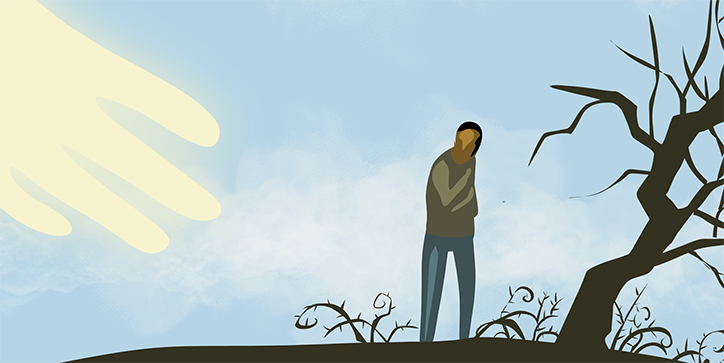
The consequence for Cain’s sin mirrors the consequence of his parents: exile. Something to ponder: the humans are already outside of the Garden, where do you think is Cain being exiled to? What might be the point of this consequence and what could it be describing about humans and their Creator?

Who do you think the “they” could be that Cain is afraid of? We aren’t told what the sign is (there’s that lack of detail) that God gives to Cain – but what is the purpose of it? What does this reveal about God’s character in the face of abject human failure?

I hope you can join us this Sunday as we continue examining at the roots of the Biblical narrative in Genesis.

What’s the Deal with Baptism?

This Sunday, we are going to take a short detour from Genesis and spend some time examining the subject of baptism. I know that this is a topic that has been taught before at Eastgate, but to clarify that choice is intentional. There is a reason that we keep coming back to a sacred ritual of our faith, a sacred ritual that we encourage all Christians to partake in. At the beginning of the gospel of Mark, we find John the Baptist in the Jordan River baptizing many Israelites. Baptism was a demonstration of their repentance and renewal in God. In Mark chapter 1, Jesus arrives at the Jordan river and asks John to baptize him.

Why do you think Jesus took his turn with all the other people there and underwent this ritual? What does it tell us about the nature of this Divine King?

After his baptism, the fabric of reality is torn open and a glimpse is given to God’s reality – and from heaven the Holy Spirit descends on Jesus and God’s voice speaks calling Jesus His beloved Son. This is a passage that gives a provoking glance at the mystery of God’s Triune nature.

Jesus, as Messiah, stands as representative of all the human race. He entered our condition in order to bring us into His condition. That means that what is true of Jesus is true of those who believe in and follow Him.

What do you believe the Father declares about you?  Can you imagine God saying to you: “You are my Child, whom I love; with you I am well pleased.” Let that run through your mind, and put your own name in that sentence. What is your reaction to that?

I invite you to join us this Sunday at 10:00AM as we discuss the importance of baptism. We also invite you to join us at Rick Seltzer park after church to cheer on those who have decided to dedicate their lives to Jesus and get baptized.

The Rescuing Counterpart

This Sunday is Mother’s Day and coincidentally enough, in our study we’ll be reading about the very first mother, the creation of Eve. We’ll be continuing our study in Genesis, reading ch 2:18-25.

Once again, I want to remind us to manage our expectations when we come to a study like this. Remember, Genesis isn’t a modern science text-book – it is sacred spiritual literature – and we are approaching it to discover its theological truths. We’ll be reading about the creation of a counterpart for the human (Adam), and we’ll consider what this part of the story is trying to tell us. Whole fields of ideology on gender and gender roles have been derived from this section, for good or bad. Issues of gender are in the foreground of the text, but whether or not they’ve been well understood is another matter.

As you read the text, you’ll see we are confronted with another obstacle, maybe even crisis, since it is described as “lo-tov” – not good. What is it? God determines to resolve or eliminate the obstacle by providing a “helper”, which was “just right/suitable” for him.

The word “helper” in the Hebrew is EZER. Now, if you’re interested, click HERE to look at the word and a concordance list of all the times that word is used in the Hebrew bible. As you examine the passages, how might it indicate what an EZER is – that is, is it describing a subordinate who assists, or something else? Does its usage elsewhere inform you about the nature of the EZER God provides for the solitary human (Adam)?

When it describes the EZER who is “suitable” for Adam, that word is NEGED in the Hebrew, meaning “in front of, or opposite of”, like a mirror. Again, does that seem to imply someone inferior, superior, or an equal?

We’ll look at the woman’s formation, and the deep sleep Adam goes into, and consider the significance of that. Adam began alone, then the one became two, for the purpose of becoming one again. While this certainly has the marriage relationship in view, this idea spills over into a variety of relationships, not least of which is the one we have with the church in Christ. There is a pattern being revealed in this – one which carries through the entire biblical narrative, landing at John 17 and arching like an arrow through the NT epistles.

This has the potential of being an intense study – but one that can be inspiring, albeit, challenging to some of our pre-loaded assumptions about the nature of humanity as God has made us. I hope you can join us this Sunday at 10 AM!

Origin and Destiny in Eden

Do you remember the old Mad Magazines, how the inside back page was an Al Jaffe cartoon that had an image on it which, if you folded it in, created another image which was a commentary on the first. I used to love those things. In many ways, the book of Genesis, if we metaphorically folded it to touch the book of Revelation, operates similarly. We begin and end in a Garden…and everything in between functions to elaborate on that hope. The imagery of the first few chapters of Genesis unlock the meaning of the imagery used in the rest of the Biblical narrative.

 We’ll be returning to our study in Genesis this Sunday, looking at Gen 2:8-17.

In Gen 2 we are introduced to the Garden of Eden, Adam (the human) in connection with it, and the two trees in the center of it.

Most of us have picture book ideas in our heads about the Garden of Eden – an image of an entire world in a tropical paradise setting and nothing unpleasant anywhere around. But the Genesis narrative doesn’t really validate that picture.

For instance, as you read v8; is all the land Eden? Is all of Eden a garden? Was the human “formed” in the garden? All of this implies that there is something outside that paradisical space. Isn’t that intriguing? Eden was an anomaly in the midst of non-paradise. A project begun to which we will return.

On Sunday we’ll look at the significance of the river that comes from Eden, and where it flows to.

What do you make of the trees and the warning God issues to the human? What is the first part of God’s command? Do you find it interesting that God leads with an invitation to enjoy what he’s made? Does that influence your understanding of the warning God concludes with?

If the human was made from dust (stuff of mortality), what does the Tree of Life represent to him? The forbidden tree is not the Tree of Good and Evil- it is something else – what word comes before good and evil? How would you interpret what that means?

We have a really interesting study in front of us – I hope you can join us this Sunday as we dig into this together!

Genesis – an Introduction

This Sunday we’ll begin a new series, tackling the first 3 or 4 chapters of the book of Genesis. Genesis has long been considered a dense forest to traverse, and certainly, during the 20th Century it has become a battleground between competing worldviews.

I’ve been really drawn to the chronicle of Biblical origins. I’m recognizing more and more how the Genesis story affects the entire narrative of the Scriptures. The threads of Genesis run straight to the Gospel and the New Testament and provide patterns that help us unlock what sometimes seem like obscure texts.

In Genesis we glimpse the Kingdom of God, and we recognize that our hope isn’t in something that’s never been, but in the return to something we’ve never known, but is how it all began. In Genesis we find out where we started from, and hence can more easily see where we’re going.

This Sunday we’ll begin our study with an introduction and a quick look at the first words of v 1.

If you’re interested in preparing for this exploration – sometime before Sunday, take the time to read chapter one of Genesis. It’s a short chapter – so take your time. Read it, if you can, in several different translations. Take note of words that get repeated (that’s one way to start identifying patterns). Jot down observations or thoughts you have about the text. It’s great stuff to meditate on.

I’m super excited about this study – I hope you can join us, Sunday morning at 10 AM.