Resurrection; The Substance of Salvation

We’ll be returning to our study of 1 Corinthians after taking two weeks away from it for the holidays. We’ll be reading 1 Cor 15:35-58 – Paul’s concluding thoughts concerning the doctrine of the resurrection.

In the first part of chapter 15, Paul was corrective in his discussion about the resurrection – pointing out how intimately Jesus’ resurrection was tied to our own stories. In Paul’s thinking, Jesus’ experience was a model for what God intended to do for all of his people, hence, the general resurrection was a mandatory belief.

I do find it fascinating how very little time or thought our modern, Western church gives to this idea. N.T. Wright wrote a very insightful book on this topic, called “Surprised by Hope”, which I highly recommend reading.

For the last half of the chapter, Paul points both to nature and the Biblical narrative to make his case for the holistic nature of the resurrection. I really like his argument as it touches nature. What are we witnessing every spring as winter recedes? If God is the author of reality as we perceive it, what might he be trying to tell us in this cycle of seasons?

Going to the biblical narrative, Paul asserts a new Adamic role for Jesus. His logic seems to be, if we all face the certainty of death through Adam’s sin, doesn’t it stand to reason that we all get in on Christ’s resurrection life through Him?

As Paul has elaborated on this subject, has it influenced how you perceive an afterlife with God? Paul finishes on a high note, in v55 he rewords a prophetic poem from Hosea 13, flipping the meaning of that oracle into a forecast of triumph for God’s people. How can we start incorporating a more robust hope for resurrection into our faith worldview?

I’m really stoked about getting into this section of 1 Corinthians – I hope you’re able to join us this Sunday at 10 AM!

Resurrection; The Sum of all Hope

I know, I know….you’re thinking: “Rob! It’s almost Christmas, not Easter!” I realize that. But I would also argue that the themes of Easter should be something that resonates with followers of Jesus no matter what time of year it is. As we’re going to be reading in our text this Sunday, the resurrection of Jesus is the very heart of our faith and hope. We’ll be continuing our study in 1 Corinthians this Sunday, reading chapter 15, verses 1-34.

I’ll warn you right off, this is a fairly complex and dense bit of theology that Paul delves into as he comes to the close of his letter. It might behoove you to read the passage in a few different translations – but especially take a look at Eugene Peterson’s “The Message” version – because while it may overly simplify some of the concepts Paul is advocating, it most certainly provides a readable overview of this thoughts.

As you read it over, how important does the resurrection of God’s people seem to be for Paul? Does it match your own passion for that subject? If not, why might that be? How much space does the resurrection of the saints take up in your spiritual worldview? Clearly, for Paul, everything hinged on that idea.

Paul indelibly tethers Christ’s experiences to the future plans for His followers. In Paul’s thinking, our beliefs about what happened in the past have a profound effect on our present and our future when it comes to the resurrection. I’ll be honest, the string of Paul’s logic feels so foreign to me as someone who has grown up in the Evangelical church. Our matrix has always been: “Believe on Jesus and you will go to heaven when you die and avoid eternal punishment in hell.” It just feels like that reasoning couldn’t be further from Paul’s thinking about mortality and eschatology. In fact, how many times does Paul reference “going to heaven or hell” in his presentation of the central core of the Gospel?

That’s really something to ponder for a bit. The more I ponder it, the more I start to ask, “What have we been thinking?”

If you’re really interesting in tackling a big topic, I hope you’ll join us this Sunday at 10 am as we dig deeply into Scripture.

Order From Disorder

What should we do when we encounter scripture that makes us uncomfortable? Sometimes I’ve read scripture that leaves me squirming in my seat and unsure if I should continue reading or close the book for good. Maybe it’s when God sends a flood to destroy all of humanity except for one family, maybe it’s the violence we are confronted with in the Old Testament, or maybe it’s the verses that Paul writes about slavery and women. 

When this uncomfortable confrontation happens, and I believe it will happen for anyone who reads scripture, we are faced with a choice. Do we close the book for good? Do we pretend we didn’t read that part or pretend those verses are not in the Bible?

We can choose to walk towards God or away from God in our confusion. It seems that walking away would be an easier route. It certainly takes less work and it requires less trust.

Or, do we take the road less traveled? Do we choose to move towards God, even in our confusion? 

Personally, I have found God and scripture to be more than capable and strong enough to withstand my questions, doubts, and feelings of confusion. I have also found that when we begin to understand that God is big enough for our questions, something else begins to happen. The uncomfortable scriptures morph from a haunting of unknowns to a mysterious adventure waiting to unfold with God at our side. 

This week we will be reading 1 Corinthians 14:26-40, which are famous verses for this exact reason. Read them and you’ll know why immediately. We invite you to step towards the uncomfortable scriptures and join us this Sunday at 10:00AM as we study God’s word together.

The Best Life of All

According to an article on Insounder.org, love is the all-time most common theme of song lyrics, followed by life and death. Love is such an elusive concept for so many people, which is probably why it dominates our thoughts.

Of all the people in the world, I would think that followers of Jesus would have some pretty important insights into the nature and meaning of love. The Bible talks about love around 750 times, depending on the translation, about 300 of those mentions appear in the New Testament. That’s what I would consider to be an emphasis.

Strangely, that emphasis doesn’t seem to carry over into how the church has represented itself throughout history, and especially in our contemporary American culture. I often wonder about that. Why is it such a struggle to keep our eye on this massive target the Scriptures present?

This Sunday we will be reading one of Scriptures most famous, and certainly most beautiful poem about love. We’ll be reading 1 Cor 13, the famous love chapter.

This passage usually finds its way into wedding ceremonies, which is great…but not that’s really the context or point the author was trying to make. The context is one that spills over from ch11-12, how we attend to our services and abilities as the church. As you read v1-3, how much importance does Paul place on having love as a motive for what we do in service to Christ? Do you think Paul would agree that “the end justifies the means”?

V 4-7 Paul describes what love looks like in action. Where do feelings fit in with his descriptions? What sort of lesson can we take away from his picture of love?

Here’s something: we’ve said before that if we want to know what God is like, we look at Jesus. Try substituting the name Jesus for the word “love” in v4-7. Does it seem to fit? If so, what do we learn about God’s nature from this?

In v8-13 Paul points out the eternal nature of love. In the NLT v113  says that “three things will last forever” – I don’t think that’s a great translation. Most other translations word it: “three things abide” or “remain” – basically it means stay and wait with us. Faith, hope and love, but the greatest is love. When might faith or hope be completed? What would bring love to its conclusion? Does that give any insight as to why Paul said love is the greatest?

Of all the teachings in this series, I just think this one is the most vital for our day and age. I really hope you can join us this Sunday as we dig into Scripture together.

The Lord’s Supper

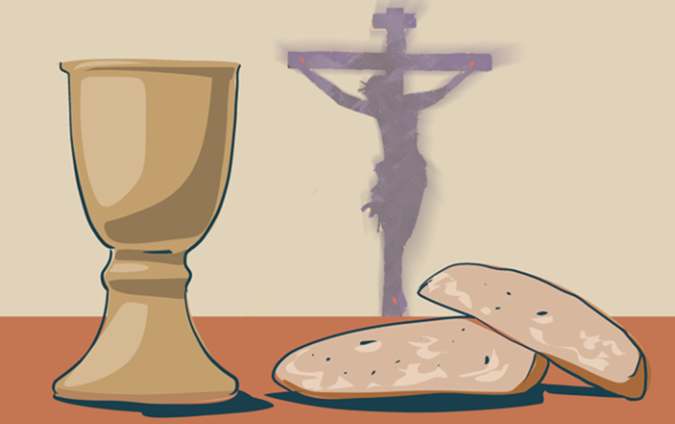
I heard a well-worn story of a little girl who didn’t want to go to kid’s church, but wanted to join her parents for the main service. It happened to be a Communion Sunday, and when they passed the tray of cracker bits and small cup of juice, her mother noticed she was visibly disappointed. When the service was over her mother asked her how she liked the main service, and the little girl said: “I’m going to go back to kid’s church next week. The snacks are better and you get way more juice!”

She’s not wrong, a nibble and a sip wouldn’t cut it…if snack time was what this ritual was all about. But, for those of us who’ve encountered the One who is behind this ritual, we know it’s far more than just a snack-break in church.

This Sunday we’ll be observing Communion (we put it off from last week because the text was more appropriate for it this week). We’ll be reading 1 Cor 11:17-34 in our study of Paul’s letter.

As you read Paul’s critique, you’ll notice he states his harshest criticisms over this matter. What stands out to you as Paul’s main complaint (you’ll find it spelled out in v22)? Do you notice that the practice Paul describes doesn’t really seem to match up with how we attend to this ceremony today? We’ll look into that a bit on Sunday.

When Paul says to examine ourselves before taking the bread and cup, what do you think he’s wanting us to determine? What do you think eating and drinking “unworthily” might be? If you’re not sure, v33-34 explain it pretty clearly. How might we be able to put Paul’s instructions into place in our own practice of observing the Lord’s Supper?

I hope you can join us this Sunday as we examine this passage together, and join each other at the Lord’s Table.

Freedom in Relationship

I know we’re all waiting for this hurricane season to conclude…but God alone controls these things, so we’ll put it in His hands. In the meantime, we will be praying for those who suffered loss in the last hurricane, and let’s stay alert as to how we can assist.

This Sunday we’ll be continuing on in our study of 1 Corinthians, reading ch 10:1-22.

The overall theme of the last several chapters has been our freedom in Christ and what we do with it. We’ve been encouraged to see to it that our Christian liberties aren’t used in ways that harm each other, and now Paul draws the circle tighter, reminding us that we want to exercise our freedoms in ways that are safe for ourselves as well.

In the passage, Paul points to Israel’s history to make his point. When they were led into freedom by Moses, they didn’t manage that freedom well. It’s reminiscent of his warning back in chapter 6: “I’m allowed to do anything…but not everything is ________.” Israel fell into idolatry, sexual immorality and complaining – similar things that Paul warned the Corinthians that they were dangerously flirting with. In what ways can we be careful with our Christian freedom so as not to harm ourselves?

There’s a pretty famous passage in our text this week, where Paul says “He will not allow the temptation [we face] to be more than [we] can stand.” – which is often transliterated as “God won’t give you more than you can handle”…which is exactly not what Paul is saying. We’ll unpack that and try to gain a bit more clarity by untangling that verse on Sunday.

Paul finishes the section by contrasting the Lord’s Table (what we refer to as the Communion Ceremony) with the table of demons. He’s talking about a partnering fellowship – reminding us that we can’t go two different directions at the same time. In our time and culture, we aren’t usually tempted to go participate in pagan sacrifices – but what are some ways in which we could find ourselves invested and partnering with forces that are at odds with God’s intent for life in this world? That will be some challenging stuff to ponder.

Hope you can join us this Sunday as we dig into God’s word together!

Uncompromising Compassion

This Sunday we are going to continue our study in the book of 1 Corinthians (Chapter 9:19-27) and we will be reading some fairly famous verses that Paul wrote. The verses start with a statement from Paul where he juxtaposes his freedom, (“with no master”), and his slavery (“to all people”). Those are clearly opposite statements and it leaves us pondering how both can be true.

He goes on to say that when he was with the Jews, he lived like a Jewish person. When he was with the Gentiles, he lived like a gentile person. Some people could perceive this as Paul being fake or disingenuous, but the fact that he proudly shares his choices tells us that this was all for a purpose. Why doesn’t Paul walk into those spaces with the rights and freedoms he possesses to show people how Christianity should look? Isn’t he one of our prime examples of how to live Christianity out?

It’s important to remember that when Paul went to preach about Jesus at the synagogues he was not met with open arms. He knew the risk, he knew the challenges, he knew the outward changes he had to make to be heard, and he knew the feeling of being beaten and bruised by those he once called family. He knew all those things and not only did he continue to share, he looked at the people he was writing to and asked them to do the same.

So where does this leave us in the polarized world that we live in today? In what ways can we exercise our freedom by choosing to be a slave to the people around us? How does this work in our effort to maintain healthy boundaries and remain honest about who we are at our deepest levels?

There is a lot to ponder in these verses and we invite you to join us this Sunday at 10:00 AM as we study and break down these verses together.

Grow Up!

“You’re acting like a baby!”

If someone were to direct that statement to us, we’d know that it’s not a compliment. I mean, most people like babies – they’re cute and sweet and vulnerable and we instinctively want to protect them. There is, however, a threshold where humans are expected to move beyond the helpless, selfish and demanding behavior of an infant. Humans without mental or physical obstacles are meant to mature.

That same expectation is present in our spiritual lives as well. In the passage we’ll be reading in our study of 1 Corinthians, we’ll examine the idea of spiritual maturity this Sunday. We’ll be reading 1 Cor chapter 3.

Paul returns to his original example of division in Corinth, highlighting the factions they have split into over different church leaders. Division is his chief identification of spiritual immaturity and worldliness. Do you find that interesting? When we consider what a worldly church, or a compromised church might have as characteristics, what things normally come to mind? Where does division fit in your thinking? Does this challenge you to reconsider the priority of unity in the church?

Paul stacks several metaphors together in order to explain his concern about unity in the church – a garden, a building and the temple. What does “garden” imagery bring to mind when it comes to the Bible? What is Paul’s point about those who tend the garden? How does the the modern American church fare when it comes to making celebrities out of church leaders? In what ways can we keep from falling into that pitfall, based on Paul’s words?

What is the foundation of the “church building” (metaphor, remember). How important is a foundation to any structure that is built? What does that tell us about where the focus of the church should be?

The temple imagery sort of wraps his thesis up. What was the temple a representation of in Israel (hint, we talked about it extensively in our teaching on Genesis)? How does it tie in with the “garden” imagery? It’s very important to remember that whenever Paul says “you” in this passage, we should be reading it as “ya’ll” – it’s corporate language; a group of people, not an individual. According to v17, why is it important to maintain the unified integrity of the “temple-church community”?

What do you suppose Paul is getting at when he says “everything belongs to you” in v22? Since the unity of the church is the theme, I tend to read it as a reminder that we don’t need to strive and fight our way to the top of any social structure….when we belong to the Church (at large), we’ve arrived at the best place we can be in God’s scheme of things. Does that mean the church is without problems? Not as long as WE’RE part of it – but it’s where God intends us to be in order to bring out what’s best in us. That alone provides us a life-long purpose and goal, both individually and corporately.

I think this will be an enlightening and still challenging study. Hope you can join us!

God’s Plan Revealed

My grandson lost one of his water shoes at our house the other day. We looked everywhere for it – outside, inside, in drawers, under couches…no place left unturned. It appeared to have a yearning to be free because it never showed up. Until a few weeks later, when we weren’t looking for it, it was resting in plain view in our toy room. Had it been there all along? It seems impossible, and yet there it was on the floor for everyone to see. I’ve had numerous experiences like that in life, predominately with our refrigerator. I ask Robbie if we’re out of mustard, and she replies “No, it’s in the fridge”, to which I reply “I’m looking in the fridge and there isn’t any.”; which prompts her to join me at the door of the icebox where she magically reaches in and retrieves the mustard which was right in front of me. She’s a wizard.

Sometimes things are hidden to us even when they’re in plain view. In our study in 1 Corinthians this week, we’ll be considering how the Gospel, God’s great plan for humanity and this world, was something hidden in plain sight until it was revealed by Jesus. We’ll be reading 1 Cor 2:1-16.

Verse two of this chapter is one of my favorite verses. Think back on what we’ve learned about Roman culture, the honor / shame aspect of it. How might a crucified Messiah sound to people in that context? Paul doesn’t seem to mind how out of sync his message is to the prevailing cultural norms. Why do you think Jesus as the crucified One was an important message in Paul’s view? What message does Christ’s crucifixion give us about God’s intent for humanity (hint, look at John 3:16-17). How might Paul’s singular focus on the cross impact our message in the world we live in?

Paul goes on to describe the Gospel as a mystery – which in the Greek means something revealed that was formerly hidden. What aspects of the Gospel were likely surprising to those Paul is writing to? Paul references the “rulers of this world” being in the dark about God’s purposes. Why do you think Paul said that?

As you read his concluding thoughts on this subject (v10-16), how does it appear that the mystery of God’s plan gets revealed to human minds? It’s interesting how readily we will make assumptions about what’s going on in other people’s minds – and here Paul points out that we do that with God as well. However, we can know God’s mind because He has given us His Spirit, who reveals God’s intent to us. What do you think is the primary way in which the Holy Spirit has revealed the mind of God to us?

It’s a rather dense section of Scripture we’ll be tackling, but I know you’re up for it – and I hope you can join us this Sunday as we dig into God’s Word together!

The Weight of Unity

Has anyone ever had a job that would require regular inspections from outside sources? When I (Janelle) worked in the children’s program at the navy base we were regularly inspected by government officials to make sure our practices complied with their standards.

Sometimes the inspections were planned and sometimes they were surprises. The planned inspections involved a great deal of preparation on our side. We would review the areas that would be inspected, we would re-train staff, and we would clean every last inch of a space that was constantly filled with over a hundred kids. Needless to say, it was a stressful time.

There was always a huge feeling of relief when the inspection was over and we could return to our normal ways of running the center. We could untuck our shirts and be a lot more relaxed about how we ran things.

While Paul was not an inspector for the church of Corinth, he was invested in how they lived out their Christian faith. Even though Paul spent a good deal of time with the church in Corinth and teaching them about Jesus, even from afar, Paul found that it was clear they got sloppy while he was away. We’ll be reading 1 Corinthians chapter 1:10-17, where we’re told that Chloe’s household noticed that they did more than untuck their shirts… they seemed to have forgotten the majority of the way they were taught to live.

From what we understand of the culture at that time, societal standings were built on an honor and shame code. It was like a never-ending game of chutes and ladders where people could move up or down depending on what leaders they followed and who they associated with. Even though they were instructed to flip the board game table like Jesus, they seemed to have fallen back into the same social traps by creating a Christian-themed version of the game.

Paul, knowing and loving this church well, had no patience for this type of behavior and was clear about where he wanted them to go from there. I find it fascinating and heartbreaking that a church’s problems from so long ago and so far away can still relate to us today.

This brings us to Sunday and the questions we must ask ourselves as we study the text. Is this a cycle we are doomed to repeat, like the one in Genesis, or are there different choices we can make? Is it possible that the actions of our small church could make a difference? Do you think the Corinthians heard Paul’s word and changed? Or do you suspect their divisions only got deeper as time passed? 

Since we don’t have the Corinthian response to Paul’s letter it means that we get the opportunity to live out the response for them. I invite you to join us this Sunday at 10:00 AM as we study 1 Corinthians 1:10-17 together and discover for ourselves the power of Paul’s pleas for unity.