The Two Roads

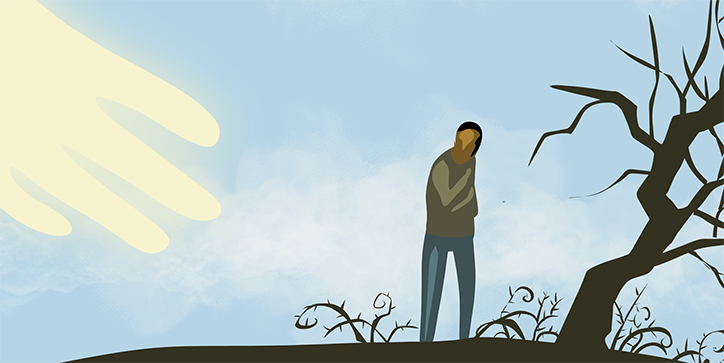
There is no way around it, the Bible presents us with a dualistic worldview. We are continually presented with two paths, two choices, two loves.  Middle ground is hard to come by in Scripture. As the Didache says in it’s opening: “There are only two paths; one leads to life and the other to death and there is a world of difference between the two.” 

This Sunday we’ll be starting to wrap up our study in Genesis, reading the fallout from Cain’s murder of Abel and the consequences that befell him because of it. We’ll be reading chapter 4:17-26. As we’ve noted before, following Cain’s lineage is sort of like viewing the trajectory of the offspring of the snake.

Cain was banished to the wilderness with God’s provision of a sign which would protect him. As you read the passage, does Cain end up in the wilderness? What might be significant about him building a city?

As we follow his family line, we get to the 7th person from Adam – Lamech. What is first noted about Lamech in the text? How does his taking of two wives reflect on Gen 2:24? How would you describe what is happening in Cain’s family line?

Lamech writes the first song recorded in the Bible – a lovely little tune sung to his wives about retaliatory murder (what a romantic!). Lamech, the 7th human from Adam, sings a song about sevens. In Gen 4:15, God promised to protect Cain by giving a sign that warned of a 7-fold retribution for harming Cain. What does Lamech do with the words of that promise? How does it interact with Jesus’ words to Peter in Matt 18 about forgiveness?

Last week we read about the line of Seth, the son God provided to Eve after the loss of Able. We’ll revisit that again as we consider the other road, the offspring of the woman. How does v26 compare with the lineage of Cain and their actions and attitudes? Who would you rather be?

I’ve really been enjoying getting into Genesis – hope you can join us this Sunday as we examine the two roads for life.

Outside of Eden

One of the intriguing puzzles of the Biblical narrative is the amount of detail that is afforded some elements of the story, and the shocking lack of detail given to others that feel like they deserve more. Part of that, I believe, is intentional. There is no better way to draw your readers in than to push their minds to fill in the gaps. Much like an impressionist painting, the story of the Bible has many moments that virtually demand our participation.

One such section is what we’ll be reading this Sunday as we continue our study of the first four chapters of Genesis. We’ll be reading ch 4:1-16, which describes the start of life outside of the Garden.

The structure of chapter 4 is pretty important. It fairly mirrors certain aspects of chapter 3. Re-read chapter 3 after reading chapter 4 – what similarities jump out at you? What does God ask the humans in ch 3, what does he ask Cain? How do the humans respond in ch 3 and how does Cain respond in ch 4? Are you picking up the similarities.

The consequence for Cain’s sin mirrors the consequence of his parents: exile. Something to ponder: the humans are already outside of the Garden, where do you think is Cain being exiled to? What might be the point of this consequence and what could it be describing about humans and their Creator?

Who do you think the “they” could be that Cain is afraid of? We aren’t told what the sign is (there’s that lack of detail) that God gives to Cain – but what is the purpose of it? What does this reveal about God’s character in the face of abject human failure?

I hope you can join us this Sunday as we continue examining at the roots of the Biblical narrative in Genesis.

God’s Response to Human Failure

We’re coming to the most tragic part of the Biblical narrative this Sunday – we’ll be reading Genesis 3:8-24 in our continued study in that book. It’s a tragedy that sets up a pattern that gets set on repeat throughout the whole Hebrew Scriptures, leading right up to the Gospel.

As you read about God’s response to human failure, what are some of the images that your mind conjures up? Imagine (and it shouldn’t be too hard) that you’ve messed up royally – how do you imagine God responding to that sin? As you read about God’s appearance in Genesis 3, how would you describe His entrance?

God speaks 7 times and ands 3 questions. What does He ask? More importantly, if God is omniscient, why do you think He asks?

Do the humans come clean and confess what they did wrong right away, asking forgiveness? What do they do instead? Does this seem consistent with human nature as you know it? What message do you think this is trying to give us?

Read the section very carefully. Who or what is cursed by God? Who or what is not cursed? As you perceive it, does that mean anything, and what might it be?

God forecasts a war between the offspring of the snake and the offspring of the woman (we would assume she represents human existence). How do you think this plays out through the Bible and through history? We must carefully note that biology or lineage have nothing to do with who is who’s offspring – it is all in the context of choice – whose voice is listened to. Jesus called someone the offspring of a snake in Matt 12 – do a little digging to determine who he called snake-offspring, and why.

We’ll have a lot we’ll be covering in this teaching – it’s sobering but encouraging at the same time. I hope you can join us this Sunday!

The Ruin

Have you ever done a diet, say restricting carbs or something? I don’t know if it’s your experience as well, but the moment I decide to cut out carbs the only food I ever think about is full of carbs. “Just don’t think about it, Rob.” – Heh….for me, the moment I’m told not to think about something the only thing I can think about is whatever I’m not supposed to think about. Can I get an “amen”?

I wonder about that forbidden tree in the Garden of Eden – the one tree the first humans were told not to eat from and I wonder if they had that experience too: “All these fruits are great! They’re the BEST!….I wonder what the fruit tastes like on the one we shouldn’t eat?” They were in an idyllic environment, so it’s hard to say if that was a thing, but it didn’t take a very hard push to get them to that tree.

This Sunday we’ll be reading about when everything got ruined – Gen 3:1-7.

How well does a talking snake sit with you intellectually? Is that a hard one for you, and is that easy to accept? I know it’s different for different people. We’ll discuss the nachash, the snake, on Sunday and consider some possibilities.

The text describes the snake as “crafty” – some translations say “cunning” or “subtle”. We usually assign a negative spin on that description, however, a quick word search indicates that it is often used in a positive context, especially in Proverbs. A negative or positive connotation comes down to how that ability is used. What might that tell us about the nature of sin, since the origin of sin is the theme of the text?

In the dialogue that follows, the snake asks a question which the woman answers and the snake concludes the dialogue. Read that exchange very carefully. What jumps out to you, if anything? Read the divine command in Gen 2:16-17 – how does the snake’s quotation match up with God’s words? How do Eve’s corrective quotation match up to the original wording? What do you observe about this – what can it teach us about how we view or interact with God’s words?

The snake suggests that God has been holding out on the humans. He tells them they will achieve something if they take matters into their own hands – what does he say they’ll become? How does Gen 1:26-27 reflect on what the snake was offering? What could that tell us about the nature of temptation?

Read Gen 3:6 with 1 John 2:16 – what parrallels can you find between Eve’s consideration of the fruit and John’s warning about what the world offers?

I’m really looking forward to this study – I hope you can join us. We’ll be observing the communion ceremony after the teaching!

What’s the Deal with Baptism?

This Sunday, we are going to take a short detour from Genesis and spend some time examining the subject of baptism. I know that this is a topic that has been taught before at Eastgate, but to clarify that choice is intentional. There is a reason that we keep coming back to a sacred ritual of our faith, a sacred ritual that we encourage all Christians to partake in. At the beginning of the gospel of Mark, we find John the Baptist in the Jordan River baptizing many Israelites. Baptism was a demonstration of their repentance and renewal in God. In Mark chapter 1, Jesus arrives at the Jordan river and asks John to baptize him.

Why do you think Jesus took his turn with all the other people there and underwent this ritual? What does it tell us about the nature of this Divine King?

After his baptism, the fabric of reality is torn open and a glimpse is given to God’s reality – and from heaven the Holy Spirit descends on Jesus and God’s voice speaks calling Jesus His beloved Son. This is a passage that gives a provoking glance at the mystery of God’s Triune nature.

Jesus, as Messiah, stands as representative of all the human race. He entered our condition in order to bring us into His condition. That means that what is true of Jesus is true of those who believe in and follow Him.

What do you believe the Father declares about you?  Can you imagine God saying to you: “You are my Child, whom I love; with you I am well pleased.” Let that run through your mind, and put your own name in that sentence. What is your reaction to that?

I invite you to join us this Sunday at 10:00AM as we discuss the importance of baptism. We also invite you to join us at Rick Seltzer park after church to cheer on those who have decided to dedicate their lives to Jesus and get baptized.

Ash Wednesday 2024

So…I know tomorrow is Valentine’s Day, but I really can’t help the timing, it wasn’t up to me. Ten years ago we did an Ash Wednesday service at Eastgate, and I found it to be a very moving and spiritually nourishing experience. I said back then: “We need to do this more often”….but time gets away from us. So, this Wednesday we are re-visiting that ritual from long ago. Ten years ago I also wrote an explanation of the service, which I’m going to repost here, to help explain the purpose of this service.

I grew up in a decidedly non-liturgical home.  We were evangelicals, but my father was ordained in the Methodist church, so I’m a bit confused as to why we were so far removed from liturgies…but, such is the case for me.

[Tomorrow] is Ash Wednesday, the first day of Lent for most Western Christian churches who observe liturgical calendars.

I have never observed Lent in my whole life.  I honestly didn’t even know for sure what it was until a few years ago.  Lent, in case YOU don’t know either, is a period of forty days prior to Easter, where the Christian, in imitation of Christ’s forty day wilderness temptation, observes a time of penitence, fasting, charity and prayer.

People practice the denial of self in a great variety of ways during lent.  Some abstain from certain types of food…I have one friend who gave up deserts for forty days (and consequently lost a lot of weight).  It was very meaningful for him.  I had another friend who quit watching TV for forty days.

Having grown up completely outside the reaches of liturgical observances, recently I’ve become quite fascinated with them.  Several years ago, I began the practice of praying the “daily office”, from the Celtic Daily Prayers book.  It has had a profound effect on me.

Tomorrow is Ash Wednesday, and for the first time ever (second time) we will have a small Ash Wednesday service..

What is this about, you ask? Ash Wednesday is a practice that began in the middle ages – intended as a time for followers of Christ to prepare their hearts for Easter. The main thrust behind the imposing of ashes on a forehead is summed up in REMEMBER, REPENT, and RETURN.

REMEMBER – that we are mortal – from dust we were created and to the dust we return. Material wealth, plastic surgery, advances in science…none of these things can prevent our inevitable death. The ashes connect us with the reality of our finite, human condition.

REPENT – acknowledge that we don’t do this Christian thing very well, and commit our hearts to change. It does the heart a world of good to come clean with God and admit our struggles to him, and appeal for his help in our resolve to live the life he intended for us.

RETURN – the ashes are brushed on the forehead in the shape of the cross. We are mortal and destined for the dust – but the cross changes everything. The cross of Christ, the love of God in action is the only means by which we now have hope of everlasting life. The ashen cross on our forehead urges us to leave off our pursuits of lesser lovers and  return to the only source of life there is.

The meeting will be quiet and contemplative. We’ll begin at 6 PM with a brief explanation, then a worship song. After that, as Matt continues to play, we’ll invite people forward to have the ashes imposed on the forehead. We’ll be handing out a sheet with meditative prayers on it, covering the themes of remembrance, repentance and returning. As you wait for the ashes, you can meditate on and pray those prayers. Feel free to stay for the whole service, or leave after you receive the ashes, it’s entirely up to you.

“How long do I have to wear the ashes, Rob?” Again, that’s entirely up to you – what’s important is the state of our hearts, not what we have on our foreheads. This is just a time for a visceral, tangible reminder of who we are in Christ, and an opportunity to draw closer to Him as a community.

I hope you can join us, Wednesday the 14th, at 6PM.

A Very Present Jesus

This Sunday we’re going to be reading John 20:19-31, which finishes up the chapter. This chapter brings us to the end of the Book of Glory, with only the epilogue (ch 21) remaining. In this chapter we’ll be reading about Jesus’ appearance to the rest of the disciples and to Thomas – and we’ll be considering the ramifications of the risen Christ in the midst of his followers.

Jesus shows up in the middle of a locked room. He is obviously present in a new kind of physicality, one that is not hindered by normal obstacles. Think about that locked door and the symbolism of it. What kind of doors do we lock in life…and how effective are they in keeping Jesus out?

The first thing out of Jesus’ mouth is the common greeting: Shalom. It means peace, wholeness, stability of life. John is using this event to convey the meaning of Christ’s presence, which is with us still – and how his presence brings with it wholeness and fullness of life. In what ways have you found stability, wholeness and well being in the presence of Christ?

Jesus commissions his followers to do the same thing he’d been doing. That would be unthinkable if he didn’t follow it up by giving the Holy Spirit to empower us for such a task. How can we start developing habits of following the Holy Spirit’s lead to do good and help the oppressed in this world?

V23 is a strange command. Whole ecclesiological frameworks have developed around the way people interpret what Jesus says here. There’s a conservative interpretation that I’m persuaded by (I’ll share it Sunday) – what do YOU think he’s saying?

The account of Thomas is awesome to me. I love that dude. Do you think Tommy was doubting Jesus, or the testimony of the other disciples? How did Jesus interact with Tom: rebuke, anger, irritation, compassion, care…? What was the first thing he said to him? Do you think that Jesus is angered by our questions or honest skepticism?  Do you believe that doubt and sincere searching is debilitating to faith, or can it actually encourage and enhance faith? How might Jesus’ interaction with Thomas inform your view?

I hope you can join us this Sunday, I think we’ll have a lot of good stuff to chew on!

A Deeper Faith

We all know the phrase: “seeing is believing”. It’s a saying that communicates the idea that if we see something with our own eyes we will believe it to exist or be true, no matter how unexpected or unusual it may be. On the surface it expresses a willingness to accept a reality that is verifiably evident.

What’s interesting is that the phrase was coined by Thomas Fuller, a 17th Century clergyman, and the whole phrase is: “seeing is believing, but feeling is the truth”. He was suggesting that truth and evidence are sometimes differentiated. Some truths can’t be verified so neatly.

It’s a pretty deep concept, one that is the heart of our study this Sunday as we continue in our examination of the Gospel of John. We’ll be reading John 4:43-54.

Some things to keep in mind as you read: the repeated idea of “seeing” (see, seen). This is a through-line from the last section.

In our text we are introduced to a man of means and position, a government official (likely working for Herod Antipas). He implores Jesus to come to his home and heal his son. Jesus’ response is puzzling on the surface. Who do you think he’s talking to when he says “you”? Why do you think he responded that way? In what ways do you think this man didn’t believe in Jesus?

When Jesus sends the man home, what evidence did that man have that anything had changed for his son? What was the basis for him heading home? What does that tell us about the kind of faith God is looking for from us?

The timing of the boy’s healing and Jesus’ words is highlighted by John. What might it teach us about who Jesus is and what is within his control?

In v53 we are told the man and his household believe in Jesus. How is that a different kind of faith than the believing expressed by the Galileans from v45? How would you describe the deeper faith that we are challenged to in this passage?

I’m really stoked about this section, I hope you can join us for what I think will be a intriguing but very encouraging study!

Staying Free

One major fear that gets posed whenever Christian freedom is discussed is the concern that it can lead to an antinomian lifestyle – a life with no constraint, living lawlessly. I’ve heard that fear expressed to me many times over the years. Martin Lloyd Jones, the old Welsh minister, famously said that if we aren’t accused of preaching lawlessness, we aren’t preaching grace the way Paul did. He’s right – Paul got accused of that a lot, and had to qualify his emphasis on grace many times in his letters.

This Sunday we’ll be reading Paul’s great rallying cry that boldly proclaims the main theme of his letter to the Galatians. We’ll be starting chapter 5, reading vs 1-12.

Paul states his main thesis in v1a – We are FREE! That’s a statement that carries a lot with it – first, it assumes that at one point, we were not free. Think back through the letter to the Galatians – what has Paul been emphasizing our freedom concerning? Read ch 1:4 to get one perspective of our rescue. Ch 3:10-13 gives another aspect of what we are freed from.

Freedom is sort of a loaded word. Loaded, I should say, with our pre-determined definitions of what it means. Our country, the United States has freedom as it’s centerpiece. How do we as Americans normally define freedom? How would you characterize freedom based on what Paul says we are free from? What differences, if any, can you identify? Which sort of freedom should take precedence in our lives as Christ Followers?

In v1b, Paul exhorts us in light of the thesis. What does he tell us we must do concerning our freedom?

In vs 2-12 of the chapter, Paul elaborates on how we can go about fulfilling that exhortation. As you read those verses, what jumps out to you as practical advice for living free in Christ? The last part of v6 is terribly important. It’s the way that antinomianism, lawlessness, is counteracted when it comes to our freedom.

What do you believe it means that our faith is expressed in love? Love for whom? What will that look like when lived out in real life situations?

I think this will be a really challenging study – I hope you can join us, either in person or online via Facebook or YouTube. We are no longer requiring pre-registrations – but we are asking that we continue wearing masks during the singing portion of our service.

The danger is still real, as we see in the recent development with our President. Please keep him in prayer for a full recovery.

Faith > Works

Image result for blue dress or gold dress

Do you remember the buzz a while back about how people could look at the same dress and some people saw a blue dress with black stripes, while others saw a gold dress with white stripes? I’m still amazed that anyone saw anything but a blue dress – but that’s the thing, isn’t it? It was all the same dress. How our brains processed the light and color made all the difference.

That’s similar to what Paul will be talking about in our text this Sunday, as we read Romans 10:1-13.

Paul will be talking about how Israel looked at the promise of God and saw something that had to be worked out by honoring the Old Testament law. Yet, as Paul will explain, that was seeing the promise in the wrong light. God always intended for salvation to come as His gift to human-kind, not as something we earned.

In this section, Paul provides us with the profound declaration of how salvation is bestowed on us. The message of faith that Paul preached is found in v9. How do you understand this combination of speech and belief in the inner person? How would you explain to someone unfamiliar with Christianity what it is that Paul is driving at here? What distinction, if any, do you see between faith in the heart and understanding in the intellect? How do you think someone who struggles with the tension between the two can resolve on faith without committing intellectual suicide?

Sunday is a special day – we will only have one service at 10 am – then we’ll go to St Andrews State Park to have a cook out and baptize those who wish to be. This is the very declaration of faith Paul is getting at in our text. If you haven’t been baptized and want to know more about it, you can go to this page on our website, and sign up there if you’d like to make that declaration this Sunday!

See you then!