This Sunday, we are going to take a short detour from Genesis and spend some time examining the subject of baptism. I know that this is a topic that has been taught before at Eastgate, but to clarify that choice is intentional. There is a reason that we keep coming back to a sacred ritual of our faith, a sacred ritual that we encourage all Christians to partake in. At the beginning of the gospel of Mark, we find John the Baptist in the Jordan River baptizing many Israelites. Baptism was a demonstration of their repentance and renewal in God. In Mark chapter 1, Jesus arrives at the Jordan river and asks John to baptize him.
Why do you think Jesus took his turn with all the other people there and underwent this ritual? What does it tell us about the nature of this Divine King?
After his baptism, the fabric of reality is torn open and a glimpse is given to God’s reality – and from heaven the Holy Spirit descends on Jesus and God’s voice speaks calling Jesus His beloved Son. This is a passage that gives a provoking glance at the mystery of God’s Triune nature.
Jesus, as Messiah, stands as representative of all the human race. He entered our condition in order to bring us into His condition. That means that what is true of Jesus is true of those who believe in and follow Him.
What do you believe the Father declares about you? Can you imagine God saying to you: “You are my Child, whom I love; with you I am well pleased.” Let that run through your mind, and put your own name in that sentence. What is your reaction to that?
I invite you to join us this Sunday at 10:00AM as we discuss the importance of baptism. We also invite you to join us at Rick Seltzer park after church to cheer on those who have decided to dedicate their lives to Jesus and get baptized.
So…I know tomorrow is Valentine’s Day, but I really can’t help the timing, it wasn’t up to me. Ten years ago we did an Ash Wednesday service at Eastgate, and I found it to be a very moving and spiritually nourishing experience. I said back then: “We need to do this more often”….but time gets away from us. So, this Wednesday we are re-visiting that ritual from long ago. Ten years ago I also wrote an explanation of the service, which I’m going to repost here, to help explain the purpose of this service.
I grew up in a decidedly non-liturgical home. We were evangelicals, but my father was ordained in the Methodist church, so I’m a bit confused as to why we were so far removed from liturgies…but, such is the case for me.
[Tomorrow] is Ash Wednesday, the first day of Lent for most Western Christian churches who observe liturgical calendars.
I have never observed Lent in my whole life. I honestly didn’t even know for sure what it was until a few years ago. Lent, in case YOU don’t know either, is a period of forty days prior to Easter, where the Christian, in imitation of Christ’s forty day wilderness temptation, observes a time of penitence, fasting, charity and prayer.
People practice the denial of self in a great variety of ways during lent. Some abstain from certain types of food…I have one friend who gave up deserts for forty days (and consequently lost a lot of weight). It was very meaningful for him. I had another friend who quit watching TV for forty days.
Having grown up completely outside the reaches of liturgical observances, recently I’ve become quite fascinated with them. Several years ago, I began the practice of praying the “daily office”, from the Celtic Daily Prayers book. It has had a profound effect on me.
Tomorrow is Ash Wednesday, and for the first time ever (second time) we will have a small Ash Wednesday service..
What is this about, you ask? Ash Wednesday is a practice that began in the middle ages – intended as a time for followers of Christ to prepare their hearts for Easter. The main thrust behind the imposing of ashes on a forehead is summed up in REMEMBER, REPENT, and RETURN.
REMEMBER – that we are mortal – from dust we were created and to the dust we return. Material wealth, plastic surgery, advances in science…none of these things can prevent our inevitable death. The ashes connect us with the reality of our finite, human condition.
REPENT – acknowledge that we don’t do this Christian thing very well, and commit our hearts to change. It does the heart a world of good to come clean with God and admit our struggles to him, and appeal for his help in our resolve to live the life he intended for us.
RETURN – the ashes are brushed on the forehead in the shape of the cross. We are mortal and destined for the dust – but the cross changes everything. The cross of Christ, the love of God in action is the only means by which we now have hope of everlasting life. The ashen cross on our forehead urges us to leave off our pursuits of lesser lovers and return to the only source of life there is.
The meeting will be quiet and contemplative. We’ll begin at 6 PM with a brief explanation, then a worship song. After that, as Matt continues to play, we’ll invite people forward to have the ashes imposed on the forehead. We’ll be handing out a sheet with meditative prayers on it, covering the themes of remembrance, repentance and returning. As you wait for the ashes, you can meditate on and pray those prayers. Feel free to stay for the whole service, or leave after you receive the ashes, it’s entirely up to you.
“How long do I have to wear the ashes, Rob?” Again, that’s entirely up to you – what’s important is the state of our hearts, not what we have on our foreheads. This is just a time for a visceral, tangible reminder of who we are in Christ, and an opportunity to draw closer to Him as a community.
I hope you can join us, Wednesday the 14th, at 6PM.
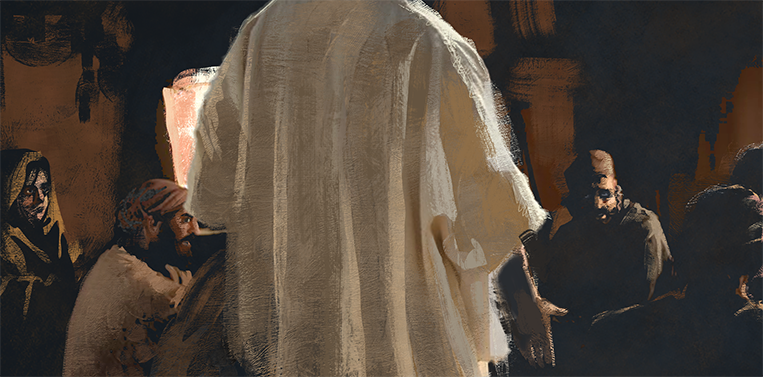
This Sunday we’re going to be reading John 20:19-31, which finishes up the chapter. This chapter brings us to the end of the Book of Glory, with only the epilogue (ch 21) remaining. In this chapter we’ll be reading about Jesus’ appearance to the rest of the disciples and to Thomas – and we’ll be considering the ramifications of the risen Christ in the midst of his followers.
Jesus shows up in the middle of a locked room. He is obviously present in a new kind of physicality, one that is not hindered by normal obstacles. Think about that locked door and the symbolism of it. What kind of doors do we lock in life…and how effective are they in keeping Jesus out?
The first thing out of Jesus’ mouth is the common greeting: Shalom. It means peace, wholeness, stability of life. John is using this event to convey the meaning of Christ’s presence, which is with us still – and how his presence brings with it wholeness and fullness of life. In what ways have you found stability, wholeness and well being in the presence of Christ?
Jesus commissions his followers to do the same thing he’d been doing. That would be unthinkable if he didn’t follow it up by giving the Holy Spirit to empower us for such a task. How can we start developing habits of following the Holy Spirit’s lead to do good and help the oppressed in this world?
V23 is a strange command. Whole ecclesiological frameworks have developed around the way people interpret what Jesus says here. There’s a conservative interpretation that I’m persuaded by (I’ll share it Sunday) – what do YOU think he’s saying?
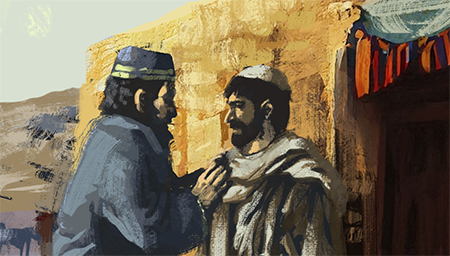
The account of Thomas is awesome to me. I love that dude. Do you think Tommy was doubting Jesus, or the testimony of the other disciples? How did Jesus interact with Tom: rebuke, anger, irritation, compassion, care…? What was the first thing he said to him? Do you think that Jesus is angered by our questions or honest skepticism? Do you believe that doubt and sincere searching is debilitating to faith, or can it actually encourage and enhance faith? How might Jesus’ interaction with Thomas inform your view?
I hope you can join us this Sunday, I think we’ll have a lot of good stuff to chew on!
We all know the phrase: “seeing is believing”. It’s a saying that communicates the idea that if we see something with our own eyes we will believe it to exist or be true, no matter how unexpected or unusual it may be. On the surface it expresses a willingness to accept a reality that is verifiably evident.
What’s interesting is that the phrase was coined by Thomas Fuller, a 17th Century clergyman, and the whole phrase is: “seeing is believing, but feeling is the truth”. He was suggesting that truth and evidence are sometimes differentiated. Some truths can’t be verified so neatly.
It’s a pretty deep concept, one that is the heart of our study this Sunday as we continue in our examination of the Gospel of John. We’ll be reading John 4:43-54.
Some things to keep in mind as you read: the repeated idea of “seeing” (see, seen). This is a through-line from the last section.
In our text we are introduced to a man of means and position, a government official (likely working for Herod Antipas). He implores Jesus to come to his home and heal his son. Jesus’ response is puzzling on the surface. Who do you think he’s talking to when he says “you”? Why do you think he responded that way? In what ways do you think this man didn’t believe in Jesus?
When Jesus sends the man home, what evidence did that man have that anything had changed for his son? What was the basis for him heading home? What does that tell us about the kind of faith God is looking for from us?
The timing of the boy’s healing and Jesus’ words is highlighted by John. What might it teach us about who Jesus is and what is within his control?
In v53 we are told the man and his household believein Jesus. How is that a different kind of faith than the believing expressed by the Galileans from v45? How would you describe the deeper faith that we are challenged to in this passage?
I’m really stoked about this section, I hope you can join us for what I think will be a intriguing but very encouraging study!
One major fear that gets posed whenever Christian freedom is discussed is the concern that it can lead to an antinomian lifestyle – a life with no constraint, living lawlessly. I’ve heard that fear expressed to me many times over the years. Martin Lloyd Jones, the old Welsh minister, famously said that if we aren’t accused of preaching lawlessness, we aren’t preaching grace the way Paul did. He’s right – Paul got accused of that a lot, and had to qualify his emphasis on grace many times in his letters.
This Sunday we’ll be reading Paul’s great rallying cry that boldly proclaims the main theme of his letter to the Galatians. We’ll be starting chapter 5, reading vs 1-12.
Paul states his main thesis in v1a – We are FREE! That’s a statement that carries a lot with it – first, it assumes that at one point, we were not free. Think back through the letter to the Galatians – what has Paul been emphasizing our freedom concerning? Read ch 1:4 to get one perspective of our rescue. Ch 3:10-13 gives another aspect of what we are freed from.
Freedom is sort of a loaded word. Loaded, I should say, with our pre-determined definitions of what it means. Our country, the United States has freedom as it’s centerpiece. How do we as Americans normally define freedom? How would you characterize freedom based on what Paul says we are free from? What differences, if any, can you identify? Which sort of freedom should take precedence in our lives as Christ Followers?
In v1b, Paul exhorts us in light of the thesis. What does he tell us we must do concerning our freedom?
In vs 2-12 of the chapter, Paul elaborates on how we can go about fulfilling that exhortation. As you read those verses, what jumps out to you as practical advice for living free in Christ? The last part of v6 is terribly important. It’s the way that antinomianism, lawlessness, is counteracted when it comes to our freedom.
What do you believe it means that our faith is expressed in love? Love for whom? What will that look like when lived out in real life situations?
I think this will be a really challenging study – I hope you can join us, either in person or online via Facebook or YouTube. We are no longer requiring pre-registrations – but we are asking that we continue wearing masks during the singing portion of our service.
The danger is still real, as we see in the recent development with our President. Please keep him in prayer for a full recovery.
Do you remember the buzz a while back about how people could look at the same dress and some people saw a blue dress with black stripes, while others saw a gold dress with white stripes? I’m still amazed that anyone saw anything but a blue dress – but that’s the thing, isn’t it? It was all the same dress. How our brains processed the light and color made all the difference.
That’s similar to what Paul will be talking about in our text this Sunday, as we read Romans 10:1-13.
Paul will be talking about how Israel looked at the promise of God and saw something that had to be worked out by honoring the Old Testament law. Yet, as Paul will explain, that was seeing the promise in the wrong light. God always intended for salvation to come as His gift to human-kind, not as something we earned.
In this section, Paul provides us with the profound declaration of how salvation is bestowed on us. The message of faith that Paul preached is found in v9. How do you understand this combination of speech and belief in the inner person? How would you explain to someone unfamiliar with Christianity what it is that Paul is driving at here? What distinction, if any, do you see between faith in the heart and understanding in the intellect? How do you think someone who struggles with the tension between the two can resolve on faith without committing intellectual suicide?
Sunday is a special day – we will only have one service at 10 am – then we’ll go to St Andrews State Park to have a cook out and baptize those who wish to be. This is the very declaration of faith Paul is getting at in our text. If you haven’t been baptized and want to know more about it, you can go to this page on our website, and sign up there if you’d like to make that declaration this Sunday!
Can you believe it’s been 14 years since that movie came out? Stunning. I always remember that part of the movie. It still stands out as a great illustration of our own intentions getting in the way of our ability to hear from God.
Something akin to that sort of irony will be involved in the passages we’ll be looking at this Sunday as we read Matthew 15:29-16:12. It’s a big section, but I think you’ll see how it all goes together pretty well.
As you read through this section you’ll notice that, even connected with last weeks teaching, there is an ongoing bread theme. The Canaanite woman asked for bread crumbs. Jesus provides bread in the wilderness and then warns about the wrong kind of spiritual bread. There could be a whole teaching in that thematic vein alone…but that’s not where I went for this study.
In the section that closes out chapter 15, Jesus is doing all sorts of miracles, finishing off with a miraculous feast on a desert mountaintop. A quick glance at Isaiah 35 and Isaiah 25 provides a backdrop and reveals what’s going on here. When Jesus is performing all these miracles, what does it mean? How should it be read?
When we come to chapter 16, much like Jim Carry, the Pharisees and Sadducees ask for a sign – ignoring what has been happening right under their noses. They are intent on trying to control God’s plan. In what ways are we sometimes guilty of trying to dictate to God our own purposes? How can we keep from trying to steal the director’s chair in life?
in v 5-12, Jesus’ disciples are cast in a pretty dim light. They forgot bread and assume Jesus’ warning about the leaven of the Pharisees was about a lack of bagels. Leaven is used as a metaphor for an element introduced that changes it’s host into something else. Leaven changes bread dough, causing it to rise and inflate. In what way do you think the teaching of the Pharisees had done this as it touched Israel’s calling? What is Jesus warning his disciples, and us as well, about? What are the philosophies, politics and religious agendas in our world that could veer us off the path that God originally set the church on? What is lacking, according to v8, that can keep us from falling prey to these aberrant directions?
Once again, this will be a challenging and thought provoking passage to dig into. Hope to see you on Sunday!
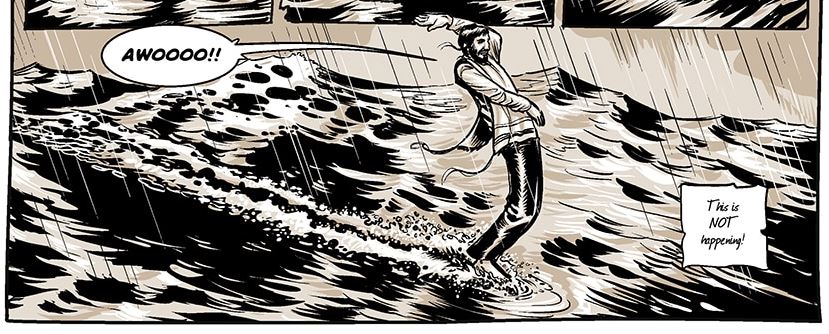
Most of you know, I’m a cartoonist who is serving as a pastor until the Lord fixes that. I’ve drawn a graphic novel for the web called “Rabbi Encounters”. You might enjoy reading chapter five, “Surf” (click the title to go there). It’s my rendition of the events that we’ll be reading this Sunday as we continue our study of Matthew – 14:22-36.
I believe this is an account of something that really happened. I also believe this actual event can read as a parable – a metaphor for a life of following Jesus.
The disciples follow Jesus’ instructions to get in the boat and go. Obeying Jesus, they find themselves caught in a storm and being (literally) tormented by the waves. What metaphor can you see in that? How does this correspond with your own life of faith? What can be learned?
When Jesus shows up the disciples are terrified. Why? To your knowledge, has anything like this happened before in the Bible, where someone has walked on water? Do you think any of the disciples expected to see Jesus out there? In what ways can you see a parallel of this in your own expectations about God and what He’s up to?
What do you think, was Peter right or wrong to ask Jesus to command him to walk on the water? Scholars seem to be divided about it. Do you think his lack of faith began when he had to have proof that it was really Jesus, or was it a bold move of faith to claim participation in the miracle?
When Peter is focused on the rising surf, he begins to sink. The lessons there are obvious. Something else to think about is: what was Jesus’ first response (not words necessarily) to Peter’s predicament? How does his response encourage you when you remember times where you’ve had “little faith”?
Those are just some things to consider before Sunday. What I’d really like you to do is read this whole section and read it as metaphor – use your imagination. What is the boat, the water, the storm, the destination? What can those be portraying to us about life and faith and most importantly, Jesus?
Have you ever felt desperate in life? It’s a rhetorical question because if you’re reading this you’re human which means you live on earth and earth has a way of squeezing us into desperate situations. In our times desperation we will usually go all over the place looking for something or someone who can give us a glimmer of hope. That’s just the nature of desperation…and it doesn’t have to be a bad thing.
This Sunday we’ll be reading Matthew 9:18-38 and we’ll discover some desperate people who go to the right place in their time of crisis. As we read about these people, we’ll be looking at what it was that moved them to seek help from Jesus. We’ll look at their faith, what Jesus said about faith, and what this can all mean in our own lives.
The synagogue ruler, the hemorrhaging woman and the two blind men all have their stories told in succession. Their expressions of faith are risky, scandalous and bold, but they are also desperate. How does Jesus respond to their desperation? What sort of attitude does he seem to have towards all of these individuals? Do you think of desperation as a positive or negative motive for coming to God for help, and why?
When Jesus casts out a demon and a man was able to communicate when he hadn’t been able to before – what are the two reactions recorded? If both groups of people saw the same miracle, what kept the Pharisees from believing Jesus’ power was from God?
The chapter culminates with a summary of what Jesus is up to with the Kingdom Project – and then we see his compassion for the multitudes who are oppressed by religion, but not cared for by a Shepherd. He clearly is inviting us into the activity of harvesting a ripened field…but what does that metaphor mean to you? How do you believe we can be used in this “harvesting” activity?
Sorry for the late post – looking forward to Sunday! Hope to see you then!
How easy is it for you to trust someone? We may consider ourselves to be “trusting souls”, but the reality is we often find it difficult to place our trust in someone else. A lot of factors go into that – past experiences, our own sense of frailty when it comes to trustworthiness, and a host of other reasons go into our tentative approach to giving away our trust. It’s hard to trust others…and those are people we can SEE and examine and evaluate on a regular basis. What about a God who hides himself (Isaiah 45:15)?
Still, that’s the whole thing when it comes to Scripture. We are continually called on to trust God – and in the New Testament, to trust God through Christ Jesus.
Last week we explored a solomn and sort of heavy section of Matthew which reminded us that following Jesus does not insulate us from the troubles that life can throw our way. But in case we were tempted to become fatalistic and slump in our chairs thinking that there’s just no hope no matter what…we have this weeks section.
We’ll be reading chapter 8:23 through chapter 9:8 this Sunday as we journey through the gospel of Matthew. The chapter break really shouldn’t be there, because this whole section belongs in a single grouping. Three areas where Jesus demonstrates his authority to encourage our trust in him, even as we follow him into potential hardships.
In chapter 8:23-27 we have the famous account of Jesus calming the storm. Whey do you think Jesus was sleeping? Have you ever felt like Jesus was sleeping while you were in dire straights? What does he ask his disciples? In our own storms of life, how can asking ourselves the question “why are you afraid?” help to orient our thinking and perspective?
In v28-34 Jesus heals two men who were demon possessed. How comfortable are you with the idea that there are demons on the loose in this world, taking possession of people sometimes? Our western culture mostly dismisses that notion as primitivism – but I thought this was an interesting article.
Jesus demonstrates his authority over evil. How does that develop our understanding of his words in the Lord’s Prayer “deliver us from evil” – and in what way can that inspire our trust? What should our response to evil be, in light of his authority over it?
Chapter 9:1-8 tells the story of Jesus healing the paralyzed man. Before he heals him, he forgives his sin. Then he demonstrates his authority to forgive sins by healing the man’s physical body. What does his authority to forgive sins inspire you to trust Him with? What did the paralyzed man do to deserve that declaration of forgiveness?
Troubles from without, in the natural world and the spiritual one, and troubles from within in the form of our own failures – Jesus has authority over them all. What will you trust Him with?




 How easy is it for you to trust someone? We may consider ourselves to be “trusting souls”, but the reality is we often find it difficult to place our trust in someone else. A lot of factors go into that – past experiences, our own sense of frailty when it comes to trustworthiness, and a host of other reasons go into our tentative approach to giving away our trust. It’s hard to trust others…and those are people we can SEE and examine and evaluate on a regular basis. What about a God who hides himself (
 WONDERWHAT