The Two Roads

There is no way around it, the Bible presents us with a dualistic worldview. We are continually presented with two paths, two choices, two loves.  Middle ground is hard to come by in Scripture. As the Didache says in it’s opening: “There are only two paths; one leads to life and the other to death and there is a world of difference between the two.” 

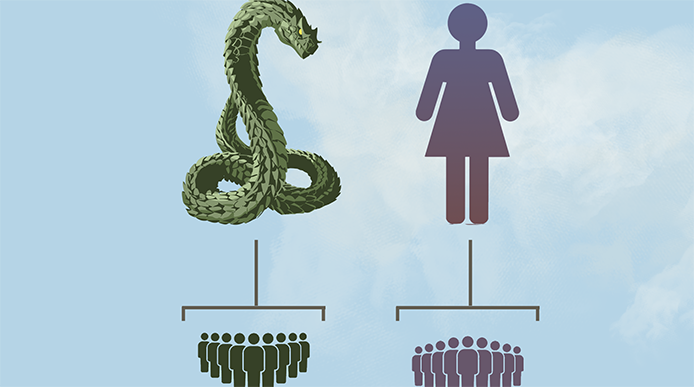
This Sunday we’ll be starting to wrap up our study in Genesis, reading the fallout from Cain’s murder of Abel and the consequences that befell him because of it. We’ll be reading chapter 4:17-26. As we’ve noted before, following Cain’s lineage is sort of like viewing the trajectory of the offspring of the snake.

Cain was banished to the wilderness with God’s provision of a sign which would protect him. As you read the passage, does Cain end up in the wilderness? What might be significant about him building a city?

As we follow his family line, we get to the 7th person from Adam – Lamech. What is first noted about Lamech in the text? How does his taking of two wives reflect on Gen 2:24? How would you describe what is happening in Cain’s family line?

Lamech writes the first song recorded in the Bible – a lovely little tune sung to his wives about retaliatory murder (what a romantic!). Lamech, the 7th human from Adam, sings a song about sevens. In Gen 4:15, God promised to protect Cain by giving a sign that warned of a 7-fold retribution for harming Cain. What does Lamech do with the words of that promise? How does it interact with Jesus’ words to Peter in Matt 18 about forgiveness?

Last week we read about the line of Seth, the son God provided to Eve after the loss of Able. We’ll revisit that again as we consider the other road, the offspring of the woman. How does v26 compare with the lineage of Cain and their actions and attitudes? Who would you rather be?

I’ve really been enjoying getting into Genesis – hope you can join us this Sunday as we examine the two roads for life.
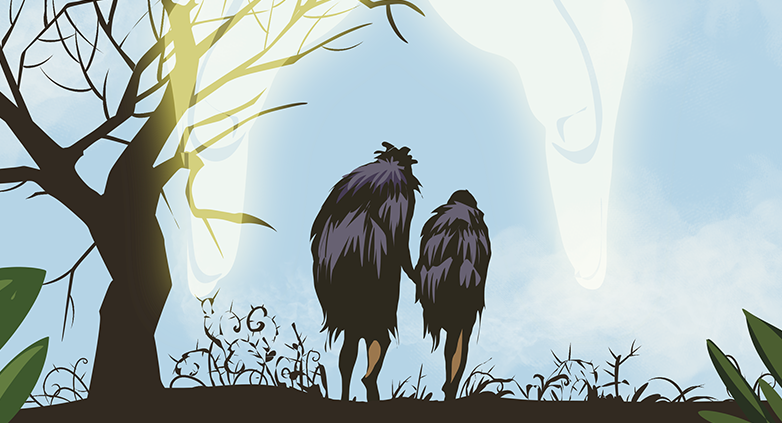
Outside of Eden

One of the intriguing puzzles of the Biblical narrative is the amount of detail that is afforded some elements of the story, and the shocking lack of detail given to others that feel like they deserve more. Part of that, I believe, is intentional. There is no better way to draw your readers in than to push their minds to fill in the gaps. Much like an impressionist painting, the story of the Bible has many moments that virtually demand our participation.

One such section is what we’ll be reading this Sunday as we continue our study of the first four chapters of Genesis. We’ll be reading ch 4:1-16, which describes the start of life outside of the Garden.

The structure of chapter 4 is pretty important. It fairly mirrors certain aspects of chapter 3. Re-read chapter 3 after reading chapter 4 – what similarities jump out at you? What does God ask the humans in ch 3, what does he ask Cain? How do the humans respond in ch 3 and how does Cain respond in ch 4? Are you picking up the similarities.

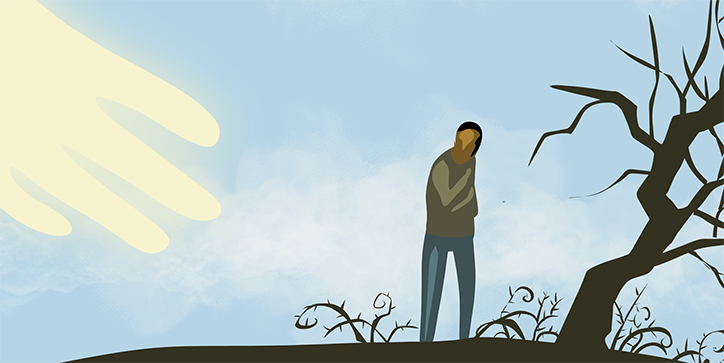
The consequence for Cain’s sin mirrors the consequence of his parents: exile. Something to ponder: the humans are already outside of the Garden, where do you think is Cain being exiled to? What might be the point of this consequence and what could it be describing about humans and their Creator?

Who do you think the “they” could be that Cain is afraid of? We aren’t told what the sign is (there’s that lack of detail) that God gives to Cain – but what is the purpose of it? What does this reveal about God’s character in the face of abject human failure?

I hope you can join us this Sunday as we continue examining at the roots of the Biblical narrative in Genesis.

God’s Response to Human Failure

We’re coming to the most tragic part of the Biblical narrative this Sunday – we’ll be reading Genesis 3:8-24 in our continued study in that book. It’s a tragedy that sets up a pattern that gets set on repeat throughout the whole Hebrew Scriptures, leading right up to the Gospel.

As you read about God’s response to human failure, what are some of the images that your mind conjures up? Imagine (and it shouldn’t be too hard) that you’ve messed up royally – how do you imagine God responding to that sin? As you read about God’s appearance in Genesis 3, how would you describe His entrance?

God speaks 7 times and ands 3 questions. What does He ask? More importantly, if God is omniscient, why do you think He asks?

Do the humans come clean and confess what they did wrong right away, asking forgiveness? What do they do instead? Does this seem consistent with human nature as you know it? What message do you think this is trying to give us?

Read the section very carefully. Who or what is cursed by God? Who or what is not cursed? As you perceive it, does that mean anything, and what might it be?

God forecasts a war between the offspring of the snake and the offspring of the woman (we would assume she represents human existence). How do you think this plays out through the Bible and through history? We must carefully note that biology or lineage have nothing to do with who is who’s offspring – it is all in the context of choice – whose voice is listened to. Jesus called someone the offspring of a snake in Matt 12 – do a little digging to determine who he called snake-offspring, and why.

We’ll have a lot we’ll be covering in this teaching – it’s sobering but encouraging at the same time. I hope you can join us this Sunday!

Origin and Destiny in Eden

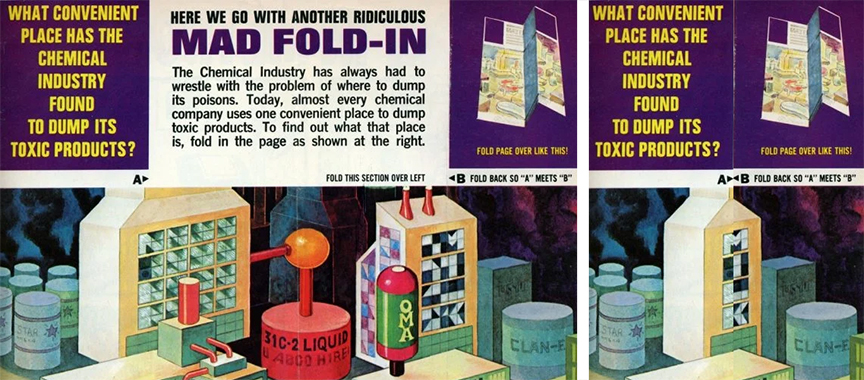
Do you remember the old Mad Magazines, how the inside back page was an Al Jaffe cartoon that had an image on it which, if you folded it in, created another image which was a commentary on the first. I used to love those things. In many ways, the book of Genesis, if we metaphorically folded it to touch the book of Revelation, operates similarly. We begin and end in a Garden…and everything in between functions to elaborate on that hope. The imagery of the first few chapters of Genesis unlock the meaning of the imagery used in the rest of the Biblical narrative.

 We’ll be returning to our study in Genesis this Sunday, looking at Gen 2:8-17.

In Gen 2 we are introduced to the Garden of Eden, Adam (the human) in connection with it, and the two trees in the center of it.

Most of us have picture book ideas in our heads about the Garden of Eden – an image of an entire world in a tropical paradise setting and nothing unpleasant anywhere around. But the Genesis narrative doesn’t really validate that picture.

For instance, as you read v8; is all the land Eden? Is all of Eden a garden? Was the human “formed” in the garden? All of this implies that there is something outside that paradisical space. Isn’t that intriguing? Eden was an anomaly in the midst of non-paradise. A project begun to which we will return.

On Sunday we’ll look at the significance of the river that comes from Eden, and where it flows to.

What do you make of the trees and the warning God issues to the human? What is the first part of God’s command? Do you find it interesting that God leads with an invitation to enjoy what he’s made? Does that influence your understanding of the warning God concludes with?

If the human was made from dust (stuff of mortality), what does the Tree of Life represent to him? The forbidden tree is not the Tree of Good and Evil- it is something else – what word comes before good and evil? How would you interpret what that means?

We have a really interesting study in front of us – I hope you can join us this Sunday as we dig into this together!

Water and Dust

Robbie and I were watching a movie some time ago. It was a popular film based on an equally popular novel called “Water for Elephants”. When it was over, Robbie quietly said, “I didn’t like that movie. They never gave that elephant water even once!”

“So you felt misled?” I asked between chortles.

“Yes!” she said, “I waited through that whole movie for them to give that elephant water and they never did, they only gave it whiskey!”

“Hmmm, you have a point. Maybe they should’ve titled it ‘Whiskey for Elephants’, or ‘The Pickled Pachyderm'”?

It really illustrates the point that the expectations we have when watching or reading something really play a huge role in informing our understanding of the work. Robbie has very literal expectations based on the title of that film – but the film had other intentions in mind. That’s the real struggle for us when it comes to Scripture as well. It’s very difficult to set our expectations or pre-loaded assumptions about its meaning aside and let the text say what it wants to say. That is never more true than it is for the first book of the Bible, the Book of Beginnings.

This Sunday we’ll be continuing our study in the opening of Genesis, and we’ll be reading chapter 2:4-7.

Verse four is a “hinge” verse – it concludes the happy picture of chapter 1 and opens the story of chapter 2. You’ll notice a reversal of the order of the subject matter half way through the verse. Take a moment to consider why that might be.

In the opening passage (v5-7) we are presented with a new creation narrative. It begins with disorder – but something is different from chapter 1:2 – in both accounts there is a state of disorder, but in chapter one there’s too much of something and in chapter 2 there’s not enough. What is it, and what might be significant about that?

We’ll dig in to why there seems to be two different creation accounts between chapter 1 and 2.

When we come to the formation of Adam (Hebrew for man or human), we really have to work hard at setting aside all the children’s books we’ve read and pictures we’ve seen represent this, and really meditate on what the text is saying.

We’ll contemplate the nature of humanity, based on this text. We’ll consider God’s activity and motives – and I think we’ll find it very encouraging and challenging as well.

I hope you can join us this Sunday as we take a deep dive into the ancient realm of Genesis!

Genesis – an Introduction

This Sunday we’ll begin a new series, tackling the first 3 or 4 chapters of the book of Genesis. Genesis has long been considered a dense forest to traverse, and certainly, during the 20th Century it has become a battleground between competing worldviews.

I’ve been really drawn to the chronicle of Biblical origins. I’m recognizing more and more how the Genesis story affects the entire narrative of the Scriptures. The threads of Genesis run straight to the Gospel and the New Testament and provide patterns that help us unlock what sometimes seem like obscure texts.

In Genesis we glimpse the Kingdom of God, and we recognize that our hope isn’t in something that’s never been, but in the return to something we’ve never known, but is how it all began. In Genesis we find out where we started from, and hence can more easily see where we’re going.

This Sunday we’ll begin our study with an introduction and a quick look at the first words of v 1.

If you’re interested in preparing for this exploration – sometime before Sunday, take the time to read chapter one of Genesis. It’s a short chapter – so take your time. Read it, if you can, in several different translations. Take note of words that get repeated (that’s one way to start identifying patterns). Jot down observations or thoughts you have about the text. It’s great stuff to meditate on.

I’m super excited about this study – I hope you can join us, Sunday morning at 10 AM.