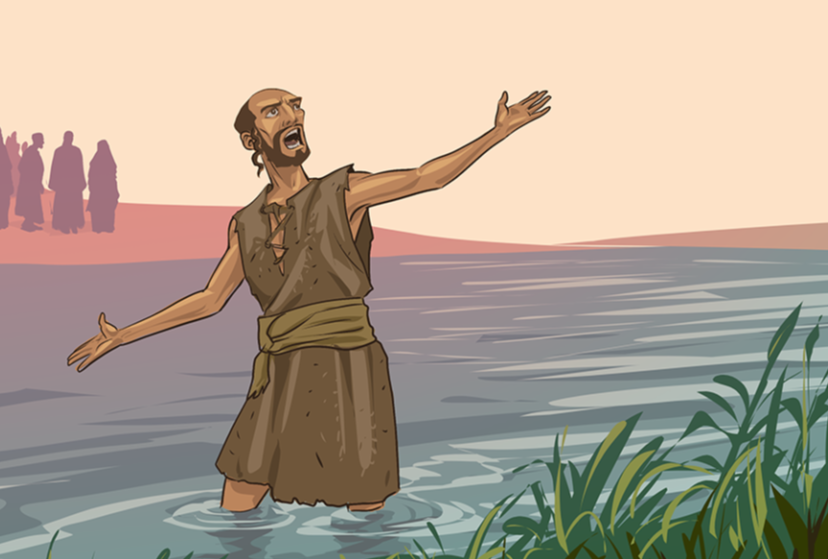
A Rest From Religion

I remember back in high school hearing about the Exxon oil spill in Alaska and feeling so bad for all of the wildlife that was hurt as a result. In fact, I was so affected by what had happened that I decided I would never get gas from an Exxon gas station again.

One day, I came home bragging to my dad about how much I cared for the environment. I told him that, in my effort to avoid going to an Exxon station, I had driven around for almost an hour until I finally found a gas station I thought was good enough for my environmental convictions.

I remember my dad saying, “I want to make sure I understand this. You avoided Exxon and other gas stations because you care about the environment, right?”

I proudly responded, “Yep!”

To which my father said, “What about the harm you do to the environment by wasting an hour’s worth of gas to find a gas station that’s really not that different from the ones you were trying to avoid?”

Yeah… I hadn’t thought about that. In my effort to do the right thing, I had actually worked against my original goal. Today, I just use whatever station is closest, but I often think back on that moment as a reminder of how easy it is to get caught up in the details and lose sight of the bigger picture.

Why do you think it is so easy to focus on rules or appearances instead of the real purpose behind them?

This Sunday, we will be looking at some verses where Jesus is confronted by Pharisees who interpret the law of rest in a way that actually causes more work. Matthew presents a contrast between the heart of the law that Jesus shows us and the rigid religious structures the Pharisees worked so hard to keep in place.

As we read Matthew 12:1-21 together, think about what differences you notice between the Pharisees’ approach and Jesus’ teaching. What might it look like for us to live by the heart of God’s law rather than getting caught up in rigid structures?

I invite you to join us this Sunday at 10:00AM as we read and reflect together on how this passage might apply to us today.

Rejecting or Receiving God’s Wisdom

We live in an unprecedented time where incredible amounts of information are readily at our fingertips, and at the same time we are starving for wisdom. We know that information is not the same as wisdom, but the keen observer will also recognize that human wisdom will only take us so far. In fact, the whole mess the human race is in, according to the Bible, stems from humanity grasping for knowledge and forsaking the wisdom of Creator God.

Still – God offers us his wisdom, again and again, all through the biblical narrative.

Our response to God’s wisdom will effect the way life plays out, and never more so than when it comes to the wisdom revealed in Christ. How we respond to God’s kingdom closing in on this world will have varying results in accordance with our response. That is something Jesus will highlight in the section of Matthew we’ll be reading this Sunday, Matthew 11:20-30.

Jesus gives some of his harshest rebukes outside of the religious leaders in v20-24. What is the repeated reason for their looming judgement? Do you think Jesus is angry with these people? What do you believe is motivating his words? What appears to be the result of rejecting God’s kingdom?

In v25-27 we see that everyone didn’t reject Jesus’ presentation of the kingdom. Who does it say it was revealed to? What do you think is significant in the contrast between the “childlike” and the “wise and clever” ones? What implicit attitudinal response seems necessary for recognizing and embracing God’s wisdom revealed in Christ?

Some of Jesus’ most beautiful words are spoken in v28-30. Here’s the thing – read them. Read them again. Read them from the Message version. Read those words out loud and hear them coming from Jesus to you, personally. Tell me how those words make you feel. What is the result of surrendering to Jesus and the wisdom of God?

I can’t wait to dig into this passage together! Hope to see you Sunday!

Mission Briefing

Learning to drive is a rite of passage in our culture and I still remember it well. It’s one thing to be along for the ride as a care-free kid, it’s another when the keys are in your hands and steering that metal box that’s flying down the road is up to you. It can be daunting at first, and it certainly isn’t something done lightly. That responsibility requires a lot of instruction.

Jesus’ disciples will experience something like that in our text for this Sunday, Matthew 10:1-25. Jesus will essentially be handing the keys of his ministry to his 12 disciples and send them out to do what he has been doing. We’ll be reading Jesus’ instructions for the mission.

In v 1-4, Jesus sends them out as “apostles” – it’s the first time this designation is used. It basically means someone sent…by Jesus, in this case. When you look at the list of apostles, what stories about them come to mind? We wouldn’t necessarily call them a dream team of spirituality. Does this tell you anything about who Jesus is willing to send?

When you read the instructions of v5-8a, we discover the tone of the mission. This is something that will demonstrate what the Good News is like. I would summarize their mission as “doing good”. How can we continue that practice today, as representatives of Jesus?

Jesus talks about finding people who are willing to listen to the message (worthy) and staying with them. The NLT says to bring “blessing” to the household – but the literal Greek is a word that is often translated as “peace” – the word used in the Greek translation of the Old Testament as “shalom”. Shalom is well-being and wholeness – that is what we are meant to bring into this world. If people reject the message, he instructs them to shake the dust from their feet. Why do you believe he gives that instruction instead of telling them to force the issue when the stakes are so high?

The last part of this section, v 16-25, is pretty dark. Jesus is realistic about how this world may respond to the news that Jesus is KING. Take some time to contemplate what it means to be a sheep in the midst of wolves, or a dove as opposed to a venomous snake. What should characterize our mission, even in the face of hostility and rejection.

These are some heavy ideas the think about – we’ll work through them as best we can. Hope to see you this Sunday!

Compassion For the Desperate

One thing we as humans all have in common is that at one time or another, we have all felt desperate. Certainly, times of desperation come in varying degrees – but none of us escape moments where things seem so hopeless they seem impossible to deal with. In our times desperation, we will usually go all over the place looking for something or someone who can give us a glimmer of hope. That’s just the nature of desperation…and it doesn’t have to be a bad thing. One thing the Bible reveals, over and over again, is that God is fond of desperate people.

This Sunday we’ll be reading Matthew 9:18-38 and we’ll discover some desperate people who go to the right place in their time of crisis. As we read about these people, we’ll be looking at what it was that moved them to seek help from Jesus. We’ll look at the compassion Jesus had on them, and we’ll observe the faith that they expressed in Jesus’ compassionate power.

The synagogue ruler, the hemorrhaging woman and the two blind men all have their stories told in succession. Their expressions of faith are risky, scandalous and bold, but they are also desperate. How does Jesus respond to their desperation? Does Jesus demand anything but trust from those who approach him? It’s important to remember that God’s compassion comes before our need is ever known.

When Jesus casts out a demon and a man was able to communicate when he hadn’t been able to before – what are the two reactions recorded? If both groups of people saw the same miracle, what kept the Pharisees from believing Jesus’ power was from God?

The chapter culminates with a summary of what Jesus is up to with the Kingdom Project – and then we see his compassion for the multitudes who are oppressed by religion and not cared for by a Shepherd. He clearly is inviting us into the activity of harvesting a ripened field…but what does that metaphor mean to you? How do you believe we can be used in this “harvesting” activity?

I hope you can join us this Sunday as we dig deeply into these fascinating accounts of Christ’s power!

Trusting in Christ’s Authority

How difficult or easy is it for you to trust someone? For many people, trust is a hard commodity to come by. A lot of factors go into that – past experiences and a host of other reasons can make us reticent with our trust…and those are people we can SEE and examine and evaluate on a regular basis.  What about a God who we can’t see and who sometimes feels like he’s hiding himself?

Still, that’s the whole thing when it comes to Scripture. We are continually called on to trust God – and in the Good News of the Gospel, to trust in the authority of Jesus.

This Sunday we’ll be reading chapter 8:23 through chapter 9:8  as we journey through the gospel of Matthew. The chapter break really shouldn’t be there, because this whole section belongs in a single grouping. Three areas where Jesus demonstrates his authority to encourage our trust in him, even as we follow him into potential hardships. They link us back to the creation story in Genesis as well as the Exodus; God bringing order to the chaotic waters, subduing spiritual evil and reconciling us to God.

In chapter 8:23-27 we have the famous account of Jesus calming the storm. Have you ever felt like Jesus was sleeping while you were going through severe and stressful times? What does he ask his disciples? In our own storms of life, how can asking ourselves the question “why are you afraid?” help to orient our thinking and perspective?

In v28-34 Jesus heals two men who were demon possessed. How comfortable are you with the idea that there are demons on the loose in this world, taking possession of people sometimes? Our western culture mostly dismisses that notion as primitivism – but I think we need to be cautious about adopting the hubris of our rationalistic culture and leave room for mystery. Jesus demonstrates his authority over evil. How does that develop our understanding of his words in the Lord’s Prayer “deliver us from evil” – and in what way can that inspire our trust? What should our response to evil be, in light of his authority over it?

Chapter 9:1-8 tells the story of Jesus healing the paralyzed man. Before he heals him, he forgives his sin. Then he demonstrates his authority to forgive sins by healing the man’s physical body. What does his authority to forgive sins inspire you to trust Him with? What did the paralyzed man do to deserve that declaration of forgiveness?

Troubles from without, in the natural world and the spiritual one, and troubles from within in the form of our own failures – Jesus has authority over them all. What will you trust Him with?

Hope to see you this Sunday!

The Road is Narrow

Robert Frost ended his famous poem “The Road Not Taken” with the words:

Two roads diverged in a wood, and I—
I took the one less traveled by,
And that has made all the difference.

It just reminds me of the “two paths” motif we find in the biblical narrative, and the “Narrow Gate and difficult road” Jesus contrasted with the Broad and easy road most travel by. This Sunday, in our study of the Gospel of Matthew, we’ll be reading chapter 8:18-22, where the story will give us examples of why the road of following Jesus is considered “narrow”.

Jesus sure has an odd sense for how to achieve church-growth, doesn’t he? I love how v18 reads in the Message: “When Jesus saw that a curious crowd was growing by the minute, he told his disciples to get him out of there to the other side of the lake.” Suddenly his ministry is becoming popular and attracting attention, and his response is to bail out immediately. Why do you think he did that?

When faced with sudden popularity, Jesus doesn’t begin the process of working the crowd and taking polls to see what will generate a greater favorability. He doesn’t try to drum up as many supporters as he can by offering give-aways or doing his best to present himself as culturally hip. Nope. He does his best to evade the masses who have only a surfaced curiosity, and when some do seek to commit themselves to him, he does his best to dissuade them!

Jesus was clearly not reading all the email articles that get sent to me. He’s doing it all wrong, at least according to the experts. And they are experts – they seem to represent gigantic, massive and wealthy churches.

v19-20 – Why do you think Jesus responds the way he does to the teacher of religious law who offers to join the cause? Jesus had places to sleep – he stayed with Lazarus in Bethany, he stayed at Peter’s house in Capernaum…and Peter had a house to stay at. There is some hyperbole in this, but there is a sharp, deeply cutting message in it, especially to 21st Century American Christians. What message does this speak to you?

V21-22 – On a scale of 1-10, with 1 being “not at all” and 11 being “this goes to 11”, how harsh does Jesus’ response to the man who wants to bury his father seem to you? Why do you think Jesus would say that? What do you think the phrase “let the dead bury their dead” means? We’ll take some time to gain a better understanding of his response by getting a clearer picture of the culture of that place and time, as well as some potential idioms that were in use.

While this section of Scripture is challenging, my hope is that it will encourage us as well – persuading us to commit our all to the Savior of our lives.

Who is Living the Good Life?

Have you ever looked at someone’s life—on social media or even in real life—and thought, “I wish I had what they have”?

Maybe it’s their home, their family, their vacations, or just the way their life seems so perfectly put together. It’s easy to compare, especially when all we’re seeing are the highlight reels. Social media filters out the grey areas, the struggles, and the sadness, leaving us longing for a version of life that’s curated—not complete.

I know people have looked at my life before and glamorized it without knowing the full story. They see the joyful moments but not the hard-fought battles behind them. That’s the illusion many of us live with in this digital age.

It’s normal to desire a good life. But what’s fascinating is how different “the good life” looks for each person. For me, it might include regular trips to the beach; for someone else, the beach might be the last place they’d want to go. That’s because a good life is subjective—it depends on the eye of the beholder.

This Sunday, we’re exploring what Jesus called “the good life” in the Sermon on the Mount, reading Matthew 5:1-16.
In most Bible translations, we read the word blessed—“Blessed are the poor in spirit…,” and so on. But if we look deeper, starting with the Hebrew context and moving forward, we find that it could also be paraphrased as, “You have a good life when…”

And that’s powerful. Because the kind of life Jesus describes is radically different from what the world calls “good.” It challenges our assumptions, it reshapes our values, and it continues to change lives 2,000 years after it was spoken.Join us this Sunday at 10:00AM as we dive into the Beatitudes and discover how Jesus’ words still speak into our world—and our hearts—today.

God’s Kingdom Revealed

We recently redid our kitchen – well, we hired someone to redo our kitchen. I remember all the planning and sketches Robbie and I did as we thought up our new space. Then the construction began and the project began to take shape – and it’s quite exhilarating to see a project we’d imagined for so long start to take shape in reality. This Sunday we’ll be reading the last part of Matthew chapter 4 , where Jesus begins his public ministry and we begin to see what the Kingdom of God is like in practice.

In v15-16, Matthew identifies Jesus’ work as a fulfillment of a prophecy given by Isaiah, 600 years earlier. Light dawning on people living in darkness is how the action of the kingdom of God is described. What is your impression of this metaphor? What do you think it means, and how does that inform your understanding of God’s purposes for humanity?

We then read about Jesus’ first disciples. We’ll be unpacking the dynamic of rabbis and talmidim (disciples) on Sunday morning – but succinctly put: if these guys were working in the family fishing business, it was because they didn’t measure up for normal rabbinical activities. Yet Jesus chooses these fishermen to be his close associates who will set out to imitate him. What does that tell us about God’s rule in action? Who is it open to, and what action does he call his disciples to (v19)?

V23-25 provide a summary of the excitement that was building around Jesus. What is it that he is becoming famous and sought out for? What is this revealing about God’s reign in practice – what is the mission of God’s kingdom? In all three of these examples, what is it about this that makes it good news?

Looking forward to this study! Happy Father’s day in advance – I hope you can join us!

Staying the Course

We’re coming back to our study in the gospel of Matthew, reading chapter 4:1-11 this Sunday. In stepping into the human experience, Jesus faces temptation to leave God’s intended path for him. In fact, the account of his temptation in the desert is a sweeping overview of the nature of our temptations. Do you ever feel bad for being tempted by things you feel you should have conquered by now? Remember this: Jesus was tempted too. What does that tell us about how we should understand our own temptations? There’s an old saying, attributed to Martin Luther, that states we’re not responsible for the birds that fly overhead, only the one’s we allow to nest in our hair.

The first temptation that is presented to Jesus is found in v1-4. It wasn’t wrong or evil for Jesus to be hungry. He certainly was given power to do miraculous things with bread – he’ll supernaturally provide enough bread to feed thousands of people out in the desert later on in this story. Why was this suggestion to make bread from stones a temptation to sin? Jesus quotes Deut 8:1-3 – read the whole context. Did Israel go hungry in the wilderness? Who provided for them? How does that help us understand what “living by God’s word” means?

Next Jesus is tempted to jump from the highest point in the temple (v5-7). Again, this is similar to something Jesus will do later on – he won’t walk on air, but he’ll walk on water, defying the laws of physics. What is the temptation to sin in this suggestion of stepping out in faith that God will rescue him? What clue do we get from Jesus’ response in v7?

The final temptation recorded in this account is in v8-11. Once again we have the contrast of human kingdoms with God’s kingdom. Worship me, the devil says, and you will be King of kings. Interesting, since that is ultimately what Jesus is called – and the last book of the Bible says in Revelation 11:15 that the kingdoms of this world will become the kingdoms of our Lord. Why is this a sin if it’s the fulfillment of his destiny anyway? What does Jesus have to go through in order to be exalted? What sort of King of kings and Lord of lords does it make him when he was willing to die for us?

In each of these temptations there is a forecast of something Jesus will ultimately do. The difference is in how it gets fulfilled, and by whom. Where do we look for our fulfillment as human beings? A lot of things in this world promise fulfillment and wholeness – but Who holds the true source of wholeness? What has your experience been in looking for fulfillment in the things we can grasp for in this broken world? How can that instruct us?

I think this will be a challenging, yet hopeful study! Hope you can join us on Sunday!

Preparing the Way

Remember how, before Hurricane Michael, when the storm season came around we only gave it our mild interest. Post-Michael, I haven’t yet met someone who doesn’t follow Mike’s Spaghetti models with grave intentionality between June and November. Experience and expectation really goes a long way in shaping our responses to the warnings we get from NOAA.

As we continue our study in Matthew this week we’ll be reading chapter 3.  We’re going to be introduced to a human GFS model – John the Baptist, who will be announcing the arrival of the Messiah and the launch of God’s kingdom invasion.

As you read John’s message, what does his major theme seem to be? What is he calling people to do? What do you think his instructions meant to a Jewish person living in the first century? What does that mean to us, as 21st Century Americans? What sort of radical changes have taken place in your life as a result of embracing the Good News of Jesus?

The Pharisees and Sadducees show up too, and John doesn’t give them the greeting they are accustomed to. What does he seem to highlight as the problem with these religious leaders? Why does he call them “the offspring of snakes”? Thinking back through the Biblical narrative, do you remember a forecast of “the offspring of the serpent” bruising someone’s heel? There’s going to be a lot to unpack in this section that I’m really excited about!

When Jesus shows up he does something that surprises everyone, including John. He gets in line for his turn to be baptized. John is nonplussed. “You’re the Messiah, come to save us from sin…I need to be baptized by you…what do YOU need to repent of?” It’s a puzzling scene to this day. Jesus said he needed to do it to, in the Greek, “fulfill all righteousness”. In other words – the righteousness, the setting things right that God intends comes through a Messiah who stands in the river with humanity, identifying with them, protecting them in their corrupted, vulnerable state. What does this tell us about what it means to “fulfill righteousness”?

I’m so stoked to dig into this text – Hope to see you Sunday!