
God’s Plan Revealed

My grandson lost one of his water shoes at our house the other day. We looked everywhere for it – outside, inside, in drawers, under couches…no place left unturned. It appeared to have a yearning to be free because it never showed up. Until a few weeks later, when we weren’t looking for it, it was resting in plain view in our toy room. Had it been there all along? It seems impossible, and yet there it was on the floor for everyone to see. I’ve had numerous experiences like that in life, predominately with our refrigerator. I ask Robbie if we’re out of mustard, and she replies “No, it’s in the fridge”, to which I reply “I’m looking in the fridge and there isn’t any.”; which prompts her to join me at the door of the icebox where she magically reaches in and retrieves the mustard which was right in front of me. She’s a wizard.

Sometimes things are hidden to us even when they’re in plain view. In our study in 1 Corinthians this week, we’ll be considering how the Gospel, God’s great plan for humanity and this world, was something hidden in plain sight until it was revealed by Jesus. We’ll be reading 1 Cor 2:1-16.

Verse two of this chapter is one of my favorite verses. Think back on what we’ve learned about Roman culture, the honor / shame aspect of it. How might a crucified Messiah sound to people in that context? Paul doesn’t seem to mind how out of sync his message is to the prevailing cultural norms. Why do you think Jesus as the crucified One was an important message in Paul’s view? What message does Christ’s crucifixion give us about God’s intent for humanity (hint, look at John 3:16-17). How might Paul’s singular focus on the cross impact our message in the world we live in?

Paul goes on to describe the Gospel as a mystery – which in the Greek means something revealed that was formerly hidden. What aspects of the Gospel were likely surprising to those Paul is writing to? Paul references the “rulers of this world” being in the dark about God’s purposes. Why do you think Paul said that?

As you read his concluding thoughts on this subject (v10-16), how does it appear that the mystery of God’s plan gets revealed to human minds? It’s interesting how readily we will make assumptions about what’s going on in other people’s minds – and here Paul points out that we do that with God as well. However, we can know God’s mind because He has given us His Spirit, who reveals God’s intent to us. What do you think is the primary way in which the Holy Spirit has revealed the mind of God to us?

It’s a rather dense section of Scripture we’ll be tackling, but I know you’re up for it – and I hope you can join us this Sunday as we dig into God’s Word together!
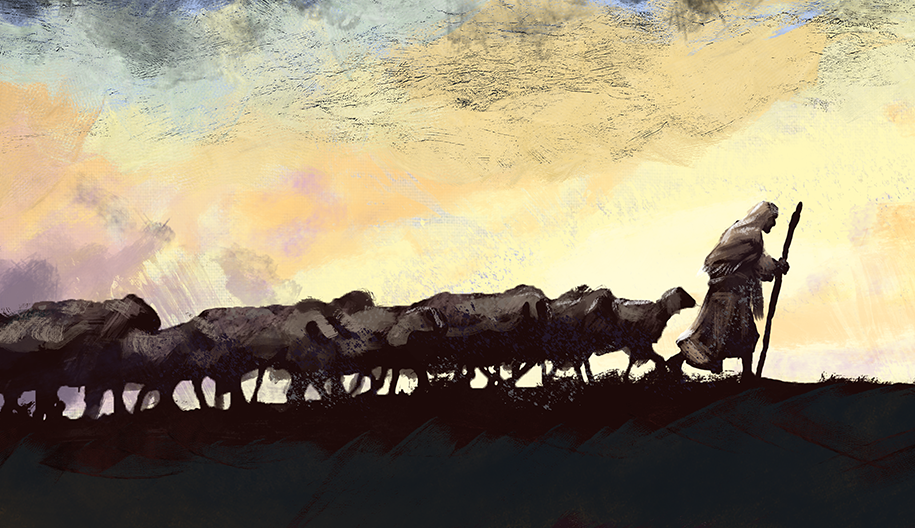
The Mission Continues

I still remember one of the most often repeated phrases I heard after Hurricane Michael was: “I just can’t wait for things to get back to normal”. It was an understandable sentiment. Whenever we go through times and circumstances that push us out of our regular patterns in life, as when life is hard and confusing, we just want to get back to something familiar so we can try and reorient ourselves. It’s a typical response.

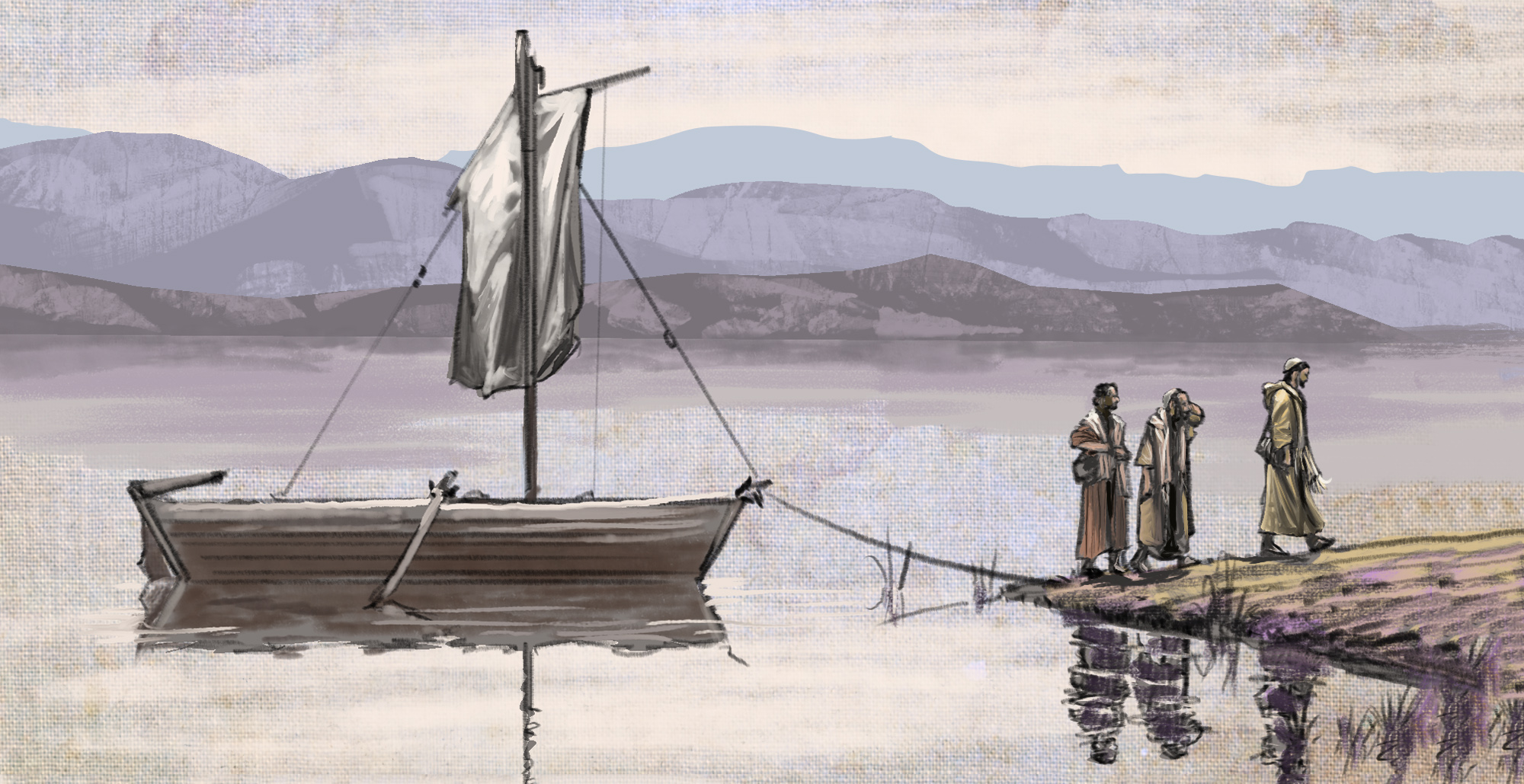
We’re going to be reading about Jesus’ disciples doing just that as come to the final chapter in our study of the Gospel of John this Sunday. We’ll be reading John 21:1-25. Peter and six other disciples don’t quite know what to do with themselves after all of the events that unfolded in Jesus’ execution and then mind-blowing resurrection. They probably had hoped that the skies would rain fire and Rome collapse in a blaze…but none of that stuff happened. Instead, life seemed to just go on and Jesus only seemed to pop in on them sporadically, and I’m sure it all felt really surreal. It makes sense to me that they wanted to get back to what they knew how to do, fishing.

However, now that Jesus is on the loose, things done under their own initiative seem to result in frustration (v3). Have you ever experienced that? Have you ever not known what God is up to and so in exasperation just decided to go back to old habits and patterns you had before meeting Christ? What were the results, and what can we learn from that?

Jesus’ interaction with Peter is, to me, one of the most moving scenes in all of the Gospels. What significance do you see in Jesus inviting Peter to confess his love for Jesus three times? How could this interaction provide a sense of closure to Peter? What can that tell us about our own failures and Jesus’ intent?

Jesus doesn’t just let Peter say words, he commissions him with a way of demonstrating his love for Christ. How does Jesus indicate a love for him is revealed? Is it something we can do in isolation, and if not, what does that tell us about our Christian priorities?

Jesus finishes his instruction to Peter by commanding him to follow. What does it mean to you to follow Jesus? What does it look like for a 21st Century American Christian?

I’ve really loved this gospel. We’ll have one more study after this Sunday where we wrap up all the themes we discovered. I hope it’s not the last time you visit this gospel…we barely scratched the surface of it. I truly hope you go there often, and go looking for Jesus in those words.

I hope you can join us this Sunday at 10 AM!

The Good News

Jim Gaffigan has a stand-up routine from years ago where he declares: “I’m a vegetarian…it’s just that I eat beef and pork and chicken…but not fish because that’s disgusting”. It’s humorous because it cuts across the very definition of vegetarianism. The character he presents clearly doesn’t understand what it means to be a vegetarian.

It strikes me sometimes that a lot of Christians are like that when it comes to the Gospel – the Good News. A lot of times if I ask the question: “What is the Gospel?”, I get a variation on the idea that Jesus died to save us from our sins so that we can go to heaven and not hell when we die. It’s not that I disagree with any of that – but I’m not sure that really captures the heart of what the Good News really is because the focus is placed on what happens after this life.

This Sunday we’ll be reading Mark 1:14-20 as we continue going through that account of Jesus.

In v14, we abruptly find out that John the Baptist has been arrested and Jesus has started publicly announcing God’s Good News. We’ve noted before that the word euangelion,  εὐαγγέλια, was not unique to Christianity. It was a word used to announce good news from Caesar, or announce his birthday, or declare a victory in battle.

What does Jesus say that sets the Good News that He preaches apart from the good news of Caesar? Who is the center and focus of this Good News?

In v 15, Jesus explains what the Good News is and what our response should be. Notice the words he’s saying: The time has COME, The Kingdom of God is NEAR, REPENT and BELIEVE. Follow the links on those words and consider what they mean.

Using the definition of the Greek words, write what Jesus is saying in your own words.

Read Daniel 2, especially v 44  – What do you think the people of Galilee were hearing when they heard the Good News proclaimed by Jesus?

When Jesus calls his first disciples in v16-20, they respond immediately.

What does their response tell us about what hearing the Good News demands of us?

What would it look like in our own lives to follow this example of Peter, Andrew, James and John? How would you describe the priorities their response symbolizes?

There have been lingering questions about why these guys would have responded so quickly and decisively. I had a whole section in my teaching that I had to remove because it would have made it run too long…but I copied it and I’ll paste it here, in case you’re interested. It helps round out the oppressive economic picture of that time and place, which helps us see why these guys may have responded like they did. I’d be interested in your thoughts on this. Anyway, here it is:

“Now, people have gotten cynical about this section, wondering about the abruptness of it – ‘what would make these guys respond so quickly to a rabbi like this?’ But, there ARE historical factors here… we need to understand the situation these guys were in.

We tend to think of these fishermen from the standpoint of a free-market, capitalist society, like WE live in. We imagine a nice little family business where they catch fish for themselves and sell the surplus to the local market. We view them as middle-class, blue collar Joes.

 But we’re wrong. There was no free-market capitalism in the world run by the Roman Empire. Rome ruled the known world – and sure, they brought roads and aqueducts and peace to the region…but they also brought the demands of the Roman elite from Caesar at the top to his agents and governors like Herod Antipas, the ruler over the Galilee region, and all the layers of bureaucracy in between. The sea of Galilee was no longer localized as a source dietary staples for the people who lived there – the sea of Galilee belonged to Caesar – nobody was going to fish there unless he approved it. Fishing leases were required, and taxes and tolls for ports were exorbitant.

Everyone was taking a cut of both the fish AND any potential profit to be made from them.

So local fishermen found themselves in an economic free-fall – they were at the bottom of this elaborate financial hierarchy. They had a trade that had been handed down through generations but now were tantamount to slave-labor …they had no hope of escape from this economic oppression.

Along comes a Rabbi who declares the time has come for God’s kingdom to break in on things. And they’re thinking…well, what would they be thinking, what might they have imagined?

‘This is IT, finally we’ll be free from our oppression and there will be justice.’

 They were right, but not the way the expected.”


Mark – Introduction; This is the Good News

This Sunday we will begin a new study in the Gospel of Mark. I am someone who believes that, as the church, it’s important to revisit the life and teachings of Jesus, just to be sure we’re tracking properly. The Gospel of mark is the shortest of the synoptic gospels, and according to surveys, the least popular of all of them. I think that’s a shame. Mark rocks, in my opinion.

As we begin this study, we’ll be reading chapter 1:1-8. Right off the bat, in the very first verse, we are confronted with several ideas which need to be explored. The Good News, Messiah and Son of God. We’ll be looking at the historic and religious contexts of those words – but let me suggest that to really get a good primer on the concept of Messiah, you can watch The Bible Project’s video on that subject: The Bible Project

How would you explain what the Good News about Jesus the Messiah is?

The writer of Mark wastes no time in getting us into the action. V2-3 introduces us to the expectations of Israel to set the stage. He quotes from Isaiah and Malachi passages that were meant to comfort the Jewish people who had gone into Babylonian exile that the Lord would return to his temple one day. God gave them a sign to look for – a messenger would come and prepare the way for the Lord’s appearance.

Why do you think it was important to connect John the Baptist with the promised sign? How can this encourage us about trusting God’s promises?

In v4-6 John is described, and he is one odd dude. He definitely didn’t follow the advice of today’s experts on how to attract people to your movement.

What does John’s dress, diet and location speak of to you? Why do you think people were so attracted to John’s message? What can we learn from that about our own ministry and church?

When John speaks in v7-8, he has a singular topic in view. Jesus. John is almost over-the-top in trying to pronounce the distinction and superiority of the coming Messiah.

In what ways can we follow his example? As we seek to minister God’s love to people, how can we keep our focus on Jesus without becoming self-depreciating? What do you believe John was describing when he said Jesus would baptize withe the Holy Spirit?

I’m really stoked to get back to posting in Wonderwhat! I’m looking forward to this study – I hope you’ll come to love Mark as much as I do! See you Sunday!


Good News People

“Today, the term evangelical is a loaded word in American culture, packed with a variety of contradictory meanings. The emotions it evokes in one person can be the polar opposite of how it affects someone else. What evangelical is supposed to mean—bringer of good news—is completely different from what it has come to mean for many in our society: judgmental, misogynist, bigoted, homophobic. How did this happen? How did the “good news” people come to be widely regarded as bad news?”

~Lance Ford,  Revangelical: Becoming the Good News People We’re Meant to Be. Tyndale Momentum

This Sunday we’ll be reading a very famous passage from Romans as we continue our study of that book. We’ll be reading ch 10:14-21.

Paul, still sorting through the dilemma of Israel’s rejection of her Messiah, puts forth a stair-step argument for how people actually receive Jesus as Messiah. His argument is in the form of questions again, and he starts with the desired goal of salvation (based on v13) and works backwards through the process. Before they can embrace God’s salvation, they have to believe. But in order to believe, they have to hear the offer. In order to hear, someone has to tell them the news, and so on.

There is no way around the usage here – the gospel has a message to be shared. The Good News is news. You might find the origins of the word we translate as “gospel” of interest – there is a famous inscription that reveals it’s usage outside of the church. If you read the translation, take note of how Augustus is described, and compare it to the first Christian description of Jesus.

Paul makes an assumption about who was sent to share that news. What does this tell us about our purpose as the church? He quotes Isaiah 52 which forecasts the day when Israel’s exile is over – and how beautiful even the feet of those will be who bring that good news. This clearly indicates to us, as the church, that we have some very good news to share with the people we are placed among. What is the good news, in your understanding? What does v17 indicate that the Good News is about? How can we see to it that we keep the main thing the main thing?

Hopefully this study will get us thinking and pointed in the right direction for how we, as a community of the Gospel, can bring light to the world in which we’ve been placed. I’m really excited about Sunday’s study.


Kingdom Come – the Gospel of Matthew

matt FB web

This Sunday we’ll be starting a new study in the gospel of Matthew! We’ll be reading all of chapter one. I’m pretty stoked about this as it’s my second time through this gospel. I know it can be a disappointing shock when you begin to read this story and realize it begins with a long genealogy. Not the exciting start we’d hoped for, but an important one for establishing Jesus’ claim as Messiah. The expected Messiah was most certainly supposed to be Jewish, and from the family line of King David. The list of names that Matthew provides establishes just that.

Now, pay attention to the names of the characters in this list. Look up Tamar and Judah. Do some research on Rahab and her occupation; Ruth and her origins. What event launched David and the mother of Solomon in thier relationship? Explore the lives of all those descendants of Solomon and look at the epitaph that they left behind, including Solomon himself. Does this look like a squeaky clean list of characters? Do you spy, with your little eye, any skeletons in Messiah’s closet? What does that tell us about God’s kingdom and who it chooses to work through? How can that combat any shameful past we may have?

V 21 and v23 give us names that declare mission and the nature of the mission of Messiah. What do those names mean to you personally?

Hey – the Bible Project has done a set of WONDERFUL introduction videos that lay out and explain the structure and emphasis of Matthew’s gospel. Please take the time to look at them in preparation for this study! Hope to see you Sunday!

https://www.youtube.com/watch?v=iriW0zX492c

A Love for Truth

 Last summer I was struggling with my weed-eater. I had come to the conclusion that the spool which held the string was old and faulty and needed to be replaced. I tore the whole assembly off the handle and ripped open the packaging on the replacement head and started trying to attach it to the trimmer. Sweat was pouring down my face and into my eyes as I tried and tried to align the new spool properly onto the shaft of the trimmer, but it just wouldn’t work. Then it dawned on me. I had the wrong replacement part. I had wasted hours and expended so much energy, only to realize I was trying to attach the wrong thing.

Ever been there? Hopefully not – I trust you’re smarter than I. There’s nothing worse than putting a lot of effort into something and realizing, too late, that it was all for naught.

That’s something John will be warning us about on a spiritual level as we finish out 2 John in our study called Truth or Consequences. We’ll be reading 2nd John 1:7-13.

John spent the first part of his letter encouraging us to live in love – then the last part of his letter seems to get a little harsh. How can we reconcile his defense of the gospel of Jesus and his challenge to be loving? Does loving others require us to abandon a claim to a singular truth? Why or why not?

What does John encourage us to “watch” in v8? What is his emphasis concerning how his warning is applied? How does that help us understand the balance of loving tolerance and holding the truth?

The deceptive doctrines he’s warning about are most likely ancient forms of “Christian Gnosticism” – it’s good to have a grasp of what his context was.

In the ancient world there were no motels or formal travel accommodations.  Traveling ministers could only spread their message by relying on the hospitality of local churches. They would be housed, fed and blessed – that is, encouraged. If those systems were removed, the teacher would not be able to continue spreading his views.  Given that context, how do we understand what John is telling us about letting false teachers into the home or blessing them?

This study will require some critical thinking on our part as we press some hard questions to the assumptions our present culture has made concerning love, tolerance and truth. Hope to see yez there!