The Humble Standard

My dad used to say: “If it weren’t for my great humility, I’d go on about how humble I am”. It was a joke, of course, but how often do we find it difficult not to go out of our way to make sure the people around us have taken note of our gracious and humble attitudes? That’s the struggle we have with our fallen, human nature – we just want to be recognized in one way or another. We are a very lonely and insecure species.

We’re coming to a section in our study of Matthew where Jesus is going to give us some instruction as to how to handle ourselves in community. We’ll be reading Matthew 18:1-14.

The scene opens with Jesus’ disciples vying for the number one spot in terms of God’s kingdom and His fantasy team ranking. In response, Jesus puts a child in front of them and commands that we follow that example. In what ways do children embody the concept of humility on a societal level? If we think about ancient attitudes towards children, it expands that idea even further. How is Jesus’ call to intentional humility distinct from the way our normal societal patterns work? If we’re not getting our validation from our fellow humans, where will we get it from if we embrace intentional humility?

Jesus warns us not to put a scandalon (stumbling block) in front of his humble children– that is, offend or trip up someone who is a humble believer in Jesus. Given the context of not seeking to advance ourselves over each other, how do you think this translates to our community interaction? Based on the imagery Jesus uses, how important do you think this is to him?

The final section has a parable about a shepherd who leaves his ninety nine sheep to search for one lost lamb. He was pointing out how all the sheep are valuable to God. No one is unimportant, including you and I. Realizing that, what do you think Jesus’ point is concerning how we interact with each other in community? How can we better embody these traits as a church? If we could do that, what effect do you think it would have on the world around us?

Hope you can join us this COLD Sunday!

A Scandalous Love

Imagine you’ve been asked to a dinner party for the small company you work for. When dinner is done and people are sitting and chatting while dishes are being taken away, your boss has quietly gone to the corner of the room and stripped down to his underwear and with a jug of bottled water, starts going down the line of guests and begins washing their feet.

Besides being the basis for a huge lawsuit – how would something like that make you feel? Would it unnerve you? Would you protest this action?

We’re going to be reading John 13:1-17 this Sunday, and the events described above sort of play out in our text. Sometimes we pass this strange display off as a cultural thing, something that everyone was accustomed to – but we have nothing to support that claim. Actually, just the opposite. Foot washing happened, but by and large, guests at a home would wash their own feet. Jewish servants were not required to do this sort of humiliating and intimate thing. Only gentile slaves were known to do something like this.

John sets the stage for this event by saying that Jesus had become aware that all things were in his hands…that is, he wielded the supreme authority of God. So with that knowledge, what did Jesus do with those hands, very first thing?

I don’t have a lot of questions to prod you with this week – just that image to ponder. If Jesus is our greatest revelation of God…who IS God as we see him on display in this section?

This is humbling, challenging and potentially life-altering stuff. Hope to see you this Sunday.

The Humble Priority

Whooo…running late this week…sorry for the short notice on this Sunday’s message.

What’s the most humiliating experience you’ve ever had? What lessons, if any, did you learn from that experience?

It’s not fun to be humbled…and it’s certainly the rare person who has “be more humble” at the top of their day’s plans.  But Jesus calls us to humility, in fact, we could say he presents us with the priority of humility in the passage we’ll be looking at this week.  We’ll be reading Luke 14:1-14.

Jesus gives us very practical instructions on social etiquette in v7-11…but what do you think a deeper point may be?

Many times we tend to think of humility as a low sense of self-worth.  That doesn’t seem to be God’s concept though.  How would you describe what humility looks like in practice as you read over this passage?

This will be challenging, but affirming in God’s love at the same time!  Hope to see you Sunday!

Religious Pride Gets a Smack-Down

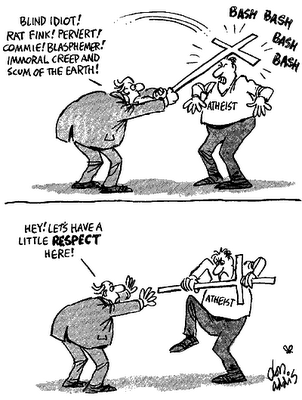
One of the most profound revelations we get about ourselves in Scripture is just how valuable we are to God.  All through 66 books of the Bible, the message cuts through the static: “I love you, come back to Me.”.  It’s in this context that our souls are awakened and we find new meaning in the spiritual significance of life as opposed to wrapping our identities in the mean and mundane trappings of materialism.  We become followers of Christ, Children of God…Christians.  And then for some reason, we seem to lose our minds.

We begin to assume a certain transcendence of position and knowledge because of the truth we embrace…and a whole new world of false identity begins to snug around us…we fall prey to religious pride.  It’s easy to have happen…it sneaks up on us without us even noticing it.  It happened to the disciples pretty early on, and Jesus had to deal out a serious smack-down to the prideful attitude that was beginning to bubble up among his crew.

We’ll be reading Luke 9:46-56 this Sunday.  (By the way, I appreciate the comments and even the emails I received concerning last weeks meeting/message.  I’m in awe at how God is moving in new ways in our community)

In the section we’ll be looking at, we will see the disciples falling prey to a form of religious pride in regard to three different areas of relating to people.  Among themselves (v46-48), among other believers who weren’t part of THEIR group (v49-50), and toward those who are actively opposing the message of Christ (v51-56).  In each case, self was at the center of the dispute.  In each case, Jesus corrects their attitude and behavior with a counter response (ie: instead of doing this, do that).

Which of these vignettes hits closest to home for you?  Do you identify with the disciples at any of these junctures?  What counter response seems the most difficult to you to embrace?

If there’s one thing that’s clear…Jesus makes no room for prideful attitudes among His ranks.  This is the work He does in shaping us into the people we were meant to be.

See you Sunday!