God’s Redemptive Plan

This Sunday we’ll be reading through a string of confrontations Jesus experiences in Matthew 22:15-46 as we continue our study in that Gospel. It’s delightful to me how Jesus is able, not only to gracefully answer his accusers, but to weave clues into his answers that reveal an overview of what God is up to.

The section we’ll be covering breaks down into four sections – v15-22, where Jesus is asked if it’s lawful to pay a poll tax to Rome. It was an extremely loaded (even dangerous) question. His answer reveals that Jesus wasn’t a political crusader – he was loyal to only One. In what way do you think we bear the image of God the way a coin bore the image of Caesar?

In v23-33 Jesus is approached by the Sadducees who rejected the notion of a resurrection at the end of the age (we’ll go into why on Sunday). They pose a riddle meant, in their minds, to highlight the absurdity of resurrection. V 32 sums up Jesus’ unassailable response. What do you think his point is, that God is the God of the living, not the dead?

The famous confrontation about the greatest commandment is found in v33-40. Why do you think Jesus said that the entire law and all the demands of the prophets are based on the two commandments to love God and our neighbor as ourself? How would love be the main component of all that the law of Moses required?

Finally, Jesus turns the tables and asks them a question in v41-46, about the existential nature of the Messiah. We’ll go into what Jesus was getting at, and we’ll see how it actually brackets the whole section by subtly pointing back to the image of Caesar on the coin.

I think this will be an encouraging section to dig into. I hope you can join us this Sunday as we do!

An Invitation from the King

What is the biggest, most elaborate party you’ve ever been invited to? Did you enjoy yourself or was it challenging to be there?

No matter how big the party was that you attended, I can guarantee it didn’t hold a candle to ancient royal feasts. They were known to last up to 10 days. Even into the medieval period, England and France threw a joint party that lasted for 17 days in a huge field, where everyone was given coats woven with silk and gold.

This Sunday we’ll read a story told by Jesus about a party thrown by a king who gets snubbed. It’s a curious story, not without its critics. We’ll be reading Matthew 22:1-14.

Who do you believe the king is in this story? Who is the son? Who do you believe the people snubbing the invitation represent? Who do you think the replacement invitees are? If you said, respectively, “God, Jesus, the Religious Leaders, the church”, you would be in the company of the majority of those who interpret this parable. I agree with them too. There are other views about who is representing whom, but they aren’t as convincing to me, given the context and theme that has been rolling along since chapter 21 began.

Jesus compares the kingdom of God to an elaborate party. How does that fit within your pictures of what God’s kingdom is like? How does it match up with images of people with wings sitting on clouds and playing harps? Which is more appealing to you?

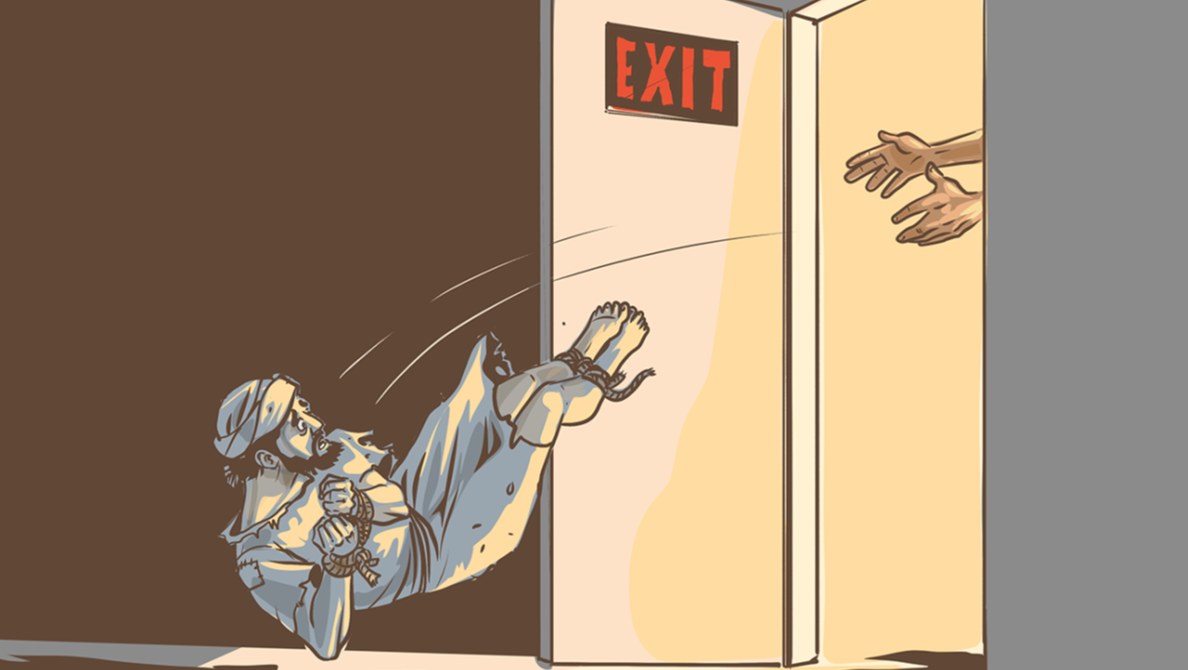
How would you interpret the last part of the story – the guy who is under-dressed and gets tied up and thrown out? What do you suppose this metaphor is representing to us about our invitation to God’s party? How might Galatians 3:27 help you imagine what this part means?

Just some stuff to ponder. Hope to see you Sunday at 10:00 AM!

A Fruitless Religion

Many years ago I was with my dad at the home of family friends. At one point, he reached out for an apple that was in a fruit bowl as the centerpiece for the table where we were sitting. Our friends gasped in horror as he quickly put it to his mouth and bit down hard…only to find it was plastic. I have to give it to the old man, his teeth were in great shape because he bit right through the plastic shell. We all had a good laugh (at least I did), but my dad didn’t seem to find it as humorous as the rest of us. I suppose it’s pretty disappointing to find an imitation meant only for display when you have your heart set on a tasty apple.

This Sunday we’ll be returning to our study in the book of Matthew, reading chapter 21:18-32, and we’ll be considering that theme of religion for display purposes only.

In v18-22, we see Jesus do the only destructive miracle in the entirety of the gospels. Do you think this fruitless tree was just something that irritated Jesus and he lashed out…or do you think there was something else being communicated in this? If this were a living parable being acted out for his disciples – what do you think the message is, given Jesus’ actions in the last section, where he condemned the temple?

The following account actually gives examples of what the message of the fig tree was. Jesus has yet another conflict with religious leaders – albeit, the chief priest is now involved. This is a first in an escalating opposition to Jesus. The question of authority is posed – “who do you think you are Jesus, emptying out the temple like that?”. There is no answer Jesus can give that won’t put him in immediate danger.  Jesus pulls a Bugs Bunny (“Duck season, Wabbit season…”) by posing a question that is impossible for them to answer. Who were the religious leaders afraid of when it came to answering the question? What does that tell us about the motive for their spirituality?

The parable of the two sons spells it out in a pretty straightforward way. If you were to sum up the lesson of the parable, how would you word it?

Looking forward to examining this passage together! Hope to see you Sunday!

The Call to Community

Did you know that April 15 marks Eastgate’s 31st birthday? Last year at a staff meeting, we talked about how amazed we were that our little church community had reached 30 years. Now here we are, a year later, celebrating 31.

Instead of throwing a big party, we realized we would rather invest our energy into the people and ministries that make this community what it is.

Over the past year, we launched a podcast to share more about who we are and to talk about things we do not always have time for on a Sunday morning. We created our first ever VBS program from scratch and served over 30 children. We began weekly financial support for Pastor Christian and the Spanish speaking ministry he leads. We also opened a new Eastgate location in the Fountain and Marianna area called Eastgate North, led by Julie Gjendem and her husband Trond. 

We also continued many of the quiet, faithful practices that shape who we are. Our weekly donations to the Panama City Rescue Mission continued. Our meal train ministry kept bringing meals to families welcoming babies or walking through illness. Men’s gatherings, women’s gatherings, young adult meetings, and small groups all carried on. We trained and hired our teens to help care for children during special events, inviting them into responsibility and service. 

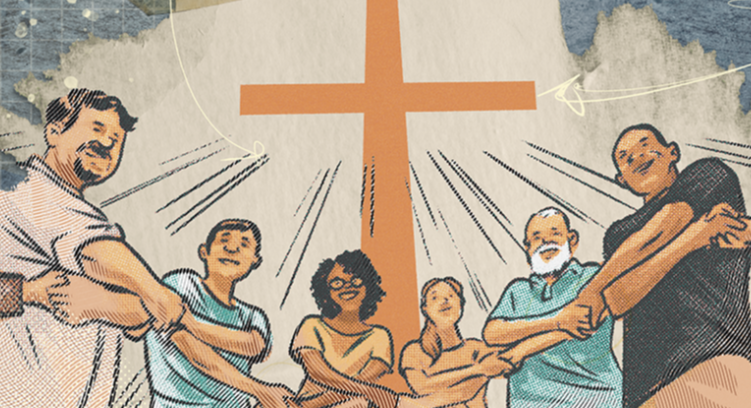
I have been part of this community for all 31 years, and I am continually in awe of what God has done through this imperfect, generous group of people. That brings us to this Sunday’s scripture. Jesus will be teaching about what to do when people in a community face internal struggles. 

The truth is that a healthy community is made up of people, and wherever there are people, there will be conflict. This Sunday we will read Matthew 18:15 to 35. The first part of the teaching helps us see that conflict is not only normal, but that there are wise and loving ways to address it. How might learning to handle conflict well actually strengthen a community rather than weaken it?

We invite you to join us this Sunday at 10:00 AM as we study this scripture together and reflect on what it means to cultivate community.

The Humble Standard

My dad used to say: “If it weren’t for my great humility, I’d go on about how humble I am”. It was a joke, of course, but how often do we find it difficult not to go out of our way to make sure the people around us have taken note of our gracious and humble attitudes? That’s the struggle we have with our fallen, human nature – we just want to be recognized in one way or another. We are a very lonely and insecure species.

We’re coming to a section in our study of Matthew where Jesus is going to give us some instruction as to how to handle ourselves in community. We’ll be reading Matthew 18:1-14.

The scene opens with Jesus’ disciples vying for the number one spot in terms of God’s kingdom and His fantasy team ranking. In response, Jesus puts a child in front of them and commands that we follow that example. In what ways do children embody the concept of humility on a societal level? If we think about ancient attitudes towards children, it expands that idea even further. How is Jesus’ call to intentional humility distinct from the way our normal societal patterns work? If we’re not getting our validation from our fellow humans, where will we get it from if we embrace intentional humility?

Jesus warns us not to put a scandalon (stumbling block) in front of his humble children– that is, offend or trip up someone who is a humble believer in Jesus. Given the context of not seeking to advance ourselves over each other, how do you think this translates to our community interaction? Based on the imagery Jesus uses, how important do you think this is to him?

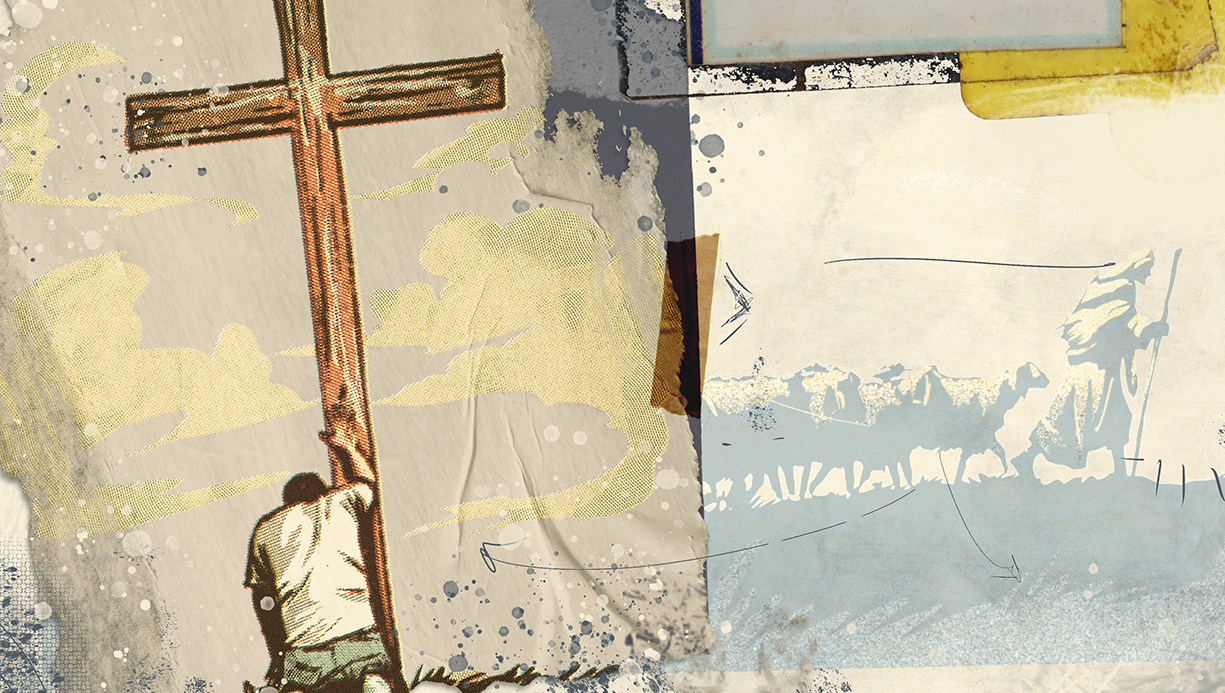
The final section has a parable about a shepherd who leaves his ninety nine sheep to search for one lost lamb. He was pointing out how all the sheep are valuable to God. No one is unimportant, including you and I. Realizing that, what do you think Jesus’ point is concerning how we interact with each other in community? How can we better embody these traits as a church? If we could do that, what effect do you think it would have on the world around us?

Hope you can join us this COLD Sunday!

Sacrificial Freedom

We’ll be reading Matthew 17:22-27 this Sunday. It’s a highly unusual story. One that’s unique to Matthew’s gospel, but understandable considering his tax-collector background.

The story opens in v22-23 where Jesus once again announces his upcoming arrest and execution, as well as his resurrection. Again, the disciples are puzzled.

When they get to home to Capernaum, they are confronted by “collectors of the Temple Tax”. This was a tax instituted in Exodus 30 as a census tax that went to support the temple operations. The priests would go to outlying areas up in Galilee and collect it from the Jewish people. When the collectors corner Peter, they assume Jesus isn’t going to pay that tax. Why do you think they would assume that? Interestingly, a sect within Israel, who was contemporary to Jesus, the Essenes, openly opposed the temple tax. It’s probable that the priests were trying to embroil Jesus in a politicalized debate.

Peter answers in the affirmative, but when he sits down with Jesus, he gets a different perspective. Jesus gives a parable about the kings of earth and how they operate a tax. We’ll get into what Jesus is getting at on Sunday – but it’s pretty clear that Jesus considers himself and his followers as free from that tax.

Surprisingly, Jesus capitulates, he does so not to offend. What can we learn about Jesus’ attitude and our calling here? What do you think is worth offending people over when it comes to our faith?

The fish story at the end…that’s something, huh? What’s the weirdest thing you’ve ever found? We see here that God will provide for us to peacefully navigate through this world of ever present cultural expectations. Let’s trust him for the wisdom to live well.

I hope you can join us on Sunday!

Christ’s Glory Revealed

Are you familiar with the phrase “a mountaintop experience”? It’s describing times of glory and exuberance, especially as it touches our spiritual journey. Those experiences are great, but usually…actually, always short lived.

This Sunday we’ll be reading Matthew 17:1-20 and we’ll read about the original mountaintop experience as we get a glimpse of God’s glory revealed in Christ.

The first section, v1-8, provides the account of the “transfiguration” of Jesus. Jesus takes three of his disciples up on a mountain, and there, his appearance changes in front of them – he is glorious. Why do you think Moses and Elijah showed up? What is it that they represent?

When the voice instructs us to “listen to him“, Jesus, what do you think that means in light of who is on the mountaintop with him?

When they head off the mountain in v 9-13 the disciples get a lesson about Elijah’s coming before the Messiah. Why do you think the people didn’t recognize John the Baptist as a fulfillment of Micah’s prophecy about Elijah’s appearance? What can we learn from that when it comes to our expectations about how God will manifest his glory?

After they return down from the mountaintop experience, they face a different tone in v14-20. What is the key element that Jesus says is missing, which prevented the disciples from helping the demonized boy? What connection would there be between our faith and God’s glory?

We’ll get really honest about our journey this Sunday – hope to see you there!

A Contrast of Intent

This Sunday we’ll be returning to our study in Matthew, and we’ll read Matthew 15:29-16:12. It’s a big section, but I think you’ll see how it all goes together pretty well.

As you read through this section you’ll notice that, even connected with last section, there is an ongoing bread theme. The Canaanite woman asked for bread crumbs. Jesus provides bread in the wilderness and then warns about the wrong kind of spiritual bread. There could be a whole teaching in that thematic vein alone…but that’s not where I went for this study.

In the section that closes out chapter 15, Jesus is doing all sorts of miracles, finishing off with a miraculous feast on a desert mountaintop. Mark’s parallel account clues us in that this happened in the Decapolis – a largely gentile region. When Jesus is performing all these miracles in that region, what does it mean? How should it be read?

When we come to chapter 16 the Pharisees and Sadducees ask for a sign – ignoring what has been happening right under their noses. They are intent on trying to control God’s plan concerning what Messiah would be doing, and with whom. In what ways are we sometimes guilty of trying to dictate to God our own purposes? How can we keep from trying to steal the director’s chair in life?

in v 5-12, Jesus’ disciples are cast in a pretty dim light. They forgot bread and assume Jesus’ warning about the leaven of the Pharisees was about a lack of bagels. Leaven is used as a metaphor for an element introduced that changes it’s host into something else. Leaven changes bread dough, causing it to rise and inflate. In what way do you think the teaching of the Pharisees had done this as it touched Israel’s calling? What is Jesus warning his disciples about? What are the philosophies, politics and religious agendas in our world that could veer us off the path that God originally set the church on? What is lacking, according to v8, that can keep us from falling prey to these aberrant directions?

Once again, this will be a challenging and thought provoking passage to dig into. Hope to see you on Sunday!

Faithful in the Fury

“Anything that can go wrong, will go wrong.” ~ Captain Edward A. Murphy Jr. (Murphy’s law)

This Sunday we will continue our study of Matthew – 14:22-36 and we’ll be reading about things going very wrong for Jesus’ disciples, and the awe-inspiring revelation they get in the process.

I believe this is an account of something that really happened. I also believe this actual event can read as a parable – a metaphor for a life of following Jesus. Very few of us, if any, have been fully insulated from the storms we face in life. We’ll find some encouraging insights we can hold to when we face troubles as we face troubles along the way.

The disciples follow Jesus’ instructions to get in the boat and go. Obeying Jesus, they find themselves caught in a storm and being (literally) tormented by the waves. What metaphor can you see in that? How does this correspond with your own life of faith?

When Jesus shows up the disciples are terrified. They think he’s a ghost sent to welcome them into death – but in reality, he’s showing up just like the Spirit of God did in Genesis 1:2, bringing light, life and order to the chaos.

What do you think, was Peter right or wrong to ask Jesus to command him to walk on the water? Scholars seem to be divided about it. Do you think his lack of faith began when he had to have proof that it was really Jesus, or was it a bold move of faith to claim participation in the miracle?

When Peter is focused on the rising surf, he begins to sink. The lessons there are obvious. Something else to think about is: what was Jesus’ first response (not words, necessarily) to Peter’s predicament? How does his response encourage you when you remember times where you’ve had “little faith”?

Those are just some things we’ll be unpacking on Sunday. I really love this account, and I think we’ll have some fun but also be very encouraged by what we encounter in this text!

Hope to see you this Sunday!

The Parallels of Power

Have you ever found yourself wondering where God is in the middle of a chaotic or painful moment? Many of us have been there. Plans fall apart, people are hurt in ways that seem needless, and violence can spread with unsettling speed. In moments like these it is natural to ask, Where is God in all of this and Does He care?

As we turn to the Scripture for this Sunday, those questions are not spoken aloud in the text, yet they seem to echo beneath the surface. This week we will read the account of John the Baptist’s beheading under Herod Antipas, the ruler of Galilee. In this section of Matthew’s Gospel, the narrative shifts from the parables Jesus has been teaching to a dramatic story that reveals the fragility of human power and the quiet persistence of God’s kingdom.

When you think about your own difficult seasons, what questions about God’s presence rise to the surface?

Matthew then moves from the darkness of Herod’s banquet to the miraculous feeding of the five thousand. The contrast is striking. One scene takes place in a palace where fear and manipulation dictate the outcome. The next unfolds in an open field where Jesus meets the needs of the crowd with compassion and abundance. As we read these stories together, we will look for the ways God’s power is at work among the powerless and how the kingship of Jesus challenges the self-serving rule of Herod.

Both stories invite us to reflect on the kind of kingdom Jesus brings into the world. Even in moments when God seems distant, Scripture reminds us that His work often unfolds quietly and faithfully, especially among those who feel overlooked or vulnerable.

We invite you to join us this Sunday at 10:00 AM as we read Matthew 14 together and consider how God’s presence meets us in both suffering and hope.