God’s Plan Revealed

My grandson lost one of his water shoes at our house the other day. We looked everywhere for it – outside, inside, in drawers, under couches…no place left unturned. It appeared to have a yearning to be free because it never showed up. Until a few weeks later, when we weren’t looking for it, it was resting in plain view in our toy room. Had it been there all along? It seems impossible, and yet there it was on the floor for everyone to see. I’ve had numerous experiences like that in life, predominately with our refrigerator. I ask Robbie if we’re out of mustard, and she replies “No, it’s in the fridge”, to which I reply “I’m looking in the fridge and there isn’t any.”; which prompts her to join me at the door of the icebox where she magically reaches in and retrieves the mustard which was right in front of me. She’s a wizard.

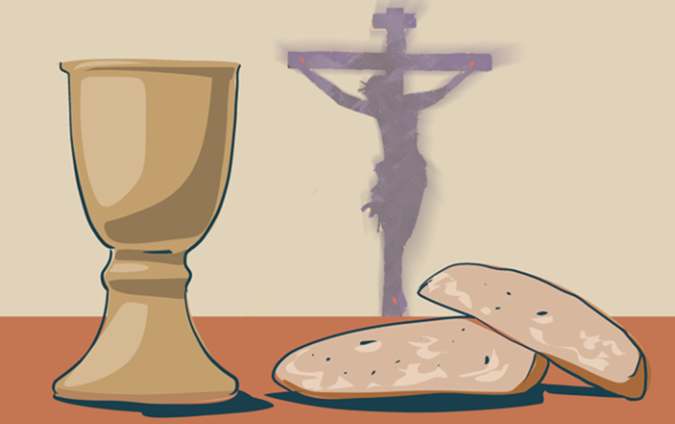
Sometimes things are hidden to us even when they’re in plain view. In our study in 1 Corinthians this week, we’ll be considering how the Gospel, God’s great plan for humanity and this world, was something hidden in plain sight until it was revealed by Jesus. We’ll be reading 1 Cor 2:1-16.

Verse two of this chapter is one of my favorite verses. Think back on what we’ve learned about Roman culture, the honor / shame aspect of it. How might a crucified Messiah sound to people in that context? Paul doesn’t seem to mind how out of sync his message is to the prevailing cultural norms. Why do you think Jesus as the crucified One was an important message in Paul’s view? What message does Christ’s crucifixion give us about God’s intent for humanity (hint, look at John 3:16-17). How might Paul’s singular focus on the cross impact our message in the world we live in?

Paul goes on to describe the Gospel as a mystery – which in the Greek means something revealed that was formerly hidden. What aspects of the Gospel were likely surprising to those Paul is writing to? Paul references the “rulers of this world” being in the dark about God’s purposes. Why do you think Paul said that?

As you read his concluding thoughts on this subject (v10-16), how does it appear that the mystery of God’s plan gets revealed to human minds? It’s interesting how readily we will make assumptions about what’s going on in other people’s minds – and here Paul points out that we do that with God as well. However, we can know God’s mind because He has given us His Spirit, who reveals God’s intent to us. What do you think is the primary way in which the Holy Spirit has revealed the mind of God to us?

It’s a rather dense section of Scripture we’ll be tackling, but I know you’re up for it – and I hope you can join us this Sunday as we dig into God’s Word together!

The Wisdom Paradox

“Wisdom shouts in the streets.

    She cries out in the public square.

She calls to the crowds along the main street,

    to those gathered in front of the city gate.” ~Proverbs 1:20-21

I don’t know about you, but when I think of wisdom, I don’t often imagine it calling out to us in the streets and the busy places we find ourselves. However, from the beginning, the Bible paints a consistent picture of wisdom that is in sharp contrast with the world around us. We see this thought continued in the New Testament with Paul who is writing the church in Corinth. We’ll be continuing our study in 1 Corinthians this Sunday, reading ch 1:18-31. Paul is desperate to remind the church that God’s wisdom should look different than the world’s wisdom. He also reminds them that what the world has to offer, especially in terms of wisdom, is actually quite foolish and insignificant compared to what God has to offer.

So, why is Paul telling the Corinthians about wisdom and reminding them about who is the “smartest of them all”? Well, since the book of Corinthians is a response and not the beginning of a conversation, we have to use context and our imagination to fill in the gaps. Last week’s verses emphasized the importance of unity and this week Paul is emphasizing God’s wisdom above our own. Could Paul be mentioning this because the Christians in Corinth are trying to change the gospel so that it looks and sounds less foolish to the world around them? Or maybe Paul is mentioning this because the Corinthians were using things like philosophy and scholarship to determine who had the highest standing among the Christians in that area? Whatever the reason, I think it’s safe to assume that a lack of humility and an abundance of pride is probably at the center of it all.

Even though it would be oh so easy to judge the “simple” Corinthians for falling into such follies, we want to remember how to hold the scripture that we read. We want to hold this living word up like a mirror to ourselves and see the places in our hearts that God wants to reach. I invite you to join us this Sunday at 10:00 AM as we consider the context and explore this scripture together.

The Weight of Unity

Has anyone ever had a job that would require regular inspections from outside sources? When I (Janelle) worked in the children’s program at the navy base we were regularly inspected by government officials to make sure our practices complied with their standards.

Sometimes the inspections were planned and sometimes they were surprises. The planned inspections involved a great deal of preparation on our side. We would review the areas that would be inspected, we would re-train staff, and we would clean every last inch of a space that was constantly filled with over a hundred kids. Needless to say, it was a stressful time.

There was always a huge feeling of relief when the inspection was over and we could return to our normal ways of running the center. We could untuck our shirts and be a lot more relaxed about how we ran things.

While Paul was not an inspector for the church of Corinth, he was invested in how they lived out their Christian faith. Even though Paul spent a good deal of time with the church in Corinth and teaching them about Jesus, even from afar, Paul found that it was clear they got sloppy while he was away. We’ll be reading 1 Corinthians chapter 1:10-17, where we’re told that Chloe’s household noticed that they did more than untuck their shirts… they seemed to have forgotten the majority of the way they were taught to live.

From what we understand of the culture at that time, societal standings were built on an honor and shame code. It was like a never-ending game of chutes and ladders where people could move up or down depending on what leaders they followed and who they associated with. Even though they were instructed to flip the board game table like Jesus, they seemed to have fallen back into the same social traps by creating a Christian-themed version of the game.

Paul, knowing and loving this church well, had no patience for this type of behavior and was clear about where he wanted them to go from there. I find it fascinating and heartbreaking that a church’s problems from so long ago and so far away can still relate to us today.

This brings us to Sunday and the questions we must ask ourselves as we study the text. Is this a cycle we are doomed to repeat, like the one in Genesis, or are there different choices we can make? Is it possible that the actions of our small church could make a difference? Do you think the Corinthians heard Paul’s word and changed? Or do you suspect their divisions only got deeper as time passed? 

Since we don’t have the Corinthian response to Paul’s letter it means that we get the opportunity to live out the response for them. I invite you to join us this Sunday at 10:00 AM as we study 1 Corinthians 1:10-17 together and discover for ourselves the power of Paul’s pleas for unity.

God’s Response to Human Failure

We’re coming to the most tragic part of the Biblical narrative this Sunday – we’ll be reading Genesis 3:8-24 in our continued study in that book. It’s a tragedy that sets up a pattern that gets set on repeat throughout the whole Hebrew Scriptures, leading right up to the Gospel.

As you read about God’s response to human failure, what are some of the images that your mind conjures up? Imagine (and it shouldn’t be too hard) that you’ve messed up royally – how do you imagine God responding to that sin? As you read about God’s appearance in Genesis 3, how would you describe His entrance?

God speaks 7 times and ands 3 questions. What does He ask? More importantly, if God is omniscient, why do you think He asks?

Do the humans come clean and confess what they did wrong right away, asking forgiveness? What do they do instead? Does this seem consistent with human nature as you know it? What message do you think this is trying to give us?

Read the section very carefully. Who or what is cursed by God? Who or what is not cursed? As you perceive it, does that mean anything, and what might it be?

God forecasts a war between the offspring of the snake and the offspring of the woman (we would assume she represents human existence). How do you think this plays out through the Bible and through history? We must carefully note that biology or lineage have nothing to do with who is who’s offspring – it is all in the context of choice – whose voice is listened to. Jesus called someone the offspring of a snake in Matt 12 – do a little digging to determine who he called snake-offspring, and why.

We’ll have a lot we’ll be covering in this teaching – it’s sobering but encouraging at the same time. I hope you can join us this Sunday!

The Ruin

Have you ever done a diet, say restricting carbs or something? I don’t know if it’s your experience as well, but the moment I decide to cut out carbs the only food I ever think about is full of carbs. “Just don’t think about it, Rob.” – Heh….for me, the moment I’m told not to think about something the only thing I can think about is whatever I’m not supposed to think about. Can I get an “amen”?

I wonder about that forbidden tree in the Garden of Eden – the one tree the first humans were told not to eat from and I wonder if they had that experience too: “All these fruits are great! They’re the BEST!….I wonder what the fruit tastes like on the one we shouldn’t eat?” They were in an idyllic environment, so it’s hard to say if that was a thing, but it didn’t take a very hard push to get them to that tree.

This Sunday we’ll be reading about when everything got ruined – Gen 3:1-7.

How well does a talking snake sit with you intellectually? Is that a hard one for you, and is that easy to accept? I know it’s different for different people. We’ll discuss the nachash, the snake, on Sunday and consider some possibilities.

The text describes the snake as “crafty” – some translations say “cunning” or “subtle”. We usually assign a negative spin on that description, however, a quick word search indicates that it is often used in a positive context, especially in Proverbs. A negative or positive connotation comes down to how that ability is used. What might that tell us about the nature of sin, since the origin of sin is the theme of the text?

In the dialogue that follows, the snake asks a question which the woman answers and the snake concludes the dialogue. Read that exchange very carefully. What jumps out to you, if anything? Read the divine command in Gen 2:16-17 – how does the snake’s quotation match up with God’s words? How do Eve’s corrective quotation match up to the original wording? What do you observe about this – what can it teach us about how we view or interact with God’s words?

The snake suggests that God has been holding out on the humans. He tells them they will achieve something if they take matters into their own hands – what does he say they’ll become? How does Gen 1:26-27 reflect on what the snake was offering? What could that tell us about the nature of temptation?

Read Gen 3:6 with 1 John 2:16 – what parrallels can you find between Eve’s consideration of the fruit and John’s warning about what the world offers?

I’m really looking forward to this study – I hope you can join us. We’ll be observing the communion ceremony after the teaching!

What’s the Deal with Baptism?

This Sunday, we are going to take a short detour from Genesis and spend some time examining the subject of baptism. I know that this is a topic that has been taught before at Eastgate, but to clarify that choice is intentional. There is a reason that we keep coming back to a sacred ritual of our faith, a sacred ritual that we encourage all Christians to partake in. At the beginning of the gospel of Mark, we find John the Baptist in the Jordan River baptizing many Israelites. Baptism was a demonstration of their repentance and renewal in God. In Mark chapter 1, Jesus arrives at the Jordan river and asks John to baptize him.

Why do you think Jesus took his turn with all the other people there and underwent this ritual? What does it tell us about the nature of this Divine King?

After his baptism, the fabric of reality is torn open and a glimpse is given to God’s reality – and from heaven the Holy Spirit descends on Jesus and God’s voice speaks calling Jesus His beloved Son. This is a passage that gives a provoking glance at the mystery of God’s Triune nature.

Jesus, as Messiah, stands as representative of all the human race. He entered our condition in order to bring us into His condition. That means that what is true of Jesus is true of those who believe in and follow Him.

What do you believe the Father declares about you?  Can you imagine God saying to you: “You are my Child, whom I love; with you I am well pleased.” Let that run through your mind, and put your own name in that sentence. What is your reaction to that?

I invite you to join us this Sunday at 10:00AM as we discuss the importance of baptism. We also invite you to join us at Rick Seltzer park after church to cheer on those who have decided to dedicate their lives to Jesus and get baptized.

The Rescuing Counterpart

This Sunday is Mother’s Day and coincidentally enough, in our study we’ll be reading about the very first mother, the creation of Eve. We’ll be continuing our study in Genesis, reading ch 2:18-25.

Once again, I want to remind us to manage our expectations when we come to a study like this. Remember, Genesis isn’t a modern science text-book – it is sacred spiritual literature – and we are approaching it to discover its theological truths. We’ll be reading about the creation of a counterpart for the human (Adam), and we’ll consider what this part of the story is trying to tell us. Whole fields of ideology on gender and gender roles have been derived from this section, for good or bad. Issues of gender are in the foreground of the text, but whether or not they’ve been well understood is another matter.

As you read the text, you’ll see we are confronted with another obstacle, maybe even crisis, since it is described as “lo-tov” – not good. What is it? God determines to resolve or eliminate the obstacle by providing a “helper”, which was “just right/suitable” for him.

The word “helper” in the Hebrew is EZER. Now, if you’re interested, click HERE to look at the word and a concordance list of all the times that word is used in the Hebrew bible. As you examine the passages, how might it indicate what an EZER is – that is, is it describing a subordinate who assists, or something else? Does its usage elsewhere inform you about the nature of the EZER God provides for the solitary human (Adam)?

When it describes the EZER who is “suitable” for Adam, that word is NEGED in the Hebrew, meaning “in front of, or opposite of”, like a mirror. Again, does that seem to imply someone inferior, superior, or an equal?

We’ll look at the woman’s formation, and the deep sleep Adam goes into, and consider the significance of that. Adam began alone, then the one became two, for the purpose of becoming one again. While this certainly has the marriage relationship in view, this idea spills over into a variety of relationships, not least of which is the one we have with the church in Christ. There is a pattern being revealed in this – one which carries through the entire biblical narrative, landing at John 17 and arching like an arrow through the NT epistles.

This has the potential of being an intense study – but one that can be inspiring, albeit, challenging to some of our pre-loaded assumptions about the nature of humanity as God has made us. I hope you can join us this Sunday at 10 AM!

Ash Wednesday 2024

So…I know tomorrow is Valentine’s Day, but I really can’t help the timing, it wasn’t up to me. Ten years ago we did an Ash Wednesday service at Eastgate, and I found it to be a very moving and spiritually nourishing experience. I said back then: “We need to do this more often”….but time gets away from us. So, this Wednesday we are re-visiting that ritual from long ago. Ten years ago I also wrote an explanation of the service, which I’m going to repost here, to help explain the purpose of this service.

I grew up in a decidedly non-liturgical home.  We were evangelicals, but my father was ordained in the Methodist church, so I’m a bit confused as to why we were so far removed from liturgies…but, such is the case for me.

[Tomorrow] is Ash Wednesday, the first day of Lent for most Western Christian churches who observe liturgical calendars.

I have never observed Lent in my whole life.  I honestly didn’t even know for sure what it was until a few years ago.  Lent, in case YOU don’t know either, is a period of forty days prior to Easter, where the Christian, in imitation of Christ’s forty day wilderness temptation, observes a time of penitence, fasting, charity and prayer.

People practice the denial of self in a great variety of ways during lent.  Some abstain from certain types of food…I have one friend who gave up deserts for forty days (and consequently lost a lot of weight).  It was very meaningful for him.  I had another friend who quit watching TV for forty days.

Having grown up completely outside the reaches of liturgical observances, recently I’ve become quite fascinated with them.  Several years ago, I began the practice of praying the “daily office”, from the Celtic Daily Prayers book.  It has had a profound effect on me.

Tomorrow is Ash Wednesday, and for the first time ever (second time) we will have a small Ash Wednesday service..

What is this about, you ask? Ash Wednesday is a practice that began in the middle ages – intended as a time for followers of Christ to prepare their hearts for Easter. The main thrust behind the imposing of ashes on a forehead is summed up in REMEMBER, REPENT, and RETURN.

REMEMBER – that we are mortal – from dust we were created and to the dust we return. Material wealth, plastic surgery, advances in science…none of these things can prevent our inevitable death. The ashes connect us with the reality of our finite, human condition.

REPENT – acknowledge that we don’t do this Christian thing very well, and commit our hearts to change. It does the heart a world of good to come clean with God and admit our struggles to him, and appeal for his help in our resolve to live the life he intended for us.

RETURN – the ashes are brushed on the forehead in the shape of the cross. We are mortal and destined for the dust – but the cross changes everything. The cross of Christ, the love of God in action is the only means by which we now have hope of everlasting life. The ashen cross on our forehead urges us to leave off our pursuits of lesser lovers and  return to the only source of life there is.

The meeting will be quiet and contemplative. We’ll begin at 6 PM with a brief explanation, then a worship song. After that, as Matt continues to play, we’ll invite people forward to have the ashes imposed on the forehead. We’ll be handing out a sheet with meditative prayers on it, covering the themes of remembrance, repentance and returning. As you wait for the ashes, you can meditate on and pray those prayers. Feel free to stay for the whole service, or leave after you receive the ashes, it’s entirely up to you.

“How long do I have to wear the ashes, Rob?” Again, that’s entirely up to you – what’s important is the state of our hearts, not what we have on our foreheads. This is just a time for a visceral, tangible reminder of who we are in Christ, and an opportunity to draw closer to Him as a community.

I hope you can join us, Wednesday the 14th, at 6PM.

The Mission Continues

I still remember one of the most often repeated phrases I heard after Hurricane Michael was: “I just can’t wait for things to get back to normal”. It was an understandable sentiment. Whenever we go through times and circumstances that push us out of our regular patterns in life, as when life is hard and confusing, we just want to get back to something familiar so we can try and reorient ourselves. It’s a typical response.

We’re going to be reading about Jesus’ disciples doing just that as come to the final chapter in our study of the Gospel of John this Sunday. We’ll be reading John 21:1-25. Peter and six other disciples don’t quite know what to do with themselves after all of the events that unfolded in Jesus’ execution and then mind-blowing resurrection. They probably had hoped that the skies would rain fire and Rome collapse in a blaze…but none of that stuff happened. Instead, life seemed to just go on and Jesus only seemed to pop in on them sporadically, and I’m sure it all felt really surreal. It makes sense to me that they wanted to get back to what they knew how to do, fishing.

However, now that Jesus is on the loose, things done under their own initiative seem to result in frustration (v3). Have you ever experienced that? Have you ever not known what God is up to and so in exasperation just decided to go back to old habits and patterns you had before meeting Christ? What were the results, and what can we learn from that?

Jesus’ interaction with Peter is, to me, one of the most moving scenes in all of the Gospels. What significance do you see in Jesus inviting Peter to confess his love for Jesus three times? How could this interaction provide a sense of closure to Peter? What can that tell us about our own failures and Jesus’ intent?

Jesus doesn’t just let Peter say words, he commissions him with a way of demonstrating his love for Christ. How does Jesus indicate a love for him is revealed? Is it something we can do in isolation, and if not, what does that tell us about our Christian priorities?

Jesus finishes his instruction to Peter by commanding him to follow. What does it mean to you to follow Jesus? What does it look like for a 21st Century American Christian?

I’ve really loved this gospel. We’ll have one more study after this Sunday where we wrap up all the themes we discovered. I hope it’s not the last time you visit this gospel…we barely scratched the surface of it. I truly hope you go there often, and go looking for Jesus in those words.

I hope you can join us this Sunday at 10 AM!

A Very Present Jesus

This Sunday we’re going to be reading John 20:19-31, which finishes up the chapter. This chapter brings us to the end of the Book of Glory, with only the epilogue (ch 21) remaining. In this chapter we’ll be reading about Jesus’ appearance to the rest of the disciples and to Thomas – and we’ll be considering the ramifications of the risen Christ in the midst of his followers.

Jesus shows up in the middle of a locked room. He is obviously present in a new kind of physicality, one that is not hindered by normal obstacles. Think about that locked door and the symbolism of it. What kind of doors do we lock in life…and how effective are they in keeping Jesus out?

The first thing out of Jesus’ mouth is the common greeting: Shalom. It means peace, wholeness, stability of life. John is using this event to convey the meaning of Christ’s presence, which is with us still – and how his presence brings with it wholeness and fullness of life. In what ways have you found stability, wholeness and well being in the presence of Christ?

Jesus commissions his followers to do the same thing he’d been doing. That would be unthinkable if he didn’t follow it up by giving the Holy Spirit to empower us for such a task. How can we start developing habits of following the Holy Spirit’s lead to do good and help the oppressed in this world?

V23 is a strange command. Whole ecclesiological frameworks have developed around the way people interpret what Jesus says here. There’s a conservative interpretation that I’m persuaded by (I’ll share it Sunday) – what do YOU think he’s saying?

The account of Thomas is awesome to me. I love that dude. Do you think Tommy was doubting Jesus, or the testimony of the other disciples? How did Jesus interact with Tom: rebuke, anger, irritation, compassion, care…? What was the first thing he said to him? Do you think that Jesus is angered by our questions or honest skepticism?  Do you believe that doubt and sincere searching is debilitating to faith, or can it actually encourage and enhance faith? How might Jesus’ interaction with Thomas inform your view?

I hope you can join us this Sunday, I think we’ll have a lot of good stuff to chew on!