A Deeper Devotion

One of the things that has accompanied the rise of the internet and our online connections via social media is an ever-increasing angst over social comparisons – something that has been ringing alarm bells for mental health professionals. The other side of that tends to be the phenomena of “virtue signaling”; expressing opinions or making posts that intimate that a person is deeply concerned and doing something about whatever the latest problem or injustice happens to be (which usually involves posting something or changing a profile picture). Not every accusation of virtue signaling is correct – but there is a very real temptation to try and look a certain way in how we present ourselves online.

Of course, this sort of posery isn’t limited to social media – it saturates politics and workplaces and is present even in family dynamics – but one place that always has a bumper-crop of people trying to look better than they really are is in the realm of religion and the church.

Jesus is going to deal with religious posing in the text we’ll be reading this Sunday as we continue our study in Matthew. We’ll be reading Matt 6:1-18.

Jesus addresses three areas of spiritual devotion and highlights the temptations we face when setting out to put them into practice. He’ll talk about giving, fasting and praying. We’ll sort of jumble up the text on Sunday so as to keep all the themes together (making it easier for a simple-minded teacher to work his way through).

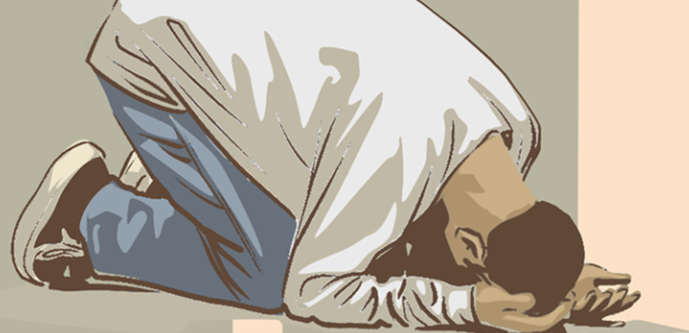
If you were to summarize Jesus’ warnings about giving, fasting and praying , what would you write? Who is supposed to be our primary concern when it comes to these acts of devotion? Why do you think we are so tempted to put the focus somewhere else?

When we look at how Jesus taught us to pray – who are we addressing our prayers to? What title does Jesus give to God? How might we read that differently from God’s other titles, such as Lord or King? How might our trust in a loving, parental Creator help curb our desire for human approval?

There’s a lot we’ll be unpacking in this section – I hope you can join us this Sunday at 10 AM as we dig into the center of the center of Jesus’ Sermon on the Mount!

Ash Wednesday 2024

So…I know tomorrow is Valentine’s Day, but I really can’t help the timing, it wasn’t up to me. Ten years ago we did an Ash Wednesday service at Eastgate, and I found it to be a very moving and spiritually nourishing experience. I said back then: “We need to do this more often”….but time gets away from us. So, this Wednesday we are re-visiting that ritual from long ago. Ten years ago I also wrote an explanation of the service, which I’m going to repost here, to help explain the purpose of this service.

I grew up in a decidedly non-liturgical home.  We were evangelicals, but my father was ordained in the Methodist church, so I’m a bit confused as to why we were so far removed from liturgies…but, such is the case for me.

[Tomorrow] is Ash Wednesday, the first day of Lent for most Western Christian churches who observe liturgical calendars.

I have never observed Lent in my whole life.  I honestly didn’t even know for sure what it was until a few years ago.  Lent, in case YOU don’t know either, is a period of forty days prior to Easter, where the Christian, in imitation of Christ’s forty day wilderness temptation, observes a time of penitence, fasting, charity and prayer.

People practice the denial of self in a great variety of ways during lent.  Some abstain from certain types of food…I have one friend who gave up deserts for forty days (and consequently lost a lot of weight).  It was very meaningful for him.  I had another friend who quit watching TV for forty days.

Having grown up completely outside the reaches of liturgical observances, recently I’ve become quite fascinated with them.  Several years ago, I began the practice of praying the “daily office”, from the Celtic Daily Prayers book.  It has had a profound effect on me.

Tomorrow is Ash Wednesday, and for the first time ever (second time) we will have a small Ash Wednesday service..

What is this about, you ask? Ash Wednesday is a practice that began in the middle ages – intended as a time for followers of Christ to prepare their hearts for Easter. The main thrust behind the imposing of ashes on a forehead is summed up in REMEMBER, REPENT, and RETURN.

REMEMBER – that we are mortal – from dust we were created and to the dust we return. Material wealth, plastic surgery, advances in science…none of these things can prevent our inevitable death. The ashes connect us with the reality of our finite, human condition.

REPENT – acknowledge that we don’t do this Christian thing very well, and commit our hearts to change. It does the heart a world of good to come clean with God and admit our struggles to him, and appeal for his help in our resolve to live the life he intended for us.

RETURN – the ashes are brushed on the forehead in the shape of the cross. We are mortal and destined for the dust – but the cross changes everything. The cross of Christ, the love of God in action is the only means by which we now have hope of everlasting life. The ashen cross on our forehead urges us to leave off our pursuits of lesser lovers and  return to the only source of life there is.

The meeting will be quiet and contemplative. We’ll begin at 6 PM with a brief explanation, then a worship song. After that, as Matt continues to play, we’ll invite people forward to have the ashes imposed on the forehead. We’ll be handing out a sheet with meditative prayers on it, covering the themes of remembrance, repentance and returning. As you wait for the ashes, you can meditate on and pray those prayers. Feel free to stay for the whole service, or leave after you receive the ashes, it’s entirely up to you.

“How long do I have to wear the ashes, Rob?” Again, that’s entirely up to you – what’s important is the state of our hearts, not what we have on our foreheads. This is just a time for a visceral, tangible reminder of who we are in Christ, and an opportunity to draw closer to Him as a community.

I hope you can join us, Wednesday the 14th, at 6PM.

Transcending the Troubles

Does it sometimes feel as though, in your Christian journey, you take a few steps forward only to get buffeted by some trial or tribulation which seems to set you back? Do you ever struggle, thinking that maybe you’re not doing this right, that you shouldn’t have so many troubles now that you’re a Christian?

We’re going to be reading Acts 12:1-25 this Sunday in our ongoing study of the Ragamuffin Revolution, the book of Acts.

Luke has been developing this story along a regular beat – a rhythm of the gospel advancing and the gospel being opposed. We left chapter 11 on a high note of a new, gentile church who is maturing and demonstrating the values of God’s kingdom, only to walk into chapter 12 and find an increased and deadly persecution.

A mistake is made sometimes, when people give their lives to Christ. An assumption develops that things should go smoothly now, now that I’m on “God’s side”. There are some presentations of doctrine that actually seek to reinforce that idea; that God’s intent is to lead us into a trouble-free life of wealth and prosperity and if we have enough faith, God will grant it to us.

That’s a lovely notion…but counter to the Bible’s explicit statements and implicit narrative. It’s pretty clear that we never really knew we had troubles until we started following this Jesus. The early church experienced that. Trouble happens – it comes from kings and chains and iron gates – it comes in bills and doctor’s reports and a culture’s growing hostility.

What is our response to this? Fatalism? Shrug and say “oh well, everything is awful and there’s nothing we can do about it.”? What did the church in Jerusalem do when Peter was put in prison? What do you think they were praying for, given their reaction at the end of the story? How do you think prayer affects things? Do you find yourself viewing prayer as a first response or a last resort?

Herod had James executed for being faithful to God. How does this end for Herod? Who has the last word (v24)? What does that tell us about the troubles of this fallen world? How can we be encouraged to transcend our troubles from this account in Acts 12?

Hope to see you Sunday!

*by the way – Josephus, the ancient Jewish historian, also records the death of Herod: Antiquities 19.8.2 343-361  – it’s an interesting parallel to the Biblical narrative.

Unsure in the In-Between

Have you ever gotten a new piece of technology and felt frustrated or overwhelmed because you now had to take up the arduous task of learning how this thing operates? When I got my computer a few years back Windows 8 had just been released, and I remember sitting in front of my monitor in near despair because I realized I had a whole new operating system to learn. I knew what it was supposed to do, but I also knew it would take a lot of hours of confused, trial and error before it was doing what I needed it to.

I can imagine the apostles were feeling that sort of pain in the hours and days immediately following Jesus’ ascension. He had told them to wait in Jerusalem for an empowering…but failed to mention what it would look like or how to recognize it when it came, much less what they should be doing in the meantime. They must’ve felt very unsure of themselves during the “in-between” – the time between the promise and it’s fulfillment. We often-times go through the same things in our journey with Christ. How often have you felt God urge you in a direction which you followed, only to find yourself hanging in limbo – between the urging and the goal realized?

This Sunday we’re going to be reading Acts 1:12-26 in our continuing study of the Book of Acts, and we’ll be looking at the example of how this early church handled the in-between.

Read the account all in one chunk. What is the most obvious thing that jumps out at you about what these people did while they waited for the promise to manifest? How does that compare to your normal waiting procedure?

Pete and the gang have been criticized by some commentators who feel they jumped the gun by trying to find a successor to Judas. After all, they say, Jesus told them to wait, not elect another apostle. However, do you get any indication from the text that this was some sort of misstep? Why do you think finding a replacement would be important to them?

Notice their procedure for choosing a successor – they prayed, looked at the Word, made the best choice they could, and then what? Casting lots is an odd thing to us, but not to them. Instead of focusing on the method, think about what they were seeking. After we’ve prayed, synced up with Scripture and made the best choice we can…what is the final thing this account encourages us to do in the in-between?

In what ways can we be more flexible and sensitive to God’s guidance in our decisions?

It should prove to be a thought provoking study – hope to see you Sunday!

More Than a Friend

It’s hard to believe I’ve been back in the States for almost two weeks.  I feel as though its only been a few days and I’m still trying to reorient myself…but I also hit the ground running when I came home, so that may be part of it.  I’m still struggling to get my bearings on a fast approaching Christmas.  Aagh!

But…aside from that…this Sunday we’ll be continuing our study in Luke. (“What? No Christmas message?”… “No, Christmas is a week away, and we’ll be having our Christmas Eve Burning House Mash Up on Dec 24th at 6:30pm, so you can get your Christmas on then.”)  This Sunday, we’ll be reading Luke 11:5-13.  Its a continuation of our study from last week, as we consider Jesus’ instructions on prayer.

In the first part of the chapter, the disciples wanted to learn how to pray.  So Jesus provided a model, a guide for what should characterize our prayers, and then, in v5-13, he elaborates on the idea of prayer by telling a couple of story examples.

The story of the friend at midnight, or more appropriately the story of the grumpy, sleepy neighbor, is an odd story to tell when elaborating on prayer.  Many people see this parable as an encouragement to be bold and persistent in prayer.  I’m not so convinced…and I’ll elaborate on why this Sunday.  What if we were to look at this story as a contrast?  I’ll leave it at that…do you have any thoughts on the subject?

As you read what Jesus says in the context of teaching us how to pray…what does he spend the majority of time talking about, in you opinion?

Why do you suppose He ties the whole thing up saying the Father will give the Holy Spirit to those who ask Him?  What does that have to do with anything that he’s said so far?

I hope this will be an encouraging, provocative time of exploring the Scriptures.  See you Sunday!  Also, since our subject is prayer, take some time to visit the Prayer Wall of this site…there are many needs the people of our community have, which we want to keep before God in prayer.  God is our hope, and He will make the difference, so I encourage us all to pray.

Recovering the Native Tongue (thoughts on prayer)

Hey everyone – it’s great to be home again.  As you think about it, please keep Tom Randles in your prayers, and if you’d like, send him an encouraging email at thomas.randles@gmail.com – just to let him know that others are thinking of him and appreciate what he’s doing now.

Now that we’re back, its time to get back into our study in the Gospel of Luke.  This Sunday we’ll be reading Luke 11:1-4, and exploring the model prayer that Jesus provided for us.  It’s interesting that guys who grew up in Jewish households would want instruction on how to pray.  They grew up with prayers as a major part of their heritage.  Why do you think they wanted Jesus to teach them to pray?

As you read Jesus’ guide for prayer, what things strike you about it?  What seems to characterize this prayer?  If you were to divide it into parts, what part comes first and what comes second?

We need a guide for prayer.  Left to ourselves, we tend to make a mess of things as important as this.  I hope this Sunday we can gain some insight about the “hows” and “whys” of our communication with God.  Hope to see you then!