Order From Disorder

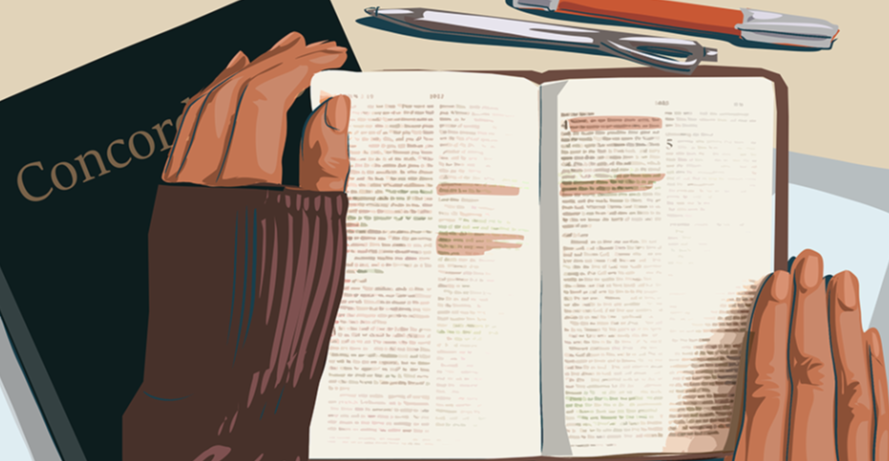
What should we do when we encounter scripture that makes us uncomfortable? Sometimes I’ve read scripture that leaves me squirming in my seat and unsure if I should continue reading or close the book for good. Maybe it’s when God sends a flood to destroy all of humanity except for one family, maybe it’s the violence we are confronted with in the Old Testament, or maybe it’s the verses that Paul writes about slavery and women. 

When this uncomfortable confrontation happens, and I believe it will happen for anyone who reads scripture, we are faced with a choice. Do we close the book for good? Do we pretend we didn’t read that part or pretend those verses are not in the Bible?

We can choose to walk towards God or away from God in our confusion. It seems that walking away would be an easier route. It certainly takes less work and it requires less trust.

Or, do we take the road less traveled? Do we choose to move towards God, even in our confusion? 

Personally, I have found God and scripture to be more than capable and strong enough to withstand my questions, doubts, and feelings of confusion. I have also found that when we begin to understand that God is big enough for our questions, something else begins to happen. The uncomfortable scriptures morph from a haunting of unknowns to a mysterious adventure waiting to unfold with God at our side. 

This week we will be reading 1 Corinthians 14:26-40, which are famous verses for this exact reason. Read them and you’ll know why immediately. We invite you to step towards the uncomfortable scriptures and join us this Sunday at 10:00AM as we study God’s word together.
What Kind of King?

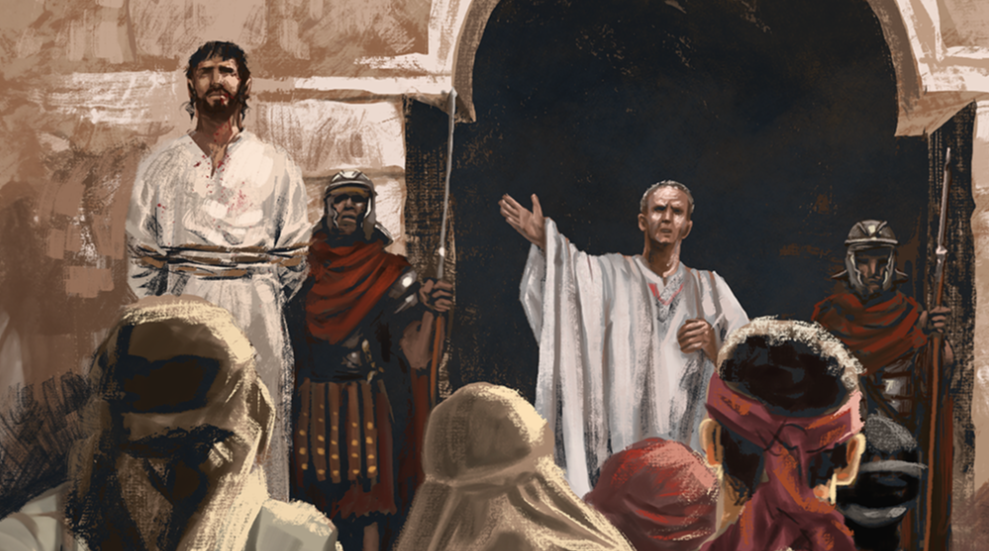
At Christmastime we celebrate the birth of Jesus – and that is something that forces a question in most of our minds: why was Jesus born? Most Evangelicals would likely respond that He was born so he could die for our sins and bring us salvation. Jesus, however, actually gives us the answer as to why he was born in the text we’ll be reading this Sunday. We’ll be reading the account of Jesus before Pilate in our study of the Gospel of John, ch 18:28-40.

Pilate was the Roman governor over Judea. History recalls him as a cruel, petty, common-born politician, and I think the gospel accounts of him back that notion up.

When Pilate interrogates Jesus, he is only interested in one thing: is Jesus claiming to be a rival king to Caesar. If so, it will warrant his death. Jesus, as he so often does, turns the tables on this interrogation, so that Pilate is forced to make decisions and provide answers, and he clearly has no interest in doing that.

In the back and forth, Jesus provides some very important revelations as to the nature of God’s Kingdom, the sort of King Jesus is, the mission that he was on and in the last few verses of the section, the way in which the power of God’s Kingdom is revealed.

Jesus declares to Pilate that His Kingdom isn’t from, or like the kingdoms of this world’s system. Then he describes the difference in v36. How do you understand what he’s saying, and how might that be applied in our present day world?

Why do you suppose Jesus never says “yes, I am a King”? How would Pilate define a king? Would Jesus fit that definition?

When Jesus says that the reason he was born was to testify to the truth, what truth do you think he’s talking about?

Pilate offers to release a prisoner in honor of the Passover, so he offers a choice between Jesus, whom he describes as their king, and Barabbas, a lestes, brigand or revolutionary (as the NLT translates it). He wouldn’t have been a Roman prisoner if he hadn’t been guilty of some sort of insurrection activity. Here he is, the one guilty of the very crime Jesus is accused, and innocent, of. Jesus takes the place of the guilty, and the guilty one goes free. It becomes a microcosmic picture of the power of God’s Kingdom. How would you describe that power, and how might it be more powerful than the war-engines of Rome?

This is going to be an important study – I hope you can join us this Sunday!