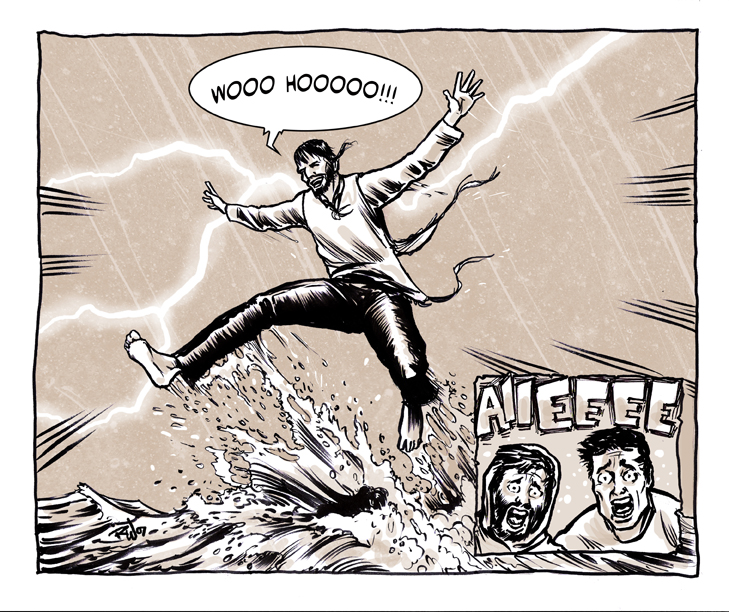
Imagine a beautiful day at the beach, the sand is white and the water is emerald. There are people all over the beach, playing Frisbee and sunning themselves, but nobody is in the water. There’s a lifeguard tower, but next to it is a big sign that reads “NO SWIMMING”. Suddenly, there is the sound of someone crying for help out in the water. The lifeguard stands up and picks up a megaphone and shouts through it “This is your fault, you didn’t obey the sign!” and sits back down.
Abruptly, a person moves through the crowd and dives into the water without hesitation, rescuing the drowning person and bringing him back onto the beach where they both collapse and greedily take big gulps of air. The lifeguard and beach-goers crowd around, but no one celebrates the rescue or calls the man a hero.
The Lifeguard steps forward and says to the rescuer, “How dare you break the rules! Can’t you read the sign? No swimming is allowed! Now get off this beach and never come back!”
Absurd, right? But that is the same sort of thing that happens in our text for this Sunday, John 9:13-41.
This is honestly an entertaining passage – it reads like a Shakespearean comedy. There is witty dialogue, imbecilic folly, but also pathos and drama. It’s a great story with a powerful message.
As we read this passage, it’s easy to identify with the man healed from blindness. It’s the oft repeated theme of the powerful oppressing the weak, and it reveals the absurdity of obsessive rule-keeping. But as members of the church in 21st century America, we need to recognize in the folly of the religious leaders a cautionary tale about the symptoms of religious blindness.
In v14 we find out why the healing of this man is controversial at all – it took place on the Sabbath. No work was to be done on the Sabbath day – and according to the Talmud, kneading was a forbidden work – something Jesus did when squishing his spit together with dirt to make a paste of mud. An activity that required the use of three fingers stirred up a tempest that ended with one man being excommunicated from the hub of Jewish society, the synagogue.
We could wag our heads at these religious leaders and wonder how they could be so blind…but as the modern church, do we have similar blind spots? Can you think of any examples where the rules of what we might consider righteousness have become more important than people? Have you ever witnessed the church pushing the requirements of holiness at the expense of people?
As you think about it, why did John include this story in the good news about Jesus? What do you think his purpose is; what is he trying to reveal about the religious order of that day contrasted with the plan of God as it unfolded through Jesus?
How can we keep ourselves from succumbing to religious blindness? How would you rewrite the Pharisee’s story if they were truly able to see?
Can’t wait to cover this one…hope to see you Sunday!


 Have you ever had a fair-weather friend? You know, someone who is happy to be your pal until it may cost them something or it is somehow inconvenient. Then they are nowhere to be found. Jesus had and still has his share of those types of friends, as we’ll see in the passage we’ll be exploring this Sunday –