Do You Know How Valuable You Are?

Last summer I was called up for jury duty.  I was in the pool of potential jurors, and had to listen to the three days of proceedings as the jury was selected.  The trial was going to be a civil lawsuit about medical malpractice, and a question that was posed to each of the jurors was “Can you put a monetary number on the value of a human life?”  Most people stammered mumbled answers in the negative, but of course, that didn’t stop lawyers from coming up with a tidy nine figure number for compensation.

What is my value as a human being?  If I have value, what is it?  For most of us, that nagging question hangs in uncertainty for a lot of our lives.  We want to be valuable…we want acceptance and a sense of belonging.  We intrinsically know we aren’t complete in and of ourselves; we even coin phrases like “no man is an island” to emphasize our need.

Sadly, for many of us, our chief attempt to find affirmation and value comes through our attempt to gain acceptance and approval from our peers.  This, in the immortal words of Admiral Akbar, is a trap!

In our study this Sunday, we’ll read Luke 12:1-12 .  Jesus warns his disciples about hypocrisy and the desire to please our fellow human beings over a desire to please God.

According to this passage, what is the central danger of hypocrisy (projecting a false persona)?  Why do people do that, and what does it say about where they derive their sense of self-worth?

Whose opinion is most important, according to this passage, and why?  In v4, Jesus calls the disciples something he hasn’t called them before in this gospel. coupling that with v 6-7, where should we derive our sense of value and self- worth?

Do you believe you are valuable to God?  If you do, what response does that inspire in you?  For all of it’s references to things like fear and hell…I found this passage to be hugely encouraging.  I hope you will too!

 

Why Legalism Sucks

It’s been a strange week for me.  I’ve really fought hard, wrestling with the verses we’ll be covering this Sunday.  I find it so important not to take the easy route of pointing fingers everywhere else when dealing with the subject of empty religion or legalism.  I honestly believe these are constant struggles that all of us, no matter how nobly we begin our journey, have to guard against.  I have a wealth of old anecdotes about how legalism oppressed me or twisted my thinking…yet the real challenge is to not live in the past, but have an eye on the present.  How do these issues effect Eastgate, or myself personally?  That’s where things get dicey…I’m more than happy to offend myself, but I hate the thought of offending someone else.  Unlike Jesus,who, in our text, let loose with a full on Ultimate Fighting Cage Match against religious stupidity with no apparent hang-ups about making Pharisees cry .

We’re going to be reading Luke 11:44-54 this Sunday, finally finishing up the chapter.  I probably could have broken this section into two parts as well…but I don’t want to belabor the point.

This section tells us that lawyers not get in on the discussion, which is never a good thing.

Actually though, the “lawyers” in this section are not lawyers like the one’s on Law and Order…it’s another term for Scribes.  They were experts on the Law of Moses, as well as the Talmud.  They learn right away it is not wise to pick a religious fight with Jesus.

Four more woes are leveled at legalistic religion.  If you were to summarize each woe, what would you say the warnings are?  v47-51 create a serious accusation against …saying that experts on religion as an end in itself are guilty of innocent blood all the way back to Abel.

Whoa, that’s a pretty serious woe.  But what do you think it means?  Why Abel?

What ways can you think of that will guard our hearts against legalism and empty religion?  How do you keep the main thing the main thing?

Stuff to gnaw on ’till Sunday.

Jesus Does the Dishes

This Sunday we’ll be reading from  Luke 11:37-54…as it stands right now, we’ll probably have to explore this in two parts.

In this account, Jesus goes toe to toe with the Pharisees, and confronts the legalism of their movement.  He declares six woes on their movement, or we could say, he gives us six reasons why legalism sucks.

Legalism is still an issue for many churches and Christian groups today.  It certainly didn’t stop with the Pharisees.  There are many modern day incarnations of this Pharisaical attitude that Jesus resisted.  I know I’ve had my share of both being a Pharisee and being under the scrutiny and buffeting of them.  Out of curiosity, what have YOUR experiences been.  It would be interesting to hear your stories of experiences with legalism in the church.  If you have time, tell me the goofiest rules you’ve encountered in the context of church.  Tell me your personal experiences.  This isn’t intended to bash anyone…just to be able to laugh at our human condition when it comes to religion.

I’ve never denied that I’m a recovering legalist.  I still find areas, after nearly 20 years of pursuing grace, where I’ve been blind to a legalistic approach to things…whether its with my kids or my church…I still have to remember the keep the Main Thing the main thing.

Anyway…tell me your stories….quick, before Sunday so I can share ’em in my teaching!

Oh…and please don’t forget about the prayer meeting Saturday for Sudan…the particulars are in the post below.  Thanks!

The Only Sign

This Sunday we’ll be coming back to Luke 11, and we’ll be reading vs 29-36.

The context is carried over from last week…that of Jesus addressing those who were rejecting him either through direct opposition and criticism, or through apathy.  Jesus challenged those who heard him to make a decision, one way or the other, and neutrality is not an option.  Carrying the theme through,  Jesus knew there were a lot of people wanting more proof that he was Messiah via some supernatural sign from heaven, so he did what any self-respecting Messiah would do; he called them all evil.  Kinda’ cool if you think about what terrible marketing that is.

Jesus mentions the “sign of Jonah”, which has had a lot of people theorizing about its meaning for the last 2,000 years.  There are some obvious parallels between Jonah and Jesus, which Matthew’s gospel points out in Matt 12.  What do you think the “sign of Jonah” is?

Why would the people of Nineveh and the Queen of the South, both pagan, gentile peoples, have a place to condemn Jesus’ generation of chosen people?

The following verses are a commentary in word pictures about the spiritual blindness of the religious people of Jesus’ day.  What do you think was the cause of their blindness…why do you think they were prone to reject Jesus as Messiah?

Stuff to ponder ’till Sunday.  See yer’ then!

More Than a Friend

It’s hard to believe I’ve been back in the States for almost two weeks.  I feel as though its only been a few days and I’m still trying to reorient myself…but I also hit the ground running when I came home, so that may be part of it.  I’m still struggling to get my bearings on a fast approaching Christmas.  Aagh!

But…aside from that…this Sunday we’ll be continuing our study in Luke. (“What? No Christmas message?”… “No, Christmas is a week away, and we’ll be having our Christmas Eve Burning House Mash Up on Dec 24th at 6:30pm, so you can get your Christmas on then.”)  This Sunday, we’ll be reading Luke 11:5-13.  Its a continuation of our study from last week, as we consider Jesus’ instructions on prayer.

In the first part of the chapter, the disciples wanted to learn how to pray.  So Jesus provided a model, a guide for what should characterize our prayers, and then, in v5-13, he elaborates on the idea of prayer by telling a couple of story examples.

The story of the friend at midnight, or more appropriately the story of the grumpy, sleepy neighbor, is an odd story to tell when elaborating on prayer.  Many people see this parable as an encouragement to be bold and persistent in prayer.  I’m not so convinced…and I’ll elaborate on why this Sunday.  What if we were to look at this story as a contrast?  I’ll leave it at that…do you have any thoughts on the subject?

As you read what Jesus says in the context of teaching us how to pray…what does he spend the majority of time talking about, in you opinion?

Why do you suppose He ties the whole thing up saying the Father will give the Holy Spirit to those who ask Him?  What does that have to do with anything that he’s said so far?

I hope this will be an encouraging, provocative time of exploring the Scriptures.  See you Sunday!  Also, since our subject is prayer, take some time to visit the Prayer Wall of this site…there are many needs the people of our community have, which we want to keep before God in prayer.  God is our hope, and He will make the difference, so I encourage us all to pray.

Recovering the Native Tongue (thoughts on prayer)

Hey everyone – it’s great to be home again.  As you think about it, please keep Tom Randles in your prayers, and if you’d like, send him an encouraging email at thomas.randles@gmail.com – just to let him know that others are thinking of him and appreciate what he’s doing now.

Now that we’re back, its time to get back into our study in the Gospel of Luke.  This Sunday we’ll be reading Luke 11:1-4, and exploring the model prayer that Jesus provided for us.  It’s interesting that guys who grew up in Jewish households would want instruction on how to pray.  They grew up with prayers as a major part of their heritage.  Why do you think they wanted Jesus to teach them to pray?

As you read Jesus’ guide for prayer, what things strike you about it?  What seems to characterize this prayer?  If you were to divide it into parts, what part comes first and what comes second?

We need a guide for prayer.  Left to ourselves, we tend to make a mess of things as important as this.  I hope this Sunday we can gain some insight about the “hows” and “whys” of our communication with God.  Hope to see you then!

Seawall

The flow of human misery into this clinic is unrelenting.  Like a faucet of suffering that’s been turned wide open and the handle broken off, they come each day the clinic is open.

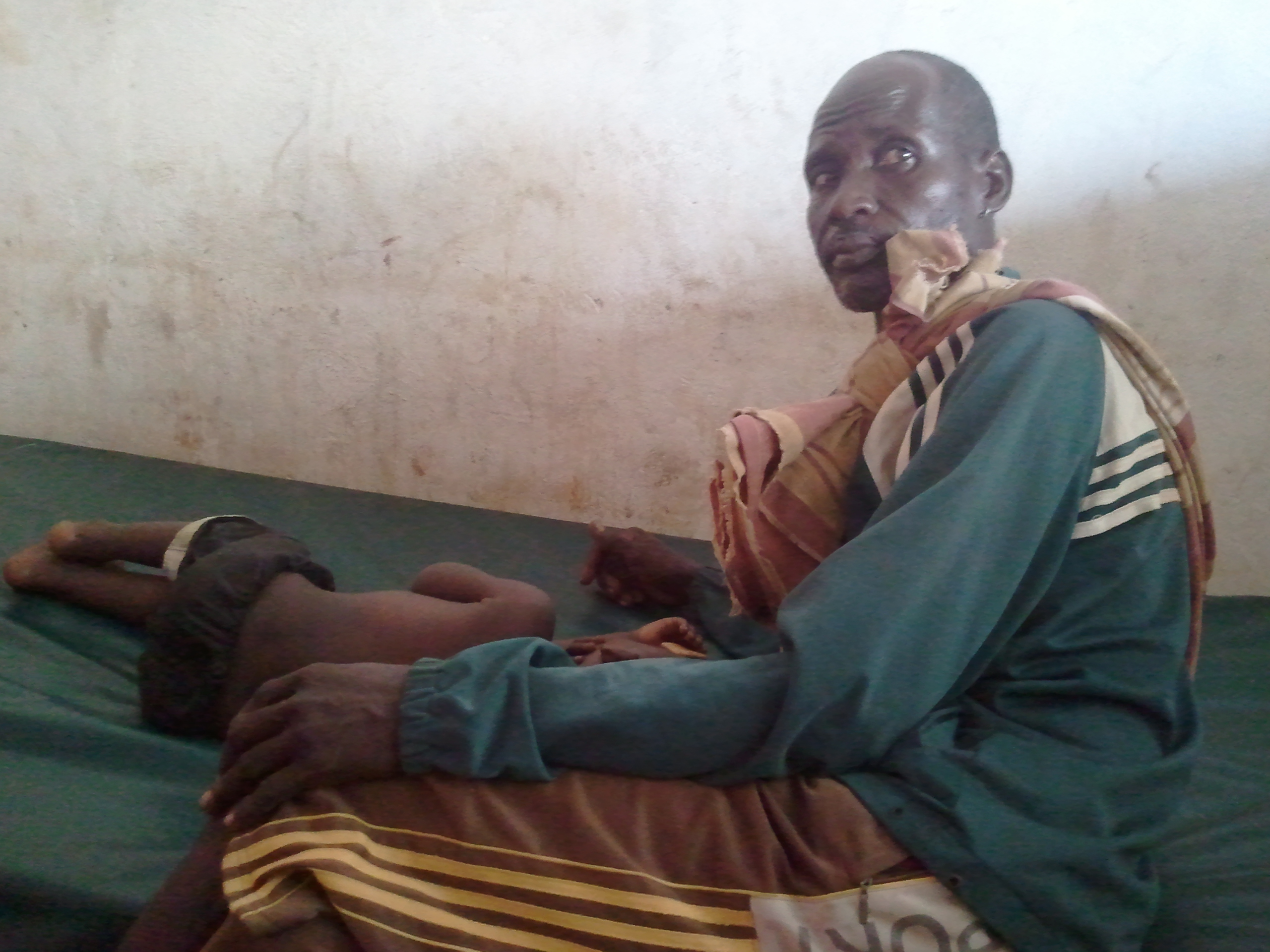
Mothers with young children make up the majority of those who wait in the heat for their turn, but there are others as well.  I walk throughout their midst to go into the clinic and they all look at me hopefully.  I’m a white guy in a medical clinic and they mistake me for someone useful.  So i pray for them, but they rarely understand what I’m doing.  I sat across from a man who was of indeterminate age but his face was weathered and hard.  He had made the four hour journey on foot from his village, carrying his two or three year old son.  His son had malaria, and he lay beside the man, never moving.  There was concern on his face, but only traces.  These are strong, hard people who’ve been forged from a brutal land and shaped by the anguish of war.

I’ve seen some terrible things in the time I’ve been here. Injuries that most ER doctors bak home would see, but here there are no deep pools of technology to draw solutions from, only raw courage and ingenuity…and grace.

The workers here at this mission and clinic are stunning.  Day in and day out, they pour out and pour out help and concern, from stores that can only be from God. There’s no fat paycheck waiting for them at week’s end, only the chance for rest and the promise of a new week of emotional intensity to come.

Last Wednesday was difficult. The midwife here had worked all morning long trying to deliver a baby that wouldn’t seem to move and was showing signs of distress.  The mother was barely in her teens, it’s how they treat women here.  Finally the decision was made to evacuate the mother to the hospital in Wau where an emergency c section could be performed.

Later that night during a bonfire/prayer meeting, word came that the mother was recovering, but the baby had died. The midwife stood up, as though she was going to say something, but just stood there with her eyes closed and palms up.  The pain and frustration of that moment radiated through everyone present; we all sat in reverent silence.  One of the girls who had been leading worship songs began to softly strum her guitar, and quietly began to sing “Blessed be Your Name”. We all joined in, including the midwife.  The only force greater than the oncoming pain and sorrow here is the grace and love that God pours into these workers.  Its like a sea wall of grace that braces against and stops what should be an overwhelming flood of hopelessness. These are remarkable people, and our God is wonderful.

I don’t have the time to detail all the heroics done here…of the 21 year old guy who knows so much from theology to welding, who works tirelessly to keep things running smoothly…of Sabet who moves like an anti-storm, bringing calm and peace to every potential crisis…and on and on.  Know that they’re out here, usually unnoticed but forging ahead and giving of themselves without reserve.

The good that’s done in this mission and clinic is palpable. It’s like a heartbeat in a vast, desolate, lifeless world.  God is at work here and the Kingdom is advancing, changing the world around it.  I hope we’ll continue to pray for the dear, broken people of Sudan and pray for these special souls called to serve them in God’s love.

I Will Carry You in my Heart

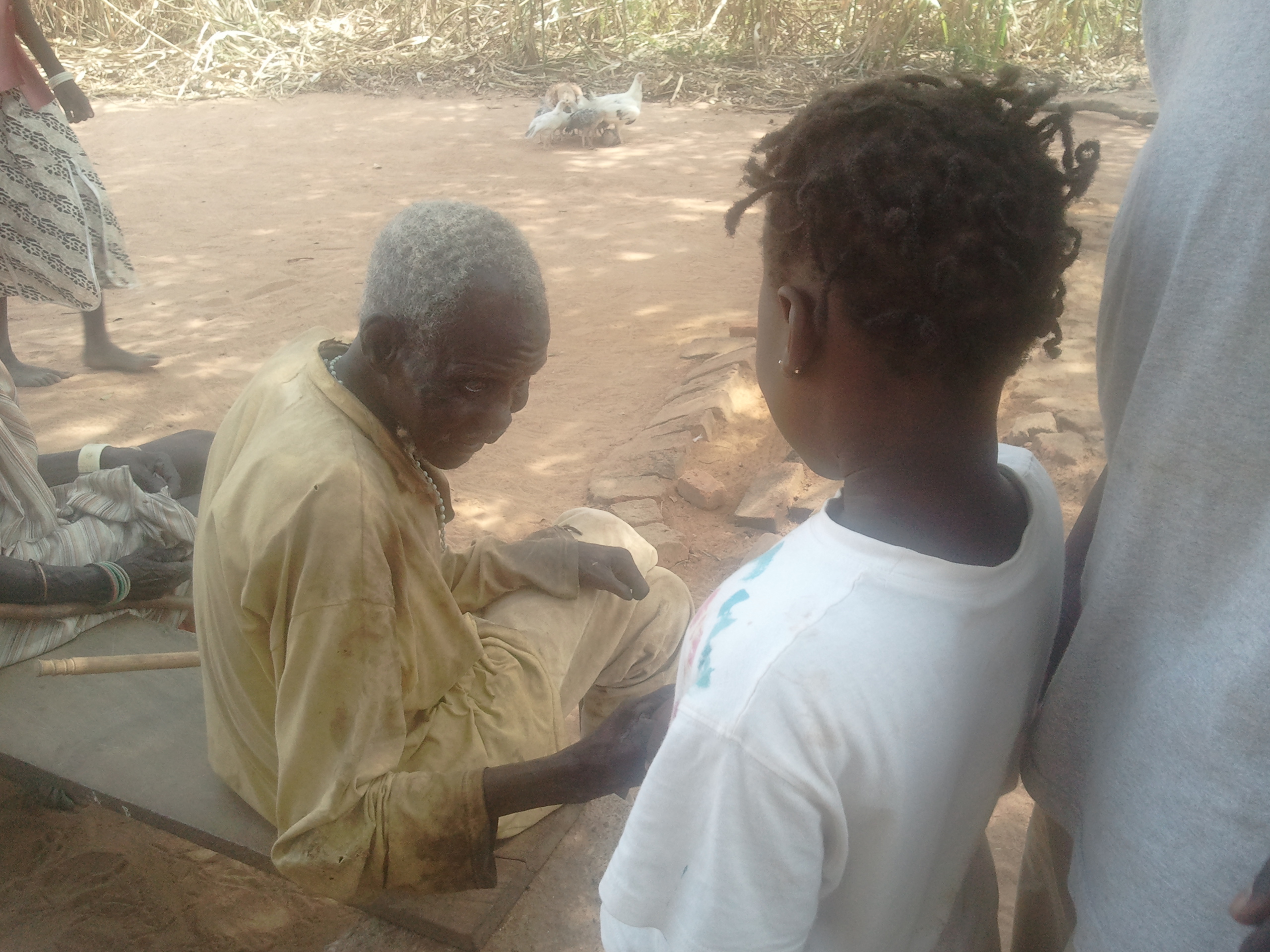
Freckled sunlight danced at our feet in the clearing under the konyuk tree. Crude wooden benches stretched out from the clearing, all facing the tree. Arrayed on the benches the occupants of the Lachook leper colony sat and sang at the top of their lungs and clapped in time to a worship song to welcome us, their visitors.

Sabet presented Tom and Dave and I to them.  They liked Dave and Tom’s names, informing us that “Tom” in Dinka means to give someone an injection, so his name was very appropriate.  My name however was foreign and difficult to pronounce and it would have to be rectified.  Sabet asked the colony to give me a name in Dinka.  An old and gentle man, missing most of his toes and fingers, as well as part of his nose, called out “Deng Mallou”.

Sabet nodded and smiled, looked at me and said as if to present me afresh, “Deng Mallou!” to an eruption of clapping and cheering.

“Please tell me it doesn’t mean cow manure or something.”

“Its a very good name, it means a strong rain, it’s a good thing.” Sabet said, smiling between me and the people who bestowed this new moniker on me.

“Deng Mallou!” I said, giving my thumbs up in approval, which was met with a unified shout “Deng Mallou!” from the group.

Then in one of those unexpected moves that make me wish I were a good pastor and always had something brilliant ready to say, Sabet leaned in and asked me to share something with them.

There I stood, looking out at expectant, dirty faces; at human beings dressed in rags and missing digits and dignity.  What could I say to them? I took a deep breath and  asked God to fill my words.

“Thank you for such a warm welcome for my friends and me.  I came a long way to meet you, and I’m so very glad I did. I’ve taken pictures of you with my camera, but I’ve also hidden you in my heart.  You’ll be in my heart when I go back to my home, and to my church, and we’ll be praying for God’s grace for you.
It’s good for us to meet like this, to catch a glimpse of each other while we’re here. If we all belong to Christ, then we’re all family, and we’ll be spending forever with each other.  This is a hard world and we’re very fragile, but one day Jesus will bring us all home and our struggles will be through.  I’ll look for you then, and you look for me, now that we’ve met we won’t be strangers.
Again, thank you for having us, and God’s love be with you.”

After that we distributed bags of sugar and tea to each door of the colony, and having plenty, we went back and gave each room two bags.

Watching through the back window of the Rover as we drove away, i watched a child who wore only a shirt run after us, waving.  I waved back. “I will carry you in my heart, I will take you home with me there.”

Pray for us, we will pray for you…

I saw baboons. You heard me, baboons.
We were on the “road” from the “airport” in Rumbek, and a whole gang of baboons were in the road, scampering off when we got close. It was seriously sinking in with me that I’m in Africa when I saw those critters.

After a few false starts, Dave, Tom and I finally made it here to the In Deed and Truth compound. We arrived in the late afternoon, so Sunday was our first full day here. We fellowshipped with the church that meets here on the grounds and it was nothing short of awesome. Rythmic clapping and voices singing in Dinka dialect wafted through the morning air, making the small thatched pavilion where we met feel like holy ground. Sabet taught from Exodus a really encouraging and challenging word. The upcoming referendum fairly permeates everything here, as is understandable, since it looms like a storm on the horizon. Sabet reminded the people that God knows the suffering of the Sudanese people, and he desires to help, and the greatest help of all is the salvation of Christ.

The next day I got sick. Not just “ew, I don’t feel so good”, but a rip roaring projectile evacuating kind of sick. I don’t remember much of the day, other than having to stop teaching the pastors mid point in order to run to the bathroom. Not the dignified start I’d hoped for.

The pastor’s class is wonderful, and today, feeling much better, I really felt much more closely connected to them. I’ve never had to speak through a translator before, but Sabet does a great job…and everyone is so kind to me as I feel my way through this. Either way, we’ve had some great discussions.

Santino gets led into the classroom by holding onto a stick that another pastor leads him with. He’s blind. He sits attentively through every hour, asking questions and joining the discussion. Serving people as a pastor with a disability is a daunting prospect in itself. Doing so in these harsh conditions is remarkable. God’s grace creates amazing heroes.

“You must pray for us” Joseph, another pastor said to me as we left the classroom. “Pray for us, we will pray for you, and maybe you will come and teach us again.”. I pack his words like precious, fragile heirlooms into my heart.

We will pray for you Joseph.

This is the class I’m teaching.

I Am So Happy You Are Here

“I was born in a time of war.” the Sudanese representative of Evangelical churches said to my friends and I as we ate dinner at a missionary house in Nairobi.
“I was married during war, my children were born in war. I have only known peace for five years. If the referendum brings war again, I’m not worried, I’m used to it.”

He took another bite of the diner the house had served and smiled. Looking at the a nearest attendant he asked. “This is called what? It is good.”
“Hahm-bugher.”

“The task before the church in Sudan is great. We must monitor elections and speak for those who have no voice. BUT, more importantly we must train the people to understand what is good government. Honest, transparent, protecting the people, so that they don’t fall into the same pit they were in. This is what God wants for all people.”. He looked at us and smiled broadly, his eyes becoming
thin lines of joy. His skin was a glossy ebony and his forehead bore faint scars that betrayed his pastoral youth.

“I am so happy you are here. To come from America to the Sudan, it is a great thing. You would only come here because God told you to come. Why would you leave America when it’s like heaven and come to Sudan…God told you to come, and it makes me so happy to see you.”

Laying in bed staring up at the mosquito netting over my head, trying to puzzle through that encounter. How could three middle class, middle race, middle age guys be a blessing to a man like that?
I kept mulling over his words, “God told you to come and it makes me so happy.”

Then it hit me. If God told us to come to Sudan, it meant that God is aware of the needs in Sudan…that God had not forgotten them…that God cares.

It’s good that we’re here. Dave and Tom and I are getting along. We’ve had a few setbacks in getting all the way to Tonj, but we are here now. It has to be seen and experienced to be fully understood, but it’s amazing. I’m having some trouble getting photos translated to the iPad I’m using…but as soon as I get it figured out, I’ll put some up.
Thanks for your prayers…Saber and Suzy tell you hello!