The Practice of Humility

“Humility is not my virtue? False – as per everything else, I excel at being humble.” ~ Dwight Shrute

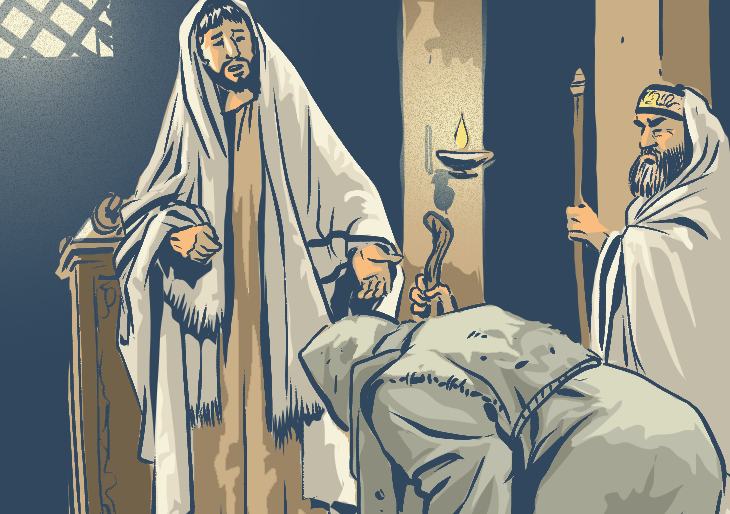
In our study of Luke this Sunday we’ll be reading ch 17:1-10. We’ll move into a section where Jesus will give a warning, a command, an encouragement and a parable – all with an underlying theme of humility. It’s interesting because the word “humility” doesn’t appear in the text, but the only means of experiencing what he calls us to is by setting our self-will aside for the sake of another.

The warning starts in v1-2, about causing a “little one” to fall into sin. Who do you think a “little one” might be? The word for “sin” in this text is scandalidzo (σκανδαλίζω) – and it means to put an obstacle in someone’s path causing them to trip up. What things might we put in someone’s life that would trip them up in their intent to follow Jesus? We can think of all sorts of temptations in this world – but think also about the Pharisees in ch 15:1-2 – in what ways could those types of attitudes trip someone up? What is necessary on our part to keep from offending our fellow believer?

V3–4 provides a warning and a command – don’t cover-up or dismiss an offense, but be quick and consistent in forgiving the repentant. Humility plays a large role in being willing to forgive – and forgiveness is a really big and nuanced subject, something we’ll be taking some time to consider and qualify in our teaching on Sunday. All of this is in a community context – so what sort of attitude do we see Jesus promoting among his followers?

Jesus also exhorts us to believe God in v5-6 after the disciples start wondering how they’re gonna’ achieve these things he’s commanding. He makes is clear we don’t need a big faith…instead, he implies the opposite. If we had great faith to rely on, what might we be tempted to trust in?

Finally, Jesus tells a parable in v7-10 which sort of wraps up the section. In some ways, the picture the story paints is sort of bleak for a disciple – described as a self-effacing servant of a task master. But remember, parables aren’t meant to be one to one comparisons – he’s making a point. There are plenty of places where our value as God’s children is emphasized in Scripture, that part is supposed to be assumed in this parable. How might this parable prompt us toward humility?

I’m looking forward to this study! Lavished Ministries will be sharing a missions update about the important work they do for an abused and marginalized segment of our society. I hope you can join us!


Living Now Like it’s Then

Have you ever experienced the 20-20 vision of hindsight? I can remember so many times when I’ve looked back on a confusing situation and had a much clearer picture in light of all the things I discovered along the way. What if we could get the clearer picture beforehand – not having to wait until the event is history before knowing the best response? Wouldn’t that be cool?

In our text this Sunday, Jesus will invite us to gain a better picture for our present day lives by reminding us that things are not always as they appear on the surface. We’ll be reading Luke 16:19-31 as we continue our study in the Gospel of Luke.

I’m someone who reads this section as a parable – the reasons for which I’ll delve into on Sunday. As a parable, I believe it sets up a perfect punctuation for everything that’s been said in the whole section which began in chapter 15:1-2. It also helps illustrate what Jesus said a few verses back about how the world honors one thing but God finds it detestable.

In the parable, the curtain gets pulled back to see that statement acted out with all the drama and theatrics of a stage play.

As you read the story, imagine the details and contrasts set up in the first act (v19-21). Who would you rather be in that description?

Act two (v22-23) brings the great equalizer on stage: death. Here we recognize that everything wasn’t as it appeared in life. Who is blessed and who is cursed in this scenario? The interesting thing is, nothing changes about their status or activity during life – which means this state of blessing and curse was present in life, just unseen. (spoiler alert!) That’s a major point of the parable! How does this relate to the Pharisee’s critique of Jesus hanging out with sinners and outcasts?

Acts three and four finish up the section. The unnamed rich man pleads with Abraham for relief and pleads for his five brothers who needed to be warned. Abraham refuses both requests – for relief because there was an irreconcilable gap between them; for warning because they had God’s word that could instruct them, if they won’t hear that they won’t believe someone risen from the dead.

There’s all sorts of nuance here which we, knowing there’s an empty tomb at the end of this gospel, are able to recognize more clearly.

Again, I’m not someone who reads this story as a teaching about the afterlife, but as an exhortation addressing how we live right now. Some questions we could consider from this parable are: Who’s evaluation of us matters most? How should we evaluate God’s word, what impact should it have on our lives? And finally, how should we assess and treat each other in light of Heaven’s tendency to reverse things that seem so obvious to us on earth?

I hope you can join us this Sunday – it should prove to be a challenging yet encouraging exploration of this passage!

Faithful Living

“Great eagerness in the pursuit of wealth, pleasure, or honor, cannot exist without sin.” ~ Desiderius Erasmus

“Yet true godliness with contentment is itself great wealth.” ~ 1 Tim 6:6

There is probably no philosophy or religion on earth that doesn’t contain at least some warning about the dangers of wealth. Jesus’ teachings are no different. The Bible is replete with warnings about money and wealth. Not warnings about the use of money as a means of exchange – but always warnings about money’s effect on our hearts.

We’re going to be continuing our study in Luke this (chilly) Sunday, reading Luke 16:10-18, where Jesus will transition from using money as a parable to speaking about it literally. They will be some of His strongest words about wealth’s potential influence on us.

As you read the passage, what are the contrasts Jesus makes? What would you think is a “little thing” and what would be a “greater responsibility”? What do you think Jesus is trying to emphasize here? Why do you suppose he goes from using money as an illustration of something else to talking about actual money? V 14 may give you a hint.

In what ways can we end up serving money? How might money be able to serve God’s interests? Do you think Jesus’ warnings are limited to wealth? If not, what other things of this temporal world are capable of enslaving us?

V16-18 are difficult parts of this section – they feel like non—sequiturs, but they are in fact related to the topic as a whole. We’ll unpack and examine that on Sunday!

Hope you can join us!

Wealth Management

Have you ever tried to explain something but the person you were trying to inform just could not grasp the idea?  This is where this weeks teaching begins.  We find Jesus, simply exhausted of trying to have the pharisee’s understand this new upside down kingdom.  So, turning to the other part of His audience, the disciples, Jesus tells another  parable further explaining how the good news of the new kingdom should look.  Keep in mind while the story is directed to the disciples, Jesus knows full well the pharisees, lawyers and scribes are listening.  Jesus has not given up on the ‘enlightened lost’.

In this section we read one of Jesus’ most difficult parables, ‘The Parable of the Shrewd Manager ‘sometimes called ‘The Parable of the Dishonest Manager’, or other times called ‘The Parable of the Unrighteous Steward’ or another translation titles it the ‘Parable of Unrighteous Mammon’. As you may notice, there seems to be a great deal of,  lets say confusion, over the  description of this parable.  Is the theme about the overseer’s character?  How would you describe his character?   Could the emphasis of the parable be about unrighteous mammon (entrusted wealth)?  Think about the role wealth plays in this parable.  Where does it come from and how is it managed?

As with the previous parable, it is still important to keep the context in which this story was told in view. The prodigal parable makes the point that even when one’s own mismanagement cause separation, a reconciliation is cause for celebration.  This story continues the theme adding important detail.  As the multitude of titles for this parable suggest, it is about the management of entrusted wealth.  You might even see it as an explanation to the brother of the prodigal son, and us, as to the nature of wealth and how it should be utilized.  
 
As we look at this parable we will find three main points.  One on accountability, one on self reflection and the last on reconciliation.  As we read this parable, pay particular attention to how we feel about the manager when he is accused, when he reflects upon his situation, and when he devises his plan of action.  Are our thoughts more in line with the prodigal’s father or his brother?  Are we prone to sympathy or skepticism?  What about  “admiration” for the “dishonest rascal”?  How does that fit into a righteous living model?  Keep in mind that a parable is hardly ever “about what it is about”.  So, if money is not the object of wealth, what is?

 This is a challenging parable.  It asks us to navigate this world with the entrusted wealth Jesus has offered and to do so in a palatable way.  No small task!
 
I look forward to sharing it Sunday, hope you can join us!

Prodigal Grace

The holiday season is over, and we’re all finding our way back to our normal routines, and this Sunday we’ll be returning to our study in the Gospel of Luke, reading Luke 15:11-32.

In this section is one of Jesus’ most famous parables, The Prodigal Son. As you’ll have noticed, I’ve re-named the parable to something I think is a bit more appropriate, since the meaning of the word “prodigal” is to spend or give something on a lavish scale.

If you read the passage, it’s very important to keep the context in which this story was told in view. When the chapter opened, Jesus was being criticized by the religious leaders of his day for hanging out and even eating with people whose reputations were less than respectable. To answer his critics as to why he was so casually spending time with sinners, Jesus told a string of parables. The Lost Sheep and The Lost Coin were the first two which we covered in our last study.

In this story, the stakes are raised, but the issue at heart is the same. Something missing is returned and this calls for a celebration.

We’re going to dig into this on Sunday because there are some nuances to this story we could easily miss as modern Westerners looking in on it. There are patterns from Israel’s history that show up here – maybe you can recognize them.

You’ll notice that the parable unfolds in four acts – the first act is the the youngest of two sons asking for his inheritance early and squandering it all in wanton living, far away from home. The second act is his coming to his senses and determining to try and bargain his way back home. The third and most beautiful act is his return and his father’s reaction and response to him. The fourth act is probably the most challenging, and the one addressing the original question of why Jesus is eating with scoundrels.

This parable is probably one of the most stunning revelations of God’s heart and grace. It’s often told as an encouragement for people to repent and turn to God, which it certainly does that – but the real teeth of this story is it’s challenge to God’s people about how we view each other. What are our assumptions about the importance of repentance, and what do we think God is looking for from humanity? What is God’s end goal? If we view the father of this parable as a picture of God, what would we say his goal is?

Try the characters on for size. Who do you relate most to in this parable? Who do you struggle to relate to? The story provides no ending – If you could write the ending, what would it be?

I LOVE this parable – I can’t wait to talk it over with you on Sunday! Hope you can join us!

Lost Valuables

This Sunday we’ll be reading two familiar parables in our study of Luke – the Lost Sheep and the Lost Coin. They are found in Luke 15:1-10.

The first two verses set the stage for the stories Jesus tells. What is at issue, and how do the stories relate to that issue? What is it revealing to us about the heart of God towards humanity?

Have you ever lost something of great value to you? How did you feel when it was missing? What did you do when you discovered it was gone? Do your best to conjure up those emotions and thoughts. Now…can you imagine God feeling that way about you, when he went looking for you?

These stories are usually read with the main focus of finding lost ones – but we also want to remember the context which started this discourse – Jesus is correcting Pharisees who had no interest in lost ones. To properly read these parables, we need to read them from the Pharisee’s perspective – and pose the question to ourselves: “Who do I consider unimportant or undesirable, and am I willing to welcome them and reinforce their value, as Jesus does with all of us?”

Value is at the heart of this passage – and the message these stories are getting across is stunning. I wonder if any of us truly grasp the way God values us.

I think this will prove to be an encouraging, yet challenging study. Hope you can join us!

Counting the Cost of Following Jesus

This Sunday we’ll be reading Luke 14:25-35. It’s another very heavy section, one that’s going to require some careful examination. When we think of Jesus, it’s probably rare that we associate words of hate with him – yet, in the text before us, Jesus speaks directly of hating people as a requirement for being his disciple. How do we sync that with the many places and ways that Jesus represents divine love, and even commands that same sort of love from us?

In what ways might his challenge be an indication of priorities and value? What then, is Jesus calling us to prioritize the most?

How can we realistically count the cost of being a follower of Jesus? What things in life are easy to set aside, and what ones are hard? What might Jesus be saying to us about our commitment to his way of life?

This will be a challenging, yet encouraging study – hope you can join us!

A Banquet of Grace

This Sunday we’ll be having our first ever Post Thanksgiving Potluck – also known as The Great Big Post Thanksgiving Family Holiday Leftovers Potluck – I hope you can join us! It’s quite fitting, given our text this week will be focusing on a meal, with a story about a great banquet. We’ll be reading Luke 14:1-24 this Sunday.

The text will have a repetition of a pattern we’ve seen already – Jesus heals someone on the Sabbath day much to the dismay and offense of the religious leaders. Jesus will make an almost identical explanation as he did back in Luke 13:10-17. Why do you think this is being repeated? What message do you take from that pattern?

From there Jesus goes on to give what seems like advice on dining manners – but it’s really a parable in disguise. In what ways might we assume a place of honor in God’s kingdom? How could that negatively effect our fellow persons, especially if they feel like outsiders?

It all finishes with a straightforward parable about a great banquet where the people who are invited snub the invitation – so the host invites all the marginalized and seeming outsiders to join in. The meaning of that should be obvious – but what can that tell us about our tendencies to make assumptions about who is in and who is out of God’s grace?

I hope you can join us – we’ll be celebrating Communion during the potluck, so please try to attend! See you Sunday!

The Hidden Kingdom

Have you ever suffered from inattentional blindness? It’s a real thing. I can remember looking for my wife in a crowd once, and I was pretty sure I knew what color shirt she was wearing. I kept looking for that shirt color, and failed to notice my wife who was nearly right in front of me, simply because she wasn’t wearing what I thought she was.

This Sunday we’ll be reading Luke 13:18-35 and it addresses inattentional blindness in a way. When it comes to the Kingdom of God, if we refuse to adjust our attention, we may miss what God is up to.

In this chapter, Jesus talks about small seeds, the invisible process of yeast, few being saved, a narrow door and the least of people. There’s a message about the nature of how God’s Kingdom works in there…what do you think it is? How might our expectations cause us to miss the work God is doing in and around us? What can we do to temper our expectations?

The whole section finishes off with Jesus lamenting over Jerusalem. Much of this lament is forecasting the events of 70 AD when Jerusalem was destroyed – but it carries another revelation in it….that God doesn’t take pleasure in judgement. What does his lament for Jerusalem speak to you about God’s character? What does the image of a hen gathering her chicks speak to you about God’s attitude toward humanity?

I hope you can join us this Sunday as we explore this fascinating section of Luke!

Stand Up!

This week we’ll pick up our narrative in the gospel of Luke chapter 13:10-17.
We’ll see Jesus heal a woman suffering with a crippling back condition that caused her to be bent in two for 18 years. Not only does he literally stand her up he also stands up for her, pleading her case in the face of legalistic opposition. In our text today we’ll see the high priority Jesus puts on helping the hurting and marginalized in our midst.


In verses 10-13 Jesus is teaching in a synagogue on a sabbath day and catches the woman in his eye. The second he sees her he immediatley stops his teaching to relieve her of her infirmity. Has there ever been a time when you were doing something you deemed important but stopped in your tracks because you saw someone in need? How difficult is it to re-prioritize your plans when faced with an opportunity to help someone? How do you feel if you don’t make time to do so? That can be a real source of heartache or regret but God in his kindness always provides another opportunity for us to act on his behalf.


This is the fourth out of five times in Luke’s narrative Jesus heals on a sabbath day and it’s his last recorded visit to a synagogue…Do you think it’s a coincidence that he chooses to repeat this compassionate act in his last teaching moment with that sort of audience? What do you think that reveals about God’s Kingdom priorities?


In verse 14, unfortunately the synagogue leader continues the trend in misunderstanding and misrepresenting God’s character. Instead of rejoicing with one set free, he responds harshly rebuking and shaming those seeking and needing his help the most. Are there beliefs or opinions you hold that when opposed, cause you to depict a less than loving God? How difficult is it for you to agree to disagree with someone on an issue you’re passionate about?
Jesus responds to the synagogue leaders harsh rebuke in vs 15-16 with a rebuke of his own. He elevates and advocates for the one suffering and secluded, scolding the synagogue leader for his willingness to stand by and do nothing. Have you ever stood up for someone who couldn’t stand up for themselves? Is there a group or cause near and dear to your heart?
Finally in verse 17 we see that overflowing joy is shared by all who see and receive God’s boundless love!


It should be an inspiring study! Hope to see you there!