This Sunday, as we continue our journey through Luke, we’ll be reading The Benedictus of Zechariah. We’ll be covering Luke 1:67-80.
It’s a song that celebrates God’s visitation of the earth. The question is, what kind of visitation is it? Should we be afraid or stoked?
One thing I did when reading this great psalm was to go through and underline all the positive words used in this passage; mercy, save, rescued, etc. When you do that and step back from it, you really get the tone of this song. What feelings are inspired in you as you read this?
What is the covenant God made with Abraham? How does that play into this song? Zechariah starts his song very localized – talking about deliverance from Israel’s enemies. The scope changes in v77-79 – what is talked about in those verses?
How might we embody the characteristics of this Divine Visitation this Christmas?
Hope you can join us on Sunday – either livestreamed at YouTube or Facebook, or in person. Please remember to mask up when you come.
This Sunday we’ll be reading Luke 1:57-66 as we continue our study in the Gospel of Luke.
The narrative will return its attention to Zechariah and Elizabeth in the birth of John the Baptist. To be fully immersed in the story, it might be a good idea to re-read vs 13-20 of chapter one. We’ll be doing that on Sunday as well. It’s important, because Gabriel proclaimed that his words would come to pass – compare v14 with 58. What is the result of believing that God will be faithful to his promises?
The controversy surrounding the naming of the child is somewhat lost on our modern Western society. We mostly pick names based on how they sound to us, but in the ancient word (and in many societies outside our own) choosing a name had profound significance. A name carried on a family legacy – which had an effect on more than just immediate family. Everything goes down according to tradition in the scene, until it comes to the name. Elizabeth usurps the process, at least in everyone’s eyes. What might we glean from this startling break with tradition, as it touches John’s future ministry as well as our own lives lived for God’s purposes?
There will be lot to consider in this short section. I hope you can join us, online via Facebook or YouTube, or join us in person. Please remember to wear a mask.
I hope everyone had a happy, peaceful and safe Thanksgiving. No matter what, we have much to be thankful for – down to the very breath we breathe.
We’ll be continuing our study in Luke this Sunday, reading Luke 1:39-56.
It is a section traditionally called the Magnificat because that is the word in Latin that Mary exclaims when she breaks out in a song. This whole section, from Mary’s interaction with Elizabeth to the song Mary sings carries the theme of reversals.
Think about all that has been reversed in Luke’s gospel so far. We started the story the story of a man, a priest – but he’s been silenced. Instead, who is now the focus of the narrative? Our first great piece of theology doesn’t come from a priest, but from the mouth of a teenage girl. Think about how that time and culture viewed women. Think about the dynamic between younger and elder people in that time and culture. What reversals are you witnessing in this text?
When Mary sings her song, she is providing the theme of the Good News that Israel had been waiting for. Is this a song about going to heaven when she dies? What is the main theme of this song? What happens to the proud, what awaits the humble? What is anticipated for the rich and for the poor?
Why do you think the theme of reversal is so important to Mary…as she echoes the cry of her ancestors? What implications do these reversals have for us today? In what ways do the trappings of our culture, our politics, even the way we practice our faith run contrary to what Mary sings about here? How would you apply the theme of Mary’s song to your life as a Christian today?
This should prove to be an interesting study.
Also, this Sunday we’ll be celebrating the Communion – if you are joining us online, be sure to have bread or wine or some symbol of sustenance handy – we’ll attend to the ritual at the end of the teaching. If you’re going to be there in person, we are still going to be using the individual pods (longing for the day when we drop the restrictions and celebrate more casually and comfortably). Hope you can join us – in person or online!
“I wanna be a lion Yeah, everybody wants to pass as cats We all wanna be big, big stars Yeah, but we got different reasons for that…” ~
Mr. Jones, by Counting Crows
Everyone seems to have an innate desire to be significant somehow. There’s nothing more intriguing, it seems, than following someone’s rise to fame from obscurity (think American Idol or The Voice). One thing that the Biblical narrative does is focus in on people who are usually forgotten or unseen, and put them in a place where they can put on display what God’s grace has done for them. It’s not everyone’s story, but it is for a lot of characters.
Mary is one such person. We’ll be reading about her encounter with the angel Gabriel as he brings the annunciation of Christ’s birth this Sunday, reading Luke 1:26-38.
Our main focus will be on Mary – and specifically, what the text leaves out. What I mean is: based on what she is called to be and do in that time and culture is profound. Imagine an honor/shame culture’s expectations concerning fidelity to betrothal vows and moral purity. Imagine trying to explain to people that a pregnancy has happened but not by the normal process. Imagine how normal, reasonably intelligent people would respond to that and what that might mean to her safety, let alone her reputation.
I think it’s very important that we not sentimentalize nor idealize Mary’s commission and her answer to this calling. Luke is providing a glimpse concerning the nature of God’s work in the gospel and what it means to and for us. There are a lot of challenges inherent in Gabriel’s commission of Mary – and much for us to learn from it as disciples who follow in her footsteps of faith.
Hope you can join us this Sunday, online or in person. If in person, please wear a mask so that we can do our part to minimize the risk to others during these demanding times.
Also – if you want a good primer on the Gospel of Luke as we go through it, you should check out The Bible Project’s videos on it. I cannot recommend them highly enough. You can find them here: The Bible Project, Luke / Acts series
When the first Back to the Future movie ended, the words “To Be Continued” popped up on the screen. It was sort of a shock to me back then that a movie was created with the sequel already fully intended. Lord of the Rings was another movie series told in three parts. It felt like such a long time between movies – usually a year or more – but when the story resumed, it was magical.
The Gospels in our Bible are the resumption of the story of redemption which didn’t have a proper ending in the Hebrew Bible (The Old Testament).
Luke picks up very much like an Old Testament writer as he provides us with his thorough account of Christ. We’ll be reading Luke 1:5-25 in our study on Sunday – a section that is traditionally called “The gospel overture”.
What does the story of Zechariah and Elizabeth remind you of from the Old Testament? Why would that be an important connection for Luke to Make?
Read Malachi 3:1 and Malachi 4:5-6 and compare them to what the angel says about John the Baptist’s ministry. What do you think coming in the spirit and power of Elijah might mean? What might the average Israelite have been looking for in the fulfillment of Malachi 4? What can we learn about how God often keeps his promises?
The exchange between Zechariah and Gabriel is intentionally funny. I love how human Zechariah, and all the Bible’s characters for that matter, are.
Zechariah being struck mute served as a sign that Gabriel’s words would come to pass. What else would a sign like that be communicating?
V25 sounds the note which the whole of this Gospel will follow. How would you summarize what v25 is telling us about the nature and purpose of the Good News?
Hope you can join us on Sunday, either in person or online via Facebook or YouTube.
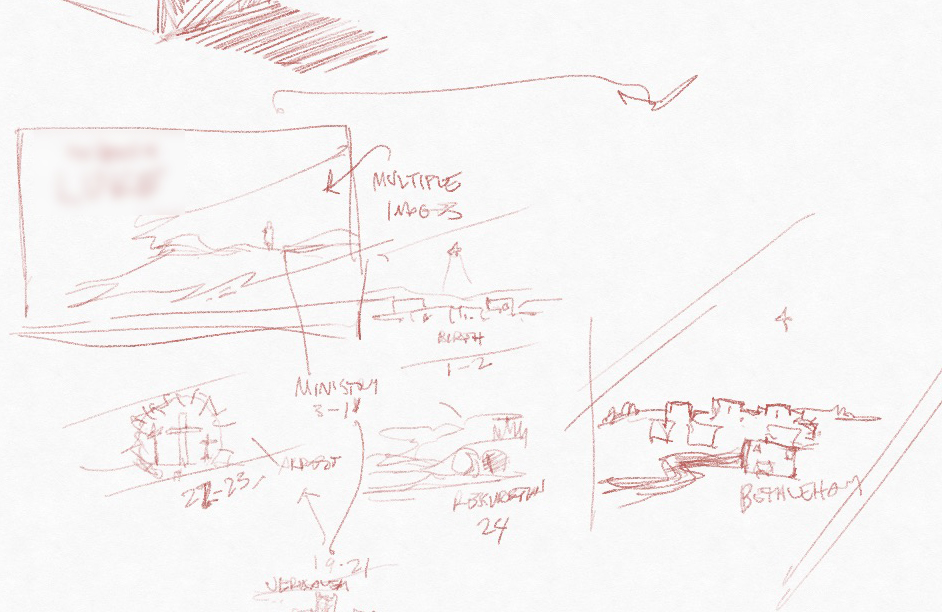
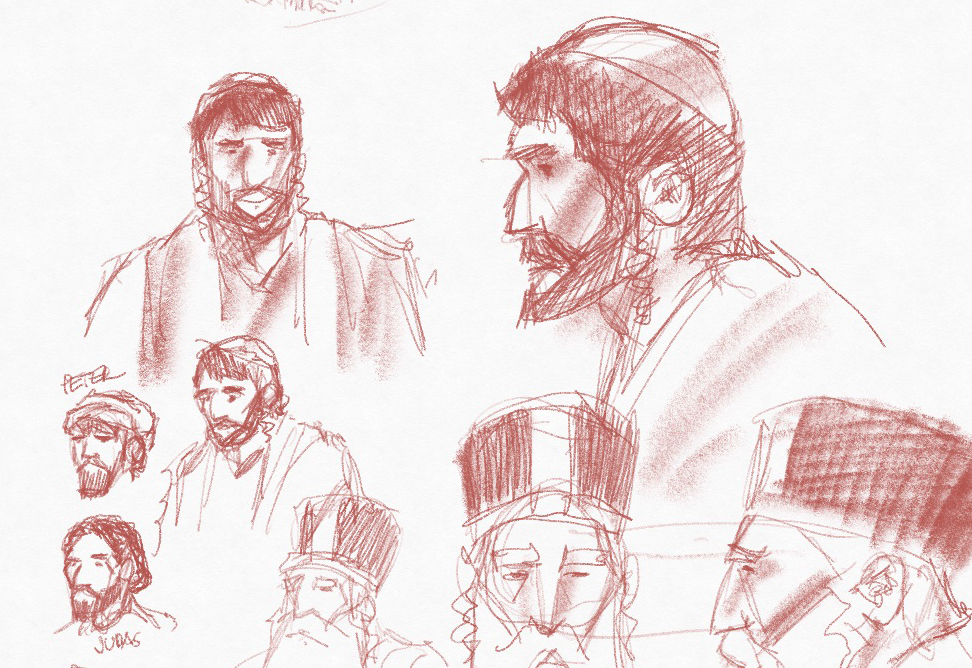
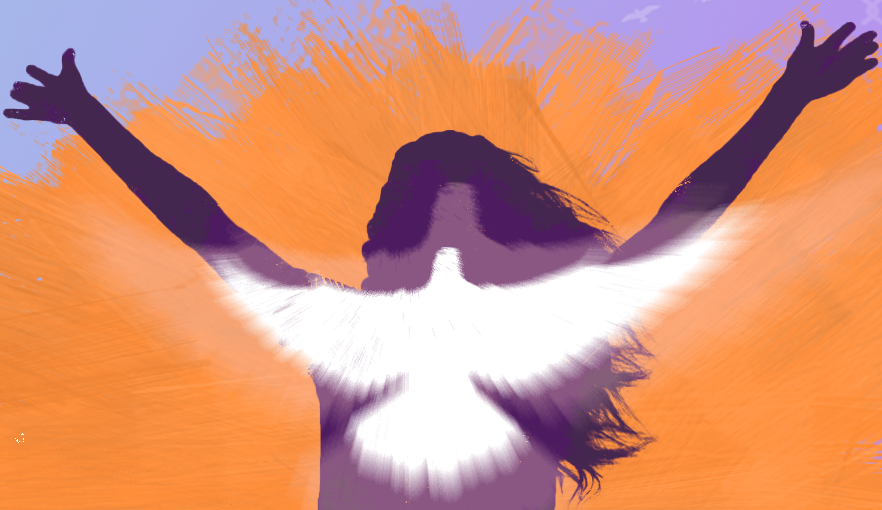
So, this Sunday we’ll begin a new teaching through a book series. I’ll tell you which book on Sunday. In the meantime, here are some sketches I doodled whilst working on the art design for the series. Can you guess what we’ll be exploring based on these images?
Hope you can join us Sunday – in person or online via Facebook and YouTube -10 am!
We have come to the final teaching in our study of Galatians – we’ll be reading ch 6:1-18. Often times it’s a temptation to skim the closing words of one of these letters – but that would be a shame to do in this one. Some scholars believe the key to really understanding this book is found in the closing statements.
In his final remarks, Paul quickly restates many of the points he made earlier, but he does so with an emphasis on how the freedom we enjoy in Christ will work itself out in the context of community. That’s what our focus will be on – how we manage both our personal responsibilities in relationship with God, with the mutual accountability we have as the church together.
In v2 Paul says to share each other’s burdens, but in v5 he reminds us of our personal responsibility for how we conduct ourselves. How would you reword those two challenges? How can we share each other’s burdens?
Paul also mentions “the law of Christ” in v2. That’s weird, isn’t it? After declaring liberty from religious laws all through this letter, he urges us to fulfill the law of Christ. What do you think he means by that? How might his words in ch 5:14 help us to understand his thinking?
In v 6-10 Paul talks about the biblical principle of sowing and reaping. How does this principle help to temper the way we use our freedom?
V15 is so powerful to me. All the expectations that get created mean nothing – do them or don’t do them…the only thing that really matters is that our lives are being transformed by God’s Spirit, made possible by Christ’s work on the cross. As you look at your own life, what transformations have you experienced that prompt you to boast in the cross?
I really love this book. It’s my second time teaching it and I really got so much out of teaching it again. That gets me excited about re-teaching other New Testament books! Hope you can join us Sunday, in person or online via Facebook or YouTube (hopefully we won’t have the connection issues we had last week – and by the way, the audio version of last week’s teaching is available HERE if you missed it).
Freedom is such an important principle in life, but more important is what we do with the freedom that is granted to us. This is true whether we’re talking about societal freedom or the freedom which is found in Christ.
This Sunday we’ll be reading ch 5:13-26 in our study of the Galatian letter. In this section, Paul will be providing the qualifiers concerning Christian freedom. Freedom, he says, should not become a base of operations for selfish indulgence – which the NLT translates as “sinful nature”, but in the Greek, the word is “flesh”. Flesh means more than just our bodies – it is a word that is signifying entire personhood being lived outside of God’s will or the Spirit’s guidance.
In v14, Paul loosely quotes Jesus in establishing how our freedom is to be lived out. What is the “flesh” action that love is countering, according to v15?
Paul talks about the war that rages in our lives between impulses to do good and impulses to do what’s wrong. The Intruders were teaching the Galatians that the way to win over theyetzer hara, the sinful impulse, was to learn and obey the Torah. In v18, Paul declares a different way – what does he say?
Ancient writers and philosophers seemed to enjoy creating lists of virtues and vices, and Paul falls right in line with that practice through the rest of the chapter. Count how many works of the flesh that he lists. Do you think it’s a comprehensive list or just a few examples? How many of the works are addressing interpersonal relationships? What might that tell us about Paul’s emphasis?
While the flesh has a lot of works, Paul speaks of fruit (singular) of the Spirit. In what ways do the works and the fruit corollate (one countering the other)? What does v25 describe as our part in bearing the fruit of the Spirit? How might we do that in real life examples?
It will be an encouraging albeit challenging study. Hope you can join us, either in person or online via Facebook or YouTube!
One major fear that gets posed whenever Christian freedom is discussed is the concern that it can lead to an antinomian lifestyle – a life with no constraint, living lawlessly. I’ve heard that fear expressed to me many times over the years. Martin Lloyd Jones, the old Welsh minister, famously said that if we aren’t accused of preaching lawlessness, we aren’t preaching grace the way Paul did. He’s right – Paul got accused of that a lot, and had to qualify his emphasis on grace many times in his letters.
This Sunday we’ll be reading Paul’s great rallying cry that boldly proclaims the main theme of his letter to the Galatians. We’ll be starting chapter 5, reading vs 1-12.
Paul states his main thesis in v1a – We are FREE! That’s a statement that carries a lot with it – first, it assumes that at one point, we were not free. Think back through the letter to the Galatians – what has Paul been emphasizing our freedom concerning? Read ch 1:4 to get one perspective of our rescue. Ch 3:10-13 gives another aspect of what we are freed from.
Freedom is sort of a loaded word. Loaded, I should say, with our pre-determined definitions of what it means. Our country, the United States has freedom as it’s centerpiece. How do we as Americans normally define freedom? How would you characterize freedom based on what Paul says we are free from? What differences, if any, can you identify? Which sort of freedom should take precedence in our lives as Christ Followers?
In v1b, Paul exhorts us in light of the thesis. What does he tell us we must do concerning our freedom?
In vs 2-12 of the chapter, Paul elaborates on how we can go about fulfilling that exhortation. As you read those verses, what jumps out to you as practical advice for living free in Christ? The last part of v6 is terribly important. It’s the way that antinomianism, lawlessness, is counteracted when it comes to our freedom.
What do you believe it means that our faith is expressed in love? Love for whom? What will that look like when lived out in real life situations?
I think this will be a really challenging study – I hope you can join us, either in person or online via Facebook or YouTube. We are no longer requiring pre-registrations – but we are asking that we continue wearing masks during the singing portion of our service.
The danger is still real, as we see in the recent development with our President. Please keep him in prayer for a full recovery.
On the Saturday before Easter, we as a fellowship have participated in praying together, even if we’re apart, for many years now. We provide written prayers for morning, midday and evening time prayer and contemplation. This is to prepare our hearts for Easter. We hope you’ll join us in praying these together in unity. The prayers in in PDF format and can be found here: Good Saturday Prayers 2020





 WONDERWHAT