A Wholeness in Life

What are the plans you had for life – the ones you thought for sure would complete you as a person? Was it a relationship, a career, some possession you wanted to acquire? Did you ever find yourself unable to achieve that plan? Did you ever feel like people not only let you down but even got in your way, which kept you from getting the thing you believed you needed?

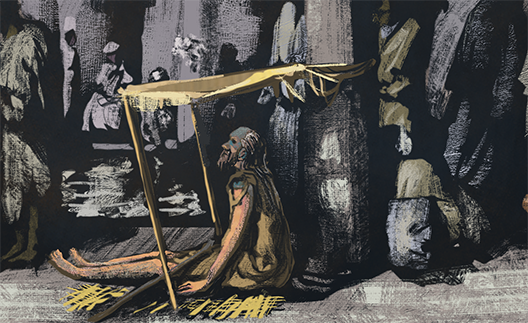
If you’ve answered yes, you’re not alone, you know that, right? In fact, there is an account we’ll be reading this Sunday in John 5:1-15 where a guy faced those same type of frustrations but found that what he really needed for a whole life was an encounter with Jesus.

Archaeologists have identified where the pool of Bethesda is located in Jerusalem in 1964. If you haven’t watched The Chosen, the episode which deals with this story is really good – I highly recommend it. You can watch it HERE.

When Jesus meets the man who has been unable to walk for 38 years, he asks if he wants to be healed (or come into existence as a whole person). That seems like such an obvious thing, why do you think Jesus asked the man this question?

What is the man’s response? What do you think he had in mind when Jesus asked him this?

As usual, our perceived solutions for life are in stark contrast with Jesus’. This man had one idea about how to become well, but Jesus had a plan to make him whole. What are the bubbling pools that we stare at, what places are we hoping to get to that we think will change our life for the better? What can we learn about our perceived solutions in light of this story?

If Jesus were to pass by your pool today, what would he ask you? What would he tell you to do?  How can we take steps to find our solutions in Christ?

Good stuff to ponder – hope to see you Sunday!
A Deeper Faith

We all know the phrase: “seeing is believing”. It’s a saying that communicates the idea that if we see something with our own eyes we will believe it to exist or be true, no matter how unexpected or unusual it may be. On the surface it expresses a willingness to accept a reality that is verifiably evident.

What’s interesting is that the phrase was coined by Thomas Fuller, a 17th Century clergyman, and the whole phrase is: “seeing is believing, but feeling is the truth”. He was suggesting that truth and evidence are sometimes differentiated. Some truths can’t be verified so neatly.

It’s a pretty deep concept, one that is the heart of our study this Sunday as we continue in our examination of the Gospel of John. We’ll be reading John 4:43-54.

Some things to keep in mind as you read: the repeated idea of “seeing” (see, seen). This is a through-line from the last section.

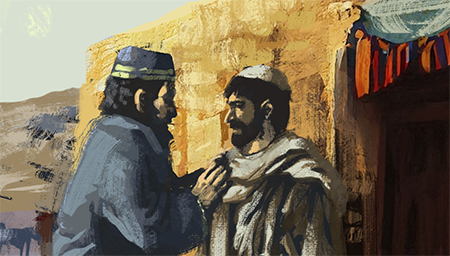
In our text we are introduced to a man of means and position, a government official (likely working for Herod Antipas). He implores Jesus to come to his home and heal his son. Jesus’ response is puzzling on the surface. Who do you think he’s talking to when he says “you”? Why do you think he responded that way? In what ways do you think this man didn’t believe in Jesus?

When Jesus sends the man home, what evidence did that man have that anything had changed for his son? What was the basis for him heading home? What does that tell us about the kind of faith God is looking for from us?

The timing of the boy’s healing and Jesus’ words is highlighted by John. What might it teach us about who Jesus is and what is within his control?

In v53 we are told the man and his household believe in Jesus. How is that a different kind of faith than the believing expressed by the Galileans from v45? How would you describe the deeper faith that we are challenged to in this passage?

I’m really stoked about this section, I hope you can join us for what I think will be a intriguing but very encouraging study!

Having Dinner with Jesus

This Sunday we’ll be reading John 4:31-45 – which is basically the falling action after the story of the woman at the well.

Once again, we have a situation where Jesus is talking about one thing but his hearers are talking about another. He talked about living water with the woman earlier, but she took it to mean literal water. He tells his disciples he’s got food they don’t know about, and his disciples are looking for the snack machine that Jesus got his stash from. But in both cases, Jesus is talking about something BELOW the surface. He compares his cooperation with God’s plan to rescue people with food. Why food? What does food do for the human body? What is Jesus trying to tell us about the source of fulfillment in our lives?

The question is…how is your diet? If you look at your normal idea of food/fulfillment and compare it to Jesus’ – how do our food groups compare?

Jesus describes wheat that is ripened and ready to harvest. What might his previous conversation with the woman have to do with that? What made the fields ready? What does that mean to us right here and now?

This will prove to be a challenging study for us – but I think it will be well worth it! Hope to see you Sunday!

A Prayer for Holy Saturday

Below is a prayer to prepare our hearts for Easter morning. If you’d like to join in on praying this, find some time on Saturday where you can have solitude and read the prayer slowly and out loud. Perhaps it will inspire you to continue on speaking with God and listening for His voice. Others from our community will be praying that same prayer on Saturday, so no matter where we are, we’ll lift United voices to God!

Father in Heaven,

I know that it is always 

darkest before dawn.

The world as we know it

groans in anticipation of a new day.

Here, in this present darkness,

I live in expectation of Your light.

Resurrection is the promise of new life.

Resurrection is the promise of all things new.

I take my place with all the saints

who’ve trusted in Your name.

This day, prepare my heart for Easter.

When I was walking in darkness,

You were there.

When I was on my knees in weakness,

You were there.

When I was in need of forgiveness,

You were there.

Let hope rise in my heart

like You rose from the grave.

Living God I praise You

for the promise of the Gospel!

Let heaven meet with earth

in my life today!

I praise You, Lord Jesus Christ,

King of endless glory

I celebrate Your life that conquered death.

In Jesus’ name I pray,

Amen.

A Victorious Decline

Have you ever worked really hard on some idea only to have someone else come along and suggest the very same idea and everyone congratulates that person for such clever thinking? What emotions did you feel in that moment? What are you immediately tempted to do?

The human need to be significant and important, at the very least for recognition, is universal. Ego is a tough wrestling opponent. Yet, as we’ll read in this week’s text, John the Baptist was able to find joy and peace by putting his own ego last and Jesus first.

This Sunday we’ll be reading John 3:22-36 as we continue our exploration of the fourth gospel account.

John’s gospel is the only account that indicates that Jesus and John had a time when their ministries overlapped. Jesus began with John the Baptist’s endorsement, and now, we find that he is present when the first hint of controversy arises. His disciples are jealous at the rising popularity of Jesus and his message. John was very popular, probably more popular than Jesus at this beginning stage…he had all the trappings of what is usually defined as a successful ministry. Yet it was his joy to step aside for the elevation of Christ.

What reason does he give for that in v27?

Does that help you in any struggles you may have in embracing an intentional humility?

v30 is a powerful statement. It sets the tone for the entire church movement. We haven’t always been very successful in remembering who it is that everything orbits around. How do you think you might find joy in allowing the reality of Jesus to increase in your life? What would you imagine might be decreasing in your life as this takes place?

In yet another way, the kingdom of God moves counter to the world’s assumptions, we we find ourselves flourishing through this victorious decline.

Hope you can join us on Sunday!

Nick at Night

It’s one of the most famous stories from the Gospels – the story of a religious leader who has a nighttime meeting with Jesus – where Jesus cryptically conveys the scope and power of his plan – where those famous words were uttered: “For God so loved the world…”.

We’ll be reading John 3:1-21 this Sunday.

While v16 of this section is probably very familiar – much of what surrounds that text is pretty mysterious stuff. Nick wasn’t the only one who got confused – scholars have had multiple interpretations about some of the things Jesus says here for more than a thousand years.

It says that Nick is a ruler of the Judeans – which means he’s on the Sanhedrin. That being the case, he must have been well older than Jesus, a respected man in the community as well as the temple, and he must have been a person from a wealthy family. What do you think was going through his mind as he met with this young, homeless Rabbi from the sticks?

Based on what he says, does he seem friendly or hostile to you? By the end of the gospel, he certainly shows signs of being a follower of Jesus, but how do you imagine him this night as he meets Jesus for the first time?

Jesus’ answers certainly don’t fit the paradigm that Nick tries to set up. Jesus talks spiritual rebirth and Nick talks obstetrics…it’s sort of a mess.

In trying to make sense of Jesus’ statements about being born of water and spirit, think about the creation account and the Spirit hovering over the face of the waters – what insight, if any, does this give you about what Jesus may be referring to?

What condition does Jesus put on receiving eternal life? What does this condition mean to you?

Read v17. Read it again. If God’s purpose is not to condemn the world, how do you understand v18-21?

God’s purpose is not to condemn – how well do you think the church has presented that truth? How can we better embody what the gospel message is?

Hope you can join us this Sunday!

A Better Temple

I remember when…we’ll say a friend of mine…pulled the lever on a fire-alarm at my middle school, and the gleeful chaos that ensued as classes were emptied and students gathered outside (this, of course, was in a world devoid of modern security threats and active shooter drills). One little lever pulled and it resulted in the total disruption of normal activities, for a little while anyway.

(I also remember the dire consequences that….we’ll say a friend of mine…suffered as a result of that prank – so that sort of behavior is NOT being approved by sharing that memory!)

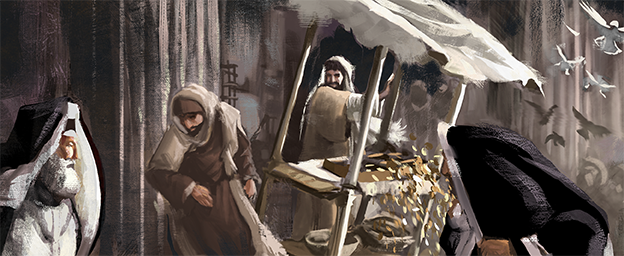
It’s hard to fully grasp the events that took place that morning that Jesus walked into the temple grounds in Jerusalem and started throwing people out, but I think it may have been similar to pulling a fire-alarm trigger. That’s the story we’ll be tackling this Sunday as we explore John 2:13-25.

It’s easy for us to immediately assign the guilt in this scene to the people who are crassly selling the accouterments of worship at the temple. How dare they sell sacrificial animals like a commercial enterprise…and yet…there was a legitimate purpose that these vendors served. Imagine living a long ways from Jerusalem and hauling the required sacrifice with you. Imagine that a dog nips at it’s heel along the way, or worse, a wolf takes a bite out of it’s ear. The sacrifice won’t be accepted and the expenditure of time and food for the trip would be for naught. It actually makes sense to provide a way, right at the temple, to buy a pre-approved animal to sacrifice.

In truth, we have no historical evidence or citations that would prove corruption or price gouging in the sale of animals or exchange of money in the temple courts.

There was actually something else going on that morning. Jesus was acting as an Old Testament prophet, staging a protest to momentarily stop the temple system. Why? A disruption and a replacement was being made.

If Jesus was forecasting the end of and replacement of the temple – what are the implications of that as you read it? V19 is a major clue as to what God intends – religious structures both physical and organizational will be replaced by a person. What can it mean to us today, as his followers in 21st century America? How can we prevent our own practice of faith from devolving into consumer ritualism?

This should prove to be a compelling study – hope you can make it!

The Best for Last

Weddings are a joyous time in almost any time and culture. There’s always the air of hope and wonder in the formation of a new family, it just overflows with all the possibilities of life.

This Sunday as we continue our series on the Gospel of John, we’ll be reading about a wedding in ch 1:1-12. We’ll be examining the first sign that Jesus did in John’s account, turning water into wine.

For some Christians, this miracle is an embarrassment – it would be a lot easier to explain if Jesus had just invented grape juice (which does not exist in nature, it must be processed) – but that’s not the Jesus we get in this Gospel. (A person may struggle with substance abuse and I don’t mean to be flippant about that – I support all efforts to remain sober and sane in life. That being said, not all people have that struggle, and we don’t want to miss the meaning of this sign in the process of that support)

As you read through this story, in v11, what reason does John give for including this account? What does this sign reveal to you about God’s glory, his nature and power? How does it compare with the way the church represents the kingdom of God – is there a difference?

The water jars were used for ritual purification. Jesus looks at those reminders of human uncleanness and re-purposes them completely. What lesson does this sign teach us about the nature of what God is up to in our lives?

Have there been times in your life when the wine ran out (metaphorically, of course)? How about now? What does this sign encourage you to do about it?

We’ll explore these topics and a few more – hope to see you on Sunday!

Following Jesus

What does it mean to follow someone? It really depends on the context, I suppose. If you follow someone on Instagram it simply means you have an interest in keeping up with what content a person posts. If you follow a football team, it basically means you’re a fan – you cheer for them and wear their team logo on your person.

To be a follower of Jesus implies much, much more. Jesus’ first disciples will be the topic of our study in the gospel of John this Sunday.  We’ll be reading John 1:35-51.

As you read this account of Rabbi Jesus gathering his first Talmidim (disciples, followers) – what do you observe about following Jesus; what did it meant to them? Did they have questions, and what were they? What was their first order of business after they met Jesus? What significant thing happens with Simon – and what might it imply for him?

As the disciples tell their friends about Jesus – what is the invitation they give?

What would you invite others to “come and see” about Jesus? How has he significantly impacted your identity?

This will be a challenging study, I hope you can join us this Sunday!

Knowing Jesus

“Who do you think you are?”

We’ve all heard that question asked at one time or another. It’s not a casual inquiry about our identity – it’s a challenge that is asking what right we think we possess to say or do a particular thing.

In our study in the gospel of John this week, John the Baptist will be asked that type of question. We’ll be reading ch 1:19-34 in our study.

When leaders come to investigate John the Baptist’s ministry, they are not trying to get to know him and understand him; it is an interrogation from the start.

They go down a list of possible people God could be sending, asking if he’s Elijah (Malachi 4:5) or “the Prophet” (Deut 18:18-19) – but John Baptist bluntly rejects every suggestion. I think there could have been a temptation to get all cryptic with these guys, maybe drop some hints that suggest a deeper importance to his work. John the Baptist doesn’t do that. If John the Baptist is a witness to who Jesus is, what do we learn about Jesus from the way John Baptist carried himself?

John the Baptist does answer their query – and what does he use to identify himself to them? How might we use Scripture as a basis for our own identities?

The next section, v29-34 has John the Baptist elaborating on his testimony. He describes something he saw happen with Jesus at his baptism, and then he described him as “the Lamb of God who takes away the sin of the world”. How does John’s description of Jesus help us to know Jesus better? What do those titles and events tell us about the ministry Jesus as Messiah will undertake? What are the ramifications for us, who believe and accept him – how will it help us in our new lives as children of God (v12-13)?

I’ll tell you, there’s something about this book. I sensed that this was an important study we are undertaking, and that has only grown since we’ve started it. I hope you can join us as we get to know Jesus through John’s gospel!