The “AH-HA” Moment

Last week we watched as Jesus performed the most wide spread miracle in all
of His public ministry, feeding the multitudes on a mountainside. Today in our text we’ll
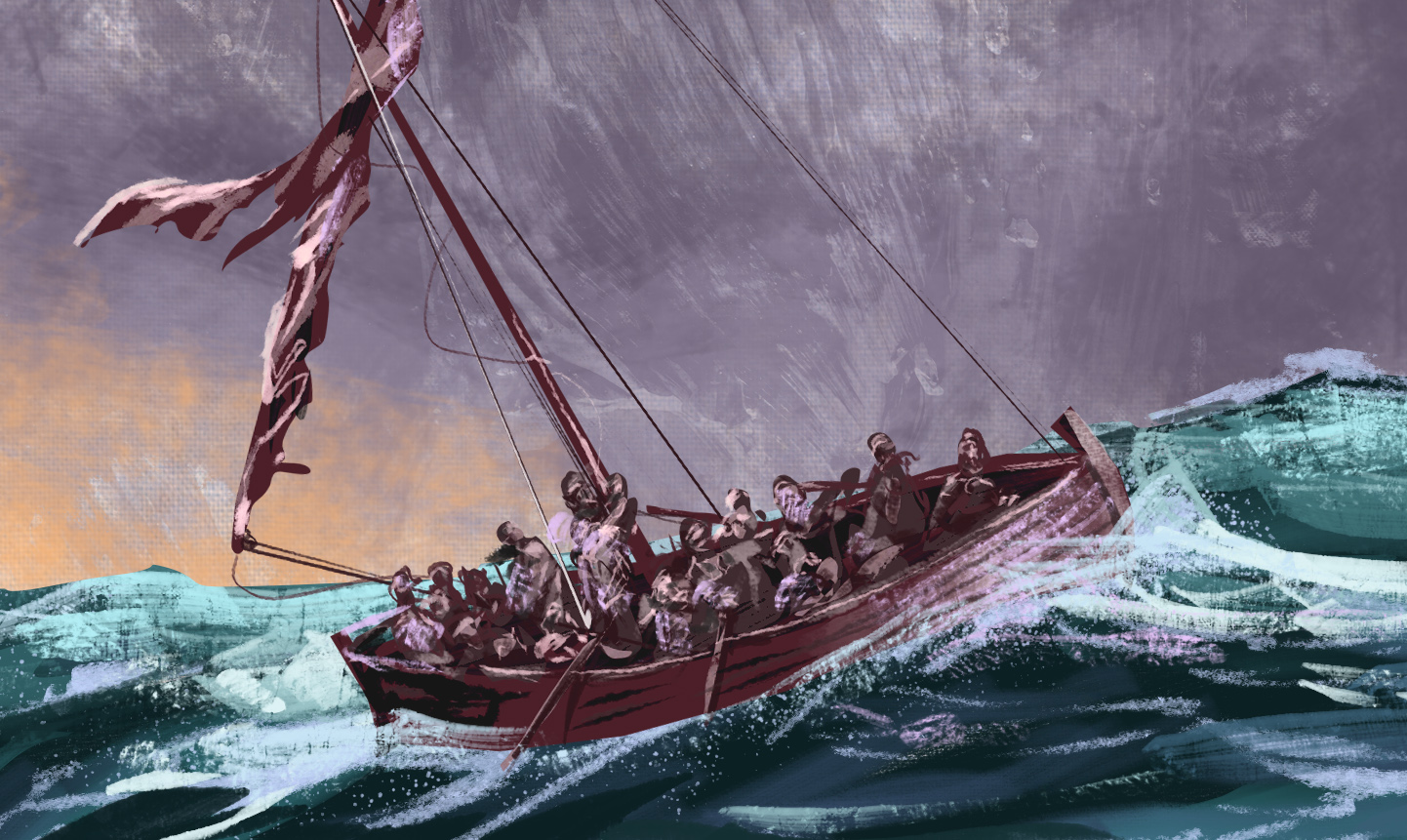
pick up with an equally impressive miracle, the story of Jesus walking on the water and
then another wide sweeping miracle of healing. All of this wonder working reveals the compassionate character of a loving savior but it’s intended to reveal something else as well. The trouble is we humans are sometimes a little slow on the uptake. This week we pick up in Mark 6:45-56.

Jesus was up in a mountain miles away from the disciples yet he saw their struggle and headed towards them. How does it feel to know that Jesus sees and comes to us in our own difficulties? Can you think of a time he did so in your own life? There’s been a lot of opportunity to witness people struggling in Bay county recently. In what ways might we be able to “get in the boat” with them?

The disciples don’t initially react to Jesus showing up how we might expect. There are some cultural conditions along with their struggles that cause them some confusion. What ultimately helped them to recognize who he was? Does the statement “It is I” in verse 50 sound familiar to you at all. Check out Exodus 3:14. What did God call himself  to Moses at the burning bush? In Matthew’s gospel account of this miracle the disciples respond making their first proclamation of the Lordship of Jesus saying “Truly you are the son of God”. This was their Ah-ha moment in recognizing who he really was. What event or series of events preceded your messiah epiphany? It seems like it took a whole lot for the disciples to finally come to this revelation. Think of all the had witnessed and experienced up to this point. How does it make you feel to realize that God never gave up in revealing himself despite their “hard hearts”. How might we join his efforts in help others recognize him in their lives?

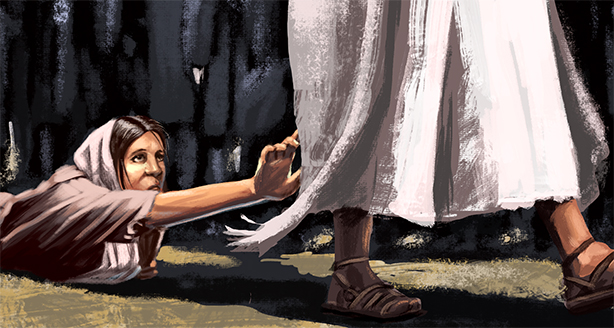
In verses 53-56 Jesus again extends his miracle working power to the masses. It says ALL who touched the hem of his garment were healed. What do you think the message behind the miracle here might be? Are there people you consider outside the reach of grace? How hard is it for you to extend grace or maybe even friendship to someone with a lifestyle other than yours. If your seats at the ball game were next to someone who identified as transgender or homosexual, how would you respond? Would you share the excitement of the evening with them or move to a different spot? Good food for thought.
This will be an intriguing study for sure! Hope to see you here!

Powerful Compassion

I hope everyone has been having a good holiday weekend and that you find some time to rest as well! We’re going to be reading about Jesus and his disciples trying to get a break from their intense ministry schedule – only to find that rest isn’t that easy to come by. The team quickly find themselves in a situation that requires attending to – and in the account of events, we get a glimpse into the motivating force of God’s kingdom.

We’ll be reading Mark 6:30-44.

As the Jesus team arrives at their secluded spot, they find it’s over-run with a mass of uninvited people who are hoping to find some help. How do you think the disciples felt when they saw this massive group of people at the border of their rest area?

We are told how Jesus felt.

What word is used to describe Jesus’ response to these vulnerable people? ἐσπλαγχνίσθη is the word used to describe his reaction. Who have you felt those kinds of feelings for? What does this tell us about God’s heart towards all humanity?

Read Numbers 27:15-17 and Ezekiel 34:1-16 (take note of v11-13). What bearing do these Old Testament passages have on our text in Mark? Who would the “shepherds” be in Jesus’ time? Who would the “shepherds” be in our context today?

The disciples wanted to send this mass of uninvited people away, why? What is the difference between the disciple’s view of the problem and solution and Jesus’? Why do you think the difference is so great?

When the disciples take inventory of their supplies, they are woefully insufficient for this task. When they bring what little they have to Jesus, what happens? What, if any, significance do you find in the detail about all the left-overs?

Where is God calling you to submit whatever you have to Christ so that He can bless others? What does compassion look like in your interaction with others? What causes and interests do you have that are compatible with God’s compassion? What does God’s compassion look like at work in this world? What steps can we take to get in sync with God’s powerful compassion?

Looking forward to exploring this together this Sunday! Hope to see you there!


A Conscience Resisted

Whoops! I was sort of under the weather and forgot to update Wonderwhat! Sorry about that. This Sunday we’ll be reading a very intriguing story as we continue exploring the Gospel of Mark. We’ll be reading chapter 6:14-29.

The writer of Mark does something noteworthy in this section: he slows down the narrative. He even adds in some thoughts and motives for his characters. I suppose, for the first readers, this was all contemporary news and still scandalous enough to catch their ears. We certainly have no lack of love for political scandals and gossip about the famous in our day, why shouldn’t it be true of them?

This section tells the sordid account of how Herod Antipas executed, without trial or provocation, a religious leader who posed a political threat to him. When you word it like that, it does sound like a contemporary headline.

You’ll notice as you read the text that Jesus is not center stage in this section. Instead we have Harod Antipas, his current wife Herodias, her daughter and John the Baptist. There are a lot of issues being addressed in this story. Abuse of power. The importance of character for leaders. Political machinations. Commodification of women. Lust. Ego. Murder. I’m tellin’ ya’, this section is downright Shakespearean.

As you read the story, put yourself in the position of each of the characters. John was faithful to the cost of his life. Herod was intrigued but unyielding. Protective but controlling. Ultimately, he is backed into a corner where if he were to do the right thing it could cost him his reputation. Little did he know what his reputation would really be.

Track Herod’s interest, but refusal to heed what John had to say. What can we learn about the ramifications of ignoring God’s attempts to shape us? What is the reason given for Herod acquiescing to his step-daughter’s request? What areas of your personal reputation do you spend a lot of time protecting? What if God called you to do something that would diminish that reputation?

It could end up being a convicting study…a challenge towards yielding our hearts to God. Hope to see you then!

Your Life Comes with a Mission

“We’re on a mission from God” ~ Elwood Blues

It’s pretty amazing what a person with a sense of purpose can accomplish. It’s equally disheartening to witness a person with no sense of purpose. Nothing withers so tragically like a human soul. We are hard-wired as a species with a need for something to do.

When Jesus gathered his disciples, and later commissioned his church, it was all with a sense of purpose. A mission. I’m convinced we don’t fully grasp the power of the new life in Christ until we awaken to that sense of divine vocation.

We’re going to be looking at Jesus’ commission of the 12 disciples in our text this week, Mark 6:7-13.

As you read through the text, how would you describe the purpose of this mission? What did Jesus want his disciples to be doing? Our mission may not always involve casting out demons or seeing people healed physically – but what are those miracles a picture of? What other ways can we be opposing evil and promoting restoration in our world?

Why do you think Jesus put such restrictions on his disciples concerning what they could take on their journey? How would you describe these restrictions in one or two words? In what ways can we make our mission in this world more simple and humble?

Do you believe there is significance to Jesus sending them out in twos, if so, what is it? How have you found encouragement in your mission by talking to someone else?

Hope to see you Sunday!


Certainly Wrong

“There’s no chance that the iPhone is going to get any significant market share. No chance.” That’s what Steve Ballmer, the CEO of Microsoft said in 2007. 

It’s a funny topic to research, the hilariously wrong predictions that some folks have made throughout the years. There’s a notoriously wrong assessment of Jesus that we find in the gospel of Mark where Jesus’ hometown rejects him as significant because they knew him for so long. We’ll be reading about that this Sunday as we explore Mark 6:1-6.

When the text tells us that the people of Nazareth were amazed at Jesus, the context makes it a negative reaction. The questions they ask indicate that they are suspicious of his training and ability to say and do what he has. What is the reason they give for being doubtful of his calling?

Why do you think his family and trade have any bearing on their evaluation of him? They were certain about who he was…but they were certainly wrong.

If we would have asked them why they rejected God’s kingdom, what do you think they would have answered?

What can we learn from the closed-minded way the people of Nazareth reacted to God’s unexpected kingdom? What would a godly open-mindedness look like to you?

These will be important and timely questions we’ll consider this Sunday. And it’s SURF N GRILL this Sunday…and FATHER’S DAY! If you haven’t been baptized and would like to be, sign up online!

The Kingdom at the End of the Rope

You know what the phrase “I’m at the end of my rope” means, right? It is a descriptive way of emphasizing that one is out of options, there’s nothing left to try. That’s a place most of us spend our lives trying to avoid. We work hard to make life predictable and secure.

The problem is, things go stupid. Sometimes so stupid it is beyond our grasp to fix things.

Try as we do, there is nothing that we can find in this world that will make us immune to the troubles of this broken world.

This Sunday we’ll be reading Mark 5:21-43, and we’ll read about two different characters who are at the end of their ropes. It will be another Markian sandwich – something Mark is prone to do. We’ll find a story within a story.

As you read the text, try to list off all the ways in which the two characters who interact with Jesus are different from each other. For instance, one is a man, the other a woman. Keep in mind the purity code of the Mosaic Law as it concerned this woman. Remember how important the Synagogue was to Israelites in the 1st century.

Once you’ve got a good picture in your mind about how different these two are, start looking at what is the same about them? What is it that brings them to the same place?

What can that tell us about those times when we are at the end of our rope?

What is it that stops Jesus to ask who touched him? What do you think Jesus meant when he told the woman that her faith had made her well again? What does Jesus say to Jairus when the news comes about his daughter?

What does God seem to be looking for from us in our times of trouble? What does trusting God in difficult times look like to you?

Looking forward to digging into this on Sunday – hope to see you there!

Madman Across the Water

I know you’ve heard me mention this before, but I just need to reiterate just how good The Bible Project videos (and podcast) are. For this Sunday’s teaching, I really would encourage you to watch the whole series on spiritual beings – but especially the one concerning the satan and demons. It will serve as a perfect primer for our text.

We’re going to be reading about evil spiritual forces at work in an individual’s life in our text this week, Mark 5:1-20.

There is a lot of stuff in this text that the author assumes our familiarity with. I personally have a lot of questions that Scripture doesn’t give sufficient explanation for. The exchange between Jesus is very curious.

However, while details are ambiguous, the primary thrust of this event reveals Jesus’ authority over all spiritual forces, including ones that oppose him. Does there appear to be a struggle in this from Jesus’ perspective? What can we learn about the power of evil touching us when we are in Christ?

After the man was delivered, Jesus gave him a mission. What does that indicate about our own lives after Jesus has saved us? What sort of theological training do you suppose this man had? What message did Jesus send him out with? How can we apply his commission to our own lives?

Hope to see you Sunday!

Following Jesus

Bay County is made up of people who know just how much chaos a storm from the water can bring. Michael swept up on us suddenly and powerfully and left our world a wreck. That’s the nature of a storm like that – it is a bringer of chaos.

In our text this Sunday (Mark 4:35-41), Jesus and his disciples will face a sudden storm. While I believe this is an account of something that really happened, I also firmly believe that this event becomes a parable for us – a story that helps us see ourselves and Jesus more clearly. I believe this story helps us define what it means to follow Jesus.

In the story, Jesus tells the disciples to take him across the lake (of Galilee). That seems innocuous enough, except that in 1st Century Israel, that area was called the Decapolis, and was considered off-limits for pious Jews. According to Ray Vander Laan’s article on the Decapolis: “Apparently, the pagan practices of the people of the Decapolis and their anti-God values seemed to be continuations of the practices of the Canaanites, who used sexual perversions and even child sacrifice in their worship. It is probable that the people of Jesus’ day, who took their Scriptures seriously, viewed the Decapolis as very pagan.” 

What does Jesus’ intent on going across the lake indicate to us about how we will follow Jesus? Who are the people across the lake in your world?

When a storm comes up, it might have been easy for the disciples to assume that they were being punished by God for going to a place that was off-limits. Why would that be a wrong assumption? What does that tell us about the storms and chaos that effect us as we follow Jesus?

Why does Jesus rebuke the disciples? Do you believe they were wrong for being afraid? How can we understand what Jesus is looking for in our response to the trials of life?

It’s funny how the disciples go from fear to terror in this story. What is it that terrifies them? Why do you believe they are reacting this way? What, if any, experiences have you had with Jesus that have overwhelmed you because of his power?

We’ll be celebrating communion this Sunday as well – hope to see you there!

Do You or I or Anyone Know?

“Oats, Peas, Beans and Barley grow. Do you, or I, or anyone know, how oats, peas, beans and barley grows?”

This Sunday we’ll be having our Surf-N-Grill Sunday – which means we will have a shorter than normal service, and then head down to St Andrews State Park for a beach day. The weather looks pretty good for that!

If you haven’t been baptized and would like to, you can still sign up online: Baptism Sign Up

We’ll also be continuing our study in Mark, reading 4:26-34 which contains two parables about seeds. I drew a coloring page for the kids to work on during our teaching – and it may give you something to talk about afterwards.

As you read the first parable in v 26-29, we should take our cues from the previous parable about what the seed stands for: the news of God’s kingdom advancing in this world. In this story, what does the emphasis seem to be on? What impact does human agency have in the growing of the crops? How would you correlate scattering seeds and gathering a harvest with our activity as the church? What lessons do you believe Jesus is intending to teach us with this imagery?

The second parable about the small mustard seed seems pretty straightforward. What would you say constitutes those seemingly insignificant ways in which God’s Kingdom grows in this world?

I’m looking forward to a family day at Eastgate! Hope to see you there!

Who Defines You?

One of my favorite types of humor is mistaken identity, like the Flight of the Conchords song above. The confusion and delightful misdirection as the mis-identified man tries to sort through the woman’s description of their relationship. I never get tired of that video. Mistaken identity like that can be fun – but usually when someone defines our identity improperly, it takes a heavy toll.

We’ll be reading about people mis-identifying Jesus in our text this week as we continue our study in Mark’s gospel. We’ll be reading 3:20-35, which will finish up the chapter.

In this section, Jesus’ family and the religious leaders from Jerusalem define Jesus as either crazy or demonic. The two groups of people who were most qualified to identify who Jesus is completely fail to do so.

This passage has a chiastic structure and is an example of Mark’s way of framing one episode with another…in other words, we will be enjoying a Markian sandwich this Sunday!

Here is how the text is structured:

verse 20  Crowd
verse 21  Family
verse 22  Scribes (accusation)
verses 23-27  The parable of plundering the satan’s possesions
verses 28-30  Scribes (warned about their accusation)
verse 31  Family
verse 32  Crowd

Why do you think Jesus’ family were so concerned about his behavior? Why do you suppose that they didn’t understand his mission? What do you think was motivating the religious leaders in their opposition to him? How significant do you think Jesus’ redefinition of family is in v35?

All of this will provide us with some insights about how we see ourselves and how it is that our own identity is defined.  Plus, we’ll have a talk about v28-30 and alleviate any unnecessary fears about the U.P.S. (un-pardonable sin). Hope to see you on Sunday!