Compassion For the Desperate

One thing we as humans all have in common is that at one time or another, we have all felt desperate. Certainly, times of desperation come in varying degrees – but none of us escape moments where things seem so hopeless they seem impossible to deal with. In our times desperation, we will usually go all over the place looking for something or someone who can give us a glimmer of hope. That’s just the nature of desperation…and it doesn’t have to be a bad thing. One thing the Bible reveals, over and over again, is that God is fond of desperate people.

This Sunday we’ll be reading Matthew 9:18-38 and we’ll discover some desperate people who go to the right place in their time of crisis. As we read about these people, we’ll be looking at what it was that moved them to seek help from Jesus. We’ll look at the compassion Jesus had on them, and we’ll observe the faith that they expressed in Jesus’ compassionate power.

The synagogue ruler, the hemorrhaging woman and the two blind men all have their stories told in succession. Their expressions of faith are risky, scandalous and bold, but they are also desperate. How does Jesus respond to their desperation? Does Jesus demand anything but trust from those who approach him? It’s important to remember that God’s compassion comes before our need is ever known.

When Jesus casts out a demon and a man was able to communicate when he hadn’t been able to before – what are the two reactions recorded? If both groups of people saw the same miracle, what kept the Pharisees from believing Jesus’ power was from God?

The chapter culminates with a summary of what Jesus is up to with the Kingdom Project – and then we see his compassion for the multitudes who are oppressed by religion and not cared for by a Shepherd. He clearly is inviting us into the activity of harvesting a ripened field…but what does that metaphor mean to you? How do you believe we can be used in this “harvesting” activity?

I hope you can join us this Sunday as we dig deeply into these fascinating accounts of Christ’s power!

The Merciful Kingdom

The Israelites in the time of Jesus lived under the heavy hand of Roman rule. That context shapes so much of what we read in the gospels, influencing the meaning of scripture and the dynamics we see in the stories.

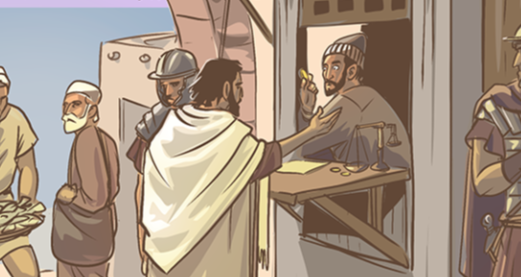
This Sunday we’ll read Matthew 9:9-17, about Jesus calling Matthew to be His disciple. At first glance, “Matthew the tax collector” may not strike us as anything unusual, perhaps just a profession that isn’t well-liked. But for a first-century audience, those words would have been shocking.

Tax collectors were not simply disliked. They were despised. They worked with Rome to oppress their own people, betraying their families, neighbors, and community. By overcharging and exploiting others, they grew wealthy while their fellow Israelites suffered. To hear that Jesus would not only speak to a tax collector, but call him to follow, was nothing short of scandalous.

That is where the power of this passage lies. The betrayal and brokenness that Matthew represented highlights the radical nature of God’s kingdom: Jesus steps toward the outcast, the despised, and even the betrayer, offering grace and transformation.

Join us this Sunday as we study Matthew together, and discover how Jesus’ call to Matthew reveals the shocking depth of God’s mercy and how it continues to change our own lives today.

Trusting in Christ’s Authority

How difficult or easy is it for you to trust someone? For many people, trust is a hard commodity to come by. A lot of factors go into that – past experiences and a host of other reasons can make us reticent with our trust…and those are people we can SEE and examine and evaluate on a regular basis.  What about a God who we can’t see and who sometimes feels like he’s hiding himself?

Still, that’s the whole thing when it comes to Scripture. We are continually called on to trust God – and in the Good News of the Gospel, to trust in the authority of Jesus.

This Sunday we’ll be reading chapter 8:23 through chapter 9:8  as we journey through the gospel of Matthew. The chapter break really shouldn’t be there, because this whole section belongs in a single grouping. Three areas where Jesus demonstrates his authority to encourage our trust in him, even as we follow him into potential hardships. They link us back to the creation story in Genesis as well as the Exodus; God bringing order to the chaotic waters, subduing spiritual evil and reconciling us to God.

In chapter 8:23-27 we have the famous account of Jesus calming the storm. Have you ever felt like Jesus was sleeping while you were going through severe and stressful times? What does he ask his disciples? In our own storms of life, how can asking ourselves the question “why are you afraid?” help to orient our thinking and perspective?

In v28-34 Jesus heals two men who were demon possessed. How comfortable are you with the idea that there are demons on the loose in this world, taking possession of people sometimes? Our western culture mostly dismisses that notion as primitivism – but I think we need to be cautious about adopting the hubris of our rationalistic culture and leave room for mystery. Jesus demonstrates his authority over evil. How does that develop our understanding of his words in the Lord’s Prayer “deliver us from evil” – and in what way can that inspire our trust? What should our response to evil be, in light of his authority over it?

Chapter 9:1-8 tells the story of Jesus healing the paralyzed man. Before he heals him, he forgives his sin. Then he demonstrates his authority to forgive sins by healing the man’s physical body. What does his authority to forgive sins inspire you to trust Him with? What did the paralyzed man do to deserve that declaration of forgiveness?

Troubles from without, in the natural world and the spiritual one, and troubles from within in the form of our own failures – Jesus has authority over them all. What will you trust Him with?

Hope to see you this Sunday!

The Road is Narrow

Robert Frost ended his famous poem “The Road Not Taken” with the words:

Two roads diverged in a wood, and I—
I took the one less traveled by,
And that has made all the difference.

It just reminds me of the “two paths” motif we find in the biblical narrative, and the “Narrow Gate and difficult road” Jesus contrasted with the Broad and easy road most travel by. This Sunday, in our study of the Gospel of Matthew, we’ll be reading chapter 8:18-22, where the story will give us examples of why the road of following Jesus is considered “narrow”.

Jesus sure has an odd sense for how to achieve church-growth, doesn’t he? I love how v18 reads in the Message: “When Jesus saw that a curious crowd was growing by the minute, he told his disciples to get him out of there to the other side of the lake.” Suddenly his ministry is becoming popular and attracting attention, and his response is to bail out immediately. Why do you think he did that?

When faced with sudden popularity, Jesus doesn’t begin the process of working the crowd and taking polls to see what will generate a greater favorability. He doesn’t try to drum up as many supporters as he can by offering give-aways or doing his best to present himself as culturally hip. Nope. He does his best to evade the masses who have only a surfaced curiosity, and when some do seek to commit themselves to him, he does his best to dissuade them!

Jesus was clearly not reading all the email articles that get sent to me. He’s doing it all wrong, at least according to the experts. And they are experts – they seem to represent gigantic, massive and wealthy churches.

v19-20 – Why do you think Jesus responds the way he does to the teacher of religious law who offers to join the cause? Jesus had places to sleep – he stayed with Lazarus in Bethany, he stayed at Peter’s house in Capernaum…and Peter had a house to stay at. There is some hyperbole in this, but there is a sharp, deeply cutting message in it, especially to 21st Century American Christians. What message does this speak to you?

V21-22 – On a scale of 1-10, with 1 being “not at all” and 11 being “this goes to 11”, how harsh does Jesus’ response to the man who wants to bury his father seem to you? Why do you think Jesus would say that? What do you think the phrase “let the dead bury their dead” means? We’ll take some time to gain a better understanding of his response by getting a clearer picture of the culture of that place and time, as well as some potential idioms that were in use.

While this section of Scripture is challenging, my hope is that it will encourage us as well – persuading us to commit our all to the Savior of our lives.

God’s Power in the Margins

Every society on earth has always had groups of people in the social margins; people who are relegated to the edges of the larger community. It’s a tragic symptom of living in this broken world, the ease with which we dehumanize others by categorizing them as unwanted or undesirable, or unuseful.

Which is why Jesus’ ministry is so arresting, simply because the majority of his messianic work was done with and for those who were designated as the outcasts of his time. When the Kingdom of Heaven began its invasion of this world, it wasn’t focused in on the elites and powerful of Rome or even Israel. It was laser focused on the most vulnerable among us – revealing the heart of God and the nature of His healing work in this world.

This Sunday we’ll be reading Matthew 8:1-17 in our ongoing study of this Gospel. Chapters 8 and 9 of Matthew are arranged around two sets of three miracles, bridged by sayings of Jesus. This framework is meant to put the authority of Jesus on display after he had revealed his authority to teach in the Sermon on the Mount.

V1-4 is the account of Jesus healing a leper. The Torah had very specific instructions on identifying skin diseases, and what to do if one was diagnosed on a person. It’s clear that a person’s life would be miserable with that affliction, especially on a social level – they would be mandatorily outcast. Does the leper demand a healing from Jesus? Why do you think he phrased his inquiry the way he did? What is the first thing Matthew describes Jesus doing, even before declaring him healed? What might a human touch have meant to someone who had been labeled as “untouchable”? What do we learn about the nature of our mission, as Jesus’ representatives, from that?

V 5-13 tells us about a request from a Roman officer. Rome was the occupying force in Israel – they were seen as the enemy, the oppressors of the Jewish people. I can’t think of someone who would be more likely to be ostracized by the larger community than man who represented the Roman army. How resistant did Jesus seem to answer this man’s request? What might have been the thoughts of the people around Jesus when this gentile soldier made this request? The officer gives Jesus a way out of coming into his house, and Jesus commends his faith. Faith in what, do you suppose?

The last part of this section details Jesus’ healing of Peter’s mother-in-law from a fever. Women rarely took center stage in recorded events in the ancient world. This is highlighted in the Gospels for a reason. What was her response when she was healed, what did she do (hint: the words “a meal” are not in the Greek – she got up and diakoneō him)?

I’m really excited to get into this text together – I hope you can join us this Sunday at 10 AM!

The Two Ways

This Sunday we’ll be concluding Jesus’ most famous teaching, the Sermon on the Mount, in our ongoing series studying the Gospel of Matthew. Well be reading ch 7:13-29.

Jesus wraps up his instructions with a series of contrasts between two choices. Only two. Two gates, two roads, two types of spiritual leaders, two types of disciples and two different foundations (as well as a sub-set of two fruits and two trees).

All of this is intended to emphasize an “either/or” proposition concerning how we live. We are either following Jesus by mirroring his values into the world, or we are not following him at all. There doesn’t appear to be a third way.

Some things to think about for Sunday: When you read about two trees and two kinds of fruit, what other famous Bible story has a choice between trees in it? Can that give us a clue as to the what doing God’s will might look like? According to Jesus, can a person be representing God’s purposes if they reject in their lifestyle his teachings about greed, forgiveness, love for our enemies, rejecting lust, and not judging others?

Jesus describes people doing some really powerful works and yet declares he never knew them. This clearly indicates that a relationship with Jesus is upmost importance. What might motivate a person to do spectacular things besides a desire to please God?

What would constitute a sandy foundation, that is, what would be something unsuitable to build our life and identity on? What, or who would be a rock-like foundation on which to establish our lives and priorities?

I hope you can join us as we dive into this text on Sunday!

Greed and Generosity

When I was a kid, staying home from school meant watching The Price is Right. I loved guessing the value of prizes and was often surprised by how different items were valued. Interestingly, 47 other countries have their own versions of the show. If I struggle with prices in the U.S., I can only imagine how lost I’d be trying to guess values in other currencies.

This Sunday, as we continue our study of the Sermon on the Mount in Matthew 6:19–34, we’ll explore how Jesus views wealth, possessions, and earthly treasures. He doesn’t give us dollar amounts, but He does reveal the deeper cost of materialism and the danger of hoarding.

Jesus challenges us to look beyond surface value and embrace a life of generosity, free from the grip of greed.

Join us this Sunday at 10:00 AM as we study God’s Word together and discover the lasting values of the Kingdom of Heaven.

A Deeper Devotion

One of the things that has accompanied the rise of the internet and our online connections via social media is an ever-increasing angst over social comparisons – something that has been ringing alarm bells for mental health professionals. The other side of that tends to be the phenomena of “virtue signaling”; expressing opinions or making posts that intimate that a person is deeply concerned and doing something about whatever the latest problem or injustice happens to be (which usually involves posting something or changing a profile picture). Not every accusation of virtue signaling is correct – but there is a very real temptation to try and look a certain way in how we present ourselves online.

Of course, this sort of posery isn’t limited to social media – it saturates politics and workplaces and is present even in family dynamics – but one place that always has a bumper-crop of people trying to look better than they really are is in the realm of religion and the church.

Jesus is going to deal with religious posing in the text we’ll be reading this Sunday as we continue our study in Matthew. We’ll be reading Matt 6:1-18.

Jesus addresses three areas of spiritual devotion and highlights the temptations we face when setting out to put them into practice. He’ll talk about giving, fasting and praying. We’ll sort of jumble up the text on Sunday so as to keep all the themes together (making it easier for a simple-minded teacher to work his way through).

If you were to summarize Jesus’ warnings about giving, fasting and praying , what would you write? Who is supposed to be our primary concern when it comes to these acts of devotion? Why do you think we are so tempted to put the focus somewhere else?

When we look at how Jesus taught us to pray – who are we addressing our prayers to? What title does Jesus give to God? How might we read that differently from God’s other titles, such as Lord or King? How might our trust in a loving, parental Creator help curb our desire for human approval?

There’s a lot we’ll be unpacking in this section – I hope you can join us this Sunday at 10 AM as we dig into the center of the center of Jesus’ Sermon on the Mount!

A Deeper Righteousness

We’re going to be continuing our study in Matthew’s account of the Sermon on the Mount this Sunday – we’ll be reading chapter 5:17-48. So far, Jesus has been turning popular concepts on their heads, pointing to the stuff we normally try to avoid in life and saying that is where the good life is found. In the text we’ll read this Sunday, Jesus will drive this idea home through a series of contrasts.

Jesus begins this next section making it clear that he’s not starting some new religion, and he’s not just trying to contradict the Old Testament Law, but his intention is to fulfill it. His coming on the scene is a continuation of the story that was developed in the Old Testament and he is the fulfillment of the promises made to Abraham and David.

While he intends to fulfill the law, he also warns that our righteousness has to exceed that of the Pharisees. What do you believe he means by that? How do we apply that in our present world and time? If adhering to a moral code doesn’t produce righteousness, what do you think will?

Jesus has something else he wants to make clear: the deeper intention behind the Law of Moses. So from v21-48 he presents what have become known as the antitheses’ of the Sermon on the Mount, where Jesus reveals a contrast by putting two different ideas side by side. It will be in the form of “You’ve heard it said…but I say…”.

He will cover themes of murder, lust, adultery, oaths and how to treat our enemies. What is the common thread that you notice to all these themes? Jesus is describing real righteousness that is more than the outward expression of the Pharisees – so how do you think real righteousness is expressed, based on the themes Jesus presents?

When Jesus tells us to present the other side of our face when struck on one side, do you believe he’s telling an abused wife somewhere to just take it? If not, then what would be a good way to understand the nature of Christ’s instructions here? What difference do you think there is between self-defense and retaliation and revenge?

What Jesus is describing is certainly no way to get ahead in this world. We know the rules of this world. If getting ahead in this world isn’t on Jesus’ agenda, what benefit do you think living out this kind of righteousness accomplishes?

This is going to be a challenging study – Hope you can join us this Sunday as we explore the Sermon on the Mount more deeply.

Who is Living the Good Life?

Have you ever looked at someone’s life—on social media or even in real life—and thought, “I wish I had what they have”?

Maybe it’s their home, their family, their vacations, or just the way their life seems so perfectly put together. It’s easy to compare, especially when all we’re seeing are the highlight reels. Social media filters out the grey areas, the struggles, and the sadness, leaving us longing for a version of life that’s curated—not complete.

I know people have looked at my life before and glamorized it without knowing the full story. They see the joyful moments but not the hard-fought battles behind them. That’s the illusion many of us live with in this digital age.

It’s normal to desire a good life. But what’s fascinating is how different “the good life” looks for each person. For me, it might include regular trips to the beach; for someone else, the beach might be the last place they’d want to go. That’s because a good life is subjective—it depends on the eye of the beholder.

This Sunday, we’re exploring what Jesus called “the good life” in the Sermon on the Mount, reading Matthew 5:1-16.
In most Bible translations, we read the word blessed—“Blessed are the poor in spirit…,” and so on. But if we look deeper, starting with the Hebrew context and moving forward, we find that it could also be paraphrased as, “You have a good life when…”

And that’s powerful. Because the kind of life Jesus describes is radically different from what the world calls “good.” It challenges our assumptions, it reshapes our values, and it continues to change lives 2,000 years after it was spoken.Join us this Sunday at 10:00AM as we dive into the Beatitudes and discover how Jesus’ words still speak into our world—and our hearts—today.