Perils of the Poser

Probably the most common complaint leveled at the church is that of hypocrisy. While that has always been the case, it nevertheless is something the Bible takes very seriously. Jesus reserved his harshest remarks for those who misrepresented God through religious hypocrisy. The word that is used in the Greek for hypocrisy means “play-acting”. Like an actor on a stage, a poser, playing a role of religious piety instead of allowing God to do the difficult and painful work of reshaping the inner-person.

That’s going to be the topic Paul deals with as we continue our study in the book of Romans. We’ll be reading chapter 2:17-29.

In V17-23 Paul describes how the mission and purpose of the people of Israel was described in various places in the Old Testament. This is who they saw themselves to be. Still, Paul levels some serious questions at them. He makes the statement in v23 “You’re so proud of knowing the law, but you dishonor God by breaking it.” The difference is vital. Have you ever seen food that looked really good on the outside, only to find it’s just a plastic display? Why is hypocrisy so serious that the warning is repeated so often in the Bible about it?

V24 drives home the imperative of this warning. How might people outside our faith blaspheme God because of hypocrisy?

In V29 Paul plainly declares that outward conformity to a code of conduct means nothing to God. What, instead, is God’s intent with our lives? How can we take steps to keep our focus on the only source of real change?

Hope to see you Sunday!

Broken Religion

Newsweek Magazine . 14 August 2006. Excerpt from interview with Billy Graham ~ A unifying theme of Graham’s new thinking now is humility. He is sure and certain of his faith in Jesus as the way to salvation, but when asked whether he believes heaven will be closed to good Jews, Muslims, Buddhists, Hindus or secular people, Graham says: “Those are decisions only the Lord will make. It would be foolish for me to speculate on who will be there and who won’t … I don’t want to speculate about all that. I believe the love of God is absolute. He said he gave his son for the whole world, and I think he loves everybody regardless of what label they have.”

You would think, when a man of Graham’s pedigree made a statement like that, people would lean forward and listen more closely. “This is something to think about…a perspective to contemplate and pray about.” That was, however, not the response.

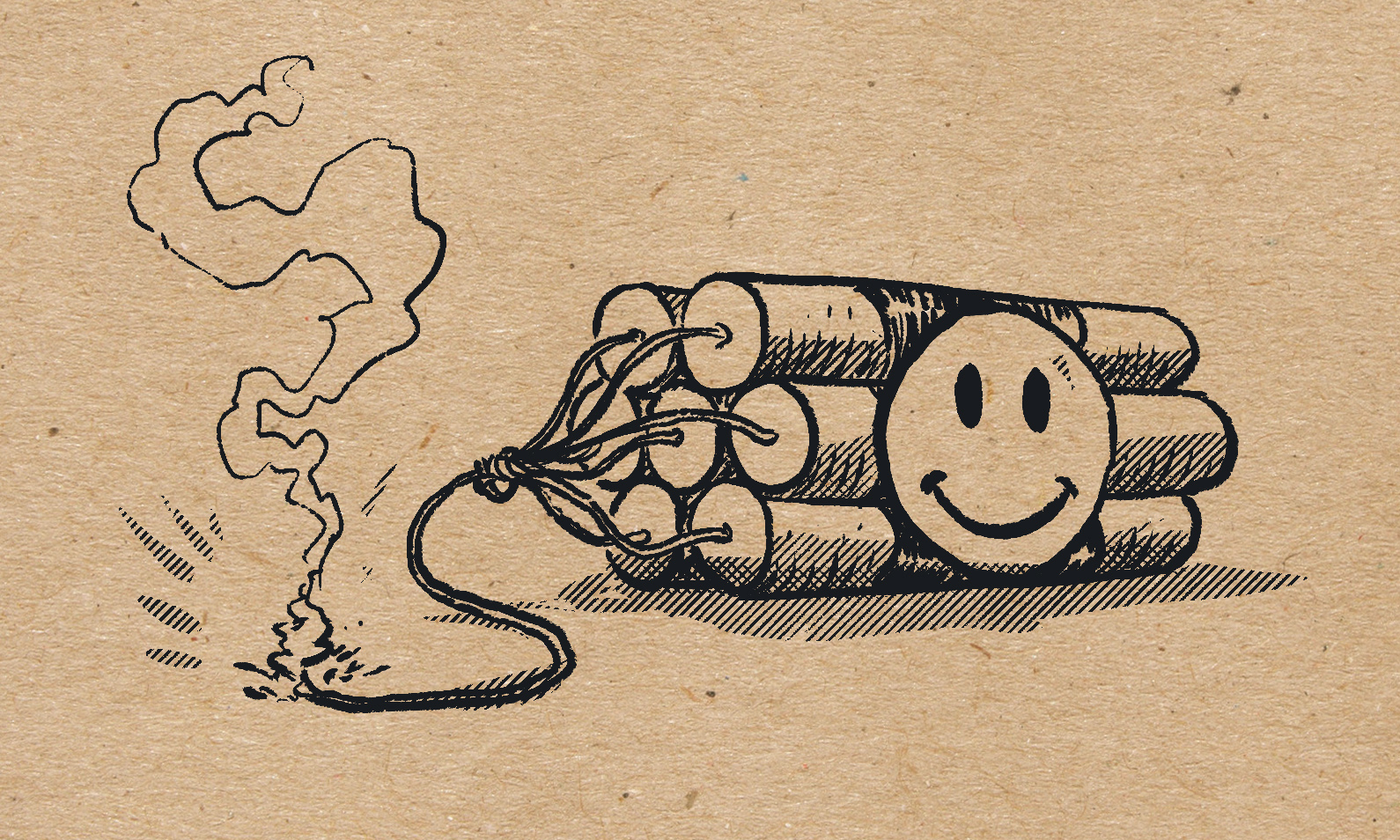
If you were in the church at that time, you heard the howls of the defenders of the faith. He was labeled a heretic, a universalist and a false teacher. That response prompted my cartoon, posted above. We have curiously morphed from being people of the Good News to doctrinal police and moralists who think they impress God by what they condemn. I suppose the church has done this a lot throughout our long history. It’s something Paul addresses all the way back at the beginning of the church.

This Sunday we’ll be reading Romans 2:1-16 as we continue our study in that book.

When you read Paul’s warnings, what overall theme emerges to you? Do you think Paul is trying to say there is no right or wrong? What would you consider the best defense against adopting a moralist approach to our Christian faith?

The Broken World

This Sunday we’ll be continuing in our study of the book of Romans – a Story to Live From. We’ll be reading v18-32 of the first chapter.

Last week we finished up with Paul describing how God intends to make things right through Jesus Christ. The last half of the chapter is Paul backing up to explain how things have gone wrong. It’s a two part story, which will continue on through chapter 3 where the wonderful conclusion is described. But, before we get to the good ending, we have to navigate Paul’s description of this broken world

Let me warn you, this will not be the most comfortable section of Scripture to read. It’s going to require a lot of maturity on our parts, and a willingness to consider Paul’s words from several different angles. Join me in praying that God’s grace will guide us in exploring this passage – that we will find ways to be faithful to God’s word and be loving towards all people.


Powerfully Good News

“I wish I’d never heard of Christianity” my 15 year old daughter said one day.

“What? Why?” came my shocked response.

“Because then I wouldn’t know that I was breaking all the rules.”

Her answer stunned me. I had been a pastor for only a few years, but I saw myself as the great champion of grace. I was the “grace guy”, I spent most of my teaching time talking about how God’s grace saves us through faith, apart from works. How had my daughter come to the conclusion that Christianity was about keeping the rules?

I’ve come to realize that there is a learning curve to this message. For my daughter, living under my roof and therefore required to function within the scope of my convictions, her perception of Christianity was linked to my house rules. I did my best to explain the distinction, but it would be years before she caught my drift. That is the strange dichotomy that exists between salvation by grace through faith alone and the good works God created us for. The church has had an uneasy history of trying to manage that dance, often falling to one extreme or the other like a drunkard walking home.

For the Apostle Paul, it always came down to faith – but that faith was placed in something transformational.

We’re going to be reading Romans 1:8-17 as we continue our study in that book this Sunday.

The word “faith” is used several times in that section of Scripture. It’s important to understand the greater impact of that word. It is  pisitis in the Greek – and is translated a variety of ways. Trust, believe, faith, faithfulness. It is more than just an intellectual assent to a proposition, it means a truth embraced and then lived by.

That being the case, in v8, Paul says the Roman’s faith was talked about all over the world. What would have been on display that would cause people to notice their faith? How has your faith in Christ made a noticeable difference?

In V11, Paul wants to encourage their faith and have his own faith encouraged by them. What do you think that would look like? How can we apply that to our life in community with the church?

The most famous verses of this passage are v16-17, where Paul makes a grand statement concerning his boldness in representing the gospel. We’ll go into this in more depth on Sunday – but notice how Paul says that the Good News is the power of God for salvation. Not a message about that power. How do you understand his meaning? In what way can you imagine the story of Jesus’ death and resurrection being God’s present power? What does Paul say it takes to unleash that power in our lives?

This is a story to live from. It is God’s transformational power at work in this world. I get why Paul is so stoked about it! See you Sunday!

This Sunday we’ll begin a new study in the book of Romans. I taught through this book 17 years ago, but I’m not sure I agree with that guy, so I’m re-imagining our approach to this magnum opus from Paul. The letter to the Roman church is considered one of the most important books of the New Testament. It certainly has the most robust and dense theological arguments of any of Paul’s writings.

It’s impossible to overstate the impact that this single letter has had on the history and ongoing formation of the Christian church. Augustine, Luther, Calvin, Wesley, Barth and a host of other important thinkers of the Christian faith all point to this letter as having the greatest impact on their spiritual worldview. The writing of Romans is an amazing example of an intellectual mind from the ancient world.

There is little dispute that Apostle Paul was the author of the letter – written sometime between 55-57 AD. We’ll discuss the reasons he may have written this letter on Sunday, as well as looking at how the letter unfolds and the best way of approaching it for study. Traditionally, this book has been seen as a series of systematic theological arguments on a variety of subjects. I have been persuaded (HT: N.T. Wright, Katherine Grieb) that Romans has a narrative substructure which lays out the story of God’s righteousness, revealed for us in Jesus.

So…we’re going to be keeping story in view as we journey through this epic letter. The Story, that is.

We’ll be starting with an introduction, but then we’ll read Paul’s greeting: chapter 1:1-7. We’ll be using the NLT for presenting the text.

From what we understand, Paul hadn’t yet been to the church in Rome, so he is introducing himself. The letter begins like most ancient letters do – the author identifying himself and stating his position in life, then identifying his intended recipient. Paul elaborates on this formula quite a bit though. V2-6 expand the greeting into a summary of the gospel. Here’s what’s interesting: V2-6 are all modifiers of the original subject, Paul. Paul is still in the process of introducing and describing himself in V2-6.

What does that tell us about Paul and his connection to the gospel? On personal reflection, what stories do you feel have shaped your life so far? If you were to introduce yourself to people who didn’t know you, what stories would you tell that would best indicate who you are as a person?

Based on what Paul writes in his greeting, what sort of person do you understand him to be? As you consider what characterizes Paul, what aspects of him do you admire. What parts, if any, of his person put you off?

I cannot properly express how stoked I am to begin this study! What’s yer story, morning glory?


Easter Weekend at Eastgate

Tonight is Good Friday and we will be observing it with a service which reflects on Jesus’ sacrificial death on the cross. It will be a time of singing and contemplation. We will also be doing a live painting, as well as an interactive, visceral worship experience. The cross has been a central part of the Christian faith for 2000 years. Tonight, we’ll take our place alongside the church through the ages and remember that pivotal day…the day the revolution began! We hope you can join us tonight, 6:30 pm in the Big Room at Eastgate.

On Saturday: we are inviting people to join in a voluntary day of fasting and prayer in anticipation of Easter. You can skip a meal, or two or skip the whole day (if your health allows for it). This allows us to step into an experience of loss and discomfort, like the first disciples experienced that terrible Saturday after seeing their Rabbi die along with their hopes and dreams of God’s kingdom. We have prepared written prayers that you can use to guide you in contemplating and communicating with God. This is a time to give thanks and to deeply consider the depths of God’s love for us.

You can find the prayers here: COMMUNITY PRAYERS_

On Sunday: Join us at sunrise at Rick Seltzer Park on Thomas Dr as we welcome the day and begin celebrating the wonder of resurrection! If you haven’t joined in on one of these services, I encourage you to do so, you won’t regret it!

Later, at 10 am in the courtyard of the Eastgate building, we’ll have a day of celebration, where we kick up our heels and shout for joy because Jesus is loose in the world making all things new! Join us for the celebration, then stay for a potluck lunch where we can fellowship and reap the benefits of God’s renewal by hanging out with the family of God! It’s always a good time! Bring a dish to share…and I hope to see you there! (see how I did that? It rhymes!)

See you tonight!

Elemental Eastgate

So we finally made it through the extremely challenging task of studying the book of Revelation. This Sunday, before we begin our study in a new book, we’re going to take a moment to reflect on our goals as a community. We will be looking at our purpose, our values, as well as our vision.

Some of the Scriptures we will be looking at will be: Matthew 22:36-40; 2 Corinthians 5:18-20; Galatians 5:1-3 as well as others.

If you’ve been a part of Eastgate for anytime, how would you describe our fellowship? If you were to take an objective look at our fellowship, what do you think our values are? Are there specific things that you appreciate about Eastgate? Are there things you think we could improve on? I’d be interested to know your thoughts on this in the comment section.

I think this will be a good refresher on why were here and what we’re doing. It’s good for us to find unity in purpose and harmony in Christ! I hope you can make it, I believe it’s important for everyone who feels that they are a member of this fellowship. Hope to see you Sunday!

In necessariis unitas, in dubiis libertas, in omnibus caritas

Further Up & Further In

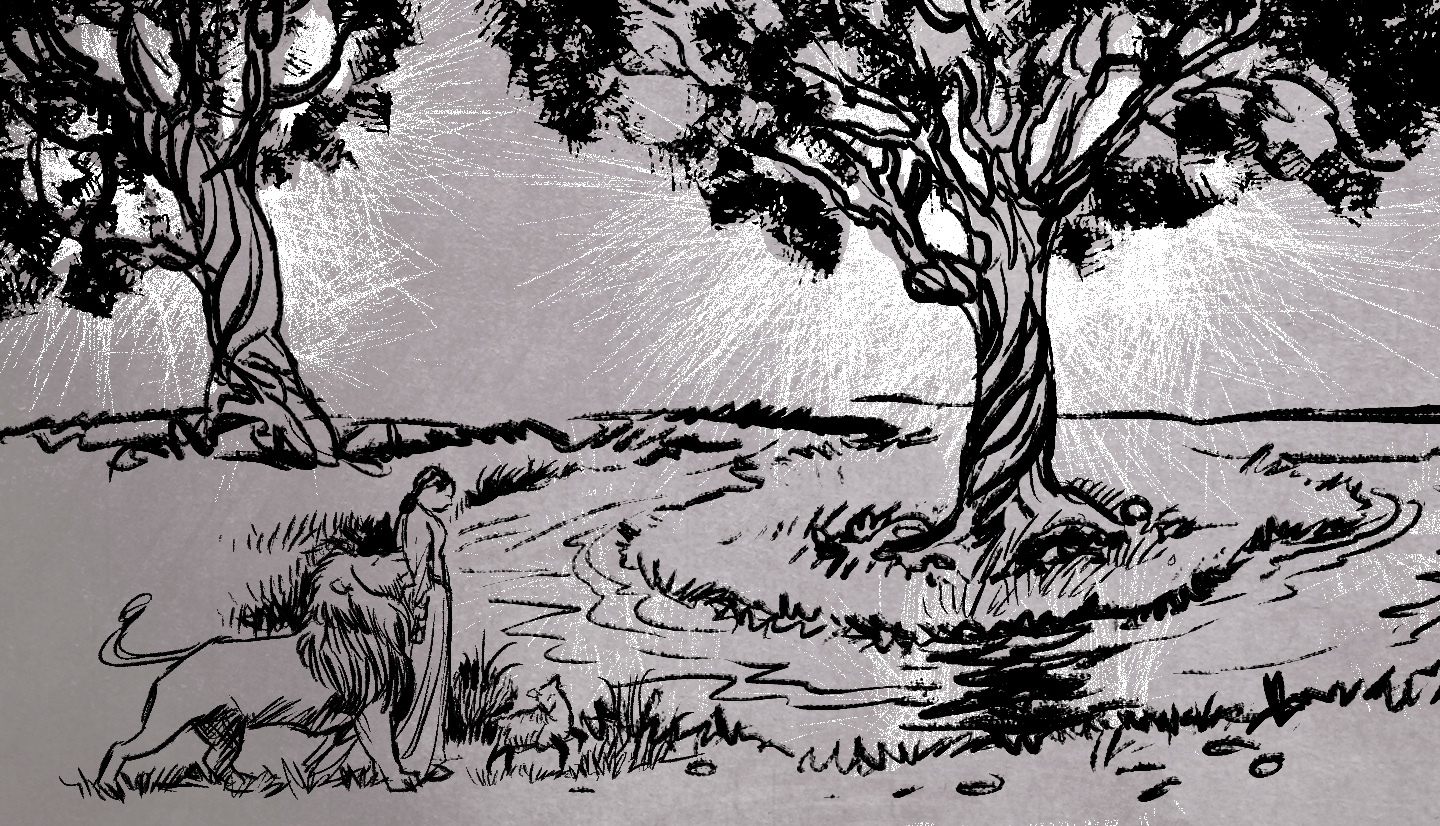
“I have come home at last! This is my real country! I belong here. This is the land I have been looking for all my life, though I never knew it till now…Come further up, come further in!” 
― C.S. Lewis, The Last Battle

Well, we are coming to our final study in the book of Revelation. We’ll be reading Revelation 22.

To really get a grasp of and appreciate the imagery of v1-5, you have to be somewhat familiar with Ezekiel 47:1-12. To contextualize that for you, Ezekiel was a prophet of God during Israel’s exile in Babylon. Many of his prophecies were about Israel’s return and justice dealt out for her enemies. Near the end of the book, Ezekiel sees the temple rebuilt, and a river flowing from it which gets deeper and deeper and has the remarkable properties of turning the salt water of the sea into fresh water. It also has the tree and fruit imagery as well.  Ezekiel was seeing more than just Israel’s return from exile, he was seeing the whole world restored.  John’s vision takes from this picture and completes it for us.

There is also imagery from Genesis 1-3 sprinkled in. What do you think the point would be, to have these parallels with return from exile and original creation? What does the end state appear to be, as you read this?

V6-21 are comprised of the final messages and warnings and encouragements about the whole of the vision.

I find it really curious to the point of humorous that John repeats his folly from chapter 19 again in v8. The repeated warning given by the angel in v9 seems emphatic enough to get our attention. Why do you think this warning is repeated? Why do you think John makes this mistake twice? What does that tell us about human nature and what we need to be alert about in our mission here?

I love the final words of Revelation, which then become the final words of the whole bible.

“May the grace of the Lord Jesus be with God’s holy people”.

It all resolves with grace.

Amen.

Here’s something: if you have any questions about this book, or want to discuss various interpretations or ideas about it, or if you need one of my points of view clarified, let’s use the comment section of this post to discuss it. There are no wrong questions, and I can’t promise anything resembling an intelligent response, but I’d be happy to talk about this more if anyone wants to. If not, it’s cool. I really enjoyed teaching through Revelation, even though the research and artwork fairly well swallowed up most of my days. Still, I have to say that I’ve gained a new appreciation for a mindset that eagerly awaits Christ’s return – even as we reflect that future good in our lives and actions today. I hope you were able to get something out of it too!

Hope to see you Sunday!

Out With the Old, In With the New

I can’t think of a more fitting time to look forward to a new day, one where all things are made right. Once again, our nation is rocked with the agony of senseless violence and more families have to cope with unthinkable loss. God help us.

It. Is. A. Broken. World.

We all grope around looking for answers – why did this happen, how can we prevent this, who is to blame? Maybe more strict gun control laws would help, but it seems like the genie is out of the bottle already. Perhaps we can get serious about addressing mental health issues, or maybe its a prescription drug problem, or possibly a breakdown in family training? I think, as a society, we should be exploring all of these possibilities and seeking to address them as best as we can. But the greater reality is: evil continues to ruin creation.

Evil expands and contracts and as hard as we try, humanity just can’t seem to get a handle on it.

That’s why God promises that a new world is coming. One that His power initiates. We’ll be looking at that new world in our study in Revelation this Sunday as we read chapter 21.

Once evil has been dealt with (ch 20), a new heavens and new earth emerge. Not that God is crumpling up the good that he created, but like one of those renovation shows, he expels all that is rotten and offensive, and rebuilds with good materials.

The vision John has is of the great restoration and redemption God has in mind. All the things that bring misery and heartache and pain are removed and we are provided with life from God’s own presence among us. It’s more than my mind can truly conjure.

Some stuff to take note of: underline all the places where John says “there is no more” and then all the places where he describes things as “new”. What is out and what is in? How does that help us understand our priorities as Christians in this world today?

Once again, John hears about a bride, but what he sees is a city. We’ll go into all the measurements and stuff on Sunday. Think about this: where does the city come from? We seem to have imagined the gospel to be about going up to heaven when we die…yet how does that seem to fit with what is described in Revelation 21?

The city of Babylon represented something besides a city a few chapters back. What do you suppose the New Jerusalem might be representing? As you consider some of the details of this city – no temple, constant light, no closed gates, all the nations included – what might those represent, and how might that influence how we understand our purpose and priorities as the church today?

I’m looking forward to this chapter – we’re finally done with monsters and flames. I think we could all use a bit of good news. Hope to see you Sunday!

The Final Clash

Gandalf’s charge in the second of the Lord of the Rings trilogy is probably one of my favorite moments in all of those movies. Admittedly, those movies are suffering over time (nobody should be allowed to make movies that are that long) – but that moment always sticks out for me. It, of course, reminds me a lot of what we’ll be reading about this Sunday as we continue our study in the book of Revelation, reading chapters 19:11-20:15.

We will be reading about Jesus’ Parousia – Jesus’ second coming. Still – we’ll have a lot of dense imagery to get through, so be warned.

As you read the description of the One riding the white horse – who do you believe He is? Why do you believe his clothes are stained red with blood before any battle takes place.

When we read this opening account, we see two armies lined up for a classical battle scene – but by the time we get to v20, prisoners are rounded up and the vultures are already at work. Why do you think there is no battle described here? What do you think the symbolism of the sword from Jesus’ mouth taking down the armies of the earth may mean?

Chapter 20 is a doozy. It is here, within 6 verses that we have a great controversial subject which has divided the church for ages. The Millennial Kingdom – the 1,000 year reign of Christ. We will be discussing the various views about how this should be interpreted – and I’ll do my best to explain these ideas as simply as possible (we’ll try to avoid this).

No matter how one interprets the details of chapter 20, one thing comes across loudly and clearly. All of human and spiritual creation will be accountable to someone. Who is the Someone identified as? We are told (symbolically) in a courtroom scene that ledgers of deeds will be examined to determine a person’s fate. However, there is one book (singular) which seems to set deeds aside. What book is that? Read Revelation 13:8 – what does the name of that book imply about how we get our names in it?

It will be a sobering, yet hopeful talk we have on Sunday. Hope to see you there!