Bye Bye Babylon, Hello Hallelujahs!

Are you familiar with the term “too big to fail”? It’s a phrase that emerged in the late 80’s to describe large corporations, specifically financial institutions which have become so large and globally interconnected that if they were to fail, it would have catastrophic effects on the whole economic system. They are too big to fail, therefore it is incumbent on the government to support and subsidize them should they actually face a potential failure.

We actually saw this concept play out in reality in 2009.

When we look at the world systems that are in place – systems we’ve known our whole lives, it would seem that those systems are too big to fail. Yet, as we’ll be reading about in our study this week, there is a point in time somewhere where God has drawn a line. The broken systems of this fallen world, as immutable as they seem to be, will fall and be swept away. This Sunday we’ll be reading Revelation 18 – 19:10.

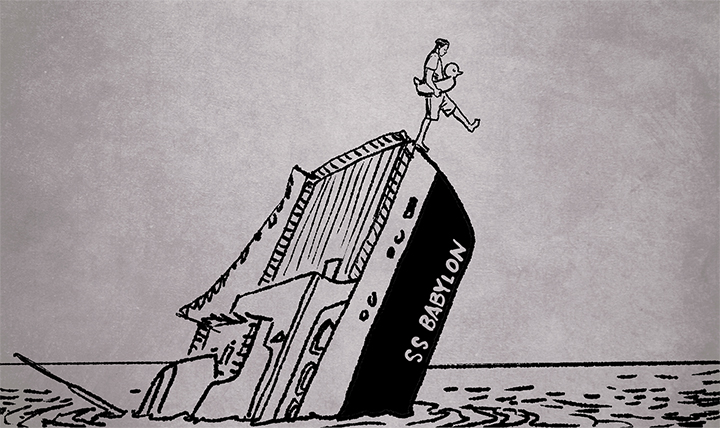
Chapter 18 provides us with a more detailed account of Babylon’s demise. Babylon, as we presented last week, is a code word in the Bible to describe humanity’s efforts to create a society and ethos apart from God. Paradise without a Creator. Those systems are bound for failure, and invariably create more torment and pain than they ever resolve.

What details are brought out about Babylon in chapter 18? Who is lamenting over her? What do they cry about? What does that tell us about the symbolism of adultery and prostitution? It might help to contextualize this imagery if you read Jeremiah 51 (especially v6-8 and v60-64).

When we get to chapter 19, we find a contrasting action to the lament and weeping of chapter 18. Four distinct HALLELUJAHS (Praise the Lord in the NLT) are sounded. What reasons are stated for praising God in those four sections? At one point we are told about the “wedding feast of the Lamb”. What does the imagery of a “bride” conjure up concerning our relationship to Christ as His people? What can we learn about being a follower of Jesus in 21st Century America from this section?

Hope to see you on Sunday!
By the Waters of Babylon

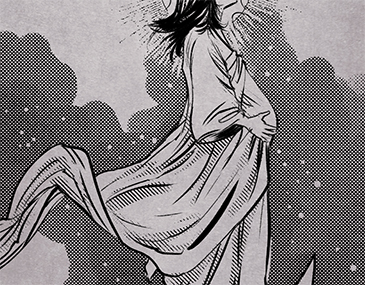
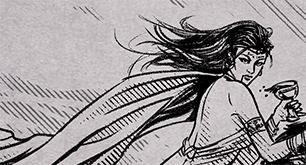
Most of us are familiar with the archetypal trope of the femme fatale. The term is French for fatal woman. She is usually presented as a temptress, driven, manipulative and shrewd. She is often very dangerous to the men she tangles with, usually being cast as a villain in the story. From the Bible to Arthurian tales, to Shakespeare, to modern film-noir we encounter this archetype. Certainly there are stories with men who fit the pattern as well; the homme fatale. A handsome, mysteriously seductive, yet dangerous man. I suppose the female version is more prominent because it overturns and threatens the formerly normalized power dynamics, making for a more intriguing story. That’s my theory anyway.

As we continue our study of Revelation we’ll be reading chapter 17 and we will encounter an archetypal femme fatale: the harlot described as Babylon. Revelation is all written in symbolic language, remember, so what is really being described has nothing to do with women or prostitution, but rather, fidelity to God.

The woman is described as sitting on the Beast we encountered earlier, in chapter 13. When you read over her description, what might the various details about the scarlet clothes, the jewelry and what it is that she is drunk on be symbolizing? If we remember the last time this sort of imagery was employed, in chapter 2, when the church in Thyatira was rebuked for committing adultery with Jezebel, it was most likely addressing a compromise of convictions in the church. What might this woman in chapter 17 be representing?

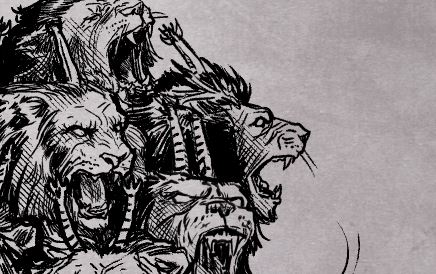
When the Beast is described, attention is paid to his heads and horns, with cryptic significance assigned to them. We’ll cover the various theories about what they might be representing on Sunday.

If this imagery is describing the systems of power and popular ethos in our world, what warning might we take away from it? What encouragement could it give?

The chapter is filled with vivid and disturbing images – hopefully we’ll be able to get a handle on the message it conveys. See you Sunday!

Right Undoing Wrong

Related imageThis Sunday we’re going to spend a significant amount of time talking about judgement and wrath, specifically, God’s judgement and wrath. We’ll be continuing our study in Revelation, covering chapters 15-16. It’s not very often that an entire message finds judgement as its focal point, but this is the nature of the two chapters we’ll be reading and we wouldn’t be treating the text honestly nor honorably if we were to skim past it. So buckle up because we’re going to look squarely at this subject…and believe it or not, I think it may prove to be encouraging.

God’s judgement is one of those unfortunate concepts that falls into two extremes in the history of church doctrine. Some elements of the church get so focused on judgement and wrath that a caricature is created of God, one that resembles pagan concepts more than biblical ones. On the other hand, some in the church are so concerned that talk of God judging might undermine the message of his grace that they also create a caricature of God; one of a doting old grandparent who just winks and smiles in the face of all that’s wrong.

But what are we to make of wrath and judgement ascribed to God, not only in the Old Testament, but also in the New, as in the chapters we’ll be reading this Sunday?

I believe without reservation that God is not mad at humanity. I believe the message of the Gospel, that God so LOVED the world he sent Jesus, his son, as an atoning sacrifice. I also believe what the bible says about God’s wrath. The main issue is the focus of that wrath. This is something we’ll talk about at length on Sunday.

For now, just consider this: what comes to mind when you hear the word “wrath”? When you think of judgment, what do you envision? In what ways could God’s judgement be a positive thing that compels the nations to worship God, as is described in chapter 15:4?

Don’t get nervous – I think it’s important to talk about these ideas and do our best to grapple with them. If we observe this rightly, it’s very possible to come away from a teaching like this with a whole new sense of hope. See you on Sunday!

Destinations in View

Do you remember being a child and watching scary movies? Sometimes, when the monster was about to attack or the action got really tense, it seemed prudent to hide under a blanket, or cover your eyes, or suddenly get interested in something else until the tension eased in the story. Who am I kidding…I’m still like that. However, as a young tyke, I can remember my mom noticing my worry and reminding me: “it’s just a movie, it’s not real”. If it were a movie she had already seen, she would sometimes let me know how it ended: “It’s okay, they’ll stop the monster, I’ve seen this”. I don’t think people cared about spoilers then as much as they do now.

Anyway, as we are returning to our study in Revelation this Sunday, we’ll be reading chapter 14, where we’ll be getting some reassurance in the midst of some really tense images. The chapter intends to remind those who follow Jesus about their destination. (spoiler) There’s a good ending for those who believe.

In v1-5 we are greeted with some familiar characters – the Lamb and the 144,000 followers of the Lamb. We first met these 144K back in chapter 7, and we concluded that they were most likely a symbolic representation of God’s redeemed people throughout time. They showed up as an interlude between the 6th and 7th seal…a quick look at God’s protection of his people, right before we saw the finale of history.

As we look at how these people are described in v4-5, what significance do we assign to each of these symbolic characteristics?

v 6-12 has a vision of three angels, or messengers, each declaring invitations and warnings. The first angel has the invitation of the gospel. To whom is that gospel offered? What similarities do you see between those people and the people of chapter 13? What does this tell us about God’s heart?

This chapter is pretty loaded with disturbing pictures and forecasts – most of which we’ll try to unpack and explore on Sunday. Hopefully, we’ll see you then!

Things Get Beastly

Well, I hope everyone had a good and pleasant holiday season. For the last two weeks we’ve had special services – but this Sunday we’ll be returning to our normal schedule of a 9 and 11 o’clock service. We’ll also be returning to our study of the book of Revelation! We’ll be reading chapter 13.

This is probably one of the most famous chapters of this whole book because it contains the infamous and mysterious sequence of numbers: 666.

In order to really get the full effect that John’s vision is seeking to evoke, it would serve you well to read Daniel 7, because it contains very similar imagery. Daniel’s dream of a series of beasts rising from the sea is usually, and certainly by John’s day, considered a forecast of the successive empires that ruled the ancient world. Babylon, Medo-Persia, Greece and finally Rome.

Given that idea – what do you suppose the beast from the sea in John’s vision might represent? What similarities are there between Daniel’s dream and John’s vision? Who is it that is said to give this beast his power and authority? What main characteristic of the sea-beast stands out to you?

John then sees a monster from the earth. He has horns like a lamb but the voice of the dragon (chapter 12). Who can you think of that is described as a “lamb” earlier in this book? What significance to you see in having the appearance of a “lamb” but the voice, or words of a “dragon”? What is the earth beast’s mission? Count how many times the word “worship” is repeated in this chapter. Do you find that significant? What is it that is withheld if a person does not worship the beast?

Politics, religion and money. It appears to be a toxic combination, doesn’t it? If you were to read this as an encouragement in following Jesus, what message would you take from it?

The number 666…..what does it mean? I’ll get into my thoughts on that Sunday morning. Hope to see you there!

A New Year’s Hope

I just want to remind everyone that this Sunday, New Year’s Eve, we will only be having one service at 10 am. We’ll be praying for the new year, singing together, taking communion, and considering Jesus’ words in John 16:33. It’s been a tumultuous year and I know many people are glad to see it go. What does the next year hold in store? We don’t know – we only know Who holds us – and we’ve been encouraged to trust Him because He is defined by love.

The following week, Jan 7th, we will return to our normal schedule of meetings at 9 and 11 am – and we’ll continue going through the book of Revelation. A book which reminds us that the One who is called Love also holds the reigns of history and has a good ending in store. I’m looking forward to hanging with you all, Lord willing, in 2018. May you have a GRACE-FILLED New Year!!

It’s Christmas Time!

The big day is just a day and a half out – and I know many of us are excited and busy! I just want to remind you that we’re taking a break from our study in Revelation for the next two Sundays. Tomorrow, on Christmas Eve, we’ll have one, short service at 10am, and our traditional Christmas Eve service at 6:30pm. We hope you can make it for one or both of those times, since the meetings will be different from each other.

Also – The Bible Project has a wonderful series on the themes of Advent. I highly recommend these videos – and they’ll be a great primer for a devotional I’ll share at the 10am service. You can find them all HERE.

May the light of God’s grace, and the hope of the Good News flood your lives this holiday season. Merry Christmas!

Can I Get Two Witnesses?

witnesses

While Revelation may be the most puzzling book of the Bible, chapters 10 and 11 prove to be the most puzzling section of Revelation. The imagery is dense and the symbolism is deep and this will take some thinking as we navigate our way through this section.

We’re first introduced to an angel holding a little scroll which John is instructed to eat. If you read Ezekiel 3, it gives some context to this odd requirement. What do you think this action symbolizes for John, and what might the scroll represent?

In chapter 11, John is instructed to measure the temple, symbolically indicating it’s preservation. At the time of Revelation, the temple had been destroyed more than 20 years earlier. What do you suppose this temple represents? Hint: 2 Corinthians 2:6.

The witnesses are described as lampstands and olive trees. What else has been described as a lampstand in Revelation? What might these witnesses represent?

Wear your thinking socks on Sunday, this will be a challenge, but well worth it!


The Trumpet Section

This week we’ll be reading two chapters in Revelation – chapters 8-9 – as we continue on our journey through this book. There is a dense amount of imagery in this section dealing with another set of 7 events. We’ll be reading about the seven trumpet judgments that come on the earth. As we’ve said many times already, there are a myriad of differing views about what these images mean and when they take place.

I am someone who is persuaded by the interpretation that says this set of seven trumpets and the set of seven seals prior to it, are describing the same events but from differing perspectives. These may be descriptions of the state of the world during the period of time between Christ’s ascension and his return.

Again, as you read these images, use your imagination to picture the scenes and consider how those images make you  feel. Revelation is a book meant to be experienced as well as read. In what ways have we seen our ecological environment negatively impacted, and how might that relate to the images of chapter 8?

Most of these images are showing us what happens when humanity gets its own way – we want to call the shots and rule the world, and the world becomes a tormenting place as a result.

All of these judgments carry that theme. And the last verses of chapter 9 show us the disheartening results. Judgement, and the threat of it, does not seem to change people’s hearts. What can we learn from this as we carry out the mission of the church?