Can I Get Two Witnesses?

witnesses

While Revelation may be the most puzzling book of the Bible, chapters 10 and 11 prove to be the most puzzling section of Revelation. The imagery is dense and the symbolism is deep and this will take some thinking as we navigate our way through this section.

We’re first introduced to an angel holding a little scroll which John is instructed to eat. If you read Ezekiel 3, it gives some context to this odd requirement. What do you think this action symbolizes for John, and what might the scroll represent?

In chapter 11, John is instructed to measure the temple, symbolically indicating it’s preservation. At the time of Revelation, the temple had been destroyed more than 20 years earlier. What do you suppose this temple represents? Hint: 2 Corinthians 2:6.

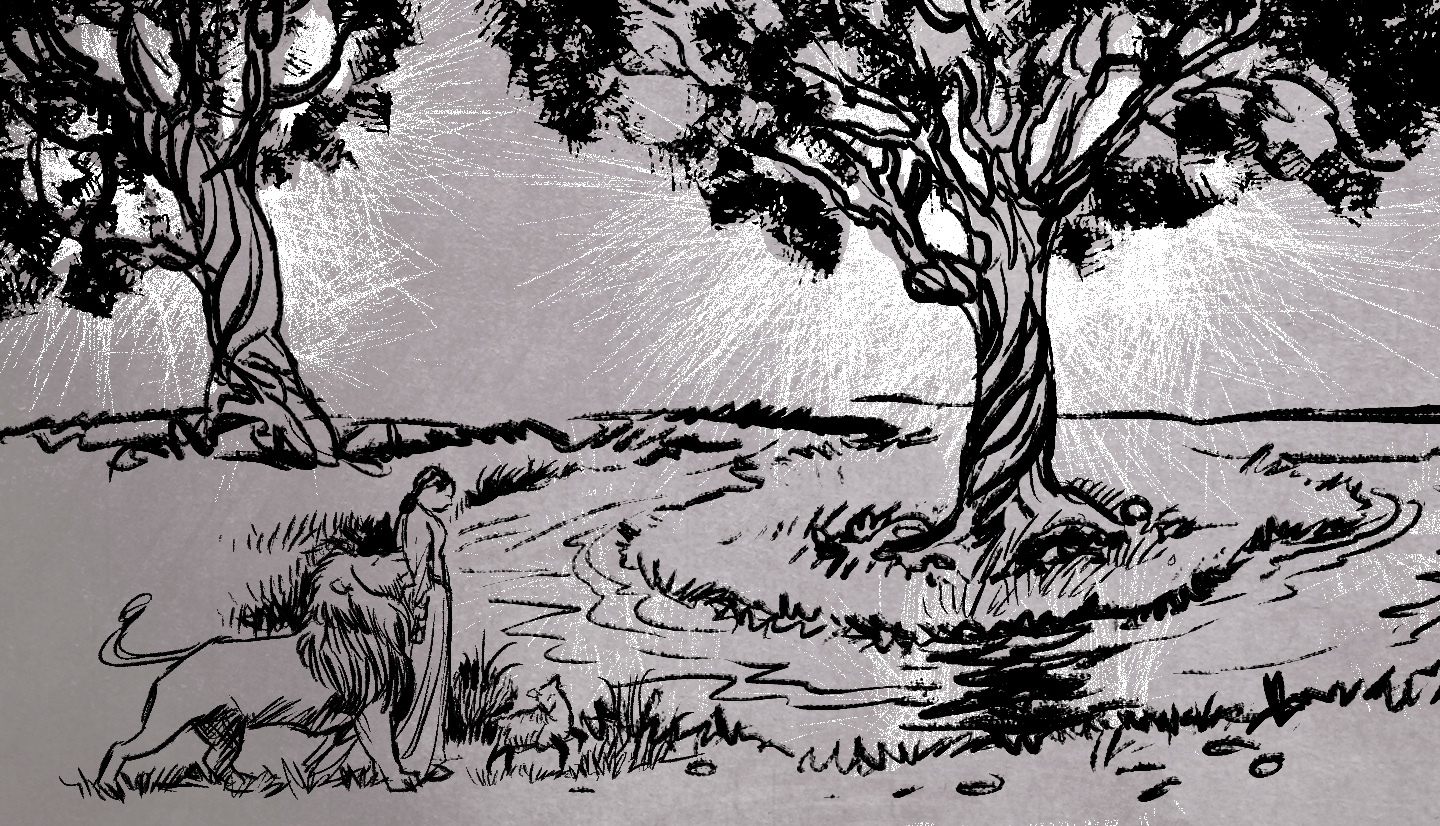
The witnesses are described as lampstands and olive trees. What else has been described as a lampstand in Revelation? What might these witnesses represent?

Wear your thinking socks on Sunday, this will be a challenge, but well worth it!


The Trumpet Section

This week we’ll be reading two chapters in Revelation – chapters 8-9 – as we continue on our journey through this book. There is a dense amount of imagery in this section dealing with another set of 7 events. We’ll be reading about the seven trumpet judgments that come on the earth. As we’ve said many times already, there are a myriad of differing views about what these images mean and when they take place.

I am someone who is persuaded by the interpretation that says this set of seven trumpets and the set of seven seals prior to it, are describing the same events but from differing perspectives. These may be descriptions of the state of the world during the period of time between Christ’s ascension and his return.

Again, as you read these images, use your imagination to picture the scenes and consider how those images make you  feel. Revelation is a book meant to be experienced as well as read. In what ways have we seen our ecological environment negatively impacted, and how might that relate to the images of chapter 8?

Most of these images are showing us what happens when humanity gets its own way – we want to call the shots and rule the world, and the world becomes a tormenting place as a result.

All of these judgments carry that theme. And the last verses of chapter 9 show us the disheartening results. Judgement, and the threat of it, does not seem to change people’s hearts. What can we learn from this as we carry out the mission of the church?

Sealed and Secured

Many commentators view Revelation 7 as the most comforting and encouraging vision of the entire book. That is the section we’ll be reading this Sunday as we continue our series through these famous last words.

The vision starts rather oddly, with four angels holding back what appear to be destructive winds from scorching the earth. The reason they are held back is because God’s people are to be sealed, or marked first. Read Ezekiel 9:1-4 and Ephesians 1:13-14. How would you interpret the “seal”?

The 144,000 and the innumerable multitude are images we’ll talk about more on Sunday. The main thing to notice in the section though is God marking those who are His own. How would his persecuted first readers have found hope in that, and how can we find hope from that image today?

The rest of the chapter has some of the most tender imagery we’ll find anywhere in the Bible. In V 15-17, read over what it is the One on the throne and the Lamb will do for the people who belong to God. Use your imagination to envision the scene, then transliterate it to experiences you’ve had in this life that are similar. For instance, the One who sits on the throne will give His people shelter. Literally, provide a tent for them. In Near Eastern thinking, this is saying “bring them as family”. What does it mean to you to belong to a family – to experience the provision and protection that extends well beyond what you can achieve alone?

What do these images convey about the heart of God towards us?

I love this section – I hope you will too! See yez’ on Sunday!


The Crisis of Resistance

Shoot! I’m really late posting this – and I’m limited on time. So…just quickly, we’re going to be reading Revelation chapter 6 this Sunday. The first 6 seals of the scroll will be opened and we’ll look at the conditions of this broken world that are the result of God’s kingdom breaking in. Also…you’ll get to see a drawing of how I envision John’s description of the infamous Four Horsemen of the Apocalypse. Read the passage over if you get a chance before Sunday and use your imagination to see and feel what John describes.

What are conditions like for a world that resists God’s rule?

What encouragement do we take from the souls under the altar who were martyred for their faith? What are they told and how does that shape our own response to unjust treatment by this world?

What does the final cataclysmic description tell us about the result of resisting God’s rule? Who is described as trying to hide under the earth? What kinds of people are they? What does that tell us about the source of this broken world’s problems?

Stuff to ponder. See yez’ Sunday!

All Things Visible and Invisible

It was  Girolamo Fracastoro, in 1546, who insisted that there was an unseen force in our world that had a profound effect on our physical health. At first, people thought his views were preposterous – but by the late 1800’s, thanks to Louis Pasteur, it had become clear that micro-organisms, or germs, were behind diseases that were plaguing Europe. It’s common knowledge now. We wash our hands regularly and practice good hygiene because we believe there is an unseen world of germs around us at all times, effecting and infecting us if we’re not alert.

The Bible challenges us to take that a step further – to embrace the idea of an enchanted, spiritual dimension where unseen forces are at work. The Bible sees God’s realm, we could say “heaven”, as a world that overlaps and affects our own world, but is hidden from view.

This Sunday as we continue on in our study of the book of Revelation, we’ll be reading all of chapters 4 and 5. They’re short chapters, and I really hate to split them up because they are meant to be read together. In these chapters, John is given a revelation (hence the book’s name) of the unseen realm of God. He enters into the throne room, or command center and sees who is really in control of history.

It would be easy for John and the churches of his day to think that evil had the upper hand and that God’s plans were no longer in his charge. The vision he receives is meant, through rich symbolism, to reveal to him that all is not as it seems on the surface.

As you read over the descriptions he gives – let your imagination run wild. I’ve done some drawings that I’ll put on the screen this Sunday – but those are just to provide spacial reference – don’t let my drawings limit your imagination. See the colors in your mind – listen to the thunder and blink reflexively at the flashes of lightening. Feel the wind brush your skin as the mighty mass of wings on the four living beings fan the air. Smell the burning oil from the seven lamps, be dazzled by the crystal sea. We’ll go over what all these symbols may mean, but the summation is that they are declaring God’s sovereign rule over all things visible and invisible. No matter how things may look to the naked eye, God is firmly in control. How would John’s first readers have found comfort in this idea? In light of our turbulent world, what comfort can we derive from these images?

Chapter five introduces us to a scroll with writing all over it, sealed up with seven wax seals. This is God’s plan and purpose to redeem all things (Daniel 12:8-10). The question goes out, asking who is worthy to open this scroll – that is, who is able to enact this plan? It is here that the core of Christian reality is displayed. John is crying because no one is capable of doing this – but he’s instructed to cheer up and look, the Lion of the tribe of Judah is able to pull it off. When John looks, what does he see? It’s not a lion at all…just the opposite.

There is a message here for all who suffer and who are concerned that evil has the upper hand in this world. God is ruling from his throne, and his plan to redeem all things is still firmly in his grasp. But how he’s at work doing that is the surprising thing. Not by might, not by power as we understand power. What does a slaughtered lamb communicate to us? What does the cross demonstrate for us? What is the power that God has determined to use to overcome the world?

It’s really important to grasp this. Our own sense of well-being and stability flows from our acceptance of this important truth. We do not lose when we pick up our own cross to follow Jesus – that path leads straight to the throne of God and the making of all things new.

I’m super-stoked about the study this week. I promise not to go all Pentecostal on y’all…but it’s a thin promise.

Enduring in a Hazardous World (3) – or – Come Alive and Open the Door!

Anyone watch the show The Walking Dead? If not, don’t watch it for my sake. It’s not for everyone, and it is certainly in the horror genre of shows – but as a die-hard comic book fan I feel it’s my duty to watch it. Zombies have certainly made a cultural impact lately. I’m not sure what the appeal is or why it seems like the rage, but a rage it is nonetheless. The premise of the show is that a mysterious virus has infected the earth and re-animated corpses – so that dead people walk around and seek to devour living humans. Oddly…Jesus sort of makes that kind of picture for us in the text we’ll be reading this Sunday, albeit, he’s speaking spiritually.

We’ll be continuing our study of Revelation, reading all of chapter 3 and finishing up the letters to the seven churches.

Jesus’ complaint against the church in Sardis was that they had the reputation for being alive…but they were the walking dead.

What sorts of things can you think of that would give a church a name for being alive and vibrant yet spiritually disconnected? How can we as the church and as the people who make up the church avoid such snares in our own communities and spiritual pursuits? As we read this letter, what do we discern that Jesus is expecting from the church in the last days?

The church of Philadelphia receives no correction – just encouragement to hold on even though they little influence (strength). Jesus promises vindication for them – but how does he envision that vindication coming about?

The church of Laodicea receives what is probably the most recognized rebuke. Being neither hot or cold, their lukewarm condition elicits the threat of being spit out. It’s harsh, right? They claim to be rich and needing nothing, but Christ sees them as poor, naked and blind. In what ways can we start drifting into a sense of self-sufficiency? How would we correlate Jesus’ offer of pure gold, white clothes and eye medicine with what he offers us in a redeemed life?

We’ll cover the promises made to the faithful on Sunday – but they are very encouraging to me. Hope to see you then!

Enduring in a Hazardous World (2)

This Sunday we’ll be continuing through the letters to the seven churches in our study of the book of Revelation. We’ll be reading chapter 2:12-29, where the cities of Pergamum and Thyatira will be the recipients. Jesus follows the same pattern: commendation, correction, warning and promise.

We’ve been considering Jesus’ corrections for the churches to discern what it is God is expecting from the church as we live in these last days – what is our emphasis to be? What should characterize our ministry? As we looked at Ephesus and Smyrna, we learned that prioritizing love and minimizing fear were our expected attitudinal priorities.

Pergamum was a capital city in the Roman Empire – the ruling city of the province of Asia. Jesus refers to it as the city where Satan’s throne is…and Satan’s city. Jesus certainly does a little name-calling in these chapters. What do you think he means by this, considering that “satan” means enemy or accuser?

The church there had some good things going on, but Jesus addresses their tolerance of teachings that bear similarities with the actions of Balaam, the Old Testament rogue prophet. You can read about him in Numbers 22-24. Clearly, the symbolism is meant to indicate that the church in Pergamum was in danger of being absorbed by the cultural influences of their day. Applying that to our own time and culture, what influences do we need to be mindful of? What aspects of our present culture flow with the values of God’s kingdom, and what aspects do not? How do we make that determination?

The promise given is that of hidden manna in heaven. What did manna provide for the Israelite? What might this invisible, heavenly-sided manna be for us?

The promise of a white stone with a new name is intriguing. There are many different views about its meaning. I’m partial to the connection with the “tessara hospitalis” view. What does the white stone speak to you?

We’ll also be reading the letter to the church in Thyatira, and while it’s the longest of the letters, we’ll deal with it briefly, since it largely carries a similar warning to that of Pergamum. This time around, the false teachings being tolerated are compared to the Old Testament character Jezebel – whom you can read about in 1 Kings 18 and 19.

Committing adultery with “Jezebel” is symbolic in nature – indicating, not actual adultery, but spiritual unfaithfulness on the part of the church. Apparently they were being tempted to follow doctrines that led them away from Christ and to something or someone else. What things in our world vie for our affection or allegiance in competition with Christ? How can we examine our loyalties and see to it that Christ holds the highest priorities in our choices?

This will be a challenging study – hope to see you there!

Enduring in a Hazardous World

Related image

Man…what a year 2017 has been! We’re on track to break records for the magnitude and frequency of natural disasters this year. USA today says we’ve already tied the record for billion dollar disasters. It is reasonable that people are wondering about the end of the world.

I’ve been asked multiple times if I think these are signs of the last days. My answer is “absolutely”. According to Matthew 24, all of these things – wars, rumors of wars, earthquakes, storms, diseases – are going to characterize the world as we wait for Jesus to return. From the time Jesus rose from the dead and ascended into heaven, we’ve been on the final stretch of history until he returns. So, yes, these are indicators of that…but in many ways, it’s just another tragic day in a broken world. These are the labor pains as a new world is breaking in. Since labor pains usually increase as the birth draws closer, it seems reasonable that these upheavals will increase as we get closer to the end.

Given that, how should the church be responding to this? What is Jesus expecting from us as this world reels and becomes hazardous? If the world were going to end tomorrow, what does God want to see from us?

That’s what we’ll be considering this Sunday as we continue our study in Revelation, reading chapter 2:1-11.

This begins another section traditionally called the 7 letters to the 7 churches. As we stated before, there were more than 7 churches in Asia Minor, so highlighting 7 of them carries the implication that these instructions are for all churches throughout all time.

The first church addressed is in Ephesus. They are commended for an active ministry and doctrinal purity. They were hard at work, serving each other and holding on to orthodoxy. But Jesus zeroed in on something that was lacking. What was it? They were doing the stuff that most churches are always being prodded towards – but it doesn’t seem to be worthwhile without the component Jesus identifies as missing. Jesus tells them to “remember”, “repent” and then “do”. What would that look like lived out in real life?

What does that tell us about God’s expectations of us as this world rocks and reels? What is our main mission as we march toward the end of history?

We’ll also be reading the instructions to the church in Smyrna. They aren’t corrected for anything – but they are encouraged not to do something. What is it? What does that tell us about God’s expectations for the church in the last days? What should characterize our attitudes and ministries? How does that square with frantic end of the world predictions you’ve encountered?

Hope to see you this Sunday!


Jesus in the Middle of His Church

Image result for stereogramDo you remember those old “magic eye” posters that were all the rage in the 90’s? They were 3D images that were masked by a two dimensional pattern that could only be seen by slightly crossing your eyes, like you would to view a 3D stereogram (this is what a stereogram is, if you don’t know and actually care).

The key to seeing those visual puzzles had to do with refocusing your eyes. The picture didn’t emerge until you saw it from the proper focal direction.

That is a lot like the book of Revelation. It has a message that seems confusing and difficult on the surface reading – but when we focus our eyes properly, we begin to see that not everything is as it seems on the surface. The symbolic imagery begins to take on a different meaning which encourages us to hold fast to our faith in Christ.

We began an expository study of Revelation last week, and this week we’ll continue, still in chapter one, reading v9-20.

The first eight verses were the introduction, the last 11 are the opening of the prologue.

A dramatic and powerful voice commands John to write this down in a letter to 7 churches in the province of Asia Minor. When John turns to see who’s talking, he gets an eyeful. Jesus stands in the middle of 7 lamps, which v 20 says stand for the 7 churches. The number seven will be significant in this book. It’s actually a significant number in the whole of the Biblical Narrative. Easton’s Bible Dictionary says: “Seven is used for any round number, or for completeness, as we say a dozen, or as a speaker says he will say two or three words.”  Given this usage of that number – what significance do you think “seven churches” has?

The One speaking isn’t named as Jesus, but his self-description of being dead but now alive is a clear indicator of who this Risen One is. Where is he standing? Given that the lamps are the church, what is significant about his placement?

Look at the descriptions of Jesus. A long robe, a golden sash, white hair, flaming eyes, shining skin, burnished bronze feet and a literally sharp tongue (sorry, couldn’t help myself). All of these symbolic descriptors are meant to indicate Jesus’ power and ability to preserve and empower his church. What do you think these descriptions imply about Him in relation to the church?

We’ll go into more detail on Sunday – but take some time to read this passage before-hand. Get the feel of how John uses imagery. Let your imagination take flight and do your best to picture what John is describing. This is how we’ll enter into this as an experience and not just another lesson with more information to store. Let’s get stoked about “The First and the Last, the LIVING ONE!”

Hope to see you Sunday!