Magnificat: Song of the Revolution

This Sunday we’ll continue reading Luke’s gospel, and we’ll cover v39-56 of chapter 1.

What gets you really excited…so much so that you do odd things like jump up and down or scream or break into song?  For a lot of us, (especially men who are normally very subdued) sporting events have that effect on us.  When Bill Belichick decided to go for it in his now famous game losing decision, I stood in stunned silence.  When the Colts scored the winning touchdown moments later, I was a full bore lunatic.

There is a lot of that kind of “bouncing off the walls crazy” that comes through in our story so far.  And why not.  The Savior is about to break in on this world.  The REVOLUTION is about to begin!  The Hope of Israel is at hand.  If you were an Israelite, suffering for 500 years under one tyrannical empire after another…waiting for God to restore the golden age of David, and you heard that someone you were related to was CARRYING the Messiah in pregnancy…I think you’d whoop it up a bit too.

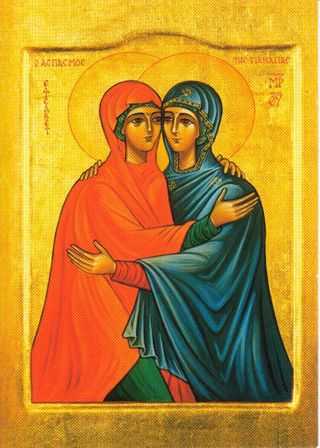
Mary goes to visit Cousin Beth, and finds the sign to be true…she’s pregnant.  Confirmation of what the angel told her was going to happen to her.  She also has Cousin Beth speak prophetically about what’s happening, without her even saying a word.  More confirmation that she hadn’t been hallucinating that day.  Mary gets so stoked, she breaks into a freestyle rap…or something.  She probably wrote it down later in her “secret pillow Hanna Montana” diary (what?…she’s just a kid remember)….and many years later she gives it to Luke as he’s compiling his narrative.  It could’ve happened that way…who knows?

Her song talks about herself…and God’s coming revolution on earth.  What does she say about herself, and her interaction with God?  From verses 51-56, how does she describe the things God is going to do in the world?  How do they help us understand what God will be doing through US?

We’ll talk about it more on Sunday.

God Works With the Unqualified

This Sunday we’ll be reading Luke 1:26-38, as we continue the story of Jesus as told by Luke’s gospel.

As you read that story, what do you see as similarities and differences between the story of Zachariah and that of Mary?  How do you see yourself in this account?  Isn’t it interesting that God chose to work in a backwoods town with a couple of “nobodies” instead of bringing Christ through well known rulers or highly respected religious leaders?  What does that tell us about how and who God works with?  What does that tell us about US?

Backstory; Birth of John the Baptist

Have you ever had a major disappointment in life?  Have you ever asked God to intervene, only to feel like heaven was shut up and silent?  In the next section we will read, we’ll be introduced to a couple who went through that very thing.  We’ll be looking at Luke 1:5-25 this Sunday.  By the way, you can listen to this passage read HERE.

How did you feel when your prayer didn’t seem to be answered?  Did you feel like you did something wrong.  In our passage, we have an old couple who are described as people who are committed, observant followers of God…yet who suffered what was often considered a sign of God’s curse on their lives.  They were childless.  Not only that, they were advanced in years, meaning, they were past the age of doing anything about being childless.  You wonder how they felt, yet it appears it didn’t cause them to give up their trust in God.

What’s really interesting is that these people are the starting point for Luke’s account.  He frames it in the time of Herod the Great…but then shifts the focus from that impressive, historical leader to these two backwoods people who are the equivalent of an old country pastor and his wife.  People who should be considered insignificant, who can’t even get a prayer answered by God.  It’s with these folks that Luke starts the story of Jesus.  God is just cool like that.

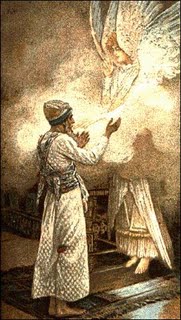
When the angel appears to Zechariah, how does he respond?  Does it change the outcome of what the angel says?  What DOES it change?  Do you relate to Zechariah at all?  What does this passage say to you?

Investigating the Hero King

LUKE webThis Sunday we’ll begin a new series…one that may take a while to get through, but I truly believe will be worth it!

What are some of the earth-shaking events that have happened in history that you can think of ?  The terrorist attacks of 9-11 come readily to mind, having occurred so recently.  Think about the ways in which our world changed as a result of that event.  It’s been one of our responsibilities as a generation to record what happened in that attack.  To investigate it, and it’s ramifications on our world and society.  It’s important because people under the age of 9 didn’t live through it, yet it has shaped their world.

We’re going to begin a study which investigates another event which occurred some 2,000 years ago…an event that spanned 33 years, and which changed the world forever.  It’s the most important thing that’s ever happened, and our lives will never be the same because of it.  What we’re talking about, of course, is the news that God came to the earth and lived, taught, was killed and then rose again among us.  It’s pretty amazing, and it’s the foundation of our faith…yet so few know anything about it.

So…we’re going to begin studying the Gospel of Luke; an investigation of the Hero King.  This Sunday, we’ll read Luke 1:1-4 as an introduction.  Also, another heads up is I will start teaching from the ESV (English Standard Version).  You can read about it and access it here.  Many teachers have been moving toward using the ESV because it appears to be a very faithful, literal translation which is still very easy to read.  I really have come to like it in my own studies.  It will track pretty well with the NKJV if that’s what you’re using.

Anyway…see yaz Sunday!

Myth #4: The Good Christian

John Doe had heard the sermon, and it had cut him to the quick.  The preacher had leaned over the pulpit in order to make his point, and projected his voice like an opera singer swelling to the finale.

“You must get to the place where your first instinct is faith and not fear when troubles come!”

John knew very well that he was not at that place.  Rumors were snowballing at his job, all the signs were there that the plant was going to close…and his first response was not faith, it was icy terror.  His first thoughts were of his family, and how he would provide for them.  His first instinct was to scramble around looking for more information, so he could better take on the task of fixing his problems.  The preacher’s words echoed through his thoughts and began pushing him into a corner.  “How can I expect God to take care of me or help me when I still don’t do this right?” he thought.  “When am I going to get to the place when I have this together, when I don’t mess up so quickly.”

The sense that he’d already failed the test pressed down on him, and he thought about the preacher who had uttered that challenging sermon.  He thought about how faithful he was, how obviously capable he was of trusting God and resisting temptation.  From there, his thoughts drifted over the other people in his church who clearly had their “spiritual lives” together, who clearly had a walk with God that far exceeded his own.  They could trust God in the worst of times but he fell into fear because of  a rumor.  The thoughts began to bear down on him…he realized he had failed his test, and the only relief available was to push all of this from his mind for now.

“Later.  I messed up…I can’t even pray about this right now.  I’ll get my act together later.  I’ll do this better next time.”

Thus John Doe was discouraged into paralysis by a MYTH.

This Sunday we’ll be looking at the myth of the good Christian.  This will get a little more personal…so be warned.

Is Christianity supposed to be a sin-management plan?  Is the life of following Christ about adhering as closely as possible to an elusive standard of good Christian living?  Is there a place we get to where we have this thing wired, where we have achieved the title of being a good Christian?  If you are answering “no” to these questions, then conversely, what role does holiness and the perfection Jesus called us to have in our lives?  How do we reconcile our struggles with faith and temptation with the Bible’s call to right living?

To prepare…read Paul’s thoughts in Romans 7:15-8:2…and I’ve linked it to the Message because its such a clarifying take on it…but check it in other translations as well.  Ponder it…meditate on what Paul is saying…Paul, the prince of apostles, the great spiritual force of the New Testament writings…consider his confession and resolution.

Don’t be afraid of straw men.  Don’t bet stuck chasing myths and missing the path.

Myth #3, The Clergy – Laity Divide

Sorry about Wonderwhat being down last week.  Technical issues which have now been rectified were to blame.

vestmentsI have received a lot of invitations over the years, invitations that you have NOT received.  Do you know why?  They were invitations to honor the clergy among us, of which I am perceived to be.  You didn’t get the invite to be honored (or fed or given a plaque or ride on a plane) because YOU are perceived to be laity.  Of course…if the one doing the inviting were to interrogate me first…do a little research beyond the fact that I’m listed as a pastor in a church…they would probably rescind the offer.  As soon as it was discovered that I didn’t attend a seminary or a Bible college, I would be promptly demoted to the position of “lay minister”, because, of course, I didn’t receive official training for my status.   That’s the way it works, you see.  I have a friend who was informed by someone who was inquiring about Eastgate that we aren’t an actual church, because the pastor hasn’t been officially ordained and lacks the proper training.

Hey…I’ll be the first in line to complain about the lead pastor at Eastgate, and his lack of skills (bow-hunting and nun-chuck skills come readily to mind).  BUT…is it really a Biblical mandate that a specific class of people receive official training for a “spiritual vocation”?  Is there really a distinction between a “clergy class” and a “laity”?

The word “clergy” comes from the Greek word “kleros“…it means first and foremost, an alloted portion, or we could say “an inheritance”.  It’s used in 1 Pet 5:3, Pete encourages leaders not to “lord over” “those entrusted to them”.  The word he used for “those entrusted” is “kleros”.  Break it down…who is Peter calling “clergy” in this verse?

Col 1:12 is another passage where this word kleros shows up.  There, it’s translated as “inheritance”.  So…substitute the word “clergy” for the word “inheritance” as you read it.  Who is the clergy in this passage?

We’ll unpack this on Sunday morning as we take on the myth of the clergy/laity divide…and we may also consider the concept of “secular and spiritual” along with it.

See you then.

CORRECTION: Just to qualify, based on Mike’s comment…I want to clarify that I in no way mean to denigrate those who have paid the cost of formal training, nor do I mean to imply that there is no value in being educated to the best of our ability to do so.  My issue is with what essentially a class distinction between those who occupy supposed offices and the general community of the church.  There is no premium on ignorance…but does that entitle a person to elevated status among the saints?

MythBusting the Church, part 2: The Ten Percent Rule

71014_MoneyHappiness_vl-vertical“If you don’t pay God His tithe, the blessings will be cut off in your life!”  Ever hear anything like that?  Is that really accurate?  Why do I picture a mob-boss in connection with that statement more than the God of the Bible?  Does God really have to resort to extortion in order to motivate His children to be generous?

The arguments are many and varied, but all of them point back to the Old Testament law, and the requirement of the 10% tithe (tithe means ten percent). This Sunday we’ll look at the myth that’s been propagated by many churches  for about 1500 years…the myth that says New Testament Christians, redeemed by grace, are obligated to give 10% of their monetary income to the church, in order to be blessed by God.

Seriously…go read Col 2:10-17, and think about what Paul says the Old Testament law was…and what our obligations are to it as those in Christ.

We’ll also look at 2 Corinthians 9 to find out what principles should guide New Testament generosity.  Ever read that passage in the Message?  It’s awesome!  While the actual context is a relief offering for the famine ravaged church in Jerusalem, the principle can be a guide to all the practical, fiscal matters that touch the church community.  There’s nothing overly mystical about it…no condemnation, no demand to meet an obligation, in fact, just the opposite.

Come hang out with us this Sunday as we MythBust the 10% tithe for the Christian!

Mythbusting the Church!

mythbusting

“That’s me in the corner, that’s me in the spotlight, losing my religion…”

This Sunday we will take a short diversion into the world of topical teaching.  We are going to start a new series on issues that confront Christians on a regular basis. 

I’m sure you’re familiar with the show Mythbusters, right?  Jamie Hyneman and Adam Savage take on the urban myths that we are always hearing and passing on as actual facts, and they put them to the test, to see if there is any feasible way those tales could be true.  Well…we’re going to start looking at some of the things that we have always been told and have taken as “gospel” truth when it comes to the church and issues that touch the Christian life. 

We are going to be MYTHBUSTING THE CHURCH!!!  Let’s put on our wrestling shoes and grapple with some of the common church myths!  Some of this will be a refresher for many of us…some of us may find these things new, and even troubling…either way, its time to crack our knuckles take these concepts to the mats!

Is church something we go to?  Is a membership roll required to be a member of the church?  Is a Christian commanded to tithe 10% of his or her income to the church?  Is a church/pastor/denomination supposed to be “a covering” for a Christian?  Is the church divided into two groups of people, the clergy and the laity?  If a Christian sins, does he/she have to ask for forgiveness in order to get right with God?  Are Christians supposed to obey the 10 commandments?  Is Christianity really about giving up sin and getting into heaven (or at least avoiding hell)?  Is the threat of hell really the message of the gospel? 

These are just some of the topics that we’ve been confronting for years.  We may not cover all these issues, but we will wrestle with the most pressing ones.  Which of these questions interests you the most?  Any other suggestions for topics?

This oughtta’ be fun!

Dealing With the Pain of Relationships

This Sunday we’ll be finishing up our study in 2 Timothy…we’ll be looking at chapter 4, verses 9-22. (The Message)

In his concluding comments, Paul addresses a lot of different people.  All of those hard to pronounce names are things we could easily skip over…but each of them has a back story…and each of those people effect Paul in ways that could be considered painful.  Think about what those ways may be.  In the relationships you have in life, how do you manage the things that cause you pain.  Does the fear of being hurt ever tempt you to avoid relationships…or even the community of the church?

Stuff to think about…stuff we’ll explore this Sunday.  See you then!

The Challenge of Being the Church

porpose diving lifeThere are so many differing styles and structures when it comes to the church…from small, traditional, country churches to sleek, multi-site mega churches, and everything in between.

How can we know what God intended the church to be like?  Is there any way to know if the church is doing and prioritizing what God intended it to do in the first place?

This Sunday we’ll look at 2 Tim 4:1-8 (the Message), and we’ll consider Paul’s challenge to Timothy and the church in Ephesus as it applies to us, as 21st century American Christians.

What seem to be the priorities Paul emphasized in these verses?  Is it about doing, or being, or believing…or all of the above? 

Here’s an interesting article from Relevant Magazine that may help facilitate your thinking about this subject.

What are your thoughts on the subject?