The Road is Narrow

Robert Frost ended his famous poem “The Road Not Taken” with the words:

Two roads diverged in a wood, and I—
I took the one less traveled by,
And that has made all the difference.

It just reminds me of the “two paths” motif we find in the biblical narrative, and the “Narrow Gate and difficult road” Jesus contrasted with the Broad and easy road most travel by. This Sunday, in our study of the Gospel of Matthew, we’ll be reading chapter 8:18-22, where the story will give us examples of why the road of following Jesus is considered “narrow”.

Jesus sure has an odd sense for how to achieve church-growth, doesn’t he? I love how v18 reads in the Message: “When Jesus saw that a curious crowd was growing by the minute, he told his disciples to get him out of there to the other side of the lake.” Suddenly his ministry is becoming popular and attracting attention, and his response is to bail out immediately. Why do you think he did that?

When faced with sudden popularity, Jesus doesn’t begin the process of working the crowd and taking polls to see what will generate a greater favorability. He doesn’t try to drum up as many supporters as he can by offering give-aways or doing his best to present himself as culturally hip. Nope. He does his best to evade the masses who have only a surfaced curiosity, and when some do seek to commit themselves to him, he does his best to dissuade them!

Jesus was clearly not reading all the email articles that get sent to me. He’s doing it all wrong, at least according to the experts. And they are experts – they seem to represent gigantic, massive and wealthy churches.

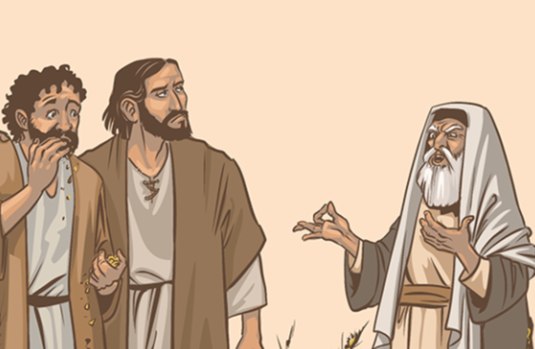
v19-20 – Why do you think Jesus responds the way he does to the teacher of religious law who offers to join the cause? Jesus had places to sleep – he stayed with Lazarus in Bethany, he stayed at Peter’s house in Capernaum…and Peter had a house to stay at. There is some hyperbole in this, but there is a sharp, deeply cutting message in it, especially to 21st Century American Christians. What message does this speak to you?

V21-22 – On a scale of 1-10, with 1 being “not at all” and 11 being “this goes to 11”, how harsh does Jesus’ response to the man who wants to bury his father seem to you? Why do you think Jesus would say that? What do you think the phrase “let the dead bury their dead” means? We’ll take some time to gain a better understanding of his response by getting a clearer picture of the culture of that place and time, as well as some potential idioms that were in use.

While this section of Scripture is challenging, my hope is that it will encourage us as well – persuading us to commit our all to the Savior of our lives.

God’s Power in the Margins

Every society on earth has always had groups of people in the social margins; people who are relegated to the edges of the larger community. It’s a tragic symptom of living in this broken world, the ease with which we dehumanize others by categorizing them as unwanted or undesirable, or unuseful.

Which is why Jesus’ ministry is so arresting, simply because the majority of his messianic work was done with and for those who were designated as the outcasts of his time. When the Kingdom of Heaven began its invasion of this world, it wasn’t focused in on the elites and powerful of Rome or even Israel. It was laser focused on the most vulnerable among us – revealing the heart of God and the nature of His healing work in this world.

This Sunday we’ll be reading Matthew 8:1-17 in our ongoing study of this Gospel. Chapters 8 and 9 of Matthew are arranged around two sets of three miracles, bridged by sayings of Jesus. This framework is meant to put the authority of Jesus on display after he had revealed his authority to teach in the Sermon on the Mount.

V1-4 is the account of Jesus healing a leper. The Torah had very specific instructions on identifying skin diseases, and what to do if one was diagnosed on a person. It’s clear that a person’s life would be miserable with that affliction, especially on a social level – they would be mandatorily outcast. Does the leper demand a healing from Jesus? Why do you think he phrased his inquiry the way he did? What is the first thing Matthew describes Jesus doing, even before declaring him healed? What might a human touch have meant to someone who had been labeled as “untouchable”? What do we learn about the nature of our mission, as Jesus’ representatives, from that?

V 5-13 tells us about a request from a Roman officer. Rome was the occupying force in Israel – they were seen as the enemy, the oppressors of the Jewish people. I can’t think of someone who would be more likely to be ostracized by the larger community than man who represented the Roman army. How resistant did Jesus seem to answer this man’s request? What might have been the thoughts of the people around Jesus when this gentile soldier made this request? The officer gives Jesus a way out of coming into his house, and Jesus commends his faith. Faith in what, do you suppose?

The last part of this section details Jesus’ healing of Peter’s mother-in-law from a fever. Women rarely took center stage in recorded events in the ancient world. This is highlighted in the Gospels for a reason. What was her response when she was healed, what did she do (hint: the words “a meal” are not in the Greek – she got up and diakoneō him)?

I’m really excited to get into this text together – I hope you can join us this Sunday at 10 AM!

A Deeper Devotion

One of the things that has accompanied the rise of the internet and our online connections via social media is an ever-increasing angst over social comparisons – something that has been ringing alarm bells for mental health professionals. The other side of that tends to be the phenomena of “virtue signaling”; expressing opinions or making posts that intimate that a person is deeply concerned and doing something about whatever the latest problem or injustice happens to be (which usually involves posting something or changing a profile picture). Not every accusation of virtue signaling is correct – but there is a very real temptation to try and look a certain way in how we present ourselves online.

Of course, this sort of posery isn’t limited to social media – it saturates politics and workplaces and is present even in family dynamics – but one place that always has a bumper-crop of people trying to look better than they really are is in the realm of religion and the church.

Jesus is going to deal with religious posing in the text we’ll be reading this Sunday as we continue our study in Matthew. We’ll be reading Matt 6:1-18.

Jesus addresses three areas of spiritual devotion and highlights the temptations we face when setting out to put them into practice. He’ll talk about giving, fasting and praying. We’ll sort of jumble up the text on Sunday so as to keep all the themes together (making it easier for a simple-minded teacher to work his way through).

If you were to summarize Jesus’ warnings about giving, fasting and praying , what would you write? Who is supposed to be our primary concern when it comes to these acts of devotion? Why do you think we are so tempted to put the focus somewhere else?

When we look at how Jesus taught us to pray – who are we addressing our prayers to? What title does Jesus give to God? How might we read that differently from God’s other titles, such as Lord or King? How might our trust in a loving, parental Creator help curb our desire for human approval?

There’s a lot we’ll be unpacking in this section – I hope you can join us this Sunday at 10 AM as we dig into the center of the center of Jesus’ Sermon on the Mount!

A Deeper Righteousness

We’re going to be continuing our study in Matthew’s account of the Sermon on the Mount this Sunday – we’ll be reading chapter 5:17-48. So far, Jesus has been turning popular concepts on their heads, pointing to the stuff we normally try to avoid in life and saying that is where the good life is found. In the text we’ll read this Sunday, Jesus will drive this idea home through a series of contrasts.

Jesus begins this next section making it clear that he’s not starting some new religion, and he’s not just trying to contradict the Old Testament Law, but his intention is to fulfill it. His coming on the scene is a continuation of the story that was developed in the Old Testament and he is the fulfillment of the promises made to Abraham and David.

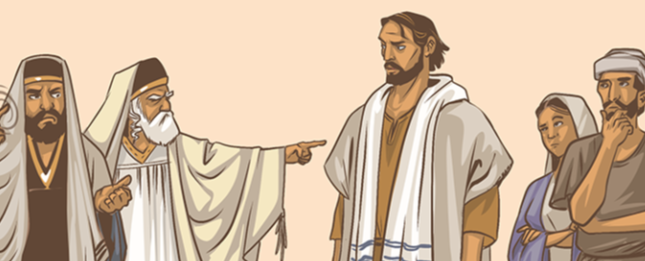
While he intends to fulfill the law, he also warns that our righteousness has to exceed that of the Pharisees. What do you believe he means by that? How do we apply that in our present world and time? If adhering to a moral code doesn’t produce righteousness, what do you think will?

Jesus has something else he wants to make clear: the deeper intention behind the Law of Moses. So from v21-48 he presents what have become known as the antitheses’ of the Sermon on the Mount, where Jesus reveals a contrast by putting two different ideas side by side. It will be in the form of “You’ve heard it said…but I say…”.

He will cover themes of murder, lust, adultery, oaths and how to treat our enemies. What is the common thread that you notice to all these themes? Jesus is describing real righteousness that is more than the outward expression of the Pharisees – so how do you think real righteousness is expressed, based on the themes Jesus presents?

When Jesus tells us to present the other side of our face when struck on one side, do you believe he’s telling an abused wife somewhere to just take it? If not, then what would be a good way to understand the nature of Christ’s instructions here? What difference do you think there is between self-defense and retaliation and revenge?

What Jesus is describing is certainly no way to get ahead in this world. We know the rules of this world. If getting ahead in this world isn’t on Jesus’ agenda, what benefit do you think living out this kind of righteousness accomplishes?

This is going to be a challenging study – Hope you can join us this Sunday as we explore the Sermon on the Mount more deeply.

Who is Living the Good Life?

Have you ever looked at someone’s life—on social media or even in real life—and thought, “I wish I had what they have”?

Maybe it’s their home, their family, their vacations, or just the way their life seems so perfectly put together. It’s easy to compare, especially when all we’re seeing are the highlight reels. Social media filters out the grey areas, the struggles, and the sadness, leaving us longing for a version of life that’s curated—not complete.

I know people have looked at my life before and glamorized it without knowing the full story. They see the joyful moments but not the hard-fought battles behind them. That’s the illusion many of us live with in this digital age.

It’s normal to desire a good life. But what’s fascinating is how different “the good life” looks for each person. For me, it might include regular trips to the beach; for someone else, the beach might be the last place they’d want to go. That’s because a good life is subjective—it depends on the eye of the beholder.

This Sunday, we’re exploring what Jesus called “the good life” in the Sermon on the Mount, reading Matthew 5:1-16.
In most Bible translations, we read the word blessed—“Blessed are the poor in spirit…,” and so on. But if we look deeper, starting with the Hebrew context and moving forward, we find that it could also be paraphrased as, “You have a good life when…”

And that’s powerful. Because the kind of life Jesus describes is radically different from what the world calls “good.” It challenges our assumptions, it reshapes our values, and it continues to change lives 2,000 years after it was spoken.Join us this Sunday at 10:00AM as we dive into the Beatitudes and discover how Jesus’ words still speak into our world—and our hearts—today.

God’s Kingdom Revealed

We recently redid our kitchen – well, we hired someone to redo our kitchen. I remember all the planning and sketches Robbie and I did as we thought up our new space. Then the construction began and the project began to take shape – and it’s quite exhilarating to see a project we’d imagined for so long start to take shape in reality. This Sunday we’ll be reading the last part of Matthew chapter 4 , where Jesus begins his public ministry and we begin to see what the Kingdom of God is like in practice.

In v15-16, Matthew identifies Jesus’ work as a fulfillment of a prophecy given by Isaiah, 600 years earlier. Light dawning on people living in darkness is how the action of the kingdom of God is described. What is your impression of this metaphor? What do you think it means, and how does that inform your understanding of God’s purposes for humanity?

We then read about Jesus’ first disciples. We’ll be unpacking the dynamic of rabbis and talmidim (disciples) on Sunday morning – but succinctly put: if these guys were working in the family fishing business, it was because they didn’t measure up for normal rabbinical activities. Yet Jesus chooses these fishermen to be his close associates who will set out to imitate him. What does that tell us about God’s rule in action? Who is it open to, and what action does he call his disciples to (v19)?

V23-25 provide a summary of the excitement that was building around Jesus. What is it that he is becoming famous and sought out for? What is this revealing about God’s reign in practice – what is the mission of God’s kingdom? In all three of these examples, what is it about this that makes it good news?

Looking forward to this study! Happy Father’s day in advance – I hope you can join us!

Staying the Course

We’re coming back to our study in the gospel of Matthew, reading chapter 4:1-11 this Sunday. In stepping into the human experience, Jesus faces temptation to leave God’s intended path for him. In fact, the account of his temptation in the desert is a sweeping overview of the nature of our temptations. Do you ever feel bad for being tempted by things you feel you should have conquered by now? Remember this: Jesus was tempted too. What does that tell us about how we should understand our own temptations? There’s an old saying, attributed to Martin Luther, that states we’re not responsible for the birds that fly overhead, only the one’s we allow to nest in our hair.

The first temptation that is presented to Jesus is found in v1-4. It wasn’t wrong or evil for Jesus to be hungry. He certainly was given power to do miraculous things with bread – he’ll supernaturally provide enough bread to feed thousands of people out in the desert later on in this story. Why was this suggestion to make bread from stones a temptation to sin? Jesus quotes Deut 8:1-3 – read the whole context. Did Israel go hungry in the wilderness? Who provided for them? How does that help us understand what “living by God’s word” means?

Next Jesus is tempted to jump from the highest point in the temple (v5-7). Again, this is similar to something Jesus will do later on – he won’t walk on air, but he’ll walk on water, defying the laws of physics. What is the temptation to sin in this suggestion of stepping out in faith that God will rescue him? What clue do we get from Jesus’ response in v7?

The final temptation recorded in this account is in v8-11. Once again we have the contrast of human kingdoms with God’s kingdom. Worship me, the devil says, and you will be King of kings. Interesting, since that is ultimately what Jesus is called – and the last book of the Bible says in Revelation 11:15 that the kingdoms of this world will become the kingdoms of our Lord. Why is this a sin if it’s the fulfillment of his destiny anyway? What does Jesus have to go through in order to be exalted? What sort of King of kings and Lord of lords does it make him when he was willing to die for us?

In each of these temptations there is a forecast of something Jesus will ultimately do. The difference is in how it gets fulfilled, and by whom. Where do we look for our fulfillment as human beings? A lot of things in this world promise fulfillment and wholeness – but Who holds the true source of wholeness? What has your experience been in looking for fulfillment in the things we can grasp for in this broken world? How can that instruct us?

I think this will be a challenging, yet hopeful study! Hope you can join us on Sunday!

Preparing the Way

Remember how, before Hurricane Michael, when the storm season came around we only gave it our mild interest. Post-Michael, I haven’t yet met someone who doesn’t follow Mike’s Spaghetti models with grave intentionality between June and November. Experience and expectation really goes a long way in shaping our responses to the warnings we get from NOAA.

As we continue our study in Matthew this week we’ll be reading chapter 3.  We’re going to be introduced to a human GFS model – John the Baptist, who will be announcing the arrival of the Messiah and the launch of God’s kingdom invasion.

As you read John’s message, what does his major theme seem to be? What is he calling people to do? What do you think his instructions meant to a Jewish person living in the first century? What does that mean to us, as 21st Century Americans? What sort of radical changes have taken place in your life as a result of embracing the Good News of Jesus?

The Pharisees and Sadducees show up too, and John doesn’t give them the greeting they are accustomed to. What does he seem to highlight as the problem with these religious leaders? Why does he call them “the offspring of snakes”? Thinking back through the Biblical narrative, do you remember a forecast of “the offspring of the serpent” bruising someone’s heel? There’s going to be a lot to unpack in this section that I’m really excited about!

When Jesus shows up he does something that surprises everyone, including John. He gets in line for his turn to be baptized. John is nonplussed. “You’re the Messiah, come to save us from sin…I need to be baptized by you…what do YOU need to repent of?” It’s a puzzling scene to this day. Jesus said he needed to do it to, in the Greek, “fulfill all righteousness”. In other words – the righteousness, the setting things right that God intends comes through a Messiah who stands in the river with humanity, identifying with them, protecting them in their corrupted, vulnerable state. What does this tell us about what it means to “fulfill righteousness”?

I’m so stoked to dig into this text – Hope to see you Sunday!

Palm Sunday – The Triumphal Entry

This Sunday is Palm Sunday which is the beginning of Holy Week! We’ll be taking a break from our study in Micah while we turn our attention to Easter.

We’ll be reading Luke 19:28-44. There are so many things going on with the way that Jesus rides into Jerusalem. Luke doesn’t mention Palm branches, but John 12:12-13 gives us that detail. This event is pointing back to ancient prophecies about the Messiah, as well as prior historical events in Israel, and all of it is meant to create a contrast between the kingdoms of this world and how God rules His kingdom.

Do your best to imagine the scene. How intimidating does someone look riding on a donkey? If intimidation isn’t what Jesus is going for, what message is is his mode of transport meant to convey? Why do you think the Pharisees were upset with the crowds singing about a coming King in Jesus’ direction? Is it possible they had their eyes on the Roman soldiers watching this impromptu parade? What do you suppose the significance of the rocks taking up the song if people were to quit shouting Jesus’ praise?

After Palm Sunday, we’ll have our Maundy Thursday service on Thursday at 6:30 PM, where we’ll re-enact the events of the Last Supper and consider what we learn about God from that night. It’s an interactive event, so we are asking for people to RSVP – you can do that HERE.

On Friday we’ll observe Good Friday, also at 6:30, with worship, a live painting, and the Stations of the Cross paintings which were done last year. This will be a meditative, reflective service where we focus on Christ’s sacrificial love for us.

Easter is the big day, with a Sunrise Service at Pineapple Willy’s at 6:15 AM and an Easter Service at our building at 10 AM.

Hope to see you there!

The Lord’s Requirement

“What does God want and how does he want us to live?” That’s a pretty common question posed in the theater of most religions, and our study of Micah brings us to God’s answer to that question with stark clarity. And, spoiler, it isn’t outward religious behavior.

We’ll be reading Micah chapter 6 this Sunday. The scene begins like a cosmic courtroom where God presents his case against his people, reminding them of how often he had been faithful to them. Remembering the blessings we’ve received from God seems to be an important way in which we remain close to God’s purposes. How easy is it for you to forget the ways in which God has been faithful to you? How might we better keep those blessings in view during the trying times of life?

The response from God’s people to his charges is basically to ask “Fine, what do you want from us anyway?”, followed by a list of various religious practices and sacrifices they could attend to.

God’s answer is straightforward. As you read his answer, how do you interpret “do what’s right”? The word that’s used carries a strong social aspect – doing what’s right by others. What are some obstacles we face in doing what’s right by others. The second part of God’s expectations is to love mercy – which means an unqualified kindness shown to our fellow person. How do these two, doing what’s right and kindness, go together? It’s been said that injustice and inequality grow where kindness shrivels. What are some practical ways in which we can start intentionally practicing these two qualities of doing right and being kind?

It’s also very important to recognize that religious performance was summarily brushed aside by God. When it comes to the values we pursue in life, does it seem like God looks at our religion or how we treat others to evaluate our faith?

This study may make us somewhat uncomfortable as the Scriptures probe our deeper motives; however, I promise it will resolve with great hope! I’m looking forward to digging into this together!