The Lord’s Requirement

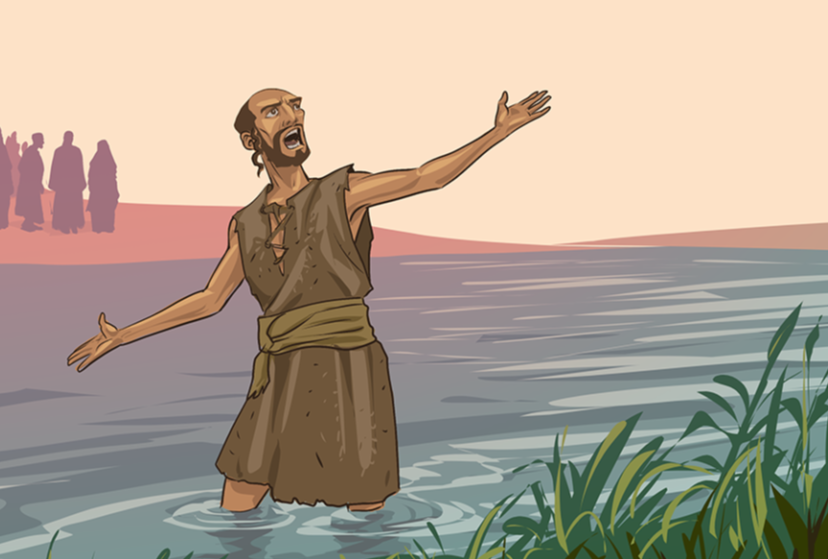
“What does God want and how does he want us to live?” That’s a pretty common question posed in the theater of most religions, and our study of Micah brings us to God’s answer to that question with stark clarity. And, spoiler, it isn’t outward religious behavior.

We’ll be reading Micah chapter 6 this Sunday. The scene begins like a cosmic courtroom where God presents his case against his people, reminding them of how often he had been faithful to them. Remembering the blessings we’ve received from God seems to be an important way in which we remain close to God’s purposes. How easy is it for you to forget the ways in which God has been faithful to you? How might we better keep those blessings in view during the trying times of life?

The response from God’s people to his charges is basically to ask “Fine, what do you want from us anyway?”, followed by a list of various religious practices and sacrifices they could attend to.

God’s answer is straightforward. As you read his answer, how do you interpret “do what’s right”? The word that’s used carries a strong social aspect – doing what’s right by others. What are some obstacles we face in doing what’s right by others. The second part of God’s expectations is to love mercy – which means an unqualified kindness shown to our fellow person. How do these two, doing what’s right and kindness, go together? It’s been said that injustice and inequality grow where kindness shrivels. What are some practical ways in which we can start intentionally practicing these two qualities of doing right and being kind?

It’s also very important to recognize that religious performance was summarily brushed aside by God. When it comes to the values we pursue in life, does it seem like God looks at our religion or how we treat others to evaluate our faith?

This study may make us somewhat uncomfortable as the Scriptures probe our deeper motives; however, I promise it will resolve with great hope! I’m looking forward to digging into this together!

The Cost of Idolatry

This Sunday we’ll be digging into the first chapter of Micah, the Minor Prophet. We’ve stated before that this book, like all the works of the Old Testament Prophets, contains some difficult and harsh words. I will again be reminding us that we must read any of these prophecies through the lens of the revelation of who God is in Jesus. We’ll talk some about how we go about applying these Scriptures as well.

As you read through this opening chapter, you’ll notice that great, cosmic imagery is employed to reinforce just how serious the situation is. Imagine the opening like a trial, where God calls witnesses to hear his complaint about how his covenant people have been using the freedom they had.

The list of complaints will be extensive as the book goes on – but in the opening salvo, we have a description of high places in Jerusalem. That is our clue that identifies idolatry as the first issue God brings into focus. We’ll talk about idolatry on Sunday – what it means and how it can affect us, even in a modern age where it’s unlikely anyone is bowing down to a carved statue somewhere.

Idolatry is a big issue in the Scriptures – a main source of trouble all through the history of God’s people. If you’ve ever been near a church, you’ve likely heard sermons on this problem before. What’s your natural reaction to hearing that we may have idols still lurking in our lives? If you are warned to get rid of an idol, no matter what form it may take, do you feel encouraged, condemned or something in between?

What if the cure for idolatry wasn’t about getting our act together or trying to be a better Christian? What if it were something deeper, something we need to realize about our identity? I’m persuaded that the first chapter of Micah gives us a clue as to how God can cure “the incurable plague” that has often hounded his beloved people. I hope you can join us as we consider this on Sunday – I think it will be a great encouragement to us all!

Am I good enough for God to use?

The Bible gives examples of all sorts of people God uses to carry out His divine plan. Studying these different stories and people can lead us to question whether we are as great as these examples or possibly good enough for God to use.

Last Sunday, we completed our study in Corinthians and learned about the hot mess church. Before moving on to the next book study we will spend a few weeks on topical studies like this one. This week, we will examine the types of people that God works through and discover what that means for each one of us today.

The main example we will examine is Esther. Being familiar with her story and this book of the Bible will help us compare her story not only with others in the Bible but also with our own. I highly encourage you to read through the story of Esther in the Bible. Also, if you get the chance, I also encourage you to watch the Bible project video linked below that summarizes it beautifully.

We hope to see you this Sunday at 10:00AM as we study this topic and scripture together.

The Best Life of All

According to an article on Insounder.org, love is the all-time most common theme of song lyrics, followed by life and death. Love is such an elusive concept for so many people, which is probably why it dominates our thoughts.

Of all the people in the world, I would think that followers of Jesus would have some pretty important insights into the nature and meaning of love. The Bible talks about love around 750 times, depending on the translation, about 300 of those mentions appear in the New Testament. That’s what I would consider to be an emphasis.

Strangely, that emphasis doesn’t seem to carry over into how the church has represented itself throughout history, and especially in our contemporary American culture. I often wonder about that. Why is it such a struggle to keep our eye on this massive target the Scriptures present?

This Sunday we will be reading one of Scriptures most famous, and certainly most beautiful poem about love. We’ll be reading 1 Cor 13, the famous love chapter.

This passage usually finds its way into wedding ceremonies, which is great…but not that’s really the context or point the author was trying to make. The context is one that spills over from ch11-12, how we attend to our services and abilities as the church. As you read v1-3, how much importance does Paul place on having love as a motive for what we do in service to Christ? Do you think Paul would agree that “the end justifies the means”?

V 4-7 Paul describes what love looks like in action. Where do feelings fit in with his descriptions? What sort of lesson can we take away from his picture of love?

Here’s something: we’ve said before that if we want to know what God is like, we look at Jesus. Try substituting the name Jesus for the word “love” in v4-7. Does it seem to fit? If so, what do we learn about God’s nature from this?

In v8-13 Paul points out the eternal nature of love. In the NLT v113  says that “three things will last forever” – I don’t think that’s a great translation. Most other translations word it: “three things abide” or “remain” – basically it means stay and wait with us. Faith, hope and love, but the greatest is love. When might faith or hope be completed? What would bring love to its conclusion? Does that give any insight as to why Paul said love is the greatest?

Of all the teachings in this series, I just think this one is the most vital for our day and age. I really hope you can join us this Sunday as we dig into Scripture together.

Freedom in Relationship

I know we’re all waiting for this hurricane season to conclude…but God alone controls these things, so we’ll put it in His hands. In the meantime, we will be praying for those who suffered loss in the last hurricane, and let’s stay alert as to how we can assist.

This Sunday we’ll be continuing on in our study of 1 Corinthians, reading ch 10:1-22.

The overall theme of the last several chapters has been our freedom in Christ and what we do with it. We’ve been encouraged to see to it that our Christian liberties aren’t used in ways that harm each other, and now Paul draws the circle tighter, reminding us that we want to exercise our freedoms in ways that are safe for ourselves as well.

In the passage, Paul points to Israel’s history to make his point. When they were led into freedom by Moses, they didn’t manage that freedom well. It’s reminiscent of his warning back in chapter 6: “I’m allowed to do anything…but not everything is ________.” Israel fell into idolatry, sexual immorality and complaining – similar things that Paul warned the Corinthians that they were dangerously flirting with. In what ways can we be careful with our Christian freedom so as not to harm ourselves?

There’s a pretty famous passage in our text this week, where Paul says “He will not allow the temptation [we face] to be more than [we] can stand.” – which is often transliterated as “God won’t give you more than you can handle”…which is exactly not what Paul is saying. We’ll unpack that and try to gain a bit more clarity by untangling that verse on Sunday.

Paul finishes the section by contrasting the Lord’s Table (what we refer to as the Communion Ceremony) with the table of demons. He’s talking about a partnering fellowship – reminding us that we can’t go two different directions at the same time. In our time and culture, we aren’t usually tempted to go participate in pagan sacrifices – but what are some ways in which we could find ourselves invested and partnering with forces that are at odds with God’s intent for life in this world? That will be some challenging stuff to ponder.

Hope you can join us this Sunday as we dig into God’s word together!

The Two Roads

There is no way around it, the Bible presents us with a dualistic worldview. We are continually presented with two paths, two choices, two loves.  Middle ground is hard to come by in Scripture. As the Didache says in it’s opening: “There are only two paths; one leads to life and the other to death and there is a world of difference between the two.” 

This Sunday we’ll be starting to wrap up our study in Genesis, reading the fallout from Cain’s murder of Abel and the consequences that befell him because of it. We’ll be reading chapter 4:17-26. As we’ve noted before, following Cain’s lineage is sort of like viewing the trajectory of the offspring of the snake.

Cain was banished to the wilderness with God’s provision of a sign which would protect him. As you read the passage, does Cain end up in the wilderness? What might be significant about him building a city?

As we follow his family line, we get to the 7th person from Adam – Lamech. What is first noted about Lamech in the text? How does his taking of two wives reflect on Gen 2:24? How would you describe what is happening in Cain’s family line?

Lamech writes the first song recorded in the Bible – a lovely little tune sung to his wives about retaliatory murder (what a romantic!). Lamech, the 7th human from Adam, sings a song about sevens. In Gen 4:15, God promised to protect Cain by giving a sign that warned of a 7-fold retribution for harming Cain. What does Lamech do with the words of that promise? How does it interact with Jesus’ words to Peter in Matt 18 about forgiveness?

Last week we read about the line of Seth, the son God provided to Eve after the loss of Able. We’ll revisit that again as we consider the other road, the offspring of the woman. How does v26 compare with the lineage of Cain and their actions and attitudes? Who would you rather be?

I’ve really been enjoying getting into Genesis – hope you can join us this Sunday as we examine the two roads for life.

God’s Response to Human Failure

We’re coming to the most tragic part of the Biblical narrative this Sunday – we’ll be reading Genesis 3:8-24 in our continued study in that book. It’s a tragedy that sets up a pattern that gets set on repeat throughout the whole Hebrew Scriptures, leading right up to the Gospel.

As you read about God’s response to human failure, what are some of the images that your mind conjures up? Imagine (and it shouldn’t be too hard) that you’ve messed up royally – how do you imagine God responding to that sin? As you read about God’s appearance in Genesis 3, how would you describe His entrance?

God speaks 7 times and ands 3 questions. What does He ask? More importantly, if God is omniscient, why do you think He asks?

Do the humans come clean and confess what they did wrong right away, asking forgiveness? What do they do instead? Does this seem consistent with human nature as you know it? What message do you think this is trying to give us?

Read the section very carefully. Who or what is cursed by God? Who or what is not cursed? As you perceive it, does that mean anything, and what might it be?

God forecasts a war between the offspring of the snake and the offspring of the woman (we would assume she represents human existence). How do you think this plays out through the Bible and through history? We must carefully note that biology or lineage have nothing to do with who is who’s offspring – it is all in the context of choice – whose voice is listened to. Jesus called someone the offspring of a snake in Matt 12 – do a little digging to determine who he called snake-offspring, and why.

We’ll have a lot we’ll be covering in this teaching – it’s sobering but encouraging at the same time. I hope you can join us this Sunday!

The Ruin

Have you ever done a diet, say restricting carbs or something? I don’t know if it’s your experience as well, but the moment I decide to cut out carbs the only food I ever think about is full of carbs. “Just don’t think about it, Rob.” – Heh….for me, the moment I’m told not to think about something the only thing I can think about is whatever I’m not supposed to think about. Can I get an “amen”?

I wonder about that forbidden tree in the Garden of Eden – the one tree the first humans were told not to eat from and I wonder if they had that experience too: “All these fruits are great! They’re the BEST!….I wonder what the fruit tastes like on the one we shouldn’t eat?” They were in an idyllic environment, so it’s hard to say if that was a thing, but it didn’t take a very hard push to get them to that tree.

This Sunday we’ll be reading about when everything got ruined – Gen 3:1-7.

How well does a talking snake sit with you intellectually? Is that a hard one for you, and is that easy to accept? I know it’s different for different people. We’ll discuss the nachash, the snake, on Sunday and consider some possibilities.

The text describes the snake as “crafty” – some translations say “cunning” or “subtle”. We usually assign a negative spin on that description, however, a quick word search indicates that it is often used in a positive context, especially in Proverbs. A negative or positive connotation comes down to how that ability is used. What might that tell us about the nature of sin, since the origin of sin is the theme of the text?

In the dialogue that follows, the snake asks a question which the woman answers and the snake concludes the dialogue. Read that exchange very carefully. What jumps out to you, if anything? Read the divine command in Gen 2:16-17 – how does the snake’s quotation match up with God’s words? How do Eve’s corrective quotation match up to the original wording? What do you observe about this – what can it teach us about how we view or interact with God’s words?

The snake suggests that God has been holding out on the humans. He tells them they will achieve something if they take matters into their own hands – what does he say they’ll become? How does Gen 1:26-27 reflect on what the snake was offering? What could that tell us about the nature of temptation?

Read Gen 3:6 with 1 John 2:16 – what parrallels can you find between Eve’s consideration of the fruit and John’s warning about what the world offers?

I’m really looking forward to this study – I hope you can join us. We’ll be observing the communion ceremony after the teaching!

The Rescuing Counterpart

This Sunday is Mother’s Day and coincidentally enough, in our study we’ll be reading about the very first mother, the creation of Eve. We’ll be continuing our study in Genesis, reading ch 2:18-25.

Once again, I want to remind us to manage our expectations when we come to a study like this. Remember, Genesis isn’t a modern science text-book – it is sacred spiritual literature – and we are approaching it to discover its theological truths. We’ll be reading about the creation of a counterpart for the human (Adam), and we’ll consider what this part of the story is trying to tell us. Whole fields of ideology on gender and gender roles have been derived from this section, for good or bad. Issues of gender are in the foreground of the text, but whether or not they’ve been well understood is another matter.

As you read the text, you’ll see we are confronted with another obstacle, maybe even crisis, since it is described as “lo-tov” – not good. What is it? God determines to resolve or eliminate the obstacle by providing a “helper”, which was “just right/suitable” for him.

The word “helper” in the Hebrew is EZER. Now, if you’re interested, click HERE to look at the word and a concordance list of all the times that word is used in the Hebrew bible. As you examine the passages, how might it indicate what an EZER is – that is, is it describing a subordinate who assists, or something else? Does its usage elsewhere inform you about the nature of the EZER God provides for the solitary human (Adam)?

When it describes the EZER who is “suitable” for Adam, that word is NEGED in the Hebrew, meaning “in front of, or opposite of”, like a mirror. Again, does that seem to imply someone inferior, superior, or an equal?

We’ll look at the woman’s formation, and the deep sleep Adam goes into, and consider the significance of that. Adam began alone, then the one became two, for the purpose of becoming one again. While this certainly has the marriage relationship in view, this idea spills over into a variety of relationships, not least of which is the one we have with the church in Christ. There is a pattern being revealed in this – one which carries through the entire biblical narrative, landing at John 17 and arching like an arrow through the NT epistles.

This has the potential of being an intense study – but one that can be inspiring, albeit, challenging to some of our pre-loaded assumptions about the nature of humanity as God has made us. I hope you can join us this Sunday at 10 AM!

Origin and Destiny in Eden

Do you remember the old Mad Magazines, how the inside back page was an Al Jaffe cartoon that had an image on it which, if you folded it in, created another image which was a commentary on the first. I used to love those things. In many ways, the book of Genesis, if we metaphorically folded it to touch the book of Revelation, operates similarly. We begin and end in a Garden…and everything in between functions to elaborate on that hope. The imagery of the first few chapters of Genesis unlock the meaning of the imagery used in the rest of the Biblical narrative.

 We’ll be returning to our study in Genesis this Sunday, looking at Gen 2:8-17.

In Gen 2 we are introduced to the Garden of Eden, Adam (the human) in connection with it, and the two trees in the center of it.

Most of us have picture book ideas in our heads about the Garden of Eden – an image of an entire world in a tropical paradise setting and nothing unpleasant anywhere around. But the Genesis narrative doesn’t really validate that picture.

For instance, as you read v8; is all the land Eden? Is all of Eden a garden? Was the human “formed” in the garden? All of this implies that there is something outside that paradisical space. Isn’t that intriguing? Eden was an anomaly in the midst of non-paradise. A project begun to which we will return.

On Sunday we’ll look at the significance of the river that comes from Eden, and where it flows to.

What do you make of the trees and the warning God issues to the human? What is the first part of God’s command? Do you find it interesting that God leads with an invitation to enjoy what he’s made? Does that influence your understanding of the warning God concludes with?

If the human was made from dust (stuff of mortality), what does the Tree of Life represent to him? The forbidden tree is not the Tree of Good and Evil- it is something else – what word comes before good and evil? How would you interpret what that means?

We have a really interesting study in front of us – I hope you can join us this Sunday as we dig into this together!