A Powerful Purpose

“We don’t do this well” is a phrase you will often hear on Sunday mornings at Eastgate. This well used phrase is meant to be a reminder that we do not participate in a works based salvation system. We are all invited to rely, not on our own abilities, but the consistent grace of God and the sacrifice made by Jesus on the cross. In this understanding, and the secure place of belonging to God, we are able to begin making those positive changes in our daily life.

This Sunday, we are going to be reading Luke 19:11-27, and there we will find a parable that seems to be giving us a job while we wait for Jesus’ return. The snag however, is that in this parable, the King (who seems to be representing Jesus) returns to let his servants know that he has been keeping track of their work and he is angry with the one servant who didn’t do their job well.

In our private reading of scripture we might be tempted to skip over the parts of the text that don’t fit neatly in our narrative, but when we study a whole book together as the church we are forced to confront every word of Jesus that’s recorded. We are forced to ask questions like, “Is it still okay if I don’t do this well even though these verses show a side of Jesus that is angry with someone who doesn’t do this well?” How might we balance this text with the emphasis we find on grace in other parts of the Gospel?

Together, at Eastgate, we will be exploring the context of these verses, and we’ll search for the truth of what Jesus was trying to communicate here… even if it means we find ourselves challenged along the way.

I hope you can join us as we examine this intriguing passage.

Grace for a Tree Hugger

Usually when we say so and so was “up a tree”, it’s a bad thing.  It’s an old saying that alludes to an animal, like a squirrel or racoon, that will climb a tree in order to flee from an attacker – but once in the tree, they can’t descend because the threat is still present.

In our study of Luke this Sunday, we’ll be reading about a guy who went up a tree, but found his life profoundly altered and expanded by the experience. Not because of the tree, so much, but because of who saw him there.

We’ll be reading Luke 19:1-10 in our ongoing study of that book this Sunday.

In the story, why did Zacchaeus climb a tree? What was obstructing his view? How might we draw a lesson from that about how accommodating we are to those around us who might want to see Jesus? What things in our modern church might hinder someone’s view of a Savior?

Jesus invites himself to dinner, and that is good for Zacchaeus, but bad in the view of those surrounding Jesus and observing it. Why do you think the people murmur at this? Can you think of a lesson for us to learn from their reaction?

Zacchaeus expresses his intention to radically alter his life choices which will result in a radically diminished lifestyle. What did Jesus say or do to precipitate that sort of response? What might we learn about heart transformation from this account?

I hope you can join us for this intriguing look into one man’s encounter with the King.

The Power of Love and Mercy

Lately there has been a big push to find alternative sources of energy, I would think especially since gas prices have escalated so much. Beyond solar and wind, there are all sorts of strange ideas being proposed for cheaper and renewable power sources.

We’re going to be reading about a very surprising source of power in our text this Sunday as we continue our study of Luke. We’ll be reading Luke 18:31-43.

The first section of this passage has the 6th prediction Jesus makes in Luke’s gospel about his approaching arrest and execution. The disciples are fairly blind to what he’s saying – but it’s yet another important reminder of where God’s greatest demonstration of power took place. How would you characterize Christ’s death on the cross? In what ways can we see that same power working through us?

The second part of the passage recounts the healing of a blind man outside of Jericho. It’s a story told in all three synoptic gospels – and it’s the very last healing miracle recorded in Luke’s account of Jesus. What does the blind man cry out for? What does that tell us about the nature of God’s mission?

Why do you think the crowds “in front” tell this man to be quiet? What are some of the pressures you face in our society about your value or place? How might Jesus’ response to this man inform us of where we find our true value?

I love this story so much! I’m really looking forward to exploring this on Sunday – hope you can join us!

Entering the Kingdom

 One of the consistent and repetitive themes of the gospel is that Jesus’ presentation of God’s kingdom on earth is VERY different from the way the kingdoms of this world work – whether that’s the leaders of Israel or Caesar in Rome or any president in our country.

This Sunday we’ll be reading Luke 18:15-30 as we move ahead in our study of this Gospel.

We’ve seen all through this gospel that what Jesus presented and MODELED in his ministry and teachings was quite different from what people were expecting when God’s will is done on earth like its done in heaven.

This, of course, is the calling of the church – to LIVE this upsidedowness out in our own understanding of self, and how it is we relate to the people around us.

This is what Jesus means when he talks about entering the kingdom –we usually relegate that to “going to heaven when I die” – but that’s just one small aspect of it.

The passage we’ll be reading contains two encounters which highlight the subversive nature of God’s kingdom and identifies ways that we enter the kingdom – that is, how we represent it into our world.

In v 15-17 we find the famous account of Jesus blessing the children. In the ancient world, children were not protected nor given any of the agency many children of our present age have. They were humans of non-status. What might that indicate to us about how we are to represent God’s kingdom to the world around us?

We encounter the rich, religious leader in v18-30, who, according to his own testimony, is a decent guy who cares about the law of Moses. He is the picture of success in any culture, including our own. We’ll go into more detail on Sunday about the interaction between Jesus and this guy– but let’s focus on what Jesus tells him. He has everything going on for him by the world’s standards, and that is the very place where Jesus places the ax in his response. “Here’s what you lack – here’s what you could do to be complete – sell all your stuff and give it to the poor and you’ll have riches in heaven and you can follow me.” That was a bridge too far for that young man.

The Bible has a lot of challenging things to say about wealth and the eagerness for riches. Why do you suppose the young man walked away from Jesus at this point? What would you be afraid of losing when it comes to following Jesus? It’s a tough question, I know.

There will be a lot to consider as we examine this text – I hope you can join us as we do!

Getting Right by Getting Real

The opening lines of the Parable we’re reading this Sunday almost sounds like a tired joke: “A Pharisee and a Tax Collector walk into the temple….”. It isn’t a joke though, quite the opposite. We’ll be progressing in our exploration of the Gospel of Luke this Sunday, reading ch 18:9-14.

Interestingly, This is the only place where Jesus uses a religious backdrop for one of his parables. That change of approach should give us pause. It’s always important to remember that parables are never about what they describe on the surface. What might that mean in this case?

We witness another reversal in this story, where the respectable and spiritually minded Pharisee is characterized with less regard than the thieving tax collector. Who are the respectable in our society and who are the pariahs? It’s tempting to insert them into the characters of this story, isn’t it?

It’s important to know that this parable contains a trap – we’ll discuss that on Sunday. Needless to say, try the characters on for size and see what happens.

The idea of being justified is at the heart of this story – that of being declared just or right before God. Compare the two prayers and consider what Jesus is trying to convey to us about humanity’s plight and how that is resolved.

I’m really looking forward to examining this parable together – hope you can join us!

Prayerful Faith

This Sunday we’ll be reading the parable of the Unjust Judge as we continue our study in Luke, reading ch 18:1-8. Luke introduces it as a parable about prayer, but a surface reading of it actually raises more questions than it does provide answers.

It’s another unusual parable where the title character is a scoundrel – so it’s important that we don’t assume he represents God. What we’ll find is that it is an analogy by contrast. If an unjust judge can be worn down so as to eventually provide justice to a pestering widow, certainly God will provide justice for his children.

Here’s the thing – this is a parable which is dealing with a specific aspect of prayer, not a general treatise on the nature of prayer or how to get any prayer answered. We don’t want to take away an assumption that if we keep pestering God to fire our boss, we’ll finally wear him down and He’ll do it. All things in Scripture have to work together.

Remember the context of the end of chapter 17 – Jesus was talking about the coming of God’s Kingdom, which would restore and redeem this broken world. That is the context in which we need to read this parable. It’s an encouragement to continue in our hope and prayer for a new world to come.

What do you find most challenging about prayer? How often does justice figure into your times of prayer? In what ways might we pray for God’s justice and goodness to invade this earth?

I hope you can join us this Sunday as we delve into this intriguing story – and we’ll be celebrating communion as well!

Kingdom Come

“It’s the end of the world as we know it….and I feel fine.” ~ REM

Our passage this week is Luke 17:20-37, where Jesus talks about the end! (For the rest of this blog post I dare you not to hum “its the end of the world as we know it” by REM.  If you DO start humming, welcome to my world where that has been a constant ear-worm for the last three days)

Jesus is asked about the timing of the kingdom of God’s arrival by the Pharisees.  They are questioning his role as a possible messiah.  They have things worked out very neatly in their theological training…they’ve probably got charts…and they want to know where all the armies and slaughter of Romans they thought would come with Messiah and the end of the age.  Jesus responds about signs…what does he say, and what do YOU take from that?

He next turns to his disciples and warns them that things may get rough…and people will come declaring they know the timetable and location of the end game.  How does he say we should react and respond to them?  What does THAT tell us about fixating on end-time hoopla?

The next thing Jesus does is compare the end to two different stories of divine cataclysmic judgment in the Old Testament – Noah’s flood and the destruction of Sodom and Gomorrah. What does he say characterized those days preceding  that sudden judgment?  Do they read like “signs” of impending doom?  What WAS there to tell people in Noah’s day that and end was coming and something new would be in it’s place (hint: two specific characters)?  What does THAT tell us about what we should focus on concerning intrigue about the end of history? There is a sign of God’s in-breaking kingdom and it’s the most important one to each of us individually…to see it, look in a mirror.

I hope you can join us this Sunday as we examine this fascinating passage in Luke!

Creating a Clean Heart

Last week in the beginning of Luke Chapter 17 we read about Jesus’ strong emphasis about intentional humility. This week, we will see intentional humility played out by the last person anyone (at that time) would expect.

In the passage that we will be learning about this week (Luke 17:11-19) we will witness Jesus’ interaction with 10 lepers. As with most people, the moment they met Jesus, their lives were changed forever.

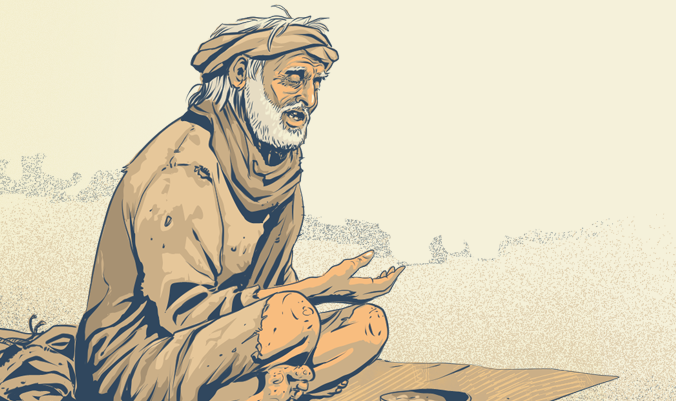
It’s important for us to realize that before they met Jesus, these lepers lived a life of pain and suffering. Due to a contagious skin disease (we’re not sure exactly which one… leprosy could have meant a variety of contagious skin diseases), they had been cut off from the world they knew and were now forced to live outside the city walls. Instead of working for food, they must beg for food. Instead of hugs, they must stand back and shout “unclean” as others walk by.

If you get the chance, reading Leviticus 13-14 will provide even greater context for the culture that is taking place in this story. These rules that we have the privilege of glossing over, are rules that people were required to live by. When reading through the laws of Leviticus 13-14 picture yourself having to understand and follow those laws.

Imagine waking up to find a rash on your skin one day. Imagine, the rash begins to spread and you realize that this is no bug bite, or something else that would go away on it’s on. Think of the moment you must say goodbye to your family. Why? Because this is the law. This law is meant to protect the very people they love from also being infected. Remember, the Jewish people of the Old Testament were covering their mouths with fabric and quarantining before it was cool.

Having leprosy was not something anyone ever walked away from. Or should I say, leprosy was not something anyone had walked away from YET.

Looking forward to sharing more about this on Sunday. See you there. 

The Practice of Humility

“Humility is not my virtue? False – as per everything else, I excel at being humble.” ~ Dwight Shrute

In our study of Luke this Sunday we’ll be reading ch 17:1-10. We’ll move into a section where Jesus will give a warning, a command, an encouragement and a parable – all with an underlying theme of humility. It’s interesting because the word “humility” doesn’t appear in the text, but the only means of experiencing what he calls us to is by setting our self-will aside for the sake of another.

The warning starts in v1-2, about causing a “little one” to fall into sin. Who do you think a “little one” might be? The word for “sin” in this text is scandalidzo (σκανδαλίζω) – and it means to put an obstacle in someone’s path causing them to trip up. What things might we put in someone’s life that would trip them up in their intent to follow Jesus? We can think of all sorts of temptations in this world – but think also about the Pharisees in ch 15:1-2 – in what ways could those types of attitudes trip someone up? What is necessary on our part to keep from offending our fellow believer?

V3–4 provides a warning and a command – don’t cover-up or dismiss an offense, but be quick and consistent in forgiving the repentant. Humility plays a large role in being willing to forgive – and forgiveness is a really big and nuanced subject, something we’ll be taking some time to consider and qualify in our teaching on Sunday. All of this is in a community context – so what sort of attitude do we see Jesus promoting among his followers?

Jesus also exhorts us to believe God in v5-6 after the disciples start wondering how they’re gonna’ achieve these things he’s commanding. He makes is clear we don’t need a big faith…instead, he implies the opposite. If we had great faith to rely on, what might we be tempted to trust in?

Finally, Jesus tells a parable in v7-10 which sort of wraps up the section. In some ways, the picture the story paints is sort of bleak for a disciple – described as a self-effacing servant of a task master. But remember, parables aren’t meant to be one to one comparisons – he’s making a point. There are plenty of places where our value as God’s children is emphasized in Scripture, that part is supposed to be assumed in this parable. How might this parable prompt us toward humility?

I’m looking forward to this study! Lavished Ministries will be sharing a missions update about the important work they do for an abused and marginalized segment of our society. I hope you can join us!

Living Now Like it’s Then

Have you ever experienced the 20-20 vision of hindsight? I can remember so many times when I’ve looked back on a confusing situation and had a much clearer picture in light of all the things I discovered along the way. What if we could get the clearer picture beforehand – not having to wait until the event is history before knowing the best response? Wouldn’t that be cool?

In our text this Sunday, Jesus will invite us to gain a better picture for our present day lives by reminding us that things are not always as they appear on the surface. We’ll be reading Luke 16:19-31 as we continue our study in the Gospel of Luke.

I’m someone who reads this section as a parable – the reasons for which I’ll delve into on Sunday. As a parable, I believe it sets up a perfect punctuation for everything that’s been said in the whole section which began in chapter 15:1-2. It also helps illustrate what Jesus said a few verses back about how the world honors one thing but God finds it detestable.

In the parable, the curtain gets pulled back to see that statement acted out with all the drama and theatrics of a stage play.

As you read the story, imagine the details and contrasts set up in the first act (v19-21). Who would you rather be in that description?

Act two (v22-23) brings the great equalizer on stage: death. Here we recognize that everything wasn’t as it appeared in life. Who is blessed and who is cursed in this scenario? The interesting thing is, nothing changes about their status or activity during life – which means this state of blessing and curse was present in life, just unseen. (spoiler alert!) That’s a major point of the parable! How does this relate to the Pharisee’s critique of Jesus hanging out with sinners and outcasts?

Acts three and four finish up the section. The unnamed rich man pleads with Abraham for relief and pleads for his five brothers who needed to be warned. Abraham refuses both requests – for relief because there was an irreconcilable gap between them; for warning because they had God’s word that could instruct them, if they won’t hear that they won’t believe someone risen from the dead.

There’s all sorts of nuance here which we, knowing there’s an empty tomb at the end of this gospel, are able to recognize more clearly.

Again, I’m not someone who reads this story as a teaching about the afterlife, but as an exhortation addressing how we live right now. Some questions we could consider from this parable are: Who’s evaluation of us matters most? How should we evaluate God’s word, what impact should it have on our lives? And finally, how should we assess and treat each other in light of Heaven’s tendency to reverse things that seem so obvious to us on earth?

I hope you can join us this Sunday – it should prove to be a challenging yet encouraging exploration of this passage!