
We’ll be returning to our study of 1 Corinthians after taking two weeks away from it for the holidays. We’ll be reading 1 Cor 15:35-58 – Paul’s concluding thoughts concerning the doctrine of the resurrection.
In the first part of chapter 15, Paul was corrective in his discussion about the resurrection – pointing out how intimately Jesus’ resurrection was tied to our own stories. In Paul’s thinking, Jesus’ experience was a model for what God intended to do for all of his people, hence, the general resurrection was a mandatory belief.
I do find it fascinating how very little time or thought our modern, Western church gives to this idea. N.T. Wright wrote a very insightful book on this topic, called “Surprised by Hope”, which I highly recommend reading.
For the last half of the chapter, Paul points both to nature and the Biblical narrative to make his case for the holistic nature of the resurrection. I really like his argument as it touches nature. What are we witnessing every spring as winter recedes? If God is the author of reality as we perceive it, what might he be trying to tell us in this cycle of seasons?
Going to the biblical narrative, Paul asserts a new Adamic role for Jesus. His logic seems to be, if we all face the certainty of death through Adam’s sin, doesn’t it stand to reason that we all get in on Christ’s resurrection life through Him?
As Paul has elaborated on this subject, has it influenced how you perceive an afterlife with God? Paul finishes on a high note, in v55 he rewords a prophetic poem from Hosea 13, flipping the meaning of that oracle into a forecast of triumph for God’s people. How can we start incorporating a more robust hope for resurrection into our faith worldview?
I’m really stoked about getting into this section of 1 Corinthians – I hope you’re able to join us this Sunday at 10 AM!



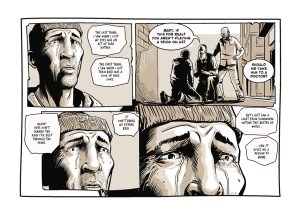
 How easy is it for you to trust someone? We may consider ourselves to be “trusting souls”, but the reality is we often find it difficult to place our trust in someone else. A lot of factors go into that – past experiences, our own sense of frailty when it comes to trustworthiness, and a host of other reasons go into our tentative approach to giving away our trust. It’s hard to trust others…and those are people we can SEE and examine and evaluate on a regular basis. What about a God who hides himself (
 I remember once when my wife and I were going to turn an enclosed porch area on the back of our house into an extra bedroom for our boys. We planned and considered how this could be accomplished and what it would take. We drew a lot of diagrams on napkins and contemplated this task – and then realized it was too big for us and had to be hired out. A friend from church did construction jobs like this agreed to take on our project. What I still remember was the great sense of satisfaction and even surprise when he set out to tear sections out and rebuild others, because there was a big difference between this project in theory and seeing it in action. It turned out much better than we had imagined.

 There are some things I have to do every day, day in and day out. Brushing my teeth is an example. But there are many, many more things that I have to attend to or practice every day. All of us have those. I can’t brush my teeth once and assume that they are now clean and that work is done. I wouldn’t have teeth for very long if I thought that way.

 WONDERWHAT