Proactive Spirituality (2), Our Frailty, His Favor

We will be returning to Psalm 103 this Sunday, and we’ll be reading vs 8-14

It would be hard to find a more comforting set of verses in all the Bible…though there are many of them to choose from.  The revelation of God…and how He views humanity which is set forth in vs 8-14 stand in alarming contrast with the expectations of so many religious institutions.  For myself, a recovering legalist, the discovery of these verses went a long way toward healing my twisted view of who God is, and how He wants to relate to me.

It’s within this passage that God unveils His paternal heart for us…which would become the pinnacle of Jesus’ teaching on how we relate to God.  Jesus broke with the norm and invited us to pray to God as “Our Father”, something that was out of step with the understanding of that time, but which was clearly revealed here in this Psalm.  God cares for us like parents care for their children…only infinitely more so. 

For most of us, we don’t really have a good framework to understand what that means.  For many, our parental interaction was flawed, if not broken.  When we conjure up images of a parent’s interaction with us, we may struggle with memories of abuse or conditional affection or limited affection…and on and on.

That’s why this Psalm is so important.  While God uses the image of a parent’s love, He qualifies it by describing what that love looks like, and what it means to us.

What images that are used to describe how God views us, or cares for us, or understands us speak the loudest to you from this passage?  What does it tell you about this God you seek to know?

Do you struggle with a sense of inadequacy…a concern that God is barely tolerating your inability to follow Him well…or at very least, do you imagine that He’s irritated with you, displeased that you don’t have it together yet?  If so…let these verses from Psalm 103 wash over you, rinsing away those inaccurate and burdensome notions.  Let this Psalm hold out strong and loving arms that you can leap into; rolling in gleeful wonder as you receive the love that only a Papa like Him can give.

When your enemy tries to discourage you by reminding you of your failures and sins…tell him “Yep, I know I’m no good at this…BUT AS FAR AS SUNRISE IS FROM SUNSET, THAT’S HOW FAR HE REMOVED MY SINS FROM ME!”  Then hold tight to the hand which reaches for you from Psalm 103, and know the contentment that comes from being loved.

Have you tried praying this Psalm yet?  If so, what have your experiences been?

See yer’ Sundee.

Our Need, His Character

For reasons I’ll explain later, I’m not going to begin a study on another full book just yet.  Instead, this Sunday, we’re going to begin a short study on what, for me, has become a focal point chapter in the book of Psalms.

Psalm 103 will be our subject for the next few weeks.  Read it here in the NKJVRead it here in The Message. (I really love The Message version…and we’ll be referencing it in our study).

This is a Psalm I love to pray…for a while I prayed it every day, but now its every few weeks, as other Scriptures and prayers have been in the forefront for me. 

Psalm 103 is a Psalm of David…a song that is believed to have been written in his old age.  I imagine that old king, scars on the arms which hold his harp, reflecting on his adventurous life with God as he hums and sings in time with his strum.  It’s such a wonderful prayer.

As you read it, do me a favor.  If you need to, print out a copy of the Message version of Psalm 103.  Now, sometime when you have a moment of quiet…somewhere when you’re all alone, and the TV isn’t screaming what you should buy, and the kids are occupied or asleep….in that time, read this out loud (a whisper will do though), and add personal pronouns in the reading…so that it is a conversation in which you personally are speaking to God. 

It will read like this:

1-2 O my soul, bless God. From head to toe, I’ll bless your holy name!
   O my soul, bless God,
      don’t forget a single blessing!

 3-5 You forgive my sins—every one. 
      You heal my diseases—every one. 
      You redeem me from hell—You save my life! 
      You crown me with love and mercy—a paradise crown. 
      You wrap me in goodness—beauty eternal. 
      You renew my youth—I’m always young in Your presence.

….and on and on.  You get the idea.  Personalize the language of the Psalm…make it YOUR prayer…and pray that Psalm to God.  Think over what it means as your saying it (realizing that He hears you, no matter what you hear).  Let it soak in.

What does this Psalm say to you in the first five verses?  What do you see as the emphasis?  What is revealed, and who is it revealed about?

Do these verses evoke any thoughts you want to share, good or bad?  Questions maybe?  Testimonials?

Just wondering.  Hopefully this will be a cool study.  I really love Psalm 103.

The Deeper Magic – Mark 16:9-20

Sorry for the delay in posting this week…I have no valid reasons, only excuses.

So, we’re going to finish our study in the gospel of Mark this Sunday.  It’s always sort of bittersweet to me to finish up a book.  Its a great feeling of accomplishment, but also a sadness to leave such familiar territory.

We’re going to be reading the last part of chapter 16, verses 9-20.   For roughly the last 1,800 years there has been a controversy surrounding these verses.  Many scholars, both ancient and modern, believe they are an addition to the original text and should not be included nor taken seriously.  If you feel like reading, you can find a fair summary of the opposing views HERE.

For my part, I find compelling arguments on both sides of the issue.  To determine if I should include these verses in our study, I asked myself some questions.  1) Are the verses in question in conflict with the rest of the Scriptures of the New Testament?  My answer was no, they’re not and in fact can be correlated to other gospel and didactic passages.  2) Do the verses introduce foreign doctrines?  Again, the answer is no.  Some cessationist advocates may try to insinuate that verses 15-18 could promote wild charismania…but even there, the things Jesus lists off in the passage DID get experienced by the Christians of the book of Acts….so a person could still argue that those gifts had ceased after that (if they wanted to, and wanted to be wrong).

The fact is, every translation of the Bible today still includes these verses, and just add a footnote.  God is pretty big, that much I’m sure of.  I think He’s well able to see to it that we have the Word He wants us to have…so…I’m going to teach on those verses.  What do you think about them?

If you read  them over, you’ll notice that one reaction is pretty consistent from those who only hear about Jesus rising from the dead.  What is it?  Put yourself in their place…how do you think you would have responded?  (seriously…when you read about someone who “spotted” Elvis working at a 7-11, what is your first reaction to that kind of “news”?)  Yet in verse 14, Jesus is none too amused at their response.

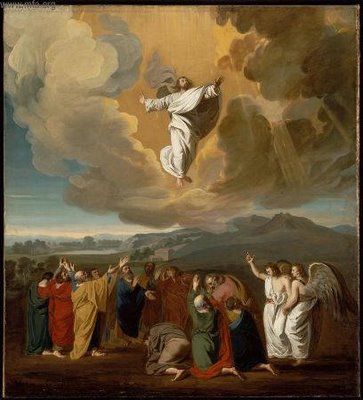
How would you summarize verses 15-18?  What do those verse tell us about the world we live in now that Jesus has risen from the dead?  V 19 is the fuel for v 20…Jesus “ascended”, or was taken into the unseen realm of  heaven (which N.T. Wright describes as the control room for the events of earth, which I think is brilliant).  From that place of power and dominion He does something…what does He do, and through what agency does He do it?

Well…don’t feel pressured to respond…I know this was late in coming.  And don’t feel like you need to answer all the questions I pose…if just one thing strikes your interest, lets talk about it!

Peace…see you Sunday!

“Holy Rolling Stone!”

Roughly three and a half years ago I had surgery done on my left knee.  It was a little more complicated than it was originally thought to be, and suddenly, without warning, I found myself with a bum knee.  For two years I suffered with daily pain, and an atrophied quad muscle which, I found out later, was the major source of my pain and weakness.

Bottom line?  I could no longer surf.  I couldn’t run, and frankly, didn’t even enjoy walking that much.  I started packing on the pounds and really found myself sinking into a dull depression.

A little more than a year ago, that all began to change.  I spent some very deep, alone time with God…and came back ready to tackle this problem.  I started exercising and building up my quad muscle, as well as the muscles that surround my knee…and lo, it eliminated about 60% of the pain I felt.  With renewed hope, I looked out at that Gulf of Mexico.

When Dolly came through recently, I was out surfing on unusaully beautiful, glassy waves one Thursday morning.  I was out there with Luke B. and I ran into Dave B.  He smiled and said to me “Weren’t you unable to surf for a while?  It’s good to see you back out here.”

Man, what an understatement.  To have something taken away…to face the possibility of letting something go that felt really important to you….only to have it restored.  How do I explain the feeling of that?  Words fall short of expressing the joy and wonder and appreciation I feel.

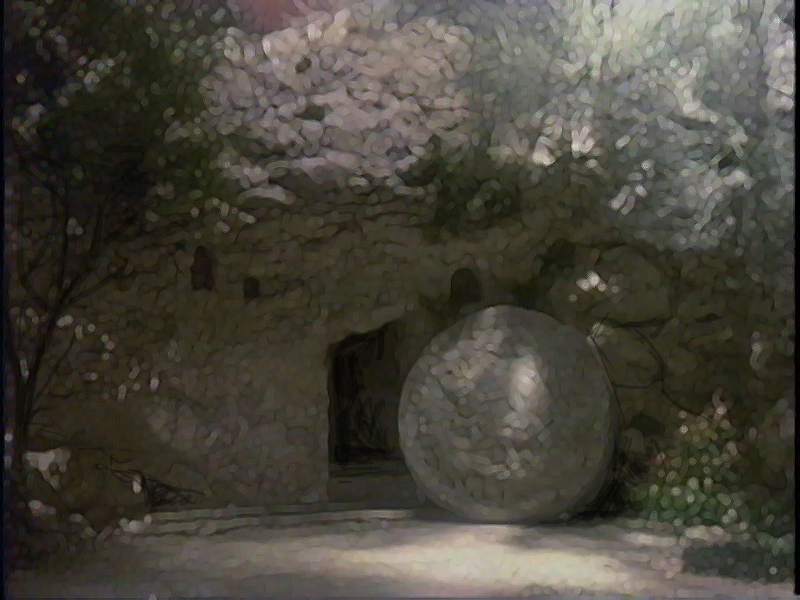
We’re going to study Mark 15:42-16:8 this Sunday.  We’re down to the last few teachings in this gospel.

As you read this passage…think about the characters again.  What must they be going through?  What are your thoughts about Joe of Arimathea as you read about who he was?  Why do you think he does what he does?  How do you think he felt?

Think about the Marys.  What is thier concern?  What ends up being their solution?

What are your thoughts on any of this?

Too many questions?

🙂

A View From the Cross

We will be studying Mark 15:21-(possibly)47 in our exploration of the gospel of Mark this Sunday.

Jesus has been tried, condemned and brought before the powers of Rome, who have determined to crucify Him for political reasons.  All of this was predicted by Jesus before hand.

Mark’s gospel is unique in all the accounts because Mark provides so few details about Jesus during this time.  There is no description of Jesus’ other words spoken just before and during His time on the cross, other than what he says in v34.  It has been suggested that Mark’s viewpoint then, is not at the foot of the cross looking up…but rather a view from the cross looking around. 

From this vantage point we see Simone the Cyrenian press-ganged into carrying Jesus’ cross.  He and his sons are mentioned in such a way that we would think they are well known to the readers who originally recieved this gospel.  Tradition says that they became leaders in the early church.

We see from Mark’s view the solders who try to offer Jesus pain killers, and then once their grizzly task is completed, begin dividing up Jesus’ clothing as the spoils of their job.

Looking to the right and left, we see two other men on crosses.  Robbers, it says in the text, though that could have been a generic term used to describe people who stirring trouble and breaking laws.  They may have been the very men Barabbas was chained up with when Jesus took his place.

From the cross, we see the passers by…the ones who probably have heard about this teacher from up north who thinks He’s the Messiah.  Now they see Him on a cross, and begin jeering and taunting Him, because in their minds, this proves Jesus isn’t the Messiah they’ve been waiting for.

The religious leaders are there too.  When the mocking begins, they don’t urge people to mercy.  There is no kindness demonstrated in spite of their disagreement with Him.    They don’t say “listen, this guy’s suffering already, lets not add to it, lets pray for Him.”  No.  They join in the mockery.

Darkness descends, the atmosphere becomes strangely ominous.  Jesus gives one final cry, and dies.  One final character stands at the foot of that cross, and we see him looking up at Jesus.  He says “Truly, this man was the Son of God.”

What are your thoughts on the cross, at least from Mark’s description of it?  Mark’s gospel was the earliest one written, and if all we had was Mark’s account of this….what would we make of it?  What do you think Mark’s view from the cross tells us?  I’d love to hear your thoughts.

Peace

Just When We Think We’ve Got it all Together – Mark 14:27-42

Hey everybody.  First off, I want to mention that Sabet Kuj called me yesterday to thank our church for praying for Suzy and he.  In case you don’t know, they are missionaries to the Sudan that we have been supporting as a church, and who stayed in our area and hung out with our church for a year.  She had filed for citizenship in the U.S. (Suzy is from the U.K.), and last week she received it.  The whole family will be united in Sudan by September.  God is good.

Our text this week is going to be Mark 14:27-42 – read it here.

Verse 26 provided the larger context of the events recorded in this part of chapter 14.  Even though we have the account of Jesus praying in the garden, that event is surrounded by accounts of self confidence and failure.

Have you ever made a commitment to something verbally, but failed to follow through because it was more difficult than you thought?  How did it make you feel?  What did you learn from something like that?

In all the gospel accounts, Peter is always quick with his tongue…and his own account (if that’s what Mark is) is no different.  He makes bold claims and promises, but later on in the chapter, we’ll find out just how he keeps those promises.

As Jesus goes off to pray, what do the disciples do?  In His humanity, as best we can tell, Jesus had the same struggles with surrendering His will to survive.  This is, in part, what is making Him “exceedingly sorrowful to death…”  It is in the context of laying aside His own will that Jesus utters the rally cry the church has echoed for 2,000 years – “not what I will, but what YOU will.”.

When He gets back to His disciples, he awakens them.  What do you make of that?  How would you apply that to your life as a disciple now?  His warning is about the weakness of our flesh when it comes to fulfiling our spiritual desires and goals.  Obviously, this has application to prayer, because that’s the immediate context, but what do we learn from His warning as we try to apply it to other areas of our spiritual journey.

In v 40, we’re given a reason why the disciples were sleeping.  In your own times of struggle or heart pain, when you just don’t know what to do, what has been your response?  Escaping is a natural human tendency.  What things do we try to escape to, instead of resolving to entrust our situations to God?

This whole scene gets repeated three times.  As you read it, how do you imagine Jesus’ facial expressions?  How do you imagine His tone of voice?  Does Jesus give up on them?  What is His final word to them in V 42?  What does that mean to your life? 

Well…I hope that sparks some good conversation.  Thanks for reading this, and being willing to dig a little during the week.  This is time WELL SPENT.  See yer’ Sundee!


She Has Done a Good Work for Me – Mark 14:1-11

 Our study this Sunday will start chapter 14 in Mark.  We’ll be reading the first 11 verses.  We are now just a few days out from Jesus’ arrest and crucifixion.  The religious leadership want Jesus out of the way, but in their reasoning, they’ll have to wait until Passover is finished, because they don’t want to cause an uproar.  Interesting that despite their planning…Jesus is still crucified over the Passover weekend.  What does that tell us about who’s really in charge here?

The text tells us that Jesus is staying at the house of a guy named Simon the Leper.  Talk about sorry nick-names.  Many believe this was a man who had been healed from leprosy by Jesus, and was now a follower of Him.  I think that’s reasonable, but we do want to keep in mind that some scholars question the translation, and there is a possibility that it should read Simon the “potter”.  I’m not a language scholar, so I’ll stay out of that debate.

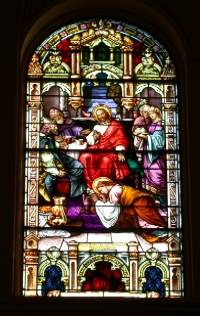
John’s parallel accountof this event tells us that the woman who comes to Jesus is Mary, the sister of Lazarus, whom Jesus raised from the dead just before He came into Jerusalem.  She lived in Bethany too.  Both accounts say that Mary broke open an alabaster flask, or jar of very expensive perfume, and poured it on his head and feet.

John’s account has Judas doing some quick calculations about the cost, which equates to about a year’s wages in that time.  Judas did this quick economics lesson to accuse her, but I’m glad he did it because it gives us a good point of reference to understand what this gesture meant.

When she was accused, she was accused (by Judas, according to John 12) of being wasteful.  Yet Jesus says she “did a good work for ME”….what do you suppose Jesus means by that?  The description of what she does isn’t always what comes to mind when I think of work.   Jesus also says “She has done what she could.”  Jesus is very pleased with her actions.  He defends her, and promises that what she has done will be immortalized, taught synonymously with the gospel.  Wow. 

Obviously, we live in a different culture, so some things are hard to understand in this.  Pouring oil on a guy’s head wouldn’t go over quite so well in our culture (at least since the 1950’s).  In that day and place, taking baths wasn’t something a person had the opportunity to do as often as we do.  People would quickly develop a certain odoriferousness (funk) about them.  So, this sort of thing was a welcome way to put a sheen on the hair and diffuse the funk.

But, Jesus associated it with his burial.  All along Jesus has been warning His disciples that He’s going to be betrayed, handed over to the gentiles, and murdered.  Do you think Mary is the only one who really heard HIm?  Is it possible she is anticipating His death, or is Jesus steering this somewhere?  What would Jesus be doing, if He were tying her activity here to His approaching death?

What other observations do you draw from this passage?  What do we learn from her “work” about our daily lives that we live here and now?

What contrasts do we draw from Judas’ behavior immediately following this event? 

See yer’ Sundee.

Dark Clouds over Mordor; Mark 13:14-37

Forgive the Tolkien reference in the title…sometimes I just can’t help but let my inner geek run amok.  This Sunday we’ll be looking at Mark 13:14-37, and we’ll finish up the chapter.

Remember our introductory remarks about the first thirteen verses…while end time events and prophecy is cool and all, to over emphasize it can be almost as dangerous as ignoring it.  So, while keeping our heads cool and level, we’ll be looking at some of the characteristics that Jesus describes will surround (what I believe to be ) the end of the age.

Jesus begins this section pointing to a prophecy from Daniel 11which references “the abomination of desolation”.  It might be interesting reading to look at this entry from the Jewish Encyclopedia (it’s about a Syrian King named Antiochus).  From the Jewish perspective today, and back in Jesus’ time, this was a historic event, not something yet to be fulfilled.  What does that tell us about Jesus’ statement here? 

In v19, what will the world be like in the time period he’s describing?  What does that tell us about the direction the world is taking…and how does it effect our expectations about the state of the world?

As you read this section over, who or what seems to have the upper hand through it all?  Yet what is the final outcome that Jesus predicts?  It might be helpful to read Daniel 7…or at least v13-14 in that chapter.

Verses 28-31, of Mark 13, tell us that we can expect an intensifying of troubles, leading up to the grand finale…just like we see buds and leaves sprouting and leading into summer and harvest.  In v31, Jesus makes a prediction about his predictions…what is it that he says?  What does that tell us about his predictions?

The final section, v 32-37 sort of put the final qualifier on the issue.  What does He say about these events?  What do we need to factor in because of this qualifier?

That should give us plenty to mull over and chew on this week!  See ya’ Sundee’!

AAAAGH!

CRUD!

You know what I failed to do this week?  I forgot to publish the text for this weeks teaching.  Sometimes life gets the better of me…sorry about that for those who read this.

Well…better late than never.  This week we’ll be looking at the last verses of Mark 12….verses 35-44. Read it here.

Jesus is still in the temple, and it’s still during this final week before the cross.  In v34, Jesus told a Scribe that because he was in agreement with Jesus about the summation of the commands of God (Love God and love people), he was “not far from the Kingdom of God”.  V 35 seems to flow right out of that conversation…even stating that Jesus is “answering” something.  What would He be answering?

In his discussion about the improper understanding the Scribes had about what the Messiah would be, Jesus points something out that had been overlooked…what do we understand about the Messiah from the passage in Psalm 110 that He quotes?  What does it have to do with the Kingdom of God?

Jesus is harsh in his condemnation of the religious leaders.  Do any of His observations sound familiar?  Instead of picking on the obvious caricatures of church leadership, how would we apply his warnings to our own lives and spirituality?

What is Jesus watching at the offering box?  What does this tell us about our spiritual journey from God’s perspective?  What is most important to God, based on these verses?

Anyway…hope you had a good week!  See you Sunday, Lord willing.

Sunday, May 11th; Mark 12:13-34

First off…please remember to check the Prayer Wall and keep the requests there before God.  Golda reminds us to pray for the people of Myanmar in Asia.

Secondly, thank you so much for all the support that was shown after my little state of the community fund talk last Sunday.  I mean support as in resources, but also so many who said such encouraging things to me personally.  It must have been obvious that I was less than comfortable doing that.

Ok…so on to our study.  We’ll be covering a lot of ground, vs 13-34 in chapter 12.  Read it here.

We don’t know if this is the next day, or exactly when this fits into the time-line…but after Jesus has had his initial confrontation with the leaders of the temple, we then have this section where the religious elite try to corner Jesus three more times, seeking to trap him with questions.  We’re going to look at all three of those traps…and we’re going to think about how Jesus evades them…and we’re going to consider ourselves, how WE can avoid the snares of religion on our spiritual journey.

The first section deals with their question about paying taxes, and if God fearing Jewish people are betraying God by paying taxes to a heathen authority.  Jesus’ answer is brilliant, and it makes a very important point about loyalty and commitment.  What does his answer say to you?  What is the most important thing, from Jesus’ perspective (based on his answer)?

In the second section, the religious “scholars” pose an elaborate “theological” question, trying to get him to side with one camp or another, hoping to stir up division based on his answer.  What is the first thing Jesus points out to these guys?  What is it that the so called scholars of his day were mistaken about in their question?  What can we learn from this about avoiding the traps of “religion”?

Thirdly, a less hostile question is asked by someone who really seems to want to hear Jesus’ answer.  But all are watching, probably hoping for ammunition to use against him.  This is a famous passage, where Jesus employs some real reductionism in his response.  Does anything jump out about what Jesus provides as an answer to this possibly complex question?  What do you take away from his response?

I came away with three distinct principles that I think are helpful in keeping our focus on the right things, and not allowing religious behavior and the expectations of church subculture from veering our course.  I hope it all is beneficial as we unpack it.