Myth #4: The Good Christian

John Doe had heard the sermon, and it had cut him to the quick.  The preacher had leaned over the pulpit in order to make his point, and projected his voice like an opera singer swelling to the finale.

“You must get to the place where your first instinct is faith and not fear when troubles come!”

John knew very well that he was not at that place.  Rumors were snowballing at his job, all the signs were there that the plant was going to close…and his first response was not faith, it was icy terror.  His first thoughts were of his family, and how he would provide for them.  His first instinct was to scramble around looking for more information, so he could better take on the task of fixing his problems.  The preacher’s words echoed through his thoughts and began pushing him into a corner.  “How can I expect God to take care of me or help me when I still don’t do this right?” he thought.  “When am I going to get to the place when I have this together, when I don’t mess up so quickly.”

The sense that he’d already failed the test pressed down on him, and he thought about the preacher who had uttered that challenging sermon.  He thought about how faithful he was, how obviously capable he was of trusting God and resisting temptation.  From there, his thoughts drifted over the other people in his church who clearly had their “spiritual lives” together, who clearly had a walk with God that far exceeded his own.  They could trust God in the worst of times but he fell into fear because of  a rumor.  The thoughts began to bear down on him…he realized he had failed his test, and the only relief available was to push all of this from his mind for now.

“Later.  I messed up…I can’t even pray about this right now.  I’ll get my act together later.  I’ll do this better next time.”

Thus John Doe was discouraged into paralysis by a MYTH.

This Sunday we’ll be looking at the myth of the good Christian.  This will get a little more personal…so be warned.

Is Christianity supposed to be a sin-management plan?  Is the life of following Christ about adhering as closely as possible to an elusive standard of good Christian living?  Is there a place we get to where we have this thing wired, where we have achieved the title of being a good Christian?  If you are answering “no” to these questions, then conversely, what role does holiness and the perfection Jesus called us to have in our lives?  How do we reconcile our struggles with faith and temptation with the Bible’s call to right living?

To prepare…read Paul’s thoughts in Romans 7:15-8:2…and I’ve linked it to the Message because its such a clarifying take on it…but check it in other translations as well.  Ponder it…meditate on what Paul is saying…Paul, the prince of apostles, the great spiritual force of the New Testament writings…consider his confession and resolution.

Don’t be afraid of straw men.  Don’t bet stuck chasing myths and missing the path.

MythBusting the Church, part 2: The Ten Percent Rule

71014_MoneyHappiness_vl-vertical“If you don’t pay God His tithe, the blessings will be cut off in your life!”  Ever hear anything like that?  Is that really accurate?  Why do I picture a mob-boss in connection with that statement more than the God of the Bible?  Does God really have to resort to extortion in order to motivate His children to be generous?

The arguments are many and varied, but all of them point back to the Old Testament law, and the requirement of the 10% tithe (tithe means ten percent). This Sunday we’ll look at the myth that’s been propagated by many churches  for about 1500 years…the myth that says New Testament Christians, redeemed by grace, are obligated to give 10% of their monetary income to the church, in order to be blessed by God.

Seriously…go read Col 2:10-17, and think about what Paul says the Old Testament law was…and what our obligations are to it as those in Christ.

We’ll also look at 2 Corinthians 9 to find out what principles should guide New Testament generosity.  Ever read that passage in the Message?  It’s awesome!  While the actual context is a relief offering for the famine ravaged church in Jerusalem, the principle can be a guide to all the practical, fiscal matters that touch the church community.  There’s nothing overly mystical about it…no condemnation, no demand to meet an obligation, in fact, just the opposite.

Come hang out with us this Sunday as we MythBust the 10% tithe for the Christian!

Being Who You Were Meant to Be

graveMichael Jackson is dead.  So is Farrah Fawcett.  And Ed McMahon.  For a guy my age, the icons are crumbling and blowing away from our present view.  I was reading Ubahleeob’s blog this morning, and thinking about his thoughts on mortality.  And I wonder…are we living the life we were meant to live?
This Sunday we’ll be looking at that very thing, as Paul continues instructing Timothy, in 1 Timothy 4:11-16 (and in the Message).

Tim was young, and that was an obstacle in his culture, that stood in the way of his being the leader God wanted him to be.  What obstacles are in your way, that prevent you from being the person God intended you to be?  Read the passage and consider the various ways these verses can point us toward living a life according to God’s plan.

Having a Healthy Spiritual Worldview

This Sunday we’ll be looking at 1 Timothy 4:1-10.  (the Message)

Paul is once again being blunt about his views on some of those who had been teaching the church in Ephesus.  Our culture has mostly adopted a pluralistic view about truth.  There is no one truth, our culture maintains, but all claims of spirituality are equally valid.  Paul gives his perception about some claims of spirituality.  What is his view?  Does this challenge your own thinking about the claims of other religions?

In v3-5, Paul outlines some specific difficulties he has with what some teachers are enforcing on members of the church.  What seems to be his point, why are these requirements an error?

V6-10 provide a few positive directions for us to follow in searching for a healthy spiritual worldview.  What is the basis for a good spiritual worldview according to v6?  What do we need to do with the truth we have, according to v7-8?

What we believe matters.  While we never want to join bashing tactics of the so  called “discernment ministries”, we do need to recognize the need for a clear, Scriptural framework from which we make the choices of life.  This should be an interesting exploration of that concept.

See ya’ Sundee.

What is the Church Anyway?

Our text this Sunday will be 1 Tim 3:14-16 (In the Message)

Just a few short verses, in which Paul gives an explanation about why he’s writing this letter in the first place.  In his explanation, he gives some very interesting insights about the nature of the church gathering.  How does v15 describe the church?  What three descriptors does he use?  What do those mean to you?

The context is the church, yet what does v16 seem to be talking about?  What do you see as the connection?

Short…to the point…yet a lot to think about.  See youse Sunday.

Quality Control for Leaders

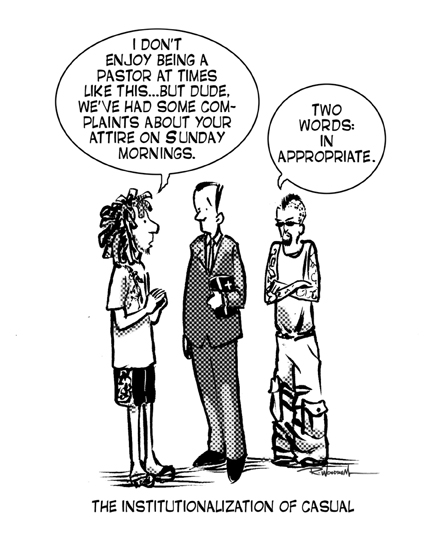
casual-1Phew…glad last week is over.  Happily, it didn’t stir nary a trace of controversy, which is awesome, since the verses we dealt with are so traditionally controversial.

This Sunday we’ll be looking at 1 Timothy 3:1-13. (the Message)

Any group of people that seek to unite and accomplish a common goal are going to, by necessity, have leaders within the group.  Even on game shows like Survivor, we see how people naturally fall into roles and leaders eventually emerge among the tribes.  An old axiom says, “If everyone is in charge, then no one is.” .  We had to learn those lessons early on in trying to re-imagine our approach to church in Eastgate.  Leaders are part of the deal.

Paul provides lists of character traits that the leadership of the church should embody.  Why do you think it’s important for those who lead the church community to embody these moral characteristics?  Is it a double standard…that is, should these traits only characterize the leadership, or is there something else to this?

The word Paul uses for “Bishop” is episkope, and it means someone who watches over things and investigates them…it is commonly called “an overseer”.  Many denominations have created an office hierarchy out of this word…but the text doesn’t seem to support that.  Words like “pastor/shepherd”, “elder” and “bishop/overseer” are more than likely describing the different functions of those who lead the local church.  Read 1 Peter 5:1-2 …do you notice anything about those terms in this verse?

The other designation for leadership is “deacon”, which in the Greek is diakonos, and it literally means “servant”.  I suppose this is any function in the church community that serves the specific needs a community has…including what the cultural developments require.  Things like teaching the children, music ministry, making coffee, doing media stuff….these would be included, in my thinking, as we make the generational and cultural leap to the 21st century.

Traditional formations of the church have created an elaborate hierarchy from passages like these…do you get any sense of an elevated class of people from what Paul says here?  What is the overall sense of Paul’s instructions….and how would you apply it to church as you know it?

Interesting stuff to chew on…huh?

See yers’ Sunday

How To Make a Difference

Hey!  I was out of town last week, hence the lack of an update.  But now I’m back (insert cheers or boos here, your choice).

Happy Mom’s day!  Be sure to buy your Mom some flowers and a card…or give her cash, that should shock her. 

hand_to_heaven_180x180This Sunday we’ll be reading 1 Timothy 2:1-7.  (In the Message).  We’re looking at 1&2 Timothy with the theme of discovering what Church life should look like in real life.  Paul started off his letter with instructions about keeping the Gospel streamlined…not adding sensational stories or heavy-handed rules.  From doctrine, he moves to practical instructions about the church’s place in this world, and our primary means of making a difference.

In v1-2, Paul gives specific instructions about how we are to deal with our fellow human beings…from our neighbors to our president.  What is his instruction?  Why does he make that such a priority?

V2 even tells us about the priorities of our lifestyle.  What should characterize the Christian life in relationship to the world around us?  HERE is the literal Greek word for the last word used to describe the Christian lifestyle in v2.  Does this characterize your life?  How does Paul’s instructions in v1 connect with v2?

In v3-7 Paul describes the ultimate way we as the church make a difference in this world.  In light of the prevalent call to political activism, these last verses seem to temper our understanding about what the church is called to do and represent.  What does that mean about our primary mission in the world?

Looking forward to exploring this together on Sunday!  See yez’ then!

Church is for Losers!

loser

We’re going to continue our series concerning Church Life in Real Life, and read 1 Timothy 1:12-20 this Sunday.  (You should read it in the Message too )

In the opening of chapter 1, Paul launched his war on error, pointing out that some of the leaders there in Ephesus had lost their way and were corrupting the message of the gospel.  The things that he highlighted as being out of sorts gave us clues about what was happening with these leaders.  They were reading into genealogies to create some sense of elevation for themselves…a claim to a higher calling and closer position to God.

Since they were making themselves out to be special…Paul bares his own past, and shows what kind of person he had been, that made him suitable for being a minister of the gospel.  What does he say about his own background in light of his present calling, in v12-17?

When you read his words…do you see yourself there at all?  In light of leaders trying to elevate themselves, what do you think Paul is trying to get across here?  V15 gives one of the most brilliantly succinct summaries of the gospel and it’s message to the world.  A person could spend a lifetime contemplating that verse, and all of it’s implications.  What are your thoughts concerning v15…how do you read it?

Timothy, the one the letter is written to, was a young man Paul had been mentoring.  He’s very likely only in his early 20’s at the writing of this letter.  What is it that Paul points to as a validation of his ministry and calling in v18?  How comfortable would you be, trusting in someone’s qualifications to lead people who was very young, had minimal training, and who’s primary evidence of his calling was a prophecy someone else had spoken over him?  This tells us something about how GOD goes about making someone qualified for the work of His kingdom…and it’s a far cry from the expectations we normally like to place on people.

Paul finishes off the chapter by calling out two guys by name, Hymenaeus and Alexander.  We don’t know anything about them, really.  Hymenaeus is mentioned again in 2 Timothy 2:17, and the “cancerous” teaching they endorse has to do with the claiming that the resurrection had already happened.  Obviously, that’s referring to the resurrection of the saints at the end of the age.  The implications of that message could take believers down many different rabbit holes…to the point where one might say “If the resurrection has already happened, and Jesus isn’t coming back, why would I follow His ways anymore?”.  It’s logical.  Paul “hands them over to Satan”…that is, he’s letting them go their own way unhindered, he’s not going to try force them into truth…if they want to ally themselves with the enemy of God’s plan, let them go for it.  But he has a reason for letting them go…a goal he’s hoping to see accomplished.  What is that goal, in v20?  What does that tell us about our hopes, even for those who seem to have lost their faith?

The Church isn’t a haven for really good people to get together in and pat themselves on the back for how much better they are than everybody else.  The church is for LOSERS…who’ve been rescued by the unrelenting love of God, through Jesus the Hero King.  That sure does make me feel at home there…..how about you?

Church Life in Real Life

churchinreallifeThis Sunday we’ll be starting a new series called “Church Life in Real Life”, and we’ll be exploring the books of 1 & 2 Timothy.  There’s a pretty good commentary which covers at least 1 Tim online at Bible Gateway…you can find it and read it HERE (if you’re so inclined). 

Both the letters to Timothy as well as Titus have become known as the “pastoral epistles”, because they deal so much with church structure.  Some people assert that their only real purpose is to set up church policy and government, but I beg to differ.  It seems to me, that while the regulation of leaders and doctrine brackets the whole work, the real import of the message is how the gospel is supposed to effect our lives with REAL change.  Change that gets evidenced in the lives we live.  Church life should merely be a reflection of our everyday life, not a different aspect of life we reserve for Sundays and Wednesdays.  Church life should be in real life and visa versa.  Anyway…we’ll unpack that a bit more as we go along.

This week as we introduce the book, we’ll be reading chapter 1:1-11  (Also in the Message), and considering Paul’s “War on Error”.

After his greetings, Paul jumps right into correcting teachers in Ephesus (Where Tim is living and working, helping get the church there established), warning them that they’re veering off the path Paul originally pointed to.  What are some of the things he warns against in v4? 

So…what’s the big deal Paul?  Why is doctrine such a sticky issue with you?  What does it matter what some people believe?  Those kinds of questions seem appropriate…so what does v4 say about the results of what is being taught in Ephesus?  What does that tell us about the importance of maintaining a healthy doctrinal understanding?

The issue seems to be a slide into mysticism, and another attempt to introduce the Old Testament law into New Testament living.  Who does Paul say the the law is for?  How do we understand this, in light of Paul’s message of salvation and life in Jesus Christ?

Should be an interesting foray into a very timely epistle!  See yaz Sundee.

Responsibility…what’s that? Responsibility, not quite yet!

Running late this week, per usual.  Don’t forget that Burning House is this Sunday…and Save the Ship will be leading worship and providing original music!  Do NOT miss this.

This Sunday we’ll be finishing up our teaching in 1&2 Thessalonians…and we’ll be reading 2 Thes 3:6-18. (Also in The Message)

It appears as though end time fever got the best of some of the people in Thessalonica…and they quit showing up to work and just sat around looking for Jesus to come back.  Every met anyone like that?  Ever done that yourself?  I heard a phrase once, that said “Live as though it were your last moment on earth, but plan as though you’ll be here 100 more years.”….or something like that.  I actually used that very unromantic phrase when I proposed to Robbie…but that’s a whole ‘nother story.

In reading these verses, we should tie v6 to v14-15, because those latter two revisit what is said in v6.  How do you interpret what Paul is saying there…and even more, how would you actually carry that out in real life?

Paul uses himself as and example in v7-9.  What do we learn from his example?

In v10-13, Paul makes a two fold challenge…one is to the slackers…the other is to those who have been trying their best to do the good that endures.  What is the message to these two groups?

He finishes it all off reminding of something very encoruaging…v16….what is it?

See you guys Sunday…and don’t forget to make room for Burning House!