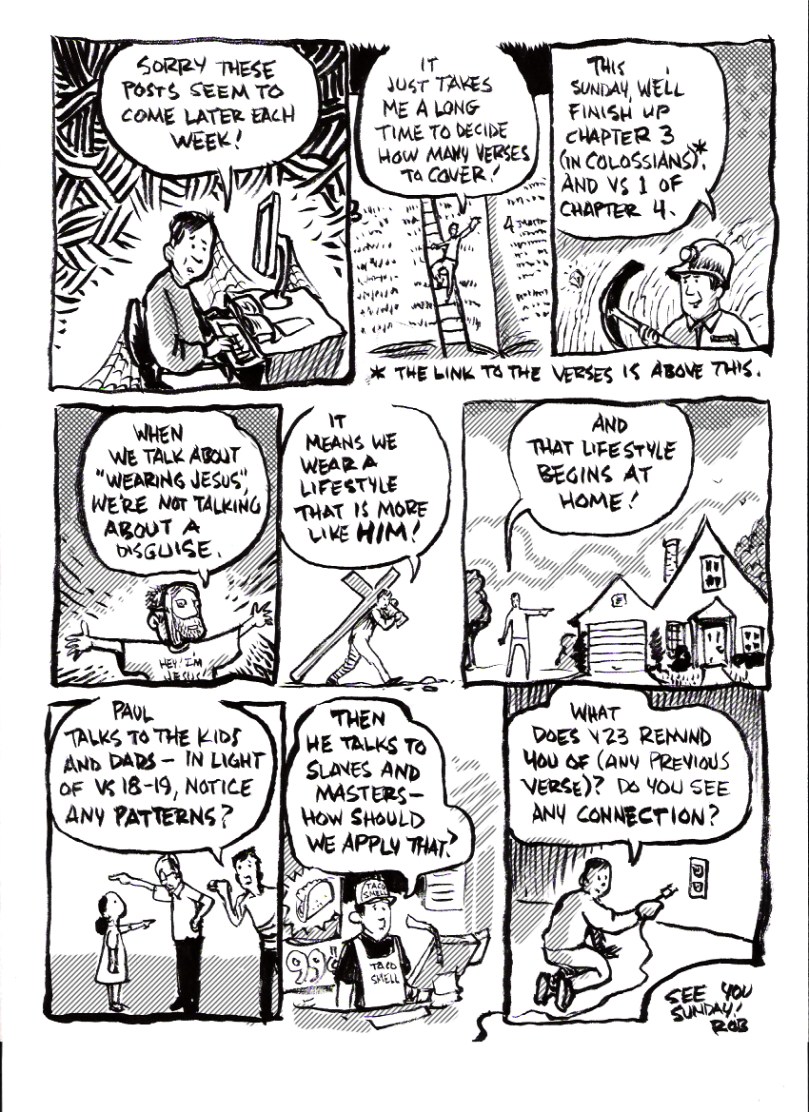
Just a reminder that next Wednesday, Aug 26th, we won’t be having a meeting that night. Pass the word to anyone who might need to know, and who doesn’t always read this stuff or get announcements.
Also, I read an interesting blog post about how Christians interface with new technologies like Facebook. It’s really worth the read. For any of you Facebook users out there…we started an Eastgate group…go join it!

This Sunday, we’ll be looking at Colossians 3:12-17. Read it here in the Message.
Paul began this discussion by telling us what attitudes and motives we shouldn’t be guided by. In the next few verses, he describes the kind of life we should wear. In v12, Paul again hearkens back to the “because of this, then this should happen” premise. Because we are included, safe and loved by God, he describes how we should handle our “self-life”…that is, the kind of attitudes we want to cultivate as individuals. All of the things Paul mentions are only possible to operate from when we feel secure about ourselves.
If we don’t feel secure about ourselves when it comes to our outer appearance…it effects the way we dress, doesn’t it? If we feel overweight, we don’t usually like to wear tight clothes. But if we feel good about how we look, we are more bold in our clothing choices…even willing to show off more of who we are.
That’s what Paul is getting at…when it comes to our inner person, we are in GOOD shape. We are loved, accepted, set aside like a favorite by God. If we could really come to grips with that, how would it effect the way we pursue life?
In v13-14, Paul extends beyond the individual, and describes how we want to interact with other people in general. Obviously, he repeats Jesus’ command to be forgiving…and then he talks about love. To quote Tina Turner, “What’s love got to do with it?”. What is Paul saying about love in connection with human interfacing?
Finally, he gets specific in terms of community, and addresses how the church should dress…not in clothing styles…but in LIFEstyles. What attitudes should we wear, according to v15-16, when we gather as a church community? What seems to be the most important thing in this description? Does it fit your experience with church?
Wrapping it up, Paul sweeps his hands and encompasses all of life in v17. Everything…everything we do, he says should be done in the “name of Jesus”. What does this mean? Does this mean when I go to the bank, and ask for a deposit slip I should say “I need to deposit funds, in the name of Jee-yah-zus!” Seriously…what is it to do life in Jesus’ name?
Stuff to ponder-fy.
See ya’ Sundee.
 As we come back to our study in Colossians this weekend, we’ll be reading vs 11-23. Of course, here it is in the Message.
As we started chapter two, we looked at the extremes we want to avoid when it comes to our efforts to live out the teachings of Christ. We want to avoid the extremism of isolation…our maturity is developed in the context of community. We want to avoid learning for the sake of learning…our goal is to live what we learn. And we want to avoid the extreme of turning Christianity into a cause…God revealed Himself through Jesus, that’s the core of our message and mission.
OK, in vs 11-12, Paul talks to the Colossians about circumcision. Circumcision was the primary evidence of a man’s identity with the Jewish people, the people of God. It was a ritual that was required under Mosaic law in order for a person to be sure he was a part of God’s team (which, when choosing teams, gives a whole new meaning to “shirts and skins”….heh heh…but I digress).
Paul says that the means by which we are now made God’s people has nothing to do with rituals we perform with our abilities…but then he goes right on to describe baptism…which is a ritual that we perform in the church. What’s the difference between these two rituals? What comes out as the focus in baptism? So then, what is it that makes us right with God, according to Paul?
Then in v13-15 Paul shows that the law as actually against us (v14)_…that is, because we couldn’t keep it, it was always evidence that we were sinful. It’s Jesus’ death on our behalf that takes away our sin and gives us a clean slate. So, if we have a clean slate…what more do we have to do to be right with God? Go to church more? Get our doctrine straight and compatible with accepted orthodoxy? What is required of us in order to be part of God’s family?
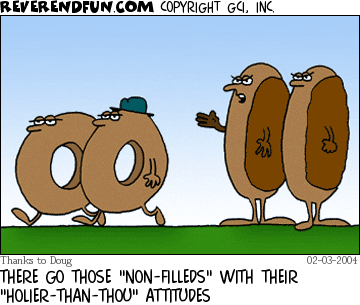
In v16-19 Paul says some strong stuff. Has anyone ever put you under pressure to tithe? Anyone ever given you the stink-eye because you went fishing instead of to a church service? Have you ever felt condemned by people who brag about their times of prayer or ecstatic experiences? Do you ever feel totally inadequate in your faith when you hear someone rant about what a Christian should wear or drink or who a Christian should vote for? What does Paul say about that stuff? If we allow those outward things to control our sense of value and worth…what happens to us? Don’t get distracted by shadow puppets…look for the real thing.
Then in v 20-23 Paul identifies the biggest folly of all these extremes. A false notion that was perpetuated then and is still prevalent today. What is the best we can hope for if we live our lives in conformity to strict outward regulations? What will it result in? What good does it do?
I love this passage. It was one that I “grazed” on for months after coming out of the legalistic system I’d been involved in. If you’ve struggled with feeling like you can’t keep all the rules right…if you’ve felt condemned by people or preachers who seem to have it all together and look so holy…this passage is for you. Take it in in deep lungfuls…breathe the sweet air of freedom. Once you start breathing that air, you can remember how to really live.
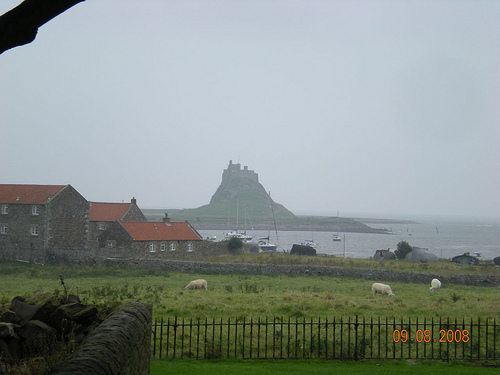
Hey Everyone! We’re back…and we had a great time in the UK. I actually drove a little over there…yeesh. It wasn’t so bad until you got to roads which were designed for almost one car, and two cars had to pass on it. All in all though, it was a refreshing getaway for Robbie and I…and we really appreciate your prayers.
I heard that the teachings these last two Sundays were good…but that’s all over now, because I’m back.
This Sunday we’re going to start a new series on the book of Colossians. It comes next in line as we journey through the didactic epistles (teaching letters). We’ll sort of introduce the book (background, purpose, author, etc…) and then read vs 1-8 of chapter one. You can read the Message version here, which I recomend, because the run-on sentence in vs 3-8 is a little tough to navigate as is.
What words seem inportant to you as you read these verses? What does it seem Paul is thankful about when he thinks of these Colossian Christians? How does that apply to our lives…how does it apply to our understanding of how we should be living as followers of Christ?
Anyway…its good to be back. We’ll see you all on Sunday!
HEY…I just realized what I forgot! This week we’ll be finishing up our short (or long, depending on your attention span) study of Psalm 103. This week, we’ll be reading v 15-22. As you read it, what do you learn about yourself…what does it reveal about God to you?
Has anyone ever said, or have you said to yourself “God is in control.”? What does that mean to you? Has that phrase ever made you feel worse instead of better? (it has for me) What does it really mean that God is in control? That He’s got the remote? That He’s got an oil field? What about when things go wrong…where does that fit in to His control?
Stuff to think about.
On another note…have you read The Shack (we carry it in the Corner bookstore)? I have…and wow. Just, wow. I highly recommend this book, especially for those struggling with the question of pain and God’s will. It’s really a good read, and I believe it will give you a refreshing sense of personalization in your relationship with God. But that’s just my opinion. You may hate it….I don’t know.
One more thing. Donald Miller (author of Blue Like Jazz, and someone I dearly appreciate) prayed at the DNC. His prayer has really sparked a lot of conversation…and there are a lot of different opinions about the content of the prayer. I’d like to hear your thoughts on it. Not about the fact that he was praying at the DNC…that’s a no brainer. If someone asks you to pray, in my opinion, you pray. So I don’t want to discuss the partisan, political stuff. What he said in the prayer….that’s what I’m pondering. I’d like to hear your thoughts,, because I’ve heard all my own. Below is the video
By the way….has that dude lost weight or WHAT? I’ll be first in line at the bookstore to buy his “Blue Like Jazzercize” book.
 Wow, we had a great discussion going last week! Thank you to all who participated. I might need to mention that I may be lifting some of this conversation and using it in our teaching time, I hope that’s OK. I think this is a great way to expand the exploration and make it interactive to some degree. This is putting the technology we have to good use, IMO.
OK…so our passage this week will be Mark 14:12-26.
As we read this passage, we can see the unifying theme to these verses. What is it? What is happening all through this section?
If you were to take this section, and break it into chunks, you would have v12-16, v17-21 and v 22-26. It’s interesting that each of these vignettes tell a different sub-story, yet all together, they describe the whole event.
In v12-16, Jesus sends His disciples to get a room prepared for them all to celebrate the Passover. Mark spends a lot of time on this detail. One thing that interests me is that they waited so long to get this room. Jerusalem is swollen with pilgrims from all over the country…it’s like spring break on the beach. I wonder how easy it is to come down to the beach the night before spring break starts and just get a room? As we read this…what is this sub-story telling us? How do we apply what we learn from this story to our own lives?
In v17-21 Jesus breaks the news that not all of the disciples are who they seem to be. There is a traitor in their midst. It’s a dire warning, and certainly not what the disciples were expecting for diner conversation. What is their reaction to this news? How do they feel, what do they say? How do we apply this to our own lives?
Finally, in v 22-26 Jesus takes the Passover meal in a whole new direction. Jesus took portions of the meal and applied them symbolically to Himself, and the events that were about to unfold. In v24-25, there is a word that gets repeated. What word is it? What does it tell us about the effect of Jesus’ death on us? What is the lesson we learn from the Lord’s Table?
Stuff to think about. Have a great week, see yer’ Sundee!
CRUD!
You know what I failed to do this week? I forgot to publish the text for this weeks teaching. Sometimes life gets the better of me…sorry about that for those who read this.
Well…better late than never. This week we’ll be looking at the last verses of Mark 12….verses 35-44. Read it here.
Jesus is still in the temple, and it’s still during this final week before the cross. In v34, Jesus told a Scribe that because he was in agreement with Jesus about the summation of the commands of God (Love God and love people), he was “not far from the Kingdom of God”. V 35 seems to flow right out of that conversation…even stating that Jesus is “answering” something. What would He be answering?
In his discussion about the improper understanding the Scribes had about what the Messiah would be, Jesus points something out that had been overlooked…what do we understand about the Messiah from the passage in Psalm 110 that He quotes? What does it have to do with the Kingdom of God?
Jesus is harsh in his condemnation of the religious leaders. Do any of His observations sound familiar? Instead of picking on the obvious caricatures of church leadership, how would we apply his warnings to our own lives and spirituality?
What is Jesus watching at the offering box? What does this tell us about our spiritual journey from God’s perspective? What is most important to God, based on these verses?
Anyway…hope you had a good week! See you Sunday, Lord willing.
 WONDERWHAT