The Great Convergence
First, before we talk about the passage we’ll be looking at this Sunday, I need to offer an apology. I was confronted about the Jib Jab video I showed at the beginning of my teaching, and was advised that it really wasn’t appropriate for public viewing. For at least one person, and maybe more, the subject matter and presentation of that particular satire was offensive and crass. It was something they wouldn’t have viewed voluntarily…and yet I showed it publicly and without warning. That was an abuse of my role in our community, and I’m very sorry.
If you took offense, please accept my sincere apologies, I didn’t set out to hurt anyone. I’ve stated more than once, I’m not very good at this…but that doesn’t excuse me. I will determine to be more cautious in the future. The last thing I want to do is cause us to lose sight of what’s important just for the sake of a laugh. I hope you’ll forgive me.
Ok…so, this Sunday we’ll be looking at vs 15-23 of Colossians 1 ( I highly recomend you read it in the Message as well). Here is where Paul transitions from his opening remarks and moves toward his main point. Remember, the Colossians had begun to drift away from the Message that they had been planted with, and were embracing errant teachings that minimized Jesus’ role in their spiritual lives.
As you read these verses, you’ll see that Paul is pretty excited about Jesus, and who He is. He makes statements about Jesus and His relationship to God. What does the text say that Jesus is in relationship to God?
Paul also points out Jesus’ relationship to creation. What is it? After that, Paul points to a new order of things in vs 19-20. What is God doing with the world through Jesus?
The question that seems to be implied in all of this is…who’s in control? It’s a good question to pose to ourselves, considering the modern, American church’s propensity to compartmentalize our spirituality. We seem to like the idea that we can keep church stuff to Sundays, but the rest of the week is a different story. Do you get that impression from what Paul says here? Based on what Paul says about Jesus, is there ANY part of life, the universe and everything that Jesus isn’t in control of?
As we look at our own lives…is Jesus compartmentalized, or in control? What areas do we tend to try and keep for ourselves? Everything converges in the person of Jesus Christ. That is where life is found…no other place. If that’s true…then that should fundamentally change the way we view the life that we have in this world…shouldn’t it?
Stuff to ponder. See you Sunday.
Ch-Ch-Ch-Ch-Changes
 This Sunday we’ll keep looking at Paul’s introductory remarks to the church in Colosse. We’ll read vs 9-14 in chapter one. In this section, Paul moves from complimenting the stuff he knows about the Christians in Colosse, to the stuff he’s hoping for concerning them.
The whole movement of this section is about change. V12-14give us the heading, and we sort of work in reverse from that point. What’s the big, overall change that’s taken place in our lives because of Christ?
Working backwards, we see three areas of change that Paul prays for to continue happening with the Christians in Colosse…and what we want to see in ourselves. V9 speaks of growth in our knowing something…v10 speaks of living something differently…v11 speaks of an ability to continue in these changes. What will we grow to know? What will change in our lifestyle? What enables us to continue on?
Stuff to think about. See you all Sunday!
What Does A Christ Follower Look Like?
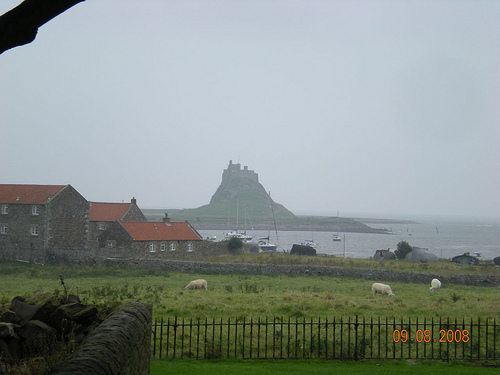
Hey Everyone! We’re back…and we had a great time in the UK. I actually drove a little over there…yeesh. It wasn’t so bad until you got to roads which were designed for almost one car, and two cars had to pass on it. All in all though, it was a refreshing getaway for Robbie and I…and we really appreciate your prayers.
I heard that the teachings these last two Sundays were good…but that’s all over now, because I’m back.
This Sunday we’re going to start a new series on the book of Colossians. It comes next in line as we journey through the didactic epistles (teaching letters). We’ll sort of introduce the book (background, purpose, author, etc…) and then read vs 1-8 of chapter one. You can read the Message version here, which I recomend, because the run-on sentence in vs 3-8 is a little tough to navigate as is.
What words seem inportant to you as you read these verses? What does it seem Paul is thankful about when he thinks of these Colossian Christians? How does that apply to our lives…how does it apply to our understanding of how we should be living as followers of Christ?
Anyway…its good to be back. We’ll see you all on Sunday!
Emergency In Haiti
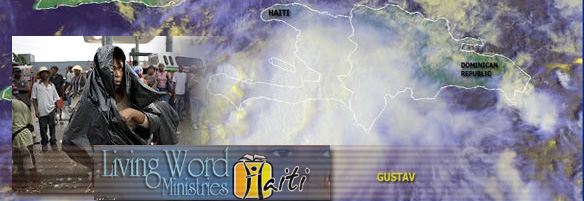
Hey all…we just received this update from Patrick and Barb Lataillade in Haiti. Please be praying for them during this crisis…and allow your heart to be open to responding to their plea for support.
OPERATION NEHEMIAH
Gustav Disaster
I, Barb, feel like Nehemiah when he heard of the destruction of Jerusalem, and he was in a foreign land. I am in Port au Prince, but the villages in the areas where we have churches are in dire need. What little they had, is now taken away!! (At this writing, Patrick is still stranded in the village.)
Every village where we have planted a church has been damaged by the hurricane. All the roads to these villages have been destroyed. The roads need to be rebuilt or repaired. If we get enough funds in, we can have a tractor/grater come in to fill the craters that are now in the road, and level out the roads again. We will need cement to build the “bridges” to cross over the deeper streams.
Marche Kabrit has no water. The water source has been destroyed. They had water piped from the mountain.
We need to get food (bags of rice, corn, beans) to the people. Right now they are eating the animals that have died during Hurricane, and the fruit from the fallen trees.
Homes need to be built, and we need to help farmers get their gardens replanted.
If God is speaking to your heart to help give the village people their life back, click here. You can give online gifts that are tax deductible.
Please feel free to forward this to your friends, church family or work place.
We are so grateful to each of you who are praying for this situation.
Thank you so much.
Patrick and Barb Lataillade
We Are a Moment, You Are Forever
HEY…I just realized what I forgot! This week we’ll be finishing up our short (or long, depending on your attention span) study of Psalm 103. This week, we’ll be reading v 15-22. As you read it, what do you learn about yourself…what does it reveal about God to you?
Has anyone ever said, or have you said to yourself “God is in control.”? What does that mean to you? Has that phrase ever made you feel worse instead of better? (it has for me) What does it really mean that God is in control? That He’s got the remote? That He’s got an oil field? What about when things go wrong…where does that fit in to His control?
Stuff to think about.
On another note…have you read The Shack (we carry it in the Corner bookstore)? I have…and wow. Just, wow. I highly recommend this book, especially for those struggling with the question of pain and God’s will. It’s really a good read, and I believe it will give you a refreshing sense of personalization in your relationship with God. But that’s just my opinion. You may hate it….I don’t know.
One more thing. Donald Miller (author of Blue Like Jazz, and someone I dearly appreciate) prayed at the DNC. His prayer has really sparked a lot of conversation…and there are a lot of different opinions about the content of the prayer. I’d like to hear your thoughts on it. Not about the fact that he was praying at the DNC…that’s a no brainer. If someone asks you to pray, in my opinion, you pray. So I don’t want to discuss the partisan, political stuff. What he said in the prayer….that’s what I’m pondering. I’d like to hear your thoughts,, because I’ve heard all my own. Below is the video
By the way….has that dude lost weight or WHAT? I’ll be first in line at the bookstore to buy his “Blue Like Jazzercize” book.
Proactive Spirituality (2), Our Frailty, His Favor
We will be returning to Psalm 103 this Sunday, and we’ll be reading vs 8-14. 
It would be hard to find a more comforting set of verses in all the Bible…though there are many of them to choose from. The revelation of God…and how He views humanity which is set forth in vs 8-14 stand in alarming contrast with the expectations of so many religious institutions. For myself, a recovering legalist, the discovery of these verses went a long way toward healing my twisted view of who God is, and how He wants to relate to me.
It’s within this passage that God unveils His paternal heart for us…which would become the pinnacle of Jesus’ teaching on how we relate to God. Jesus broke with the norm and invited us to pray to God as “Our Father”, something that was out of step with the understanding of that time, but which was clearly revealed here in this Psalm. God cares for us like parents care for their children…only infinitely more so.
For most of us, we don’t really have a good framework to understand what that means. For many, our parental interaction was flawed, if not broken. When we conjure up images of a parent’s interaction with us, we may struggle with memories of abuse or conditional affection or limited affection…and on and on.
That’s why this Psalm is so important. While God uses the image of a parent’s love, He qualifies it by describing what that love looks like, and what it means to us.
What images that are used to describe how God views us, or cares for us, or understands us speak the loudest to you from this passage? What does it tell you about this God you seek to know?
Do you struggle with a sense of inadequacy…a concern that God is barely tolerating your inability to follow Him well…or at very least, do you imagine that He’s irritated with you, displeased that you don’t have it together yet? If so…let these verses from Psalm 103 wash over you, rinsing away those inaccurate and burdensome notions. Let this Psalm hold out strong and loving arms that you can leap into; rolling in gleeful wonder as you receive the love that only a Papa like Him can give.
When your enemy tries to discourage you by reminding you of your failures and sins…tell him “Yep, I know I’m no good at this…BUT AS FAR AS SUNRISE IS FROM SUNSET, THAT’S HOW FAR HE REMOVED MY SINS FROM ME!” Then hold tight to the hand which reaches for you from Psalm 103, and know the contentment that comes from being loved.
Have you tried praying this Psalm yet? If so, what have your experiences been?
See yer’ Sundee.
Our Need, His Character
 For reasons I’ll explain later, I’m not going to begin a study on another full book just yet. Instead, this Sunday, we’re going to begin a short study on what, for me, has become a focal point chapter in the book of Psalms.
Psalm 103 will be our subject for the next few weeks. Read it here in the NKJV. Read it here in The Message. (I really love The Message version…and we’ll be referencing it in our study).
This is a Psalm I love to pray…for a while I prayed it every day, but now its every few weeks, as other Scriptures and prayers have been in the forefront for me.
Psalm 103 is a Psalm of David…a song that is believed to have been written in his old age. I imagine that old king, scars on the arms which hold his harp, reflecting on his adventurous life with God as he hums and sings in time with his strum. It’s such a wonderful prayer.
As you read it, do me a favor. If you need to, print out a copy of the Message version of Psalm 103. Now, sometime when you have a moment of quiet…somewhere when you’re all alone, and the TV isn’t screaming what you should buy, and the kids are occupied or asleep….in that time, read this out loud (a whisper will do though), and add personal pronouns in the reading…so that it is a conversation in which you personally are speaking to God.
It will read like this:
1-2 O my soul, bless God. From head to toe, I’ll bless your holy name!
O my soul, bless God,
don’t forget a single blessing!
3-5 You forgive my sins—every one.
You heal my diseases—every one.
You redeem me from hell—You save my life!
You crown me with love and mercy—a paradise crown.
You wrap me in goodness—beauty eternal.
You renew my youth—I’m always young in Your presence.
….and on and on. You get the idea. Personalize the language of the Psalm…make it YOUR prayer…and pray that Psalm to God. Think over what it means as your saying it (realizing that He hears you, no matter what you hear). Let it soak in.
What does this Psalm say to you in the first five verses? What do you see as the emphasis? What is revealed, and who is it revealed about?
Do these verses evoke any thoughts you want to share, good or bad? Questions maybe? Testimonials?
Just wondering. Hopefully this will be a cool study. I really love Psalm 103.
The Deeper Magic – Mark 16:9-20
 Sorry for the delay in posting this week…I have no valid reasons, only excuses.
So, we’re going to finish our study in the gospel of Mark this Sunday. It’s always sort of bittersweet to me to finish up a book. Its a great feeling of accomplishment, but also a sadness to leave such familiar territory.
We’re going to be reading the last part of chapter 16, verses 9-20. For roughly the last 1,800 years there has been a controversy surrounding these verses. Many scholars, both ancient and modern, believe they are an addition to the original text and should not be included nor taken seriously. If you feel like reading, you can find a fair summary of the opposing views HERE.
For my part, I find compelling arguments on both sides of the issue. To determine if I should include these verses in our study, I asked myself some questions. 1) Are the verses in question in conflict with the rest of the Scriptures of the New Testament? My answer was no, they’re not and in fact can be correlated to other gospel and didactic passages. 2) Do the verses introduce foreign doctrines? Again, the answer is no. Some cessationist advocates may try to insinuate that verses 15-18 could promote wild charismania…but even there, the things Jesus lists off in the passage DID get experienced by the Christians of the book of Acts….so a person could still argue that those gifts had ceased after that (if they wanted to, and wanted to be wrong).
The fact is, every translation of the Bible today still includes these verses, and just add a footnote. God is pretty big, that much I’m sure of. I think He’s well able to see to it that we have the Word He wants us to have…so…I’m going to teach on those verses. What do you think about them?
If you read them over, you’ll notice that one reaction is pretty consistent from those who only hear about Jesus rising from the dead. What is it? Put yourself in their place…how do you think you would have responded? (seriously…when you read about someone who “spotted” Elvis working at a 7-11, what is your first reaction to that kind of “news”?) Yet in verse 14, Jesus is none too amused at their response.
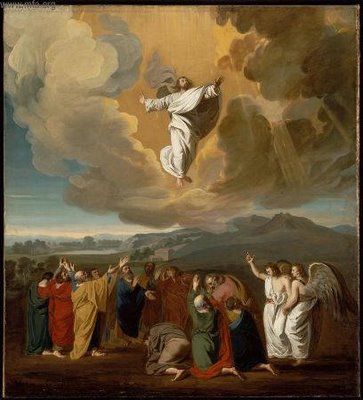
How would you summarize verses 15-18? What do those verse tell us about the world we live in now that Jesus has risen from the dead? V 19 is the fuel for v 20…Jesus “ascended”, or was taken into the unseen realm of heaven (which N.T. Wright describes as the control room for the events of earth, which I think is brilliant). From that place of power and dominion He does something…what does He do, and through what agency does He do it?
Well…don’t feel pressured to respond…I know this was late in coming. And don’t feel like you need to answer all the questions I pose…if just one thing strikes your interest, lets talk about it!
Peace…see you Sunday!
“Peace”

Joe Nori, 11/7/59 – 7/27/08
“I declare to you, brothers, that flesh and blood cannot inherit the kingdom of God, nor does the perishable inherit the imperishable. Listen, I tell you a mystery: We will not all sleep, but we will all be changed— in a flash, in the twinkling of an eye, at the last trumpet. For the trumpet will sound, the dead will be raised imperishable, and we will be changed. For the perishable must clothe itself with the imperishable, and the mortal with immortality. When the perishable has been clothed with the imperishable, and the mortal with immortality, then the saying that is written will come true: “Death has been swallowed up in victory.”
“Where, O death, is your victory?
Where, O death, is your sting?”
The sting of death is sin, and the power of sin is the law. But thanks be to God! He gives us the victory through our Lord Jesus Christ. –1 Cor 15:50-57
Just in case you didn’t know, Joe made his trip home last Sunday. We’ll be having a memorial service for him at the Eastgate building this Friday @ 7 pm, and everyone is invited. We’ll also be streaming the service on the internet for Joe’s family to join in (so please pray that the technological stuff doesn’t let us down).
Dale reminded me that Joe’s parting word was always “peace”. We don’t grieve as the world does because we have the Hope that Joe now knows a peace we can only dream of.
“See you later Joe.”
“Peace.”
*The above photo of Joe was taken from Dustin’s blog, Livesalty.com. Thanks Dustin.

